Overview
Medical device regulation is highly strict and governed by numerous standards. The IEC 60601 series is a fundamental part of this regulatory framework, covering a range of standards related to electrical devices used in medical environments. These standards protect patient safety and ensure correct device performance. The IEC 60601 standard was first published in the late 1970s and has expanded significantly over the past four decades.
Fourth Edition and Its Impact
The fourth edition of IEC 60601, implemented beginning in early 2019, has significant implications for original equipment manufacturers (OEMs) serving the medical sector. Product development, testing, and compatibility certification for medical hardware can be time consuming, so OEMs must account for the requirements of the most recent standard early in the development process.
Expanded Scope: Home Use and EMC
One key consideration in the updated standard is the growing prevalence of health monitoring devices used in home environments. Home use can improve patient quality of life and reduce hospital resource demand. The revised standard therefore includes new content addressing electromagnetic compatibility in varied application environments, including the home. It specifically addresses potential interference from nearby wireless emission sources such as Wi-Fi and Bluetooth. Other important aspects include that home devices are often operated by patients or caregivers rather than trained medical professionals, and that the power supply in these environments may be less stable than in hospital settings.
Structure of the IEC 60601 Series
IEC 60601-1 is the core standard in the IEC 60601 series and defines general requirements for basic safety and essential performance. It is accompanied by collateral and particular standards, designated IEC 60601-1-x and IEC 60601-2-x, respectively. Collateral standards address more specific performance requirements, while particular standards apply to specific types of medical equipment. Concepts such as Means of Operator Protection (MOOP) and Means of Patient Protection (MOPP) were summarized in earlier third edition documents. The new edition further expands these topics and introduces risk analysis into IEC 60601-1 for the first time.
Drivers Behind the Fourth Edition
The fourth edition builds on earlier versions, particularly by addressing previously unresolved risk analysis issues. The emergence of new collateral standards such as IEC 60601-1-2 has placed greater emphasis on EMC. A major driver for these updates is the widespread use of wireless communications in consumer electronics, including smartphones, laptops, tablets, and smart speakers. Given the impracticality of excluding these devices from home environments and the routine use of wireless technology by clinical staff for recording and accessing patient data in hospitals, medical equipment must be able to operate safely in the presence of such devices.
Intended Use Environments
Unlike earlier editions that referenced device categories such as life support, the fourth edition defines a set of intended use environments via the collateral standard IEC 60601-1-2. These are:
- Professional healthcare facilities: all locations where healthcare professionals operate, such as hospitals, intensive care units, general practitioner surgeries, and dental clinics.
- Home healthcare: all places where a patient lives, as defined in IEC 60601-1-11, in which devices are operated by non-professional users and where power supply stability may need to be considered.
- Special environments: locations such as industrial sites where high levels of electromagnetic interference may occur, and sites using high-power medical equipment such as radiation therapy facilities.
EMC Testing and Risk Analysis
Concerns about electromagnetic compatibility in modern medical devices were a major reason for migrating from IEC 60601-1 third edition to fourth edition, requiring more extensive compatibility testing. OEMs must submit risk analysis documentation prior to testing and consider all reasonably foreseeable EMC disturbances. Immunity test procedures and threshold levels have been modified substantially in some cases. The main modifications to immunity test levels between IEC 60601-1 third and fourth editions are illustrated below.
Power Supplies and Safety Requirements
Power supplies are not medical devices by themselves and therefore do not directly comply with IEC 60601-1. However, power supplies are part of medical system designs, so unless batteries are used, supplies must provide adequate isolation to prevent hazardous currents or voltages from reaching patients or operators. Many MOOP and MOPP classifications in the third edition specify requirements for isolation, creepage, and insulation. These requirements are summarized below.
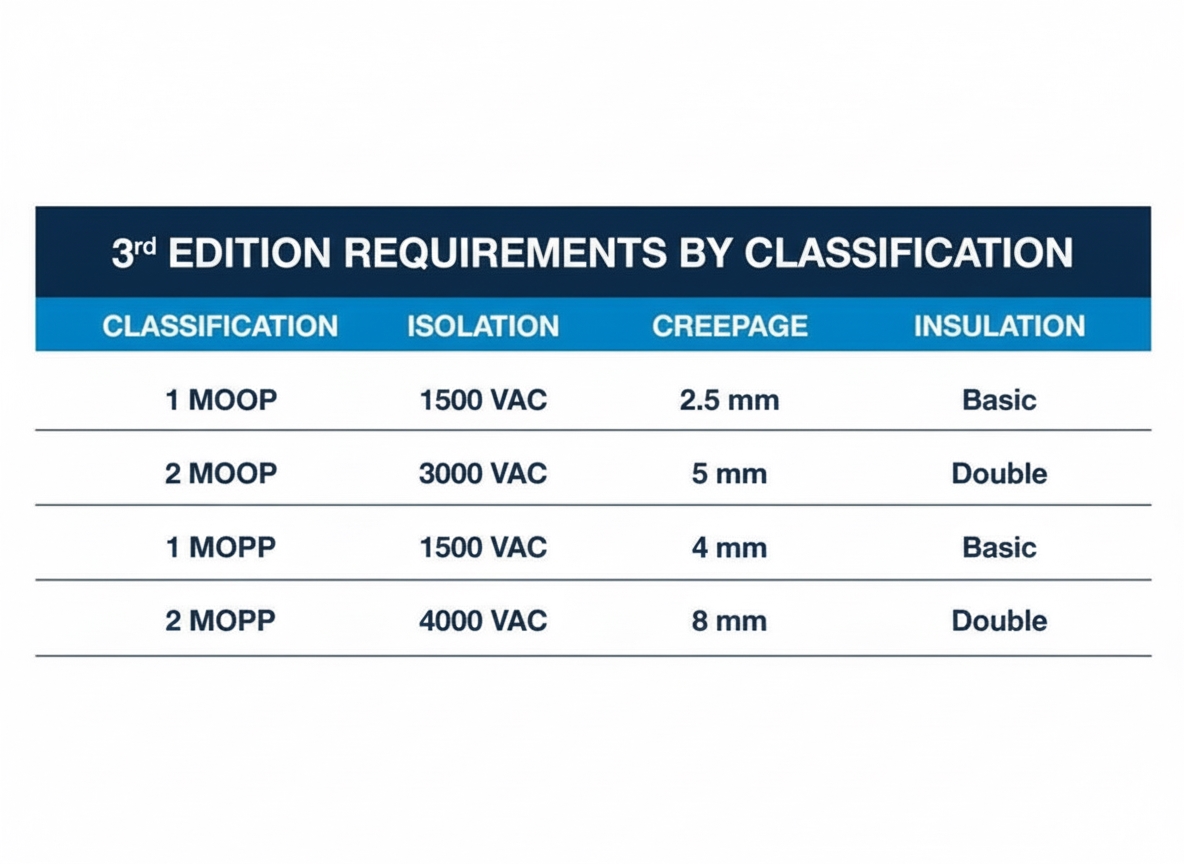
Figure 1: Summary of protection measures in IEC 60601-1 third edition.
For example, power supplies for medical equipment that come into contact with the patient, such as blood pressure monitors or ultrasound devices, must meet the third edition requirement of 2 MOOP and 1 MOPP. For devices such as defibrillators and dialysis machines, IEC 60601-1 certified power supplies are mandatory. Such equipment must provide additional isolation between the supply and any patient-contacting parts; this can be achieved with isolation transformers or DC/DC converters, but must meet the 2 MOPP guidance for 8 mm creepage and double insulation.
Determining the exact MOOP/MOPP requirements can be challenging, but making informed decisions early in development can avoid costly changes later. Although implementing 1 MOPP may be less expensive than 2 MOPP, selecting the higher classification can be prudent for safety and regulatory robustness.
Implications of EMC Updates for Power Systems
The immunity updates introduced in the fourth edition also affect how medical power systems must be implemented. To avoid IEC 60601-1 compatibility failures, designers should specify power supplies that meet the applicable safety and EMC requirements of the relevant IEC 60601-1 editions. Only then will the power supply offer acceptable isolation, leakage, and EMC characteristics.
Conclusion
Keeping up with evolving regulatory requirements is a significant challenge for OEM engineering teams. The fourth edition of IEC 60601 strengthens risk analysis, expands EMC expectations for a broader set of environments including home use, and tightens requirements that affect power supply design and isolation. Early consideration of these revisions during device development helps reduce risk and avoids costly redesigns later in the certification process.