Abstract
Fractures often result from severe trauma and high-energy injury, and their incidence has increased in recent years. Internal fixation and surgical trauma are critical factors in fracture surgery. Beyond preventing complications, the quality of reduction and fixation and the degree of surgical trauma are crucial for fracture treatment. Most orthopedic clinical studies indicate that two-dimensional planar images lack an intuitive, three-dimensional feel, which impedes communication between clinicians and patients and makes it harder for surgeons to explain surgical plans. To improve surgical precision and safety, this study applies 3D printing to produce physical bone models and implants and develops an embedded FDM 3D printing image control system. The work focuses on the framebuffer driver for the system's image control module. The driver was implemented to enable image transmission and display, allowing patient-specific bone models to be printed for accurate shaping of implant guides, which are then implanted for bone repair.
1 Image Transmission and Display in the 3D Printing Image Control System
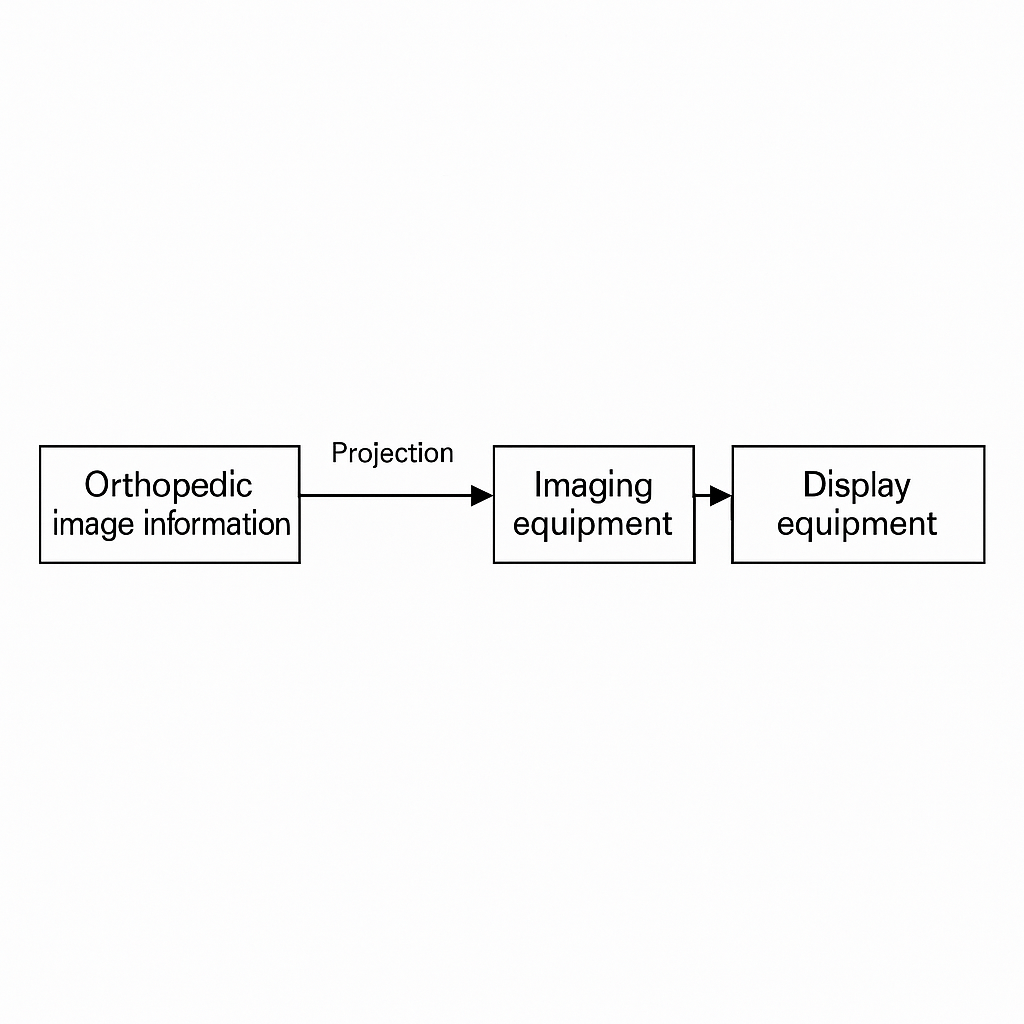
The embedded system transmits image data using the framebuffer controller in a Linux environment. Knowledge of framebuffer concepts is therefore important for this study. The primary task here was to design and implement the framebuffer driver to support image transmission and display within the control system.
1.1 Embedded System Framebuffer Design
1.1.1 Overall Control Design for the FDM 3D Printing Image Transmission System
The system uses an Atmega2560-16AU microcontroller (AVR core, 8-bit, 16 MHz, 256 KB Flash). The chip integrates many external devices to support its control functions. In Linux source code, the platform_device data structure defined in linux/platform_device.h manages these external device descriptions. All platform devices for the chip can be loaded at system startup. The structure is defined as follows:
struct platform_device Atm2560_device_fb = {
    .name = "Atm2560-fb", // device name
    .id = -1, // index when multiple devices of the same type exist
    .num_resources = ARRAY_SIZE(Atm2560_fb_resource), // number of resources
    .resource = Atm2560_fb_resource, // pointer to the resource array
    .dev.dma_mask = &Atm2560_device_fb.dev.coherent_dma_mask, // DMA mask
    .dev.coherent_dma_mask = 0xffffffffUL,
};
1.1.2 Framebuffer Driver Architecture for the FDM 3D Printing Image Transmission System
The framebuffer functions as the intermediary layer between user applications and hardware, similar to a PC graphics card: application operations on the framebuffer correspond to operations on video memory. After the framebuffer is initialized, parts of its driver under linux/drivers/video must be implemented. The driver provides the interface between applications and external hardware and must be adapted for the specific Atmega2560-16AU microcontroller to achieve actual image display. Framebuffer device driver responsibilities are mainly split between the following kernel files:
(1) linux/include/linux/fb.h
(2) linux/drivers/video/fbmem.c
fb.h primarily defines the key data structures used by framebuffer drivers. The fbmem.c file provides function interfaces for upper-layer applications to operate framebuffer devices, making basic operations hardware-independent, and also defines operations that lower-level hardware drivers must implement. In this study, the low-level, hardware-specific operations are implemented in Atm2560fb.c, which must be adapted for the specific LCD controller used.
1.1.3 Framebuffer Driver Implementation for the FDM 3D Printing Image Transmission System
To make the framebuffer work correctly and display images, the driver must be implemented. The driver depends on the underlying hardware, so it is divided into two layers: the standard driver and the nonstandard (hardware-specific) driver.
The standard driver mainly provides application-level interfaces, implemented in fbmem.c's file_operations structure. The hardware-specific driver implements the actual operations required by the framebuffer device. In this system, the framebuffer driver is implemented in drivers/video/Atm2560/Atm2560fb.c, and all driver information is stored in Atm2560fb_info_t.
Implementing Atm2560fb.c involves several tasks, including:
(1) Initializing members of fb_info.
Low-level drivers must bind to the platform device during driver loading; each platform_device is associated with a platform_driver to facilitate this binding.
2 System Testing
This study used a TMKJ-ET series FDM 3D printer for the image control system experiments. Preoperative CT scan data of orthopedic patients were imported into 3D modeling software to generate three-dimensional bone structures, as shown in Figure 3. Figure 4 compares preoperative and postoperative three-dimensional reconstructions to obtain the repaired bone 3D model. The postoperative 3D model was printed using the 3D printer, and the printed model was used to restore and shape the surgical guide plate. Finally, the precisely shaped guide was implanted into the patient to complete bone fixation and reduction.
Surgical results demonstrated that the FDM 3D printing image control system offers fast operation, high interactivity, and stable performance. It can accurately print three-dimensional bone models for orthopedic patients, supporting surgical safety and reliability, and enabling more precise orthopedic procedures using an embedded FDM 3D printing image control system.
3 Conclusion
This study applied 3D printing to fabricate bones and bone repair parts. Patient-specific bone models produced by 3D printing enabled accurate shaping of implant guides, which were then implanted for bone repair. Traditional 3D printing image control systems are often complex to integrate, have limited interactivity, and suffer from low efficiency. The framebuffer driver implemented in this work completes the image control module for the system. System tests show that the image control system is simple to operate, efficient, and stable, allowing precise printing of three-dimensional bone models and supporting accurate orthopedic surgery.