1. Background and Overview
1. Development objective
China has a large population and limited medical resources, and hospitals are often crowded. Intravenous infusion is a common treatment, but many infusion sets still provide only basic, manual functions and lack intelligent or informational control. This contributes to disorder in infusion rooms, increases nurse workload, and causes inconvenience for patients. Existing hanging infusion sets may provide a flow-rate adjustment device but cannot indicate remaining infusion time or issue an alert when infusion is finished, so patients cannot reasonably schedule their time and must call for assistance when an infusion ends.
2. Functional features
The designed device can adjust infusion flow rate in real time, display infusion progress as remaining time, and automatically provide a prompt when infusion is about to finish.
3. Innovation and practicality
Compared with traditional infusion devices that only provide infusion and basic speed adjustment, this design adds time monitoring and end-of-infusion alarm functions. Patients can set infusion duration precisely and coordinate infusion timing with other activities. For hospitals, the device provides timely infusion status information to staff for orderly replenishment and completion of infusions, improving operational efficiency. The device can be attached to the existing hanging hook of a conventional infusion set without modification, and its simple structure facilitates installation and use.
2. Design Principles
2.1 Overall principle
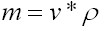
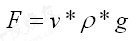
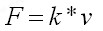
A hanging infusion bottle is subject to two main forces: the downward gravitational force G and the upward tensile force F. Since F = G, the bottle remains stationary. The tensile force F on the hanging bottle varies linearly with the liquid volume V inside the bottle. By measuring the tensile force F, the liquid volume V can be inferred.
Based on this relation, the system measures the change in tensile force over a short time interval and, together with the current tensile force, computes the remaining infusion time t.
Note: F refers to the tensile force corresponding to the liquid weight after subtracting the tare weight of the empty bottle.
2.2 Hardware design principle
The main hardware challenge is accurately measuring the liquid weight. The design uses a high-precision 3 kg load cell, which is a bridge-type strain gauge sensor. A strain gauge is bonded to an elastic element; when the element deforms under load, the strain gauge resistance changes, and this resistance change is converted into a change in output voltage. Measuring the output voltage and applying appropriate calculations yields the weight.


Although the load cell has high precision, its output voltage is very low and cannot be read directly by a standard ADC. The design uses the HX711, a dedicated 24-bit ADC designed for high-precision scales. Compared with similar chips, the HX711 integrates on-chip voltage regulation and clock circuitry, offering high integration, fast response, and strong anti-interference capability. It simplifies system design by providing a stable reference for the sensor and a built-in clock, and its interface and control signals are simple to use without requiring direct register programming. Channel A supports programmable gains of 128 or 64, and channel B provides a fixed gain of 64. After a 128x amplification in HX711 and 24-bit A/D sampling, the obtained values meet the project requirements.
Because the sensor requires a stable supply, a 5 V linear regulator is used to provide low-noise power to the sensor and associated circuitry.
2.3 Software design principle
Software challenges include obtaining accurate weight measurements and resisting external disturbances.
According to the overall principle, the program subtracts the sensor tare and the empty bottle weight from the measured total weight to obtain the liquid weight, then samples the liquid weight every 1 s to calculate the rate of change and estimate remaining time. In practice, because the infusion rate is very slow and the sensor resolution is finite, the weight change over a 1 s interval may be negligible. To address this, the design adopts a method analogous to tachometer measurement: it measures the number of 1 s sampling intervals n required for the liquid weight to change by one least significant unit, and multiplies n by the sampling period to compute the remaining time.
The bottle is not perfectly stationary and is subject to various forces, which create measurement noise. The software applies a simple first-order filter to the computed weight-change rate to suppress high-frequency noise. To guard against large disturbances, such as deliberate bottle movement, the program only accepts data as valid if three consecutive change cycles produce consistent remaining-time estimates. This approach reduces the impact of transient, large disturbances.
3. System Design
3.1 Hardware design
The power supply scheme uses 220 V mains to generate 5–12 V, then an LM2940-5.0 linear regulator provides 5 V to the MCU, sensor, display, and wireless module. Since the load cell output is small, amplification is required; however, the HX711 provides an internal programmable amplifier, so no external amplifier is necessary.
For wireless communication in a typical infusion room with multiple hanging points, protocols like Zigbee are suitable. In this implementation, an available XL02-232AP1 module was used. The display used for development was a 128x64, 0.96-inch dual-color (yellow/blue) LCD.
Due to time constraints, no PCB was fabricated. A minimum system was built on a previously used board with fly-wires. A photo of the minimum system and the assembled modules were prepared for evaluation.
3.2 Software design
The software consists of two parts: the embedded controller (lower-level device) and the host PC (upper-level application). The embedded controller samples the infusion weight at a specified period, computes the remaining time using the described algorithm, updates the local display, and transmits data via the wireless module. The host PC collects data from multiple embedded units, validates and sorts the data, and presents it in a user interface.
3.2.1 Embedded controller software
The embedded program initializes peripherals including timers, serial port, and HX711 tare calibration, then waits for the 1 s sampling interval. On each sampling event, the MCU reads the HX711, processes the data, and discards invalid measurements.
3.2.2 Host PC software
The host PC opens the designated communication port and waits for incoming data from embedded units. Incoming packets are validated against the communication protocol (A5 + ID + AA + remaining time). Valid packets are sorted and displayed; invalid packets are discarded.
4. Test Results
After debugging, measurements were taken using medical infusion bottles.
The data show negligible error over short durations; over longer durations the error increased, with a maximum measured error of 15.7%. In terms of absolute time deviation, the maximum error observed was 11 minutes, which may be acceptable for many practical scenarios.
5. Conclusion
This design uses a Shenlianhua microcontroller as the core, with a load cell, HX711 ADC, and a wireless module to provide real-time infusion time feedback to hospital staff and patients. The solution addresses the persistent issue of unknown infusion duration in infusion rooms and can help maintain orderly operation and reduce patient anxiety about infusion timing. The measured results are satisfactory for the intended application. The design is compact, has low component cost, and supports future functional expansion for broader deployment in hospital settings.