Background
The China CDC and the Ministry of Health jointly published the China Chronic Disease Report, which notes that dyslipidemia, diabetes, and hypertension have had a serious impact on public health and safety. Interest in health management and blood pressure monitoring is increasing, and measurement method and accuracy have become major concerns. Compared with traditional mercury sphygmomanometers, electronic blood pressure monitors are easier to operate, more portable, and can be used independently, so they are widely used for home blood pressure monitoring.
1. Fundamental measurement principle
The device is based on the oscillometric method. Blood pressure refers to the lateral pressure exerted by pulsatile blood flow on the arterial wall. The peak of the pressure perpendicular to the aortic wall is systolic pressure, and the trough is diastolic pressure. The oscillometric measurement process is consistent with the auscultatory method. First, the cuff is inflated by a pump to occlude blood flow in the brachial artery. After the pulse waveform disappears, the cuff is slowly deflated and pulses reappear. When cuff pressure falls from above the systolic pressure to the systolic level, the pulse waveform suddenly increases. At mean arterial pressure the pulse amplitude reaches a maximum, then decreases again as cuff pressure continues to fall. The oscillometric method determines blood pressure from the relationship between cuff pressure and pulse waveform: the pulse amplitude peak corresponds to mean arterial pressure, while systolic and diastolic pressures are calculated using proportional coefficients relative to that peak.
2. System architecture
The monitor uses Bluetooth 4.0 for data transmission. The system comprises an Android app and an on-device data acquisition unit (blood pressure acquisition module and cuff). A manifold connects the pressure sensor, solenoid valve, pump, and cuff using rubber tubing to ensure system airtightness. The solenoid valve and pump are driven by respective driver circuits, which are connected to the control chip I/O ports; the control chip operates the valves and pump via the drivers. Cuff pressure data and derived pulse waveform data are collected by a pressure sensor and separated and processed by a signal conditioning stage. After calculations in the control chip, measured blood pressure values are transmitted to the Android app for display, analysis, and storage
3. Hardware design
3.1 Pump and solenoid valve
The device uses a 370 DC pump (manufactured in Japan), with maximum supply pressure up to 450 mmHg, rated current 250 mA, operating voltage DC 3–6 V, and noise below 65 dB. The solenoid valve chosen is model CJ13-A06A1 with airtightness 3 mmHg/min, rated current 60 mA, rated voltage DC 3–6 V, minimum operating voltage 3.5 V, and DC resistance 100 ohm, meeting requirements for rapid and controlled deflation.
3.2 Pressure sensor
Pulse wave signals are weak, susceptible to interference, and difficult to acquire, which increases acquisition difficulty. This design uses the MPS20N0040D-D piezoresistive pulse sensor, which offers accurate measurement, small size, good stability, and repeatability.
3.3 Signal conditioning module
The signal conditioning module amplifies and filters the linear DC trend from the pressure sensor and the oscillatory pulse waveform, then passes the conditioned signals to the microcontroller. The design uses a millivolt-level amplifier IC with low power consumption, low input bias, low noise, and adequate precision, making it suitable for blood pressure measurement equipment.
3.4 Bluetooth communication module
The device uses a Bluetooth serial communication module based on BLE V4.0 (HC-08). Compared with Bluetooth 2.0, it has lower power consumption and faster transmission. In low-power MODE3, sending one byte via the serial port can wake the module. The module supports multiple roles (broadcaster, observer, peripheral, central) and can achieve up to 80 m communication range in unobstructed environments.
4. Embedded software design
The device-side software receives commands from the Android app and performs the corresponding operations, then uploads the processed data from the signal conditioning and control chip to the Android app via Bluetooth 4.0.
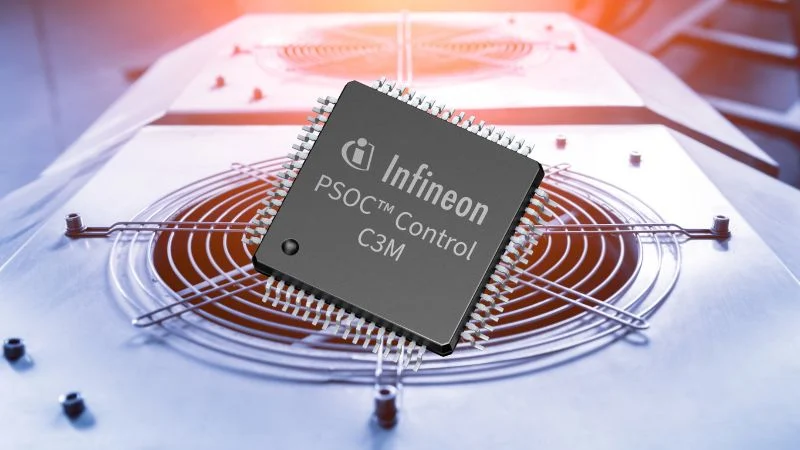
The system uses an STM32F103ZET6 microcontroller and Keil MDK as the development platform. Processed signals can be debugged using a serial port debugger.
5. Android app design
The Android app includes modules for data processing, waveform plotting, and Bluetooth communication to handle data conversion, display, and transmission. The interface flow is: startup animation (app name display) → main measurement interface with buttons for Bluetooth connection and start/stop measurement → display area showing heart rate, cuff pressure, systolic and diastolic pressure during measurement → analysis view for historical pressure graphs → information dialogs for reconnect prompts, Bluetooth not connected, cuff not applied correctly, etc.
6. Measurement results and analysis
The oscillometric Bluetooth 4.0 monitor was evaluated for stability and accuracy. Compared with mercury sphygmomanometer measurements, results were similar without significant differences. The proportion of measurements with diastolic error ≤ 5 mmHg was 90%, and systolic error ≤ 5 mmHg was 80%, meeting AAMI standards. The device is portable, simple to operate, and suitable for routine home blood pressure monitoring.