Introduction
In recent years, forehead thermometers have advanced rapidly in technology, with improved performance, expanded functionality, and wider variety and applicability. Compared with contact temperature methods, forehead thermometers offer fast response, non-contact operation, safety, and long service life.
Working principle
A forehead thermometer, also called an infrared thermometer, measures body temperature by detecting the infrared radiation emitted by the human body. Any object above absolute zero (-273°C) emits infrared radiation. The thermometer's sensor receives that infrared radiation and converts it into an electrical signal. An infrared temperature signal processing chip converts the electrical signal into a digital signal to obtain the sensed temperature value.
Three key factors that determine accuracy
- Sensor quality. Thermopile infrared sensors are MEMS-based devices; their design and manufacturing conditions affect accuracy and measurement consistency.
- ADC precision and stability. The accuracy of the infrared temperature signal processing chip depends on the ADC performance. The SD8709-based single-chip solution integrates a high-precision ADC and MCU to perform signal measurement, A/D conversion, data processing, built-in LCD/LED driving, and serial communication functions on a single chip. See Figure 3.
- Compensation algorithms. The quality of sensor-signal and ambient-temperature compensation algorithms directly affects measurement accuracy and consistency. Portable forehead and ear thermometer solutions require mature algorithms and calibration procedures to meet medical certification requirements. Reported production devices meet China CFDA or foreign FDA and CE medical certifications.
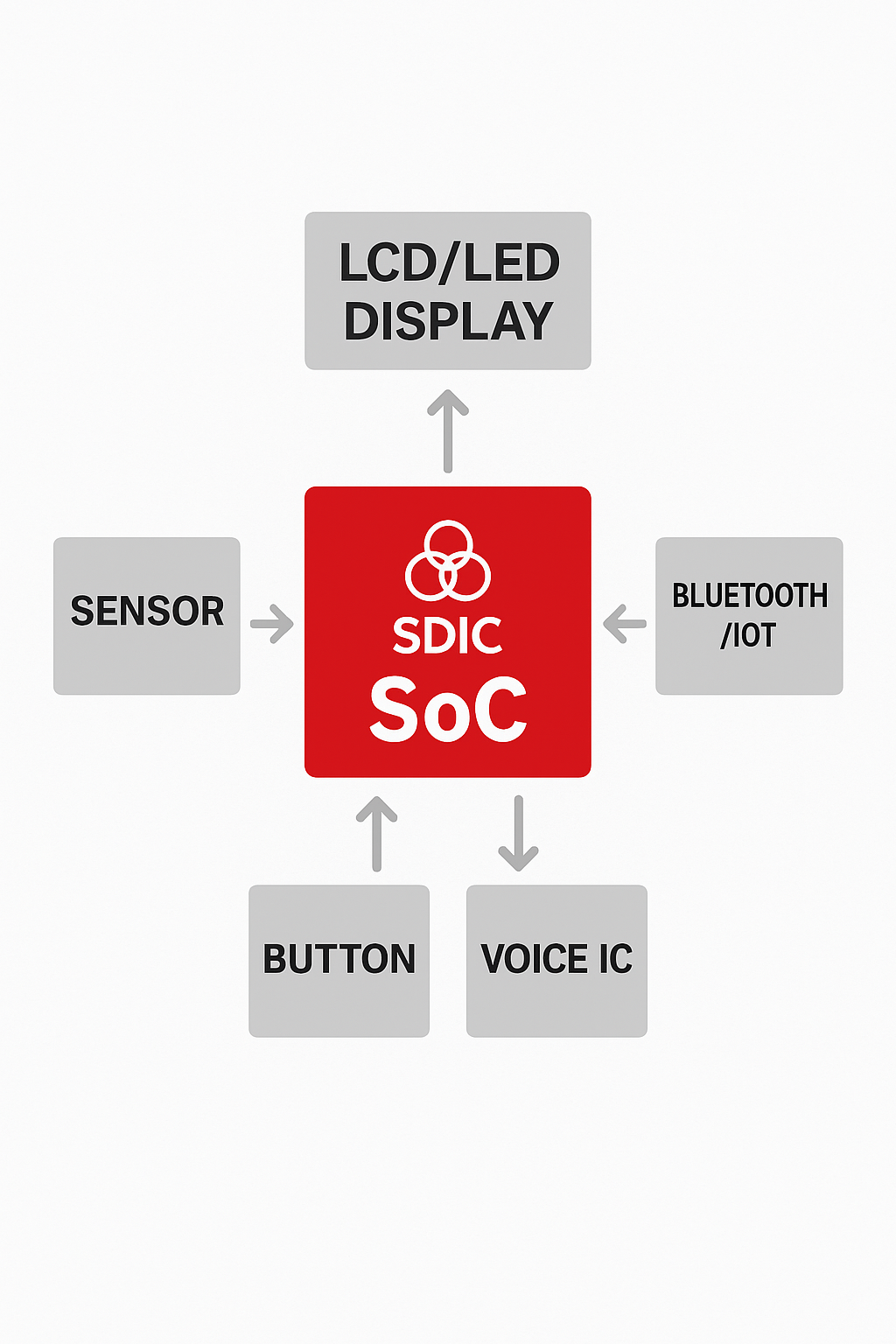
Figure 1. Single-chip solution block diagram
Solution overview
The complete human infrared temperature measurement system consists of a thermopile infrared sensor, a control chip (SD8709), display and buttons, power supply, buzzer, and indicator LEDs.
The solution based on the SD8709 chip features a simple circuit, few external components, and low overall power consumption.
Technical notes on the SD8709
The SD8709 is a SoC featuring a high-precision 24-bit ADC and a rich set of peripherals: RTC, selectable regulated power outputs, configurable PGIA, boost converter, UART, I2C, SPI, TIMER, PWM/PDM, PFD, CAPTURE outputs, and LCD driver.
The product includes 16kBytes OTP that can be programmed at low voltage; programming voltage range is 2.4V to 3.6V. OTP can be used instead of external EEPROM.
It is designed for ultra-low power. Typical operating current for the entire chip in a typical application is about 1 mA (IAD=0) or 1.5 mA (IAD=1). Three operating modes are provided: active, standby, and sleep.
Key features
- 8-bit RISC ultra-low-power MCU, 16 kBytes OTP program memory, 512 Bytes SRAM data memory.
- Integrated selectable clock oscillators; when using an external crystal, supports loss-of-clock detection.
- High-precision ADC, ENOB = 18.8 bits @ 8 sps; differential 2-channel or single-ended 4-channel input; selectable output rates.
- Selectable external or internal ADC reference, with multiple internal reference options.
- Low-noise, high-input-impedance front-end amplifier with selectable gains: 1, 12.5, 50, 100, and 200.
- 24 SEG × 4 COM LCD driver designed for low power and high drive capability.
- Low-voltage programming capability to replace external EEPROM.
- On-chip silicon temperature sensor, supports single-point calibration.
- Rich peripheral set: UART, I2C, SPI, PWM/PDM, PFD, TIMER, CAPTURE, RTC.
- Flexible battery detection from 2.0 V to 3.3 V; brown-out detection and power-on reset circuits.
- Operating voltage range: 2.4 V to 3.6 V; operating temperature range: -40°C to 85°C.
Conclusion
High-precision ADCs combined with capable MCUs enable accurate measurement of body parameters such as weight, body fat, and temperature. Solutions integrating these components can support portable forehead and ear thermometers that meet medical device certification requirements in China and abroad.