Event and presentation
From August 23 to 25, 2023, the 2023 Electric Vehicle Intelligent Chassis Conference and World Intelligent EV Advanced Technology Exhibition, organized by the Chinese Automotive Engineering Society, was held at the Shenzhen Convention and Exhibition Center (Futian). The event combined forums and an exhibition to examine future intelligent chassis technology directions and promote industry consensus and cross-industry integration of vehicle electrification and intelligence.
Yeestor (YEESTOR) was invited to exhibit and present, demonstrating high-reliability automotive memory products and complete storage solutions. Yuan Ye, head of the automotive electronics market, delivered a keynote titled "Intelligent Vehicles, the Future of Storage," sharing Yeestor's perspectives on automotive storage and related application approaches.
Trends in automotive storage
As vehicle electrification and intelligent features evolve, vehicle electronic and electrical architectures are rapidly moving from traditional distributed modular layouts toward domain-centralized integration and, ultimately, a centralized compute plus zonal architecture. Correspondingly, automotive storage is undergoing significant changes, with new requirements for capacity, form factor, and performance. Mainstream automotive eMMC is expected to decline over time, while UFS use cases will expand and automotive SD will gain traction in certain scenarios.
Storage requirements for vehicle ECUs
Automotive storage is commonly embedded across vehicle components such as in-vehicle gateways, T-boxes, smart cockpits, ADAS, driver monitoring systems, digital clusters, and chassis controllers.
Rapid development of intelligent vehicles imposes eight main requirements on storage components: capacity, performance, power consumption, endurance, operating temperature range, data integrity, stability and reliability, and partition management. Automakers and Tier 1 suppliers focus on how to apply high-level error correction algorithms to mitigate errors and ensure data integrity, and how to improve product stability and reliability through design principles, chip selection, and process control. Storage suppliers are expanding capabilities in these areas to meet automotive demands.
New form factors driven by centralized compute
With the emergence of domain controllers, zonal controllers, and central compute domains that provide much greater compute power than individual ECUs, storage capacity also needs to be centralized. Large data storage requirements demand higher-bandwidth data buses.
High-bandwidth, low-latency PCIe buses are expected to become the preferred interface for future automotive storage. Compared with eMMC and UFS, PCIe offers advantages in bandwidth, scalability, latency, virtualization, and power management, and represents a step change for embedded storage products.
Consequently, large-capacity SSDs in BGA packaging with PCIe interfaces—automotive BGA PCIe SSDs—are likely to become a primary automotive storage form factor. They inherit PCIe advantages while providing higher density, faster boot times, and improved data isolation.
CXL and in-vehicle applications
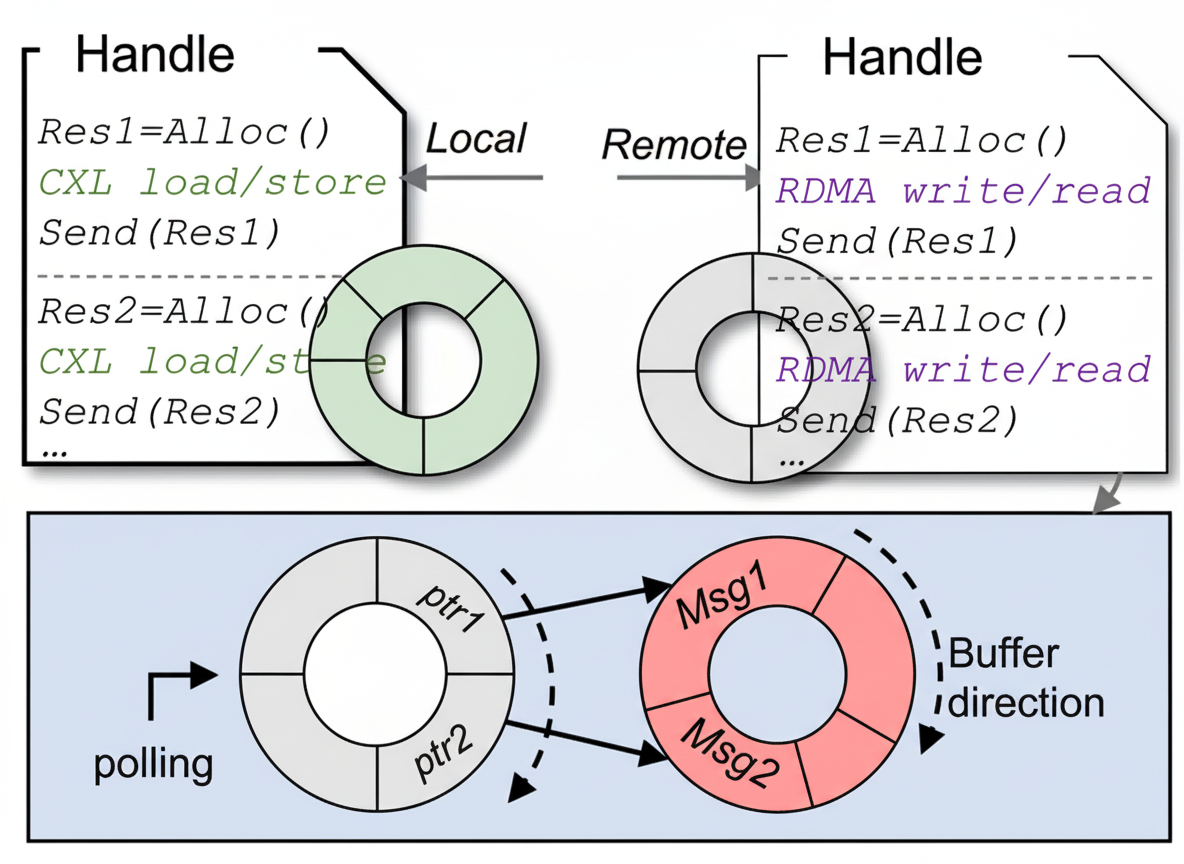
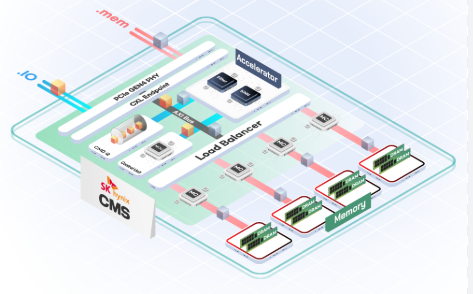
Memory-semantic interconnects such as CXL over PCIe are expected to be an important direction for automotive storage. CXL transitions storage access models toward memory-like access, enabling higher data transfer rates and improved QoS. Additional high-speed bus interfaces facilitate connection, data transfer, and storage for numerous vehicle peripherals such as cameras, radars, vehicle buses, and environmental sensors, making CXL applicable in scenarios like high-definition map updates and AI model handling.
In smart city and intelligent transport applications, integration with V2X technologies can support use cases such as smart parking, traffic safety, freight logistics, and traffic signal control. V2X requires strict real-time performance, reliability, security, and scalability. Real-time requirements mean millisecond-level data transmission; security requires protecting data against tampering, destruction, or theft, ensuring transmission integrity.
To improve V2X real-time performance and security, compute-in-storage is an effective approach. Offloading functions such as signing, verification, decryption, certificate writing, and secure deletion to storage hardware near the data endpoint enables a single hardware platform to perform data storage, services, processing, and protection. This reduces multi-step data interaction latency in V2X and enhances real-time performance and security.
As CPU and GPU compute requirements scale with higher autonomous driving levels, addressing V2X compute demand purely on the SoC becomes increasingly challenging. Using storage controllers to perform V2X-related control and computation reduces CPU/GPU load and can lower SoC costs in domain controllers.
For autonomous driving, storage redundancy and backup strategies are also trending. Redundant storage at the NAND, system, and system-of-systems levels allows continuous operation and mutual supervision. When a failure occurs, systems can quickly identify faults and perform hot redundancy switching at the smallest affected unit, preserving safety and improving availability so vehicle operation remains unaffected.
Controller as a Service and the role of storage controllers
When storage must serve diverse intelligent vehicle applications, the storage controller becomes critical. Current and future automotive storage functions rely on the storage controller as the intermediary. This concept can be summarized as "controller as a service" or CaaS. Storage vendors that understand automotive application requirements can design controllers and solutions to meet high reliability, security, and performance needs.
Yeestor's automotive-grade eMMC products have been used in factory-installed automotive applications including digital clusters, T-boxes, ADAS, smart cockpits, in-vehicle infotainment, and event data recorders.