Introduction
In the era of information explosion, data volumes keep growing and demand for storage technologies is rising. Magnetic tape, HDD, floppy disk, SD, optical disc, emerging storage media and cloud storage have all been developed to meet different needs. Each offers advantages for specific application scenarios. This article examines the characteristics, typical applications and evolution trends of major data storage technologies.
Storage Technology Categories and Roles
Data storage plays a key role in data mining and analysis, data integration and sharing, decision support, business model innovation and resource optimization. By storage medium, storage technologies are generally categorized as magnetic storage, optical storage and semiconductor storage.
Magnetic Storage
Magnetic storage is widely used for backup, archiving and cold data storage because of high density and low cost, making it suitable for large-scale storage and backup. Magnetic tape offers large capacity, low cost, reliability and ease of archiving; it is durable and well suited for long-term data retention. HDD (mechanical hard disk) combines large capacity, low cost and durability with relatively high data transfer rates to meet bulk storage needs. Limitations of magnetic storage include vulnerability to physical damage, speed constraints, power consumption and heat generation, noise and vibration, data recovery difficulty and capacity ceilings. With continued improvements in SSD performance and falling prices, HDD faces increasing competitive pressure. However, because of cost and capacity advantages, HDD will remain important for very large-capacity and long-term storage. Magnetic storage itself continues to evolve through advanced magnetic recording materials and techniques that aim to improve manufacturing, density and performance.
Optical Storage
Optical storage is notable for reliable, efficient storage, management and retrieval. It supports large-volume archival data such as machine logs, design files and quality records. Optical media provide long-term archival reliability, offline access, and relative cost-effectiveness. For backup and recovery, optical storage can be an alternative to magnetic storage for protecting critical data. For applications that require large capacity, high data importance and low modification frequency, optical storage remains a practical option. Optical media are less affected by environmental factors such as temperature, humidity and magnetic fields, making long-term stability better than some magnetic media. Optical media also offer resistance to temperature extremes, moisture, shock, vibration, pressure and dust, which suits certain outdoor or rugged use cases. Despite these strengths, the adoption of optical storage for everyday use has declined with cloud storage and SSDs. Optical read/write speeds are generally slower than SSDs, and capacity and portability have been eclipsed by USB flash drives and external hard drives. Nevertheless, for specific scenarios such as long-term archival and media distribution, optical storage remains worth considering.
Semiconductor Storage
Semiconductor storage offers high integration, low power consumption, high reliability, small size, simple peripheral circuitry, fast read/write speeds and suitability for automated mass production, and is commonly used for memory. Compared with magnetic and optical storage, semiconductor storage such as flash and SSDs provides durability, portability and fast access because there are no mechanical parts, making them less prone to mechanical failure. However, semiconductor storage has higher unit cost, especially for larger capacities, and historically has had lower storage density than magnetic technologies like HDD. Advances in technology are steadily increasing semiconductor storage density while lowering cost.
ROM types include mask-programmed ROM (MROM), which is written at manufacturing and cannot be changed, suitable for early mass production; EPROM, which is erasable and reprogrammable but slower; EEPROM, which supports electrical erasure and in-system modification and is used where data reliability and safety are critical (for example, BIOS chips, access control systems and smart cards). Flash memory is a high-density nonvolatile read/write semiconductor memory that combines characteristics of EEPROM and RAM, enabling block erase and reprogramming. Flash can be erased in seconds and offers high density by using a single transistor per bit. Typical floating-gate storage can retain charge for decades under normal use. The following figure shows ROM categories.
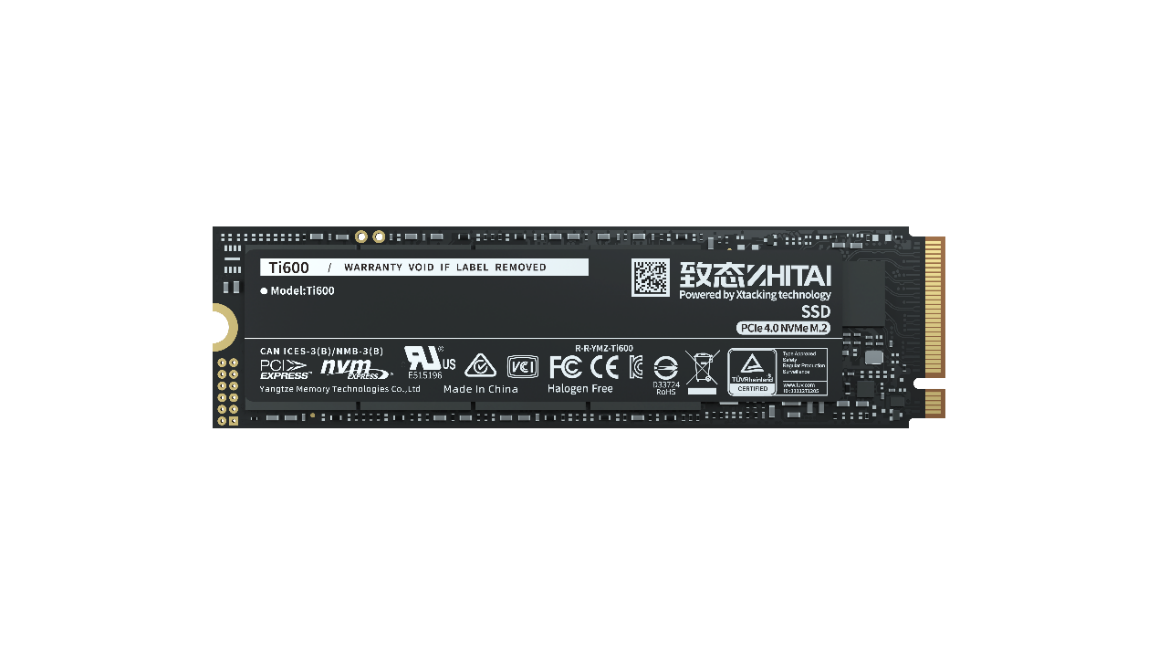
SRAM is fast, simple to use, does not require refresh and has very low static power, so it is commonly used for cache. DRAM stores charge on capacitors and requires refresh; its structure is simple, with high integration and low power per bit, making it the mainstream for large-capacity main memory. Flash quality depends on page count, page size, read/write performance, block size, I/O width, frequency and manufacturing process, and trends move toward larger capacity, lower power and lower cost. SSDs, based on NAND flash, are widely used in laptops, desktops, mobile devices, servers and data centers and can often replace HDDs. SSDs are smaller, faster and more secure than HDDs, making them preferable for many mobile storage applications. Compared with DRAM, NAND flash offers cost advantages. NOR flash is optimized for code execution in place and is suitable for storing code with fast reads and high reliability but has slow erase/write speeds and larger die size, limiting its use. NAND flash, with simpler structure and higher density, is widely used in eMMC, UFS, USB drives and SSDs.
SRAM vs DRAM comparisons and flash advantages: flash is nonvolatile, low power, long-lived (data retention over 10 years), supports many erase/write cycles, high density, low latency and good shock resistance. Its drawbacks include relatively slow write times and potential invalid blocks during use.
Evolution Trends in Data Storage
By 2030, data volumes are projected to enter the yottabyte era, with total data substantially larger than in 2020. Storage capacity and throughput demands will continue to increase dramatically. Some high-end flash cards now reach 1 TB, and many SSDs reach multiple terabytes. High-end UHS-II SD cards can offer read speeds up to 300 MB/s and write speeds around 260 MB/s, while NVMe SSDs can reach several GB/s in read/write throughput. NAND flash occupies a central position in the flash market. As NAND manufacturers update process technologies, transistor densities, and stacking techniques, supply of storage density has grown rapidly. Industry data shows global NAND flash capacity rising significantly over recent years.
Information explosion poses major challenges for storage: supply shortages for large capacities, low utilization efficiency and resource waste, high energy consumption of storage infrastructure, and uneven geographic distribution. Consequently, future storage is expected to center on unstructured data, with SSDs as a primary medium, and to evolve toward distributed storage architectures, cloud storage, DNA storage, nanoscale storage and compute-in-memory or storage-compute convergence.
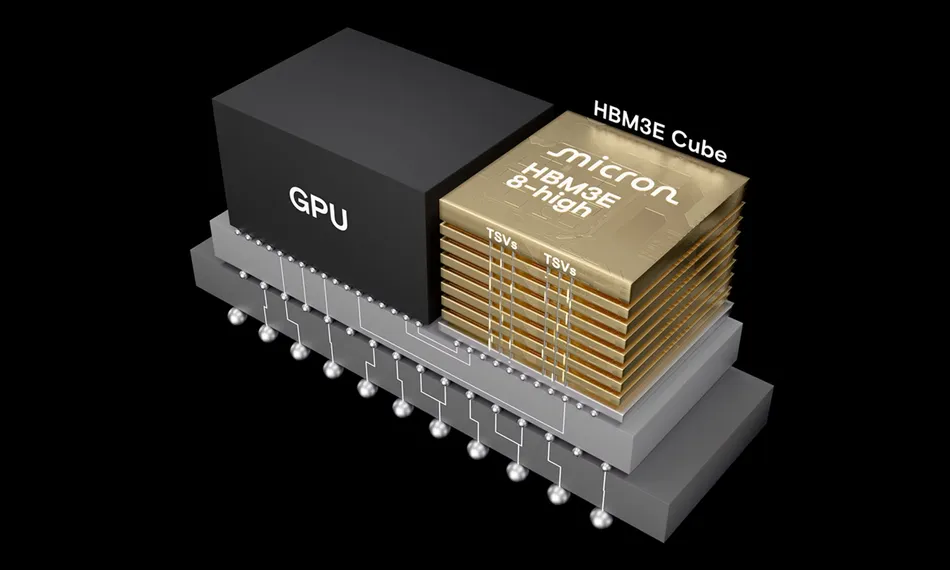
With rapid growth in cloud computing and artificial intelligence, data center traffic has expanded and issues of processing latency and energy consumption increasingly constrain performance. While CPU performance has improved, memory progress has lagged, creating a memory bandwidth bottleneck known as the "memory wall." To address rising data-movement needs, high-bandwidth memory (HBM) has emerged. Unlike traditional 2D DRAM, HBM uses 3D-stacked DRAM with through-silicon vias (TSVs) to vertically interconnect multiple layers and employs system-in-package techniques to closely integrate GPUs and multiple DRAM chips. This design greatly increases data transfer rates, delivering higher bandwidth, lower latency and improved energy efficiency in a compact footprint, making HBM an attractive solution for high-performance computing and data-center memory demands.
Conclusion
Data storage technology will face both challenges and opportunities as data volumes continue to grow. Key issues for future development include improving storage efficiency, reducing costs and meeting diverse data requirements. Emerging directions such as distributed storage architectures, cloud storage, DNA storage, nanoscale storage and storage-compute convergence will play important roles in shaping the next generation of storage technologies.