Overview
Limited by controller capabilities and flash performance, most mainstream PCIe 4.0 SSDs currently top out near 5000 MB/s sequential transfer speeds. Drives that use QLC NAND or lower-end controllers often only reach around 4000 MB/s sequential read, offering little advantage over PCIe 3.0 SSDs. To improve storage performance for budget-conscious users, GALAX recently introduced the Star Yao 7000 Plus SSD, which is marketed with a 7000 MB/s sequential read target. This review evaluates whether the drive meets that specification and how it performs in real-world usage, including game load and install scenarios.
Specifications
Interface: PCIe 4.0 x4
Controller: Phison PS5027-E27T
Flash: 3D NAND TLC
DRAM cache: N/A
Capacities: 1 TB, 2 TB
Form factor: M.2 2280
Endurance: 600 TBW (1 TB), 1200 TBW (2 TB)
Warranty: 3 years
Approximate price: CNY 449 (1 TB)
Controller Upgrade and Hardware
The Star Yao 7000 Plus uses the Phison PS5027-E27T controller, an upgrade over the PS5021-E21 used in some earlier GALAX models. The PS5027-E27T is produced on TSMC 12 nm process, features a single-processor architecture with a 32-bit microcontroller, and supports the NVMe 1.4 specification. It is a quad-channel, DRAMless controller that can use a small portion of system memory to form a virtual cache pool, reducing power consumption and manufacturing cost compared with designs that require external DRAM. The PS5027-E27T supports Toggle 5.0 or ONFi 5.0 interfaces for 3D TLC and 3D QLC NAND, with flash interface rates up to 3600 MT/s, a significant increase over the 1600 MT/s supported by the PS5021-E21.
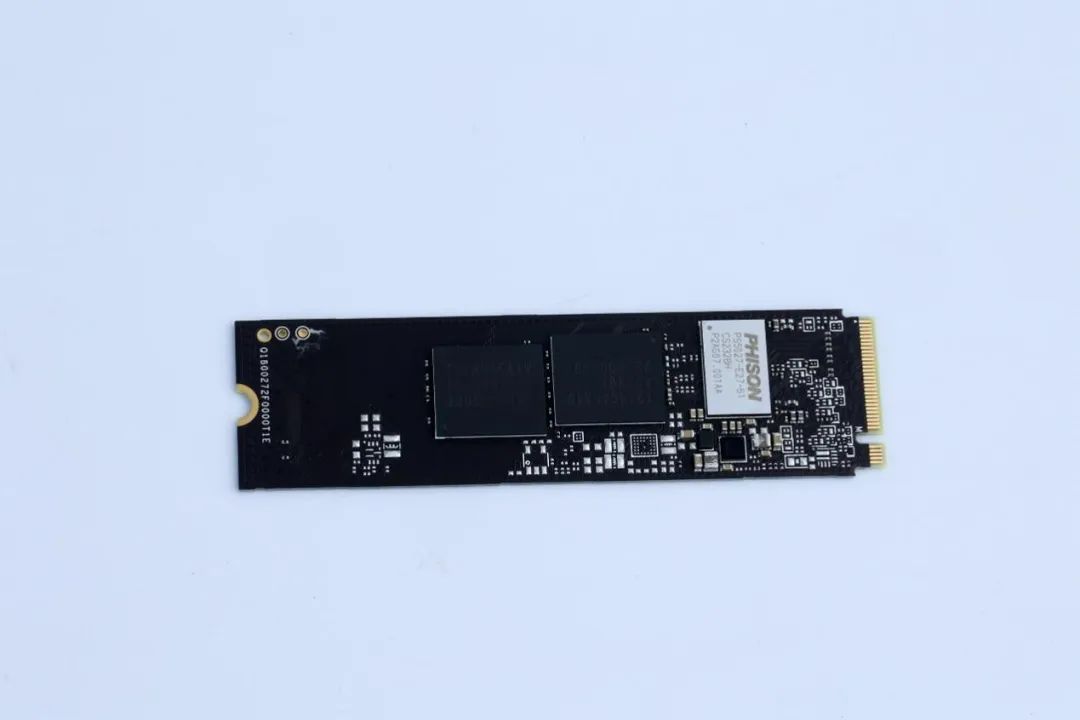
The tested 1 TB sample contains one Phison PS5027-E27T controller and two stacked 3D TLC NAND packages labeled "I27HGA5A1V". The PCB has no components on the back side. The controller supports fifth-generation LDPC error correction, RAID ECC, and end-to-end data path protection, along with common security features such as AES-256 and SHA-512.
To reach ~7000 MB/s sequential read on a quad-channel controller without external DRAM, the SSD requires high-speed NAND with per-die I/O at around 2400 MT/s and relatively high-density stacked dies. The two NAND packages on the 1 TB sample each integrate multiple 1 Tb dies to achieve the capacity and performance observed in testing.
GALAX provides a maintenance utility named Xtreme Tuner for SSD that offers temperature and health monitoring, secure erase, firmware upgrades, and optimization functions.
Design and Cooling
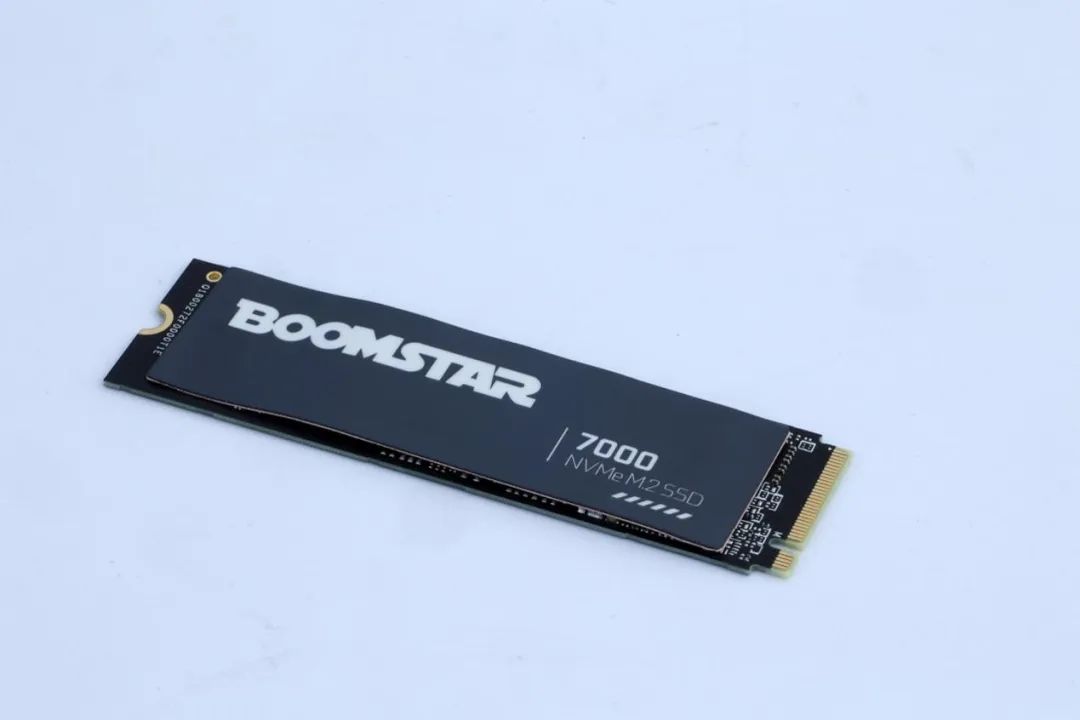
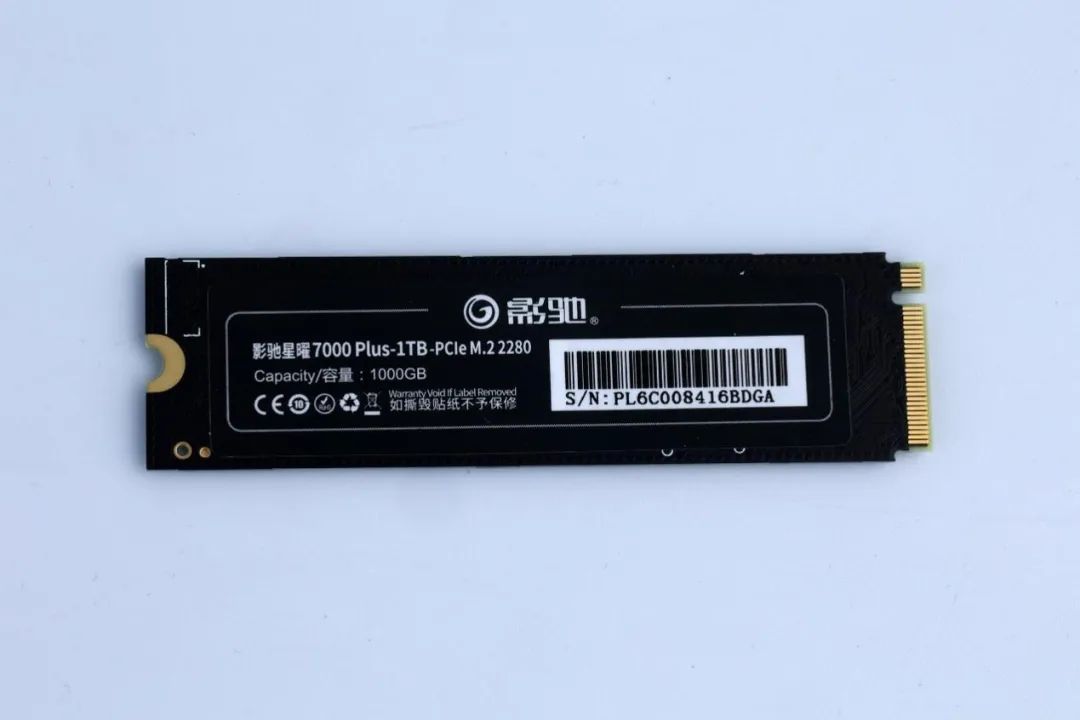
The drive is sold without a factory-mounted heatsink. GALAX includes a metal composite thermal sticker on the drive's front printed with the product model; this sticker can be left in place when the SSD is used in devices with limited space, such as laptops or all-in-one PCs, to provide auxiliary cooling. Given that most modern motherboards provide at least one M.2 heatsink, selling the SSD in a bare form helps reduce cost and avoid compatibility issues with oversized vendor heatsinks.
Claimed Performance
The 1 TB model is rated for sequential read/write of 7000/6000 MB/s and 4K random read/write of 1,000K/850K IOPS. Compared with the older Star X4 PRO 1 TB (rated 5000/3500 MB/s and 650K/800K IOPS), these numbers represent a substantial upgrade. Endurance and security features are consistent with mainstream PCIe 4.0 SSD expectations.
Test Platform
Motherboard: ROG CROSSHAIR X670E HERO
CPU: AMD Ryzen 9 7950X3D
Memory: 32 GB DDR5-6000 (dual channel)
Drive under test: GALAX Star Yao 7000 Plus SSD 1 TB
GPU: NVIDIA GeForce RTX 4090
Power: ROG THOR 1200W
OS: Windows 11
Benchmark Results
In CrystalDiskMark, the tested 1 TB SSD achieved sequential read up to 7405.72 MB/s and sequential write up to 6273.35 MB/s, both exceeding the rated specifications. Random 4K Q32T16 read/write results were measured at 4372.33 MB/s and 5734.05 MB/s, which translate to about 1,120K and 1,468K IOPS respectively, surpassing the rated random figures and outperforming many mainstream PCIe 4.0 SSDs.
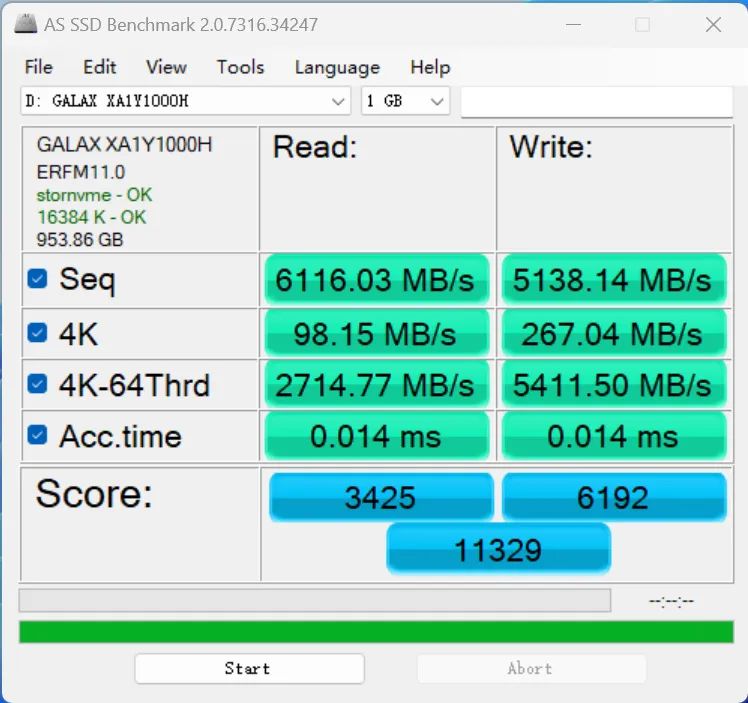
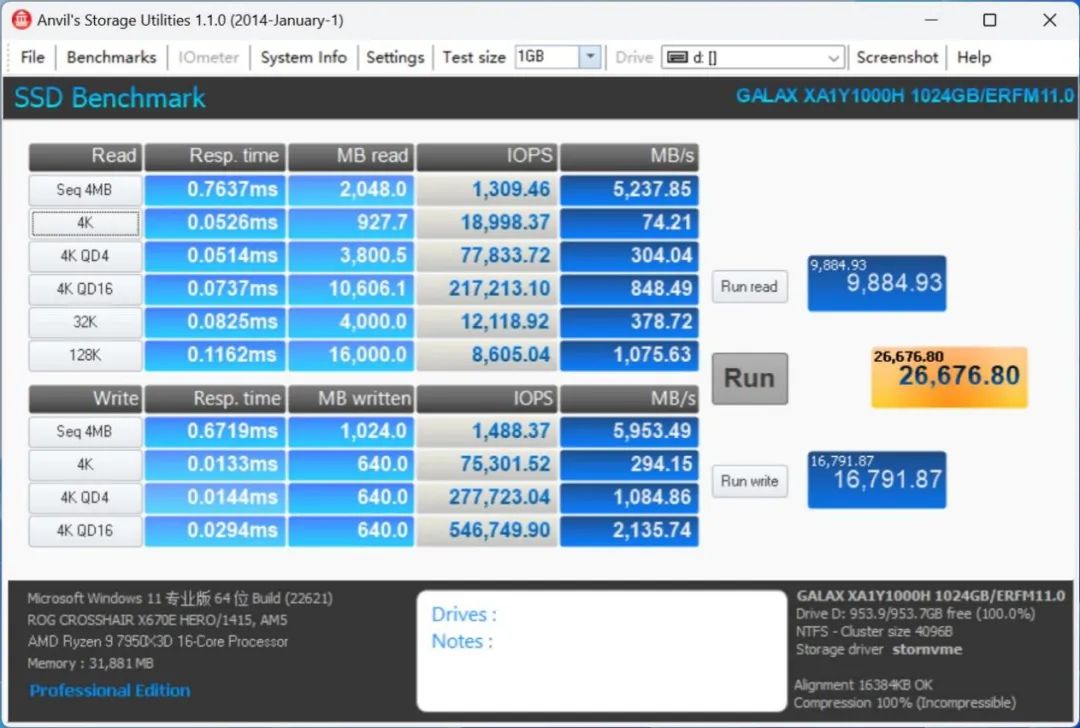
In AS SSD Benchmark and Anvil's Storage Utilities, the drive scored 11,329 and 26,676 points respectively, which are higher than typical mainstream PCIe 4.0 TLC SSDs (AS SSD usually under 9,000; Anvil often below 25,000 for those models).
File Transfer Tests
Using a 33 GB ISO file transferred to another high-performance SSD, average read/write speeds reached 5853 MB/s and 5498 MB/s, with the transfer completing in 6.0 seconds. Writing the 33 GB file to the Star Yao 7000 Plus from the high-performance SSD took 6.4 seconds, only 0.4 seconds slower than reading.
Small-file performance is important for game installs and application load times. A 33.4 GB Counter-Strike 2 install folder consisting of 2,720 files was used to test small-file throughput. The drive delivered average read/write speeds of 3851 MB/s and 4180 MB/s, completing reads in 9.3 seconds and writes in 8.6 seconds, demonstrating strong small-file performance.
Application and Game Tests
In PCMark 8 storage tests, the drive scored 5053, indicating quick completion of real-world application I/O tasks used in the test suite, such as Adobe Photoshop, InDesign, and After Effects. In the PCMark 10 complete system drive benchmark, the SSD scored 2835, comparing favorably to entry-level PCIe 4.0 drives that typically score around 2300–2400.
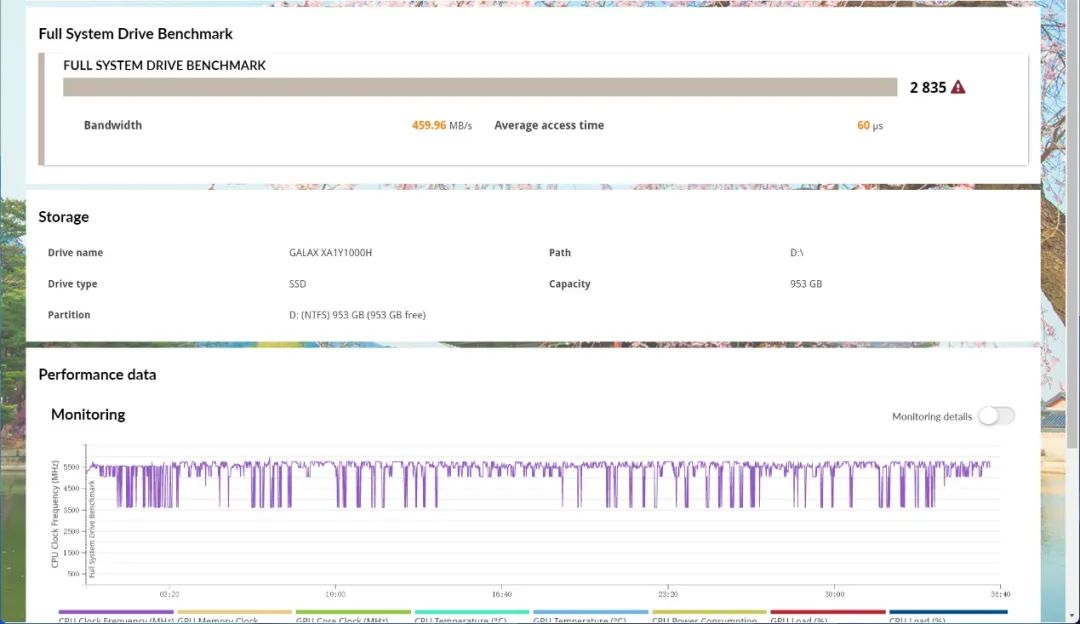
During a 37-minute PCMark 10 run, with a third-party aluminum heatsink installed, the drive reached a maximum temperature of approximately 58°C. The heatsink surface felt hot but not unmanageably so. To avoid thermal throttling and maximize sustained performance, installing a heatsink is recommended.
In 3DMark storage tests—which measure game launch to menu times, recording while gaming, and install/copy operations across several titles—the drive scored 3146 with an average transfer speed of 538.27 MB/s. Mainstream PCIe 4.0 drives often score around 2500 in this test, so the Star Yao 7000 Plus performs in the upper tier for consumer PCIe 4.0 SSDs.
Real-world game scene load tests were run at 4K maximum settings using FFXIV benchmarks for Endwalker, Shadowbringers, and Heavensward. Scene load times ranged from 6.4 to 7.2 seconds, comparable to other high-performance PCIe 4.0 SSDs, enabling fast game startup and scene transitions.
Consistency: TxBENCH Full-Drive Tests
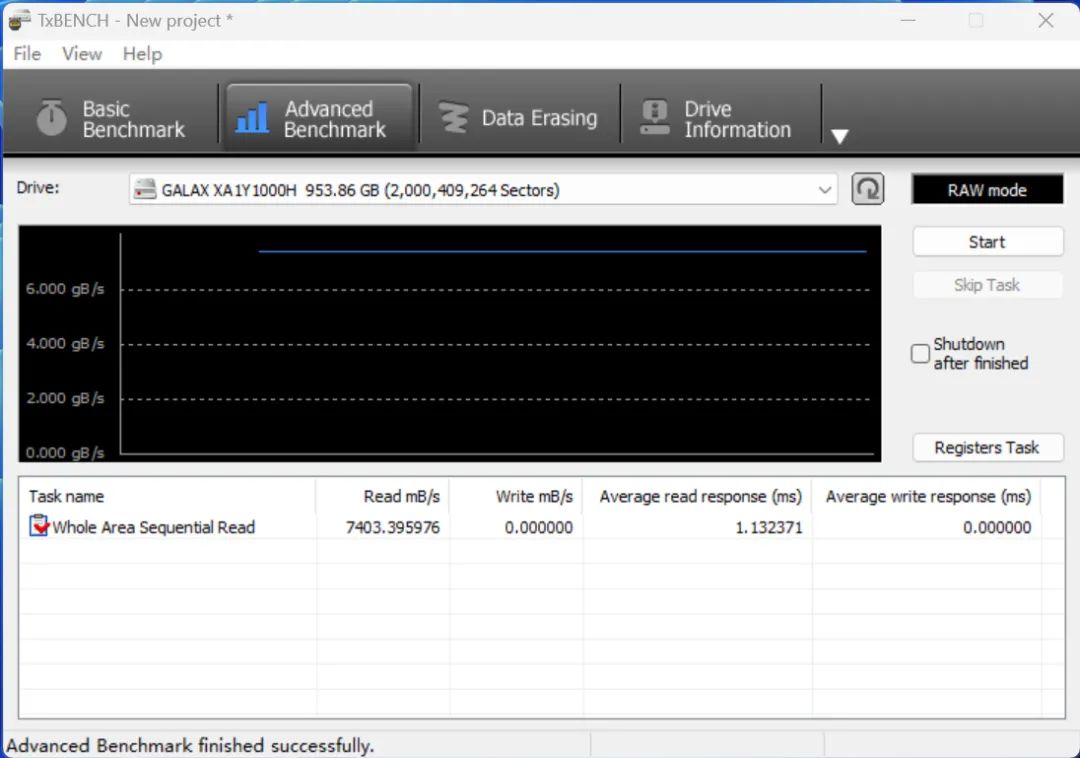
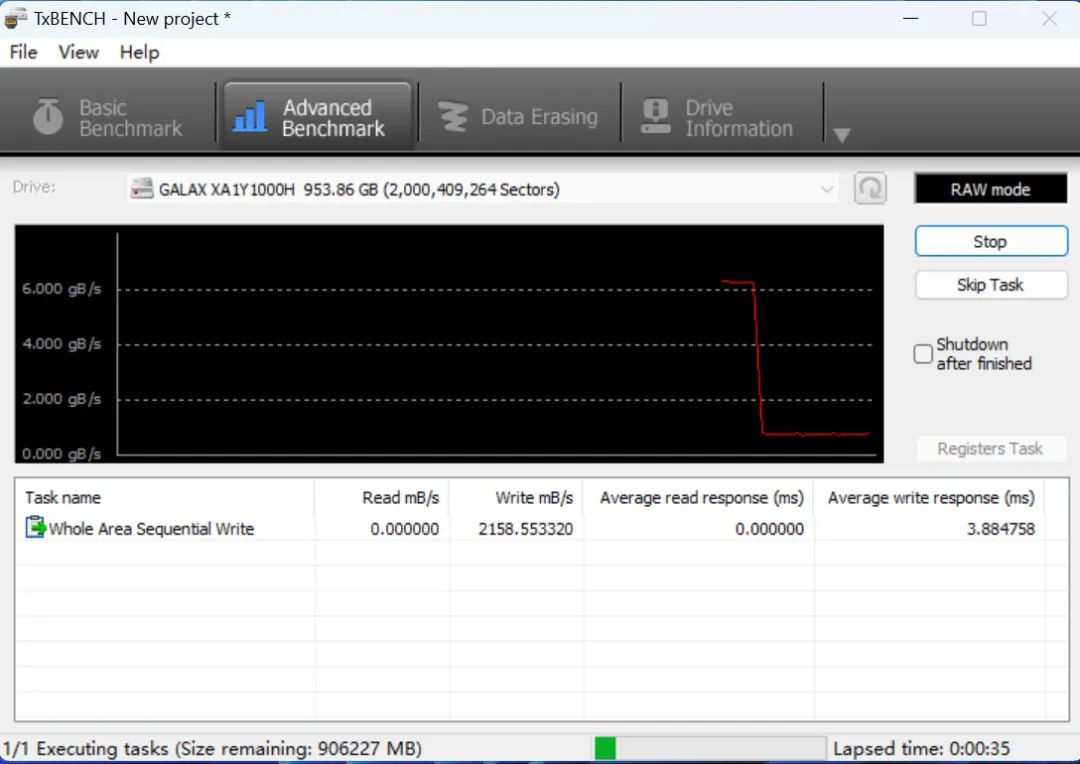
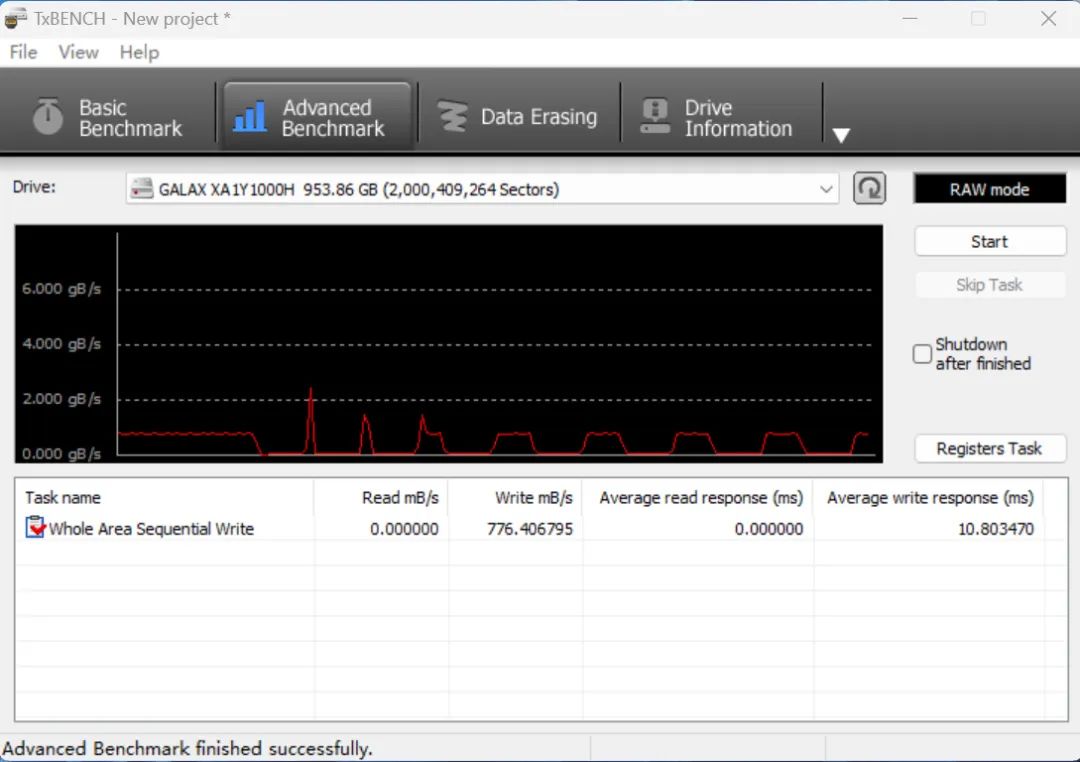
In TxBENCH full-drive sequential read testing, the drive sustained an average sequential read of 7403.4 MB/s without observed throttling. Full-drive sequential write testing showed the SSD uses an SLC cache of roughly 47 GB. While writes within this SLC window achieved around 6200 MB/s, speeds drop after the cache is exhausted. Because the underlying NAND is 3D TLC rather than QLC, post-cache sustained write speeds remain in the 700–850 MB/s range, not dropping to single-digit MB/s as some QLC designs do. The overall average full-drive write speed was measured at 776.4 MB/s.
Conclusion
Overall, the GALAX Star Yao 7000 Plus SSD 1 TB delivers strong performance for its price point. In our tests it exceeded its rated sequential read/write specs and showed robust random and small-file performance, thanks to the Phison PS5027-E27T controller and high-performance 3D TLC NAND. The drive's endurance ratings (600 TBW for 1 TB) and a three-year warranty match mainstream PCIe 4.0 offerings.
For users on a limited budget who still want a high-performance PCIe 4.0 SSD, the Star Yao 7000 Plus 1 TB is a competitive option. It provides much higher sequential throughput than many similarly priced alternatives and maintains reasonable sustained write performance after the SLC cache is exceeded. To ensure sustained peak performance, using a compatible M.2 heatsink is advisable.