Overview
Infrared camouflage refers to techniques that hide or alter an object's infrared radiation signature, which is critical for improving survivability. The development of multiband detection has posed significant challenges to traditional infrared camouflage methods, making research on multiband-compatible infrared camouflage materials urgent.
A recent review on multiband-compatible infrared camouflage was published in Progress in Laser and Optoelectronics by research teams from Zhejiang University and Westlake University. The first and corresponding author is Li Qiang.
This article first clarifies the camouflage requirements for each spectral band, then discusses designing layered structures that exploit different electromagnetic responses and structural scales to meet spectral requirements across bands. Finally, it identifies current limitations and suggests directions toward materials and processes that address more detection bands and application scenarios while simplifying fabrication and reducing cost.
Compatibility Camouflage Principle
To counter multiband detection systems, a target must meet camouflage requirements across different bands. In the visible band, targets use low reflectance (high absorption or transparency) surfaces or camouflage patterns matched to the background. In the near-infrared band, targets should reduce reflected signals from natural sources such as sunlight and moonlight or from artificial sources like lasers. In the microwave band, targets should reduce echo signals by absorption or scattering to lower radar cross section.
Compatibility Camouflage Strategies
Multiband-compatible camouflage requires effective concealment against two or more detection bands. Implementation approaches generally include: (1) using materials whose electromagnetic responses differ across bands to meet each band’s requirements; (2) stacking materials targeted at different bands so the composite structure satisfies each band’s requirements. When using a stacked approach, the upper layer must be transparent to the lower layer’s camouflage band to preserve the lower layer’s effect.
The following sections review progress in thermal infrared compatibility with visible, microwave, and near-infrared bands, highlighting applications of micro- and nano-photonic structures and comparing advantages and limitations of different material and structural approaches.
Thermal Infrared–Visible Compatibility
Thermal infrared camouflage compatible with the visible band requires low emissivity in the thermal infrared while also achieving low reflectance (high absorption or transparency) in the visible band or exhibiting colors similar to the background for visual concealment.
Low thermal infrared emissivity can be achieved with metallic micro- and nanostructures or dielectric antireflection stacks. Metallic micro- and nanostructures exploit high reflectivity of metals in the thermal infrared, while dielectric antireflection stacks are typically one-dimensional photonic crystals designed for thermal infrared detection bands (3–5 μm and 8–14 μm). Because metals and high-refractive-index infrared-transparent dielectrics (e.g., Si, Ge) also show high reflectance in the visible, a visible control layer is usually added on top to provide camouflage or antireflection in the visible band.
Adding a visible control layer on top and using its interference effects to generate structural colors can produce camouflage colors across a certain gamut. Qi et al. used a Ge/ZnS quasi-periodic photonic crystal to achieve low emissivity of about 0.1 within 8–14 μm and tuned visible color by adjusting the top ZnS layer thickness. In dim backgrounds (e.g., nighttime or high altitude), minimizing surface reflectance to present near-black or dark gray is preferred, which requires visible-band low reflectance.
Compared with one-dimensional photonic crystal stacks, metallic micro- and nanostructures require fewer layers and smaller total thickness. However, their fabrication depends on lithographic pattern transfer, and performance is sensitive to processing parameters, making large-area fabrication difficult. Another approach is to use visible-transparent thermal infrared camouflage materials, applicable to vehicle windows or other scenarios requiring visible transmission.
Visible-band camouflage must consider background features. Camouflage colors suit ground backgrounds, while low-reflectance visible camouflage is more appropriate for sky backgrounds. Visible-transparent thermal infrared materials offer broader applicability, useful for observation windows and adaptable to various backgrounds, but their fabrication is more complex and costlier.
Thermal Infrared–Microwave Compatibility
Thermal infrared camouflage compatible with microwave bands must maintain low thermal infrared emissivity while producing weak radar echoes to reduce radar cross section, achieved by absorbing radar waves or scattering them away from the receiver.
All-dielectric one-dimensional photonic crystals have high transmittance in the microwave band, so a microwave absorber can be placed beneath them to absorb radar waves. Metals are highly reflective in the microwave band, so metallic micro- and nanostructures that provide low infrared emissivity can produce strong radar echoes. To address this, the continuous metal layer can be segmented into island-like structures on a scale comparable to microwave wavelengths. These metal islands form a frequency-selective surface for microwaves while remaining large compared with infrared wavelengths, preserving low infrared emissivity.
Wen et al. designed an infrared shielding layer composed of periodic metallic patches that transmit microwaves to a radar-absorbing layer beneath. The structure achieved greater than 90% absorption in the 8.1–19.3 GHz band; its infrared emissivity is determined by the emissivity and fill factor of the patches. Replacing the metallic materials in the infrared shield and microwave frequency-selective absorber with transparent conductive oxides can realize visible transparency, low infrared emissivity, and high microwave absorption. Kim et al. combined an infrared-selective radiator with a microwave frequency-selective absorber to achieve low emissivity in the thermal infrared bands 3–5 μm and 8–14 μm, allow radiative cooling in 5–8 μm, and obtain high absorption (>90%) in the 8–12 GHz radar band. By optimizing the microwave absorber structure, the microwave absorption band can be extended to 2–12 GHz.
In addition to absorbing incident radar waves, scattering radar waves to other directions can effectively reduce echo signals. Scattering-based approaches avoid the increased thermal load associated with microwave absorption, which is beneficial for thermal management. However, building scattering-coded metasurfaces requires adjacent units to have π reflection phase differences, limiting the microwave stealth bandwidth. Microwave absorbers can broaden absorption bandwidth by adding layers of metallic or conductive resonant structures at the expense of increased thickness, weight, and fabrication complexity.
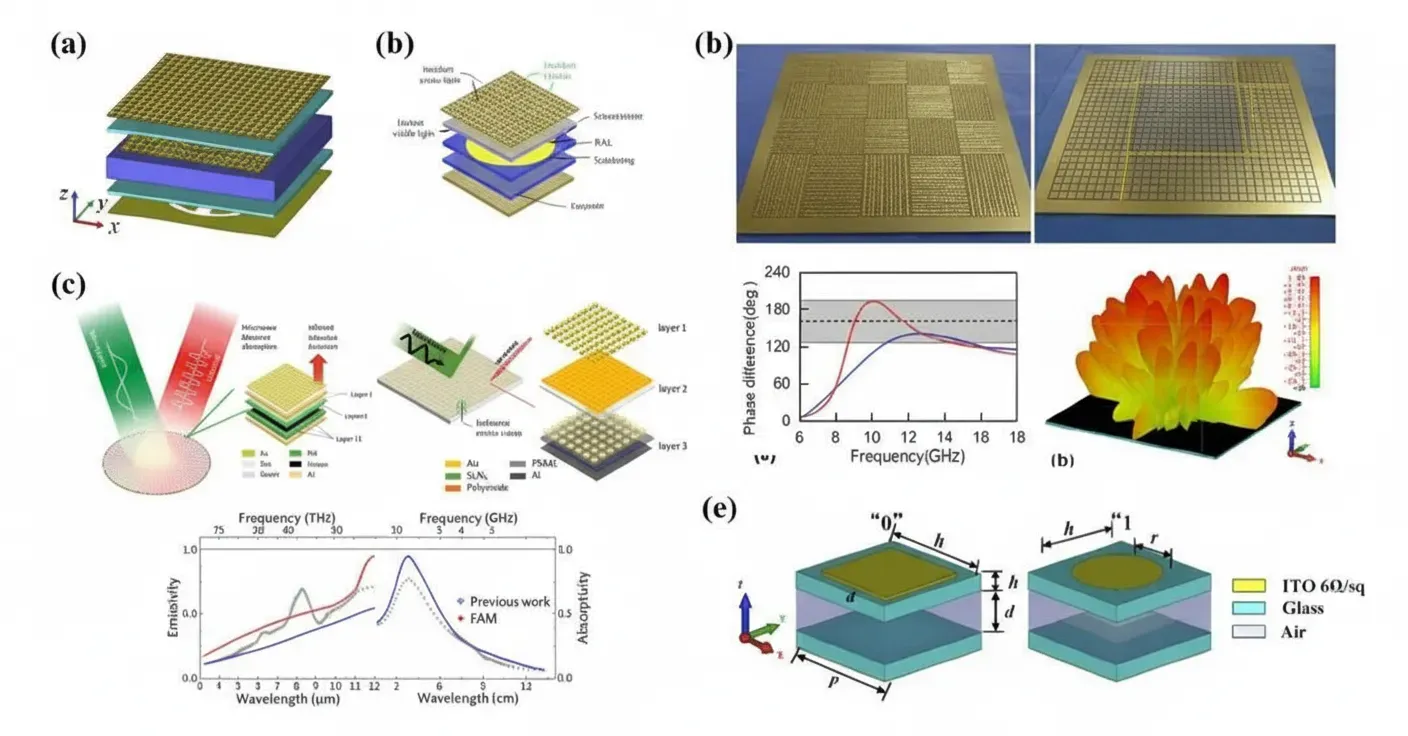
Fig 1 Thermal infrared–microwave compatibility techniques
Thermal Infrared–Near-Infrared Compatibility
Unlike the thermal infrared, near-infrared thermal emission is relatively weak; reflected external light often dominates. Common near-infrared sources include: (1) solar radiation, which is the strongest natural source in the near-infrared; (2) night light, including moonlight, starlight, and airglow, which, though weaker than sunlight, can expose targets under low-light intensification; (3) artificial sources such as infrared searchlights; (4) lidar. Achieving near-infrared compatible concealment requires minimizing reflected signals with high-absorption or scattering surfaces in the near-infrared band.
Beyond increasing near-infrared absorption, scattering or diffusing incident laser light to other directions can reduce lidar echoes. For example, coded metasurfaces designed to scatter near-infrared incident laser light away from the receiver can effectively reduce specular laser reflections.
Using rough surfaces to enhance diffuse reflection also reduces specular reflections for active infrared detection. Huang et al. deposited an Al film on sandpaper and transferred it to a flexible PI substrate to obtain a rough surface with Lambertian radiation characteristics. Its specular reflectance in the near-infrared is close to zero, while in the thermal infrared it combines low emissivity (about 0.1) with low specular reflectance (about 0.05), enabling camouflage against both active and passive infrared detection.
Near-infrared absorption-based camouflage can greatly reduce reflected signals, but absorbing external sources such as sunlight or lasers increases thermal load and raises requirements for the material's thermal stability and laser damage threshold. Coded metasurface approaches avoid the thermal effects caused by absorption but have limited scattering bandwidth and depend on lithography, restricting large-area fabrication. Rough-surface methods are simple and low-cost and can achieve ultra-wideband diffuse reflection from near- to thermal-infrared, but their spectral tunability is limited, making integration with spectrally selective emitters difficult.
Multiband Compatibility
As multiband detection advances, targets must defend against threats from more than two bands, making multiband-compatible camouflage increasingly important.
An important approach to multiband compatibility is exploiting wavelength differences across detection bands by designing hierarchical, layered structures that meet each band’s specific requirements. Zhu et al. integrated a visible color-control layer, a near- to thermal-infrared photonic crystal, and a microwave frequency-selective absorber to design a material compatible with visible camouflage, low emissivity in thermal infrared detection bands (3–5 μm and 8–14 μm), high absorption at 1.55 μm and 10.6 μm laser wavelengths, and high absorption at 8–12 GHz radar waves. Using intrinsic differences in material responses across bands can reduce the number of layers required in a hierarchical structure.
One design philosophy separates devices for each band during design, simplifying design complexity but producing more complex assembled structures with lower integration. The alternative philosophy considers material electromagnetic responses across bands during initial design, improving integration at the cost of greater design difficulty and challenges in covering wide spectral ranges.
Summary and Outlook
With advances in multiband detection, clarifying signal sources and camouflage requirements for each detection band and designing compatible camouflage materials are key research directions. Unlike traditional single-band solutions, multiband-compatible materials must consider and exploit materials and structures' electromagnetic responses across bands. Designing hierarchical structures that combine elements meeting different band requirements by leveraging wavelength differences is a core approach. Researchers have proposed various solutions, but practical deployment of multiband-compatible materials still requires addressing the following issues:
(1) Camouflage for subdivided bands. Previous divisions of detection bands are coarse; specific sub-bands may have distinct camouflage requirements. Photonic structures require finer spectral control to meet sub-band requirements. Machine learning can significantly improve design and fabrication efficiency for compatible camouflage materials. Training neural networks and other machine learning models with large datasets of micro- and nano-structure geometries and spectra enables rapid prediction of photonic structures' spectral properties and supports inverse design based on spectral targets.
(2) Large-scale fabrication of materials and structures. Many multiband-compatible materials based on micro- and nano-structures rely on lithography and other microfabrication techniques, limiting scale-up and cost reduction. Nanoimprint technology promises high-throughput micro- and nano-structure patterning. Roll-to-plate and roll-to-roll nanoimprint processes can enable continuous patterning for large-area compatible camouflage devices.
(3) Practical application requirements for materials and structures. When moving toward real-world use, multiband-compatible materials must meet requirements for high-temperature resistance, corrosion resistance, adhesion, mass, and dimensions. Using high-temperature insulating materials such as aerogels or quartz fiber insulation can reduce surface temperatures of camouflage materials and improve thermal stability. For high-temperature targets, combining infrared camouflage materials with thermal insulation can reduce the thermal load on the camouflage layer while lowering infrared emission.
(4) Dynamic tunability. In practice, terrain, season, weather, and time cause background variations. Dynamic tunability that enables adaptive camouflage to changing backgrounds is important for improving survivability. Materials with electrically tunable emissivity, such as graphene or carbon nanotube-based layers, or thermally tunable emissivity materials like vanadium oxide or germanium-antimony-telluride, can be used to design dynamically adjustable camouflage that actively or adaptively adjusts infrared radiation properties in response to the environment.