Introduction
Sensors, together with communications and computers, are regarded as three pillars of modern information technology and form the foundation of the Internet of Things. Their applications span many sectors of the economy and defense research, making sensors a fundamental, strategic industry. Current technologies that attract international attention, such as the Internet of Things, big data, and cloud computing, as well as smart city implementations, all place large demands on sensor technology.
Technology extends human capabilities. If machinery extends human physical strength and computers extend human intellect, ubiquitous sensors greatly extend human perception.
Early Development and Strategic Importance
As early as the 1980s the United States declared that the world had entered a sensor era. In the early 1980s the U.S. formed national technical groups to organize and lead sensor technology development within government, large companies, and research institutions.
Among technologies critical to preserving the quality advantage of U.S. weapon systems, several are passive sensors. In 2000 the U.S. Air Force listed 15 key technologies that would contribute to 21st century air force capability; sensor technology ranked near the top.
The U.S. development model follows a military-first then civilian path, prioritizing improvement before mass adoption. Its notable features include:
- Emphasis on research into sensor functional materials.
- Investment in sensor technology development. For example, major companies invest heavily in equipment and maintain advanced, regularly updated production lines to preserve technological leadership.
- Focus on process research: sensor principles are often straightforward and not classified, while the most guarded aspects are manufacturing processes. Many evaluate sensors not merely as industrial products but as refined process achievements. The U.S. supports a large base of manufacturers and research institutes engaged in sensor development and production.
Definitions and Basic Concepts
The English terms are "sensor" or "transducer". A transducer is defined as a device that receives energy from one system and supplies energy to another, usually in a different form. Under this definition, a sensor converts one form of energy into another, so many researchers use the term transducer interchangeably with sensor.
In simple terms, a sensor is a detection device usually composed of a sensitive element and a conversion element. It measures information or allows users to perceive information. By converting detected signals into electrical signals or other required output forms, sensors support information transmission, processing, storage, display, recording, and control.
Development History in China and Abroad
In the early 1970s western developed countries focused on computer and communications technologies while neglecting sensor development, resulting in advanced "brains" but relatively insensitive "senses" and a weak sensor industry.
In the early 1980s the United States, Japan, Germany, France, the UK and others prioritized accelerating sensor technology, regarding it as key to scientific progress, economic development, and national security. They incorporated sensor development into long-term national plans, imposed strict confidentiality, and controlled exports, especially toward China.
Japan placed sensors at the top of its list of noteworthy technologies for the coming decade in 1979. The U.S. Department of Defense included sensor-related items among military key technologies in the 1980s. Various defense and research programs in the U.S., Europe, and the former Soviet Union treated sensors as priority technologies and protected related scientific成果 and manufacturing processes as core national technologies.
The U.S. viewed computer technology as core, optoelectronic technology as key, and new materials and microelectronics as foundational supports. Integration of communications and computing and convergence of diverse new technologies shaped U.S. information technology direction.
Some analysts consider sensors the most consequential technology product influencing global economic structure and lifestyles in coming decades. The U.S. National Science Foundation described a major transformation of this century as connecting the physical world via networks to create an electronic nervous system capable of sensing information, with sensors at the core. Annual budgets in the U.S. for sensor research and applications have been substantial, framing a so-called "sensor revolution."
Internationally there is no single authoritative sensor standard. Sensors are broadly categorized into physical sensors, chemical sensors, and biosensors. Physical sensors include sound, force, light, magnetic, temperature, humidity, electrical, and radiation sensors. Chemical sensors include gas sensors, pH sensors, ion-selective sensors, and electrochemical sensors. Biosensors include enzyme electrodes and mediator-based bioelectrical sensors. Many products straddle categories, making strict classification difficult.
Common Classification Methods
Sensors are commonly classified by:
- Conversion principle: physical, chemical, or biological sensors.
- Detected quantity: acoustic, optical, thermal, force, magnetic, gas, humidity, pressure, ion, radiation, etc.
- Power supply: active or passive sensors.
- Output signal: analog, digital, or switch output sensors.
- Material used: semiconductor, crystalline, ceramic, organic composites, metal, polymer, superconducting, optical fiber, or nanomaterials.
- Energy conversion: energy-conversion type and energy-control type sensors.
- Manufacturing process: mechanical processing, hybrid and integration techniques, thin-film and thick-film processes, ceramic sintering, MEMS processes, electrochemical processes, and so on.
Globally there are roughly 26,000 productized sensor types. China already has about 14,000 types, mostly conventional varieties; about 7,000 are productizable. However, shortages remain in medical, research, microbiology, and chemical analysis sectors, leaving substantial room for technical innovation.
Common Foundational Processes and Three Major Innovation Trends
Because sensing mechanisms and materials differ and due to varied industrial environments and application scenarios, sensors have long been manufactured in small batches across many varieties. The dispersed and complex process technologies and high equipment costs have led the industry to describe sensor production as manufacturing "industrial handicrafts."
Engineers worldwide have long worked on process technology coordination and integration, product standardization, performance uniformity, function integration, structural standardization, and industrialization of process equipment and tooling, producing a wide range of specialized technical achievements.
In Silicon Valley, MEMS-based process technology has driven a quarter-century of sensor packaging and product innovation for different industry needs, yielding diverse sensor types that have expanded into many application areas and gained broad acceptance.
As MEMS process pioneer remarks, Silicon Valley sensor products have focused on silicon-based MEMS chips and packaging innovations aligned with market needs. Accordingly, MEMS technology is considered a common foundational process and a key source of sensor innovation. By 2011 the U.S. industry considered MEMS mature enough for wide application, leading to two innovation directions in sensor industry development:
- Innovation in sensing mechanisms and process breakthroughs. Advances in materials and process structures—silicon bonding, silicon thin-film processes, metal thin films, and others—have enabled miniaturization, lower costs, composite integration, and higher integration suitable for industrialization.
- Improved intelligence and application innovation. Multi-function integration, modular architectures, embedded capabilities, and network interfaces bridged manufacturing and application gaps, breaking long-standing technical barriers and stimulating market demand.
U.S. sensor industry characteristics include:
- Investment in shared foundational technologies and continuous adoption of new processes to improve quality.
- Emphasis on sensor networking, smart node technology, energy harvesting, and collaborative innovation.
- Core technologies often receive government oversight, support, and funding.
- Clear leadership and demonstration effects in key application areas such as defense, equipment manufacturing, logistics, environmental monitoring, mobile health, and smart home systems.
Industrial Ecosystem and Production Scaling
Building flexible production, standardized processes, and standardized products around shared foundational technologies is critical to overcoming fragmentation between technical capability and market demand.
Based on MEMS process characteristics and market scale, seven product categories—temperature, acoustic, force, optical, gas, magnetic, and frequency-related sensors—fit industrialization and mass-market needs and can be produced at scale.
For example, silicon-microphone-based acoustic sensors have already produced several mainstream branded products and achieved scale production. Temperature and humidity sensors are mass-produced by manufacturers in the U.S., Germany, Switzerland, Japan, and China. In the future temperature and humidity sensing will often be combined with other physical sensing parameters, such as force or magnetic sensing; RF, millimeter-wave and other frequency-domain devices share common process technologies and can be produced by the same manufacturers despite parameter and application differences.
Applications with explosive growth potential include mobile phones, intelligent transportation, and bio-sensing. RF devices remain dominated by Western manufacturers, with very limited Asian participation; breaking such industry monopolies will be a focus of future innovation and competition.
Challenges in the Chinese Market
The slower development of the Chinese sensor industry is often attributed to gaps in strategic recognition. Misconceptions and fragmented governance across industries and departments have led to management disorder and insufficient policy support. The industry is dispersed and products have not become standardized series.
Of over 1,200 sensor companies in China, more than 95 percent are small and micro enterprises lacking sufficient human, material, and process resources; their industrialization foundations are weak. High market entry thresholds, limited application development capabilities, and weak innovation mean product performance, especially reliability and stability, often lags foreign equivalents by one to two orders of magnitude, failing to meet market qualification and supply requirements.
China also lacks leading enterprises to drive the industry, international brands, market influence, competitiveness, and fundamental research capability. As a result, few specialized companies exceed 3 percent of the industry; core chips are largely imported and mid-to-high-end products are almost entirely imported. Overall process and manufacturing technology can trail advanced countries by a decade or more.
To address these issues, the industry anticipates the formation of sensor-focused industrial clusters in economically and technologically advanced regions that gather dozens of specialized companies and research institutes, creating product-process特色 and scale advantages with international market impact. The goal is to form internationalized sensor industry parks with integrated ecosystems and annual sales in the multibillion-dollar range and sustained double-digit growth.
The envisioned industry chain centers on sensitive components and integrates intelligent, networked, modular applications with the Internet of Things and smart city goals. Ideally, these clusters would include government, industry, academia, research, users, and service providers to enable clustered industrial development and international competitiveness.
Three Historical Stages of Sensor Technology
First generation: structural sensors. These use structural parameter changes to sense and convert signals. For example, resistive strain sensors convert resistance changes from elastic deformation into electrical signals.
Second generation: solid-state sensors that developed from the 1970s. These use solid elements such as semiconductors, dielectrics, and magnetic materials and exploit effects like thermoelectric, Hall, and photoconductive effects to make thermocouples, Hall sensors, and photosensors.
With the progress of integration, molecular synthesis, microelectronics, and computing in the late 1970s, integrated sensors emerged. Integrated sensors include integration within the sensor and integration with subsequent circuitry, such as charge-coupled devices and integrated temperature sensors. Integrated sensors are generally lower cost, reliable, and performance-flexible, and now account for about two thirds of the sensor market, moving toward lower cost, multi-function, and series production.
Third generation: smart sensors, which emerged in the 1980s. Smart sensors have detection, self-diagnosis, data processing, and self-adaptive capabilities, combining microcomputer technology with sensing. In the 1980s smart measurement relied on microprocessors to integrate signal conditioning, microcomputers, memory, and interfaces on a chip. In the 1990s smart measurement advanced further to provide self-diagnosis, memory, multi-parameter measurement, and networked communication at the sensor level.
Sensor Industry Rise and Current Status
Consumer electronics, particularly smartphones, have driven rapid sensor adoption. Increasingly capable chips and an expanding set of high-quality sensors enable many mobile functions. Touchscreens, gyroscopes, accelerometers, proximity sensors, ambient light sensors, magnetoresistive compass sensors, and image sensors are typical smartphone components.
New devices introduced in recent product cycles have combined multiple motion sensors, added barometric pressure sensors for altitude measurement, near-field communication and fingerprint sensors for secure payments, and optical-based heart rate sensors in wearable devices that detect pulse through reflected LED light from the skin.
Sensors are not limited to phones; they are increasingly used in cars, home appliances, wearables, and industrial automation, becoming machines' "ears and eyes." The Internet of Things, which will likely reshape lifestyles, is fundamentally based on sensors. Many predict sensors will spread widely across domains and environments like human senses.
With the Internet of Things era, diverse sensors are becoming ubiquitous, and global demand is rising rapidly. However, China has struggled to capture a proportional share of this growth while established foreign sensor giants benefit from long-term development.
Sensors as Human Sense Analogs
Sensors are often likened to human senses. After the computer era solved brain simulation and digital information processing, the post-computer era focuses on simulating senses. Sensors, or transducers, convert other forms of information into electrical signals and typically consist of a sensitive element and a conversion element to meet requirements for information transmission, processing, storage, display, and control.
Sensor development was originally driven by industrial automation needs. To improve efficiency, production processes moved under centralized control of parameters such as flow, level, temperature, and pressure, which promoted sensor development. Before the sensor concept crystallized, early measurement instruments already contained sensing elements as parts of larger systems. The sensor concept emerged as measurement instruments became more modular and sensing elements separated into standalone components for research, production, and sale.
By working principle sensors fall into physical and chemical types. Physical sensors exploit physical effects to convert small changes into electrical signals such as piezoelectric, magnetostrictive, ionization, polarization, thermoelectric, photoelectric, and magnetoelectric effects. Chemical sensors rely on adsorption, electrochemical reactions, and related phenomena. Recently biosensors based on biological properties have appeared for detecting and identifying biochemical constituents.
Sensors do not correspond to a single academic discipline; many fields contribute to sensor research. New sensors often result from secondary development built on discoveries in physics, chemistry, and materials science. Rapid advances in electronic circuit technology have pushed many measurement challenges into the sensor domain, making sensor performance a key determinant of overall measurement system performance.
While the analogy to human senses is illustrative, many human sensory capabilities remain hard to replicate. Industrial sensors for force, acceleration, pressure, and temperature are relatively mature. Vision and hearing can be treated as physical quantities and have progressed, while touch, smell, and taste remain more difficult because they involve complex biochemical measurements.
Sensor markets are driven by applications. For example, chemical industry demand fuels large markets for pressure and flow sensors, while the automotive industry creates high demand for speed and acceleration sensors. MEMS-based accelerometers have matured and been strongly driven by automotive applications.
MEMS and Emerging Applications
MEMS refers to devices or systems that integrate micromechanical structures, miniature sensors and actuators, and communication components, enabling low volume, weight, cost, power consumption, high reliability, mass production, integration, and smart functionality. MEMS also enables functions not possible with traditional mechanical sensors.
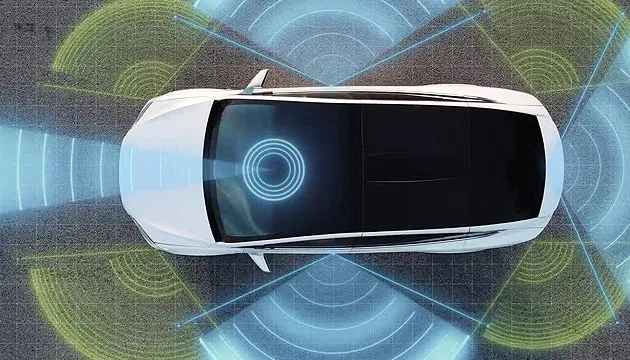
Autonomous vehicle projects have eliminated traditional controls and rely on internal sensors and vehicle computers to operate. With sensors, the Internet extends from human-to-human to object-to-object connections. Early international research conferences and industry reports predicted sensor networks and the Internet of Things as transformative technologies, with RFID, sensors, nanotechnology, and embedded smart technologies becoming widely applied.
Analysts projected that by 2020 machine-to-machine connections would far outnumber person-to-person communications, highlighting IoT as a trillion-dollar scale opportunity. M2M connects devices for real-time exchange and is a direct realization method for the Internet of Things, with applications in logistics, refrigerated transport monitoring, remote engine diagnostics, and vehicle navigation updates.
Estimates suggested global M2M connections could reach hundreds of billions, and as M2M solutions mature and device costs drop, IoT will penetrate many industries. Connecting machines such as vehicles and industrial equipment enables new analytics and business intelligence services and more value-added offerings for customers. Sensors are the core enabler: without them machines cannot automatically perceive information.
Foreign Firms and Market Dynamics
Rapid sensor technology growth is driven both by advances in computing and measurement technologies and by application demand.
For instance, Freescale was spun out from Motorola and became a major semiconductor company serving automotive, consumer, industrial, networking, and wireless markets. Its portfolio included sensors such as accelerometers and magnetometers for navigation and motion capture, meeting high-precision electronic compass needs in medical devices, navigation devices, and mobile terminals.
In automotive applications, accelerometers and other motion sensors detect changes from impacts, tilting, movement, positioning, vibration, and shock, supporting airbag systems, electronic stability control, and parking brake systems. MEMS pressure sensors measure atmospheric pressure as well as blood and tire pressure, serving home appliances, medical, consumer electronics, industrial control, and automotive markets.
Motion sensors combined with pressure sensors can monitor bedridden patients, measure respiration and heart rate, and alert nursing stations if patients attempt to leave bed. MEMS sensors appear in many devices from phones and computers to irons and sporting equipment. For example, navigation in tunnels uses inertial data, laptops protect hard drives on freefall, and irons cut power when left face down.
Barometric pressure sensors in mobile devices enable precise altitude measurement, indoor floor detection, and distinguishing between overpass and underpass vehicle positions. As pressure sensors enter more mobile devices, they could create personalized weather terminals and new location-aware services.
Advances in materials science enable new sensor types: polymer films for temperature sensors, optical fibers for pressure, flow, temperature and displacement sensors, and ceramics for pressure sensors. Sensors are integrating more intelligence and closer integration with microcontrollers and digital networks, requiring layered intelligence to address power, safety, and connectivity. IoT-driven sensor systems will become more complex and context-aware.
Industry giants such as Bosch, STMicroelectronics, Honeywell, Freescale, and Hitachi focus on sensors as major growth areas. MEMS sensor annual output value is substantial and growing rapidly.
Wearables and Health Monitoring
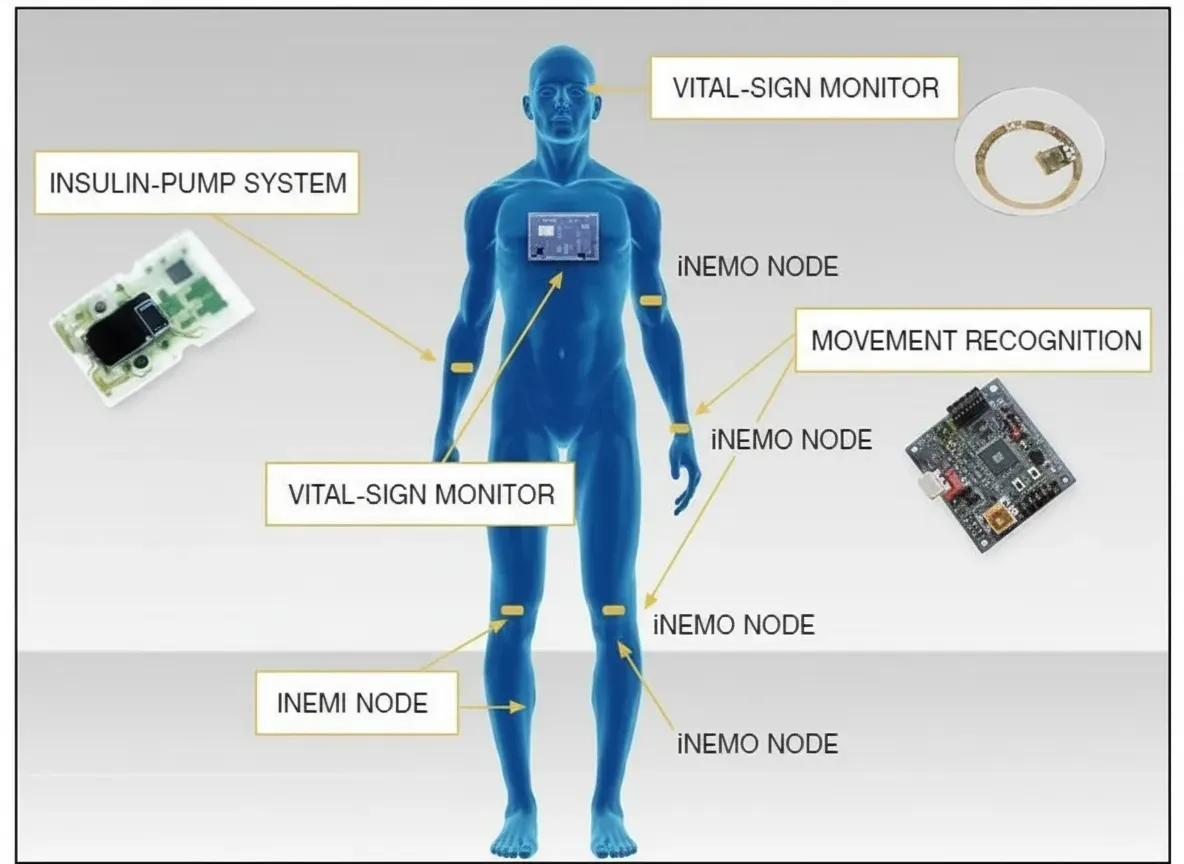
In wearable electronics, sensors are among the most important components. Projects include noninvasive glucose-monitoring contact lenses using micro blood-glucose sensors and wireless transmitters that analyze tears, and acquisitions of companies with sensor-based heart rate and heat-flow monitoring technologies. Sleep sensor firms and other specialized companies develop wearable systems that detect cardiac contraction strength, chest-wall motion, breathing rhythm, snoring, and sleep quality.
Common wearable sensors include wristband heart-rate monitors, chest-strap sensors for accurate cardiovascular metrics, and shoe-embedded pedometers for activity tracking. Integration of sensors with textiles supports impact detection, biosignal monitoring, biomechanics, and biofeedback. Noninvasive electrochemical and biosensors enable monitoring of tears, saliva, sweat, and interstitial fluid for real-time health and drug-effect monitoring.
Low-cost wristbands powered by compact accelerometers and Bluetooth chips demonstrate the potential for mass-market wearables. High-performance, low-power accelerometers used in consumer wearables are sometimes adapted from military-grade sensors.
Before entering consumer electronics, many accelerometers were already used extensively in automotive electronics for body control, safety systems, and navigation, in applications like airbags, ABS, ESP, and electronic suspension.
Point-of-care testing (POCT) integrates microfluidics, biosensors, and micro-electromechanical technologies to enable small, portable diagnostic devices outside traditional laboratories. POCT is fast, simple, cost-effective, and requires small sample sizes, and it has been widely adopted for clinical and self-testing applications. Examples include home pregnancy tests and compact biosensors for glucose monitoring and other assays. POCT biosensor techniques combine enzymatic chemistry, immunoassays, electrochemistry, and computing. There are also micro-sized sequencing devices and smart pills that monitor patient conditions and selectively release drugs.
Wearable sensors will be integrated into clothing, diapers, bandages, and many other items. Improving sensor size and power consumption without sacrificing resolution is a key enabler for broader applications, such as intelligent drug dispensing and medical devices that improve patient quality of life, home robotics, and active vehicle safety systems.
Gaps in the Chinese Market
Although sensors are recognized as a frontier technology and a pillar of modern information technology, China currently lags in several areas. While the domestic market has grown rapidly, local sensor technology still shows significant gaps compared with world leaders, both in sensing capability and in smart, networked functionality. Lack of large-scale application means domestic sensors often have lower performance and higher prices, limiting competitiveness.
China began paying attention to sensor research around 1980. Years of research have produced solid academic results, but productization and commercialization have lagged. Many laboratory innovations have not been transformed into mature market products.
Sensor development often requires long-term investment. R&D cycles of six to eight years are common, which many Chinese enterprises find difficult to sustain. The high failure rate of sensor R&D further discourages sustained investment. In contrast, some Japanese companies tolerate a low productization success rate, knowing that a few commercial successes justify long-term research portfolios.
Many Chinese companies prefer to adopt existing foreign products or recruit transferred projects rather than invest in long-term in-house R&D. The sensor industry characteristic of high technical content but low per-unit price means that relying solely on sensors is hard to produce large revenues; the real value often lies in integrated systems and applications.
China has strong micro-manufacturing capacity and is well-positioned for mass production. However, creative design and upstream innovation are weaker, limiting the benefits of production capacity. Meeting high-volume customer demands requires standardized testing equipment and processes, which involve large investments and long value chains that are challenging for smaller firms.
Weak patent protection and difficulties defending intellectual property have discouraged original innovation. Contract manufacturing models can lead to appropriation of key technologies by manufacturers. Overall, the domestic innovation ecosystem still has significant problems.
Industry leaders have pointed to the need for recognized national figures and long-term commitment to sensor development. Many sensor breakthroughs build on principles discovered decades ago, and the path from discovery to application can be long and difficult. Fields that require long-term accumulation and gradual payoff show the largest gaps compared with advanced countries.
Major International Sensor Companies
Major international sensor manufacturers include diversified industrial and specialized companies with long histories and broad product portfolios. Examples include MEAS, Honeywell, Keller, Emerson, Rockwell Automation, GE, Raytek, PCB Piezotronics, Banner Engineering, WIKA, Epcos, Infineon, Keller (Swiss), E+H, MEMSENS, Microtel, Gefran, Siemens, Bosch, and many others. These firms supply sensors across aerospace, defense, automotive, industrial automation, medical imaging, and consumer markets and often lead in product quality, process capability, and global distribution.
Sensor Development in Japan and Europe
Japan places high emphasis on practical, commercially-oriented sensor R&D, moving from introduction and imitation to self-improvement and design innovation. Japan supports a large number of manufacturers and emphasizes commercialization and practical application.
European firms use industrial heritage, brand reputation, rigorous quality management, and integration with manufacturers to maintain competitiveness. Germany historically prioritized military sensors and leverages its industrial strengths to keep materials costs low while investing in human capital and technical leadership.
Sensor R&D and Industry in China
Compared with advanced countries, sensor R&D in China has lagged by roughly a decade and production technology by around 15 years. National key laboratories and research centers focused on sensors, micro/nano technologies, and robotics have been established to support sensitive element research and sensor industrialization.
China now has many enterprises engaged in sensor production and research. Domestic manufacturers have increased product varieties and quality, investing heavily to accelerate industrialization. Goals include increasing domestic market share of sensors and instrument components and raising the proportion of high-end products produced locally.
For example, a national sensor engineering research center was established at the Shenyang Institute of Instrumentation Science to conduct engineering research and pilot production in MEMS, silicon microchips, mechanical thermal magnetic sensors, and related technologies. Facilities include CAD design centers, reliability testing centers, dedicated process equipment, and production and laboratory infrastructure supporting design, processing, packaging, testing, and rapid R&D.
Research institutes and university-industry collaborations have contributed to commercialization of sensor technologies. Several domestic companies specialize in gas sensors, industrial thermocouples, and other fields, and some have achieved public listings and full industry chains.
Conclusion
Germany, Japan, the U.S., Russia, and other established industrial nations remain active in international sensor markets, with broad application and many manufacturers achieving large-scale production. In these countries some firms have annual production capacities numbering in the tens of millions or more.
By comparison, the Chinese market’s sensor applications remain relatively narrow, concentrated in aerospace and industrial process control. Leading Chinese sensor firms are smaller in scale, and high-precision and novel sensors remain heavily supplied by foreign brands or joint ventures.
Nonetheless, the sensor sector in China faces strong market demand and supportive policies. Many Chinese companies are working to develop new technologies and improve management. Industry associations and international partners also participate in supporting development.
Future improvement priorities for the Chinese market include sensor quality, cost, and functionality. Over time sensors produced in China are expected to progress from industrial process testing toward broader functional applications. Domestic companies will need to learn from strengths and weaknesses to close the gap with international competitors and move toward miniaturization, networking, and standardization.
China’s sensor industry still has a long path ahead, but current conditions provide an opportunity for substantial progress.