Samsung announced it has completed development of the world's first 32Gb (4GB) DDR5 memory chip, the highest density in the industry to date, enabling the construction of 1TB memory modules.
In May, Samsung began mass production of 16Gb (2GB) DDR5 chips with speeds up to 7200 MT/s.
The latest 32Gb DDR5 chips continue to use a 12nm-class process. Compared with Samsung's first 4Kb memory product introduced in 1983, density has increased by more than 500,000 times.
Samsung did not disclose the specific operating frequency for the new chips.
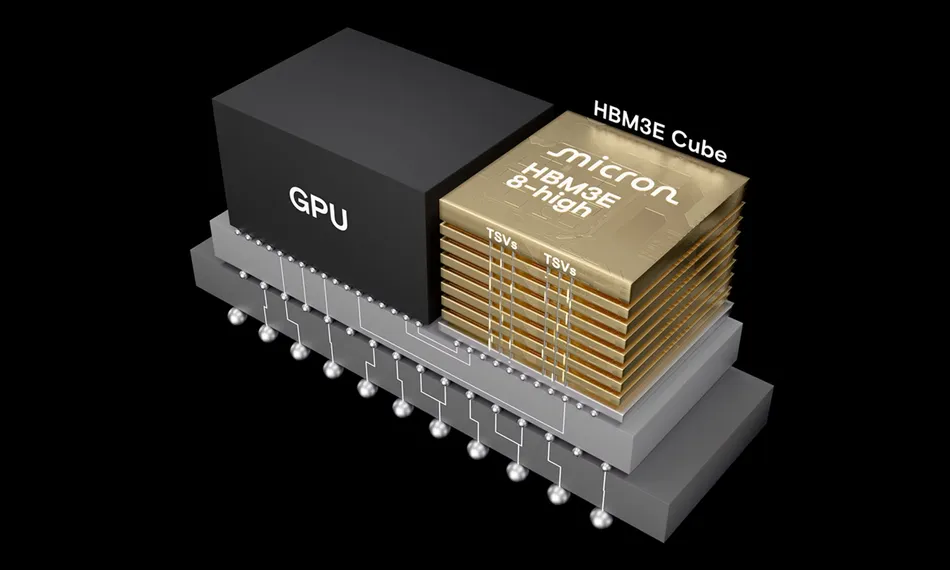
Previous 128GB DDR5 modules required TSV through-silicon via stacking of multiple chips, but with single 64Gb devices this TSV stacking is no longer required, reducing power consumption by about 10%.
Only eight of these chips are needed to reach a 32GB capacity per module.
Path to a 1TB DIMM
Using 8-Hi 3DS stacking to integrate eight 32Gb chips into one stack, and then placing 32 such stacks on a module, would yield a single 1TB memory module.
On server platforms that support 12 memory channels, such as AMD EPYC 9004, this could enable up to 12TB of memory per socket.
Samsung plans to begin mass production of the 32Gb DDR5 chip by the end of this year.
Implications for Optane and Persistent Memory
Intel announced at the end of September 2022 that it would discontinue the Optane business, including the associated SSDs and persistent memory products, recording related charges of $559 million.
Optane persistent memory offered a distinctive set of features—large capacity, high performance, hardware encryption, and the ability to retain data across power loss—combining attributes of traditional DRAM and NAND flash in a single solution.
However, Optane's cost and the need for specialized adaptation limited its adoption.
According to code in Intel's PerfMon tools, the fifth-generation Xeon Scalable platform planned for release later this year is expected to drop formal support for Optane persistent memory.
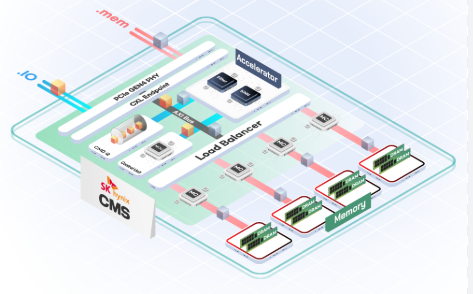
The fifth-generation Xeon is described as an upgrade to the current fourth-generation Sapphire Rapids platform: process, architecture, and interfaces remain unchanged while performance and features are further enhanced. Memory support is expected to shift toward CXL 2.0, covering three different types that would effectively replace Optane persistent memory.
Although the platform could theoretically still be paired with Optane without official support or validation, it is unlikely enterprises will pursue that route, and Optane inventory is likely largely cleared.