Overview
Currently, large-scale commercial deployment of 5G has accelerated, and under increasingly mature network conditions the connected vehicle industry is developing rapidly. Complete connected-vehicle services require coordination among people, vehicles, and roadside infrastructure. Based on cellular communication and V2X infrastructure, together with big data and artificial intelligence, these services enable features such as autonomous driving, advanced driver assistance, and intelligent transportation. At present, V2X roadside infrastructure remains at the technology demonstration stage, so automakers focusing on early-stage assisted driving, intelligent cockpits, and in-vehicle infotainment are placing growing emphasis on the communication quality of in-vehicle communication modules, especially 5G modules. Meanwhile, after years of co-evolution and optimization with smartphones and industry terminals, commercial 5G networks are relatively mature and serve as the foundational infrastructure for the first phase of the connected-vehicle industry.
As the automotive industry increasingly emphasizes in-vehicle communication performance on 5G networks, some automakers have begun building simulated-network laboratories to enable more granular testing of 5G in-vehicle communication modules. This article describes technical challenges and basic approaches for simulated-network testing of 5G multimode communication modules, covering functional testing, performance testing, and stability testing, and summarizes practical experience.
Current Status of 5G Multimode Simulated-Network Lab Testing
Simulated-network testing uses commercial equipment to build an end-to-end test environment in a laboratory or controlled small-scale outdoor area that mirrors the architecture of a commercial network. It is used to verify a product's functionality, performance, and compatibility in a realistic network. In 2G, 3G, and 4G product testing, simulated-network testing has typically been the final gate before field testing, helping avoid exposing failures during field trials. In the 5G era, terminal, chipset, and module vendors are building large-scale simulated-network environments and moving simulated-network testing earlier into the R&D cycle, increasing its importance for several reasons.
First, commercial networks now operate multiple generations in parallel. Testing must cover not only standalone 5G but also interoperation between 5G, 4G, 3G, and even 2G, increasing test complexity, the number of test cases, and test duration.
Second, to achieve optimal user experience, basic functional, compatibility, and interoperation tests are insufficient for vendors pursuing extreme communication performance. Vendors increasingly use simulated networks as a signal source and apply air-interface channel models to test and optimize baseband chipsets, RF front ends, and antennas. This has become an important R&D activity for mainstream terminal vendors.
Third, device stability has improved. The traditional "reproduce field issues back in the lab" approach is inefficient. Self-built simulated-network labs enable extensive stability and automated testing that can expose potential issues before products reach commercial deployment.
Over the past three years, simulated-network testing has been widely applied during terminal R&D, evolving from basic functional and compatibility tests to performance and stability testing. Typical practices include the following.
Functional and Interoperability Testing
This traditional simulated-network test type verifies service functions and interoperability in an environment closest to an operator's live network prior to commercialization. By exercising services and signaling flows across network elements, it performs final validation of protocol-level issues. This test type has modest simulated-network configuration requirements: configure cells with the modes, vendors, and frequency bands relevant to key commercial markets; connect to service platforms; and let test engineers use manual or automated procedures to exercise services on the device under test while using signaling analysis or drive-test tools for fault localization and analysis.
Network Compatibility Testing
At early stages of chipset and terminal development, protocol conformance testing is typically performed with conformance test equipment. Although conformance test equipment, network equipment, terminals, and chipsets are developed against standardized protocols, real-world compatibility issues arise because vendors interpret protocols differently. To ensure compatibility with various network vendors, terminal vendors must run compatibility tests with base station and core network vendors. In addition, commercial core networks and base stations have extensive configurable parameters, and operator deployments vary widely; field issues caused by configuration differences must be reproduced and resolved in the lab, which also falls under compatibility testing.
Radio Performance Optimization
Once functional compatibility is mature, terminals enter a performance-differentiation stage. Performance depends not only on baseband algorithms but also on antenna design and optimization. Targeted baseband and antenna tuning requires known air-interface channel conditions. Compared with network emulators, simulated-network systems use the same equipment as operators and therefore match commercial capacity and processing capability without uplink/downlink constraints. Using a simulated network as the signal source together with a channel emulator and air-interface channel models creates a performance test system closest to commercial conditions. Leading terminal vendors are establishing libraries of representative air-interface channel scenarios to guide accurate performance optimization across product lines.
Stability Testing
Stability testing evolved from MTBF testing. To ensure long-term stability and reliability of embedded software, large-scale, high-load, long-duration tests are run under stable network conditions to identify system faults. Because communication quality is a key factor in terminal behavior, vendors have incorporated cellular network factors into MTBF testing, making signal strength, signal variation, handover, reconfiguration, and interference part of the test conditions. Some vendors have added network impairment factors to MTBF test conditions so the lab can reproduce all field test conditions and form a complete simulated-network stability test system.
After years of development, simulated-network testing for 5G multimode smartphones is mature. These solutions continuously help vendors improve product quality and optimize performance, and have laid a solid foundation for introducing simulated-network testing into vehicle communications.
Requirements and Challenges for 5G Vehicle Communication Module Testing
In recent years, more automakers have recognized the importance of communication systems to the vehicle and have increased R&D and testing investments. Some automakers already develop in-vehicle communication modules internally. The convergence between mobile communications and automotive manufacturing will deepen. While many traditional terminal test methods can be reused, vehicle-specific scenarios require targeted test-system development or customized upgrades to existing methods.
Key testing requirements and challenges for 5G vehicle communication modules related to simulated networks include the following three areas.
First, concurrent multi-service traffic. Vehicle modules must support vehicle operational data, assisted-driving data, infotainment, and other service types concurrently, increasing communication performance demands. The simulated-network test system must include corresponding service models, and the required scale on the core network and service-platform side is larger than in smartphone testing.
Second, differentiated antenna-module designs. Vehicle antennas continue to evolve: traditional shark-fin antennas, front-panel board antennas, and future distributed vehicle antenna systems each have different impacts on communication performance. Antenna size and form factor directly affect planning for shielded test chambers, so new test systems must account for future vehicle antenna schemes.
Third, numerous high-speed mobility and complex scenario requirements. High-speed mobility introduces Doppler effects and frequent inter-cell handovers, so simulated-network test designs must include channel-emulator-integrated performance test modules from the early stages rather than only functional testing. Complex scenarios such as tunnels, underground garages, and elevated roadways, as well as harsh weather, alter air-interface multipath propagation and small-scale fading characteristics, increasing reliance on realistic air-interface channel models.
Design of a Simulated-Network Test Solution for 5G Vehicle Modules
Designing a simulated-network test solution for 5G vehicle communication modules must cover functional, performance, and stability testing needs while balancing cost and benefit. The goal is to build a comprehensive simulated-network base platform and extensible test systems for specific requirements.
Base Simulated-Network Platform
Facing increasingly global vehicle markets, automakers in China and elsewhere need international deployment. The simulated-network build should consider global operator networks. Platform design must cover existing mobile communication modes and major global frequency bands.
Core Network
Operator-grade commercial core networks are costly to build and maintain, and networks for 2G, 3G, 4G, and 5G all need configuration. There are four mainstream core network equipment vendors globally, and support for multiple vendors is required for a realistic platform. Procuring four operator-grade core networks is a prohibitively large investment for in-house labs. A common optimal approach is remote access cooperation with existing multi-vendor core network labs while locally deploying user-plane network elements. This preserves user-plane performance and test-data security while greatly reducing investment.
Access Network
Base station procurement is the primary investment for a simulated-network platform. Select modes and bands based on key global markets and choose equipment from major macro base station vendors in those regions. 5G base stations come in AAU and RRU types; choosing AAU requires appropriate interface fixtures to extract RF signals conductively for subsequent test-system integration.
RF Signal Control
With many simulated-network base stations covering multiple modes, efficient control of signal strength, inter-cell handovers, and mode switching is achieved by software-configured routing of RF signals to test lines. This requires a programmable attenuation system that routes RF from base station antenna ports through programmable attenuators, multi-hop RF cabling, and connectors to the module antenna port or shielded chamber.
Test Systems Based on the Simulated Network
Simulated-network test systems for 5G multimode vehicle modules fall into three primary categories, covering the range of current targeted capabilities.
RF Signal Control and Functional Testing
These systems perform basic function and interface/protocol testing, including L1/L2/L3 protocol conformance, field-issue reproduction, and basic service verification. Test setups can use conductive or OTA coupling. Test engineers preconfigure the core network and base stations per test cases, control signal strength, execute calls and data sessions on the device under test, and record and analyze results. Typical functional test cases are shown in Table 2.
Performance Test System
Performance tests focus on air-interface metrics and require a channel emulator in the test environment. Standard 3GPP channel models (for example, EVA, ETU, EPA, SCM-E, IMT-A, 38.901 CDL) or recorded real-world channel traces (dense urban, elevated roadway, tunnel, parking garage, etc.) are imported to support performance optimization and fault localization. Conductive performance test systems are primarily used for baseband algorithm tuning and evaluation, while OTA-based systems support whole-device and antenna performance optimization and require multi-probe microwave anechoic chambers. The performance test system architecture is shown in Figure 1.
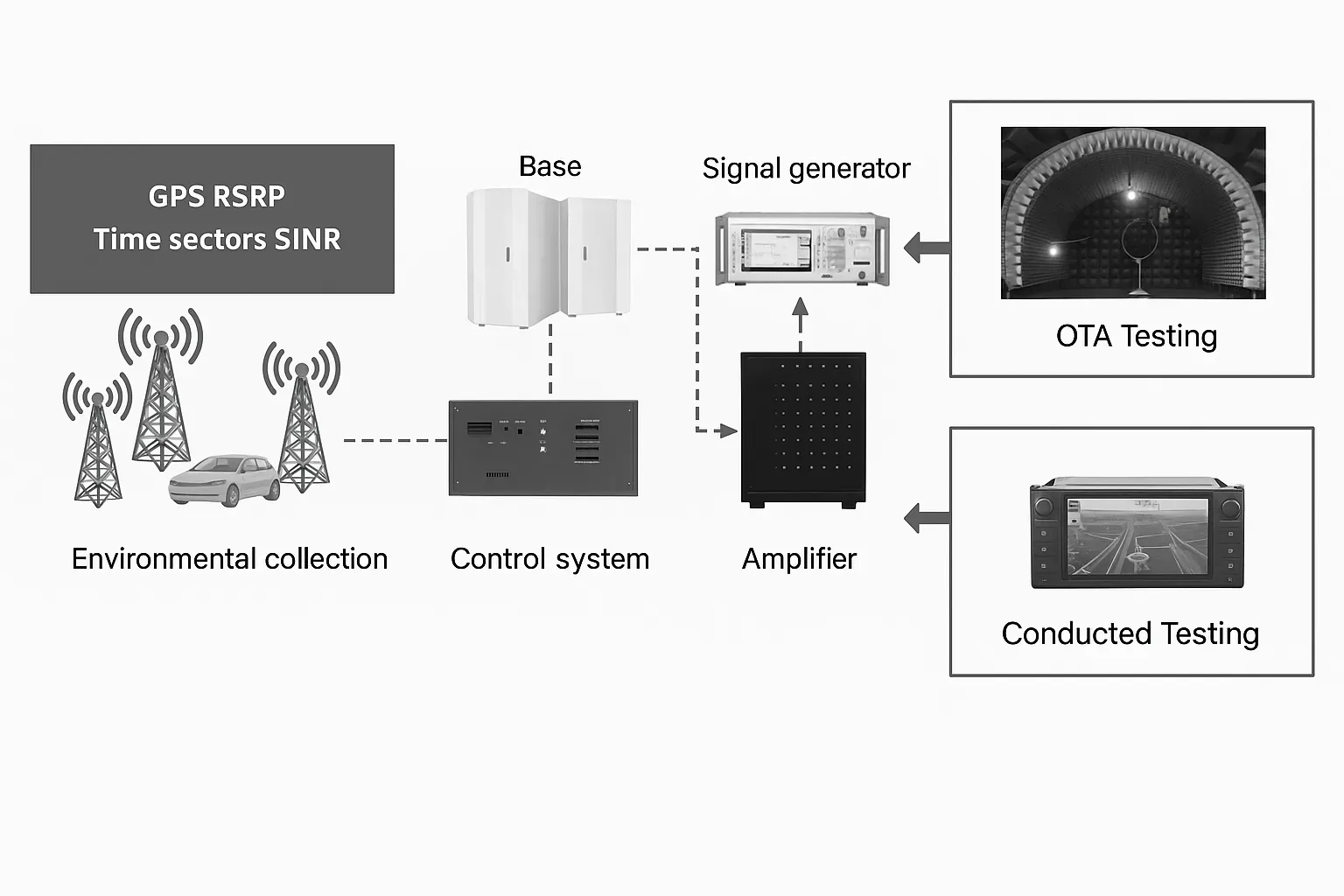
Figure 1 Performance test system architecture
Stability Test System
Stability systems simulate long-duration, stress test scenarios under varying network configurations and conditions for vehicle modules. Three aspects of automation are essential: 1) automated call and data actions on the module under test, typically implemented via vendor or third-party applications that simulate user behavior; 2) automated RF control, using scripts to operate the programmable attenuation matrix to vary cell signal levels, trigger inter-cell handovers, switch between modes, and enable/disable interference; 3) automated base station configuration, using network management interfaces to control cell grouping and parameter changes. These three areas are managed by unified control software that also automates comparison and analysis of module-side and base-station logs to realize complete stability testing capability.
Test-Line Planning Principles
Requirement-First Principle
When building simulated-network test systems, automakers should consider current and near-term global shipment destinations. Configure base station types and frequency bands according to local operators and system vendors, and reserve capacity in the base station equipment pool for future expansion. Plan the number and allocation of functional, performance, and stability test lines according to product volume and test needs. For stability testing, determine whether to build multiple parallel test lines or larger test rooms that can host more devices under test.
Minimum Path-Loss Principle
Place the base station resource pool close to the test lines to minimize RF path loss. Sensitivity to path loss, from highest to lowest, is: performance test systems, stability test systems, then functional test systems. Performance systems must preserve peak signals when not using channel models and typically require dedicated cell resources. If performance testing demands are high, consider allocating dedicated base station resources.
Conclusion
Simulated-network testing for vehicle communication modules is still in its early stages and currently centers on 5G multimode cellular systems. The accumulation of scenario models and test scripts has just begun. As vehicle communication systems evolve, simulated-network testing for vehicle modules will likely advance toward integration of cellular and short-range communication, combination of cellular and V2X, and closer coupling between module-level and whole-vehicle testing, improving in-vehicle and external communication quality and the driving experience for users.