A few days ago, China’s Ministry of Industry and Information Technology (MIIT) published a draft notice soliciting opinions on "the draft notice on strengthening end-network coordination to support the scaled development of 5G messaging." The notice states that newly activated mobile phones must support 5G messaging, and it encourages capable handset manufacturers to enable 5G messaging support through system upgrades where possible.
What "5G Messaging" Actually Is
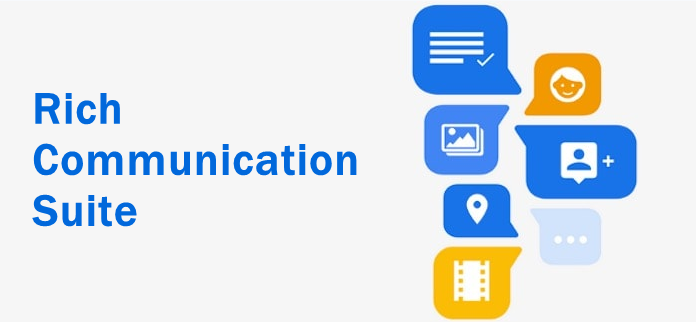
Despite the name, "5G messaging" is not inherently a 5G-only feature, nor is it a service invented specifically for the 5G era. Its true identity is RCS, a service that first appeared in 2008. RCS stands for Rich Communication Suite, a rich-media communication suite.
Rich media refers to communication formats beyond plain voice or text, including images, video, animation, emojis, voice clips, and location. Messaging apps such as WeChat are examples of rich-media communication tools. RCS is also described as unified communication, indicating both the fusion of multiple media formats and the convergence of IP-based services with traditional telecom services.
RCS: Origins and Evolution
To understand RCS functions, it helps to look at its history. More than 20 years ago, the rapid growth of the PC internet and the rise of instant messaging tools such as ICQ, MSN, and OICQ (QQ) demonstrated the appeal of multimedia messaging. The natural question was whether those capabilities could be brought to mobile phones.
With 3G standards established, mobile development shifted toward data services to meet growing multimedia needs. As mobile networks evolved toward 4G, the standards body 3GPP recognized the need to evolve traditional voice and SMS into multimedia formats. In 2002, 3GPP introduced IMS.
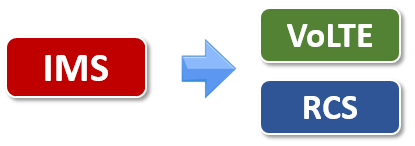
IMS, the IP Multimedia Subsystem, is familiar to telecom engineers. VoLTE (Voice over LTE) is implemented on top of IMS. IMS comprises a set of network elements that enable a packet data network like 4G LTE to support and enhance traditional voice and messaging services in multimedia form.
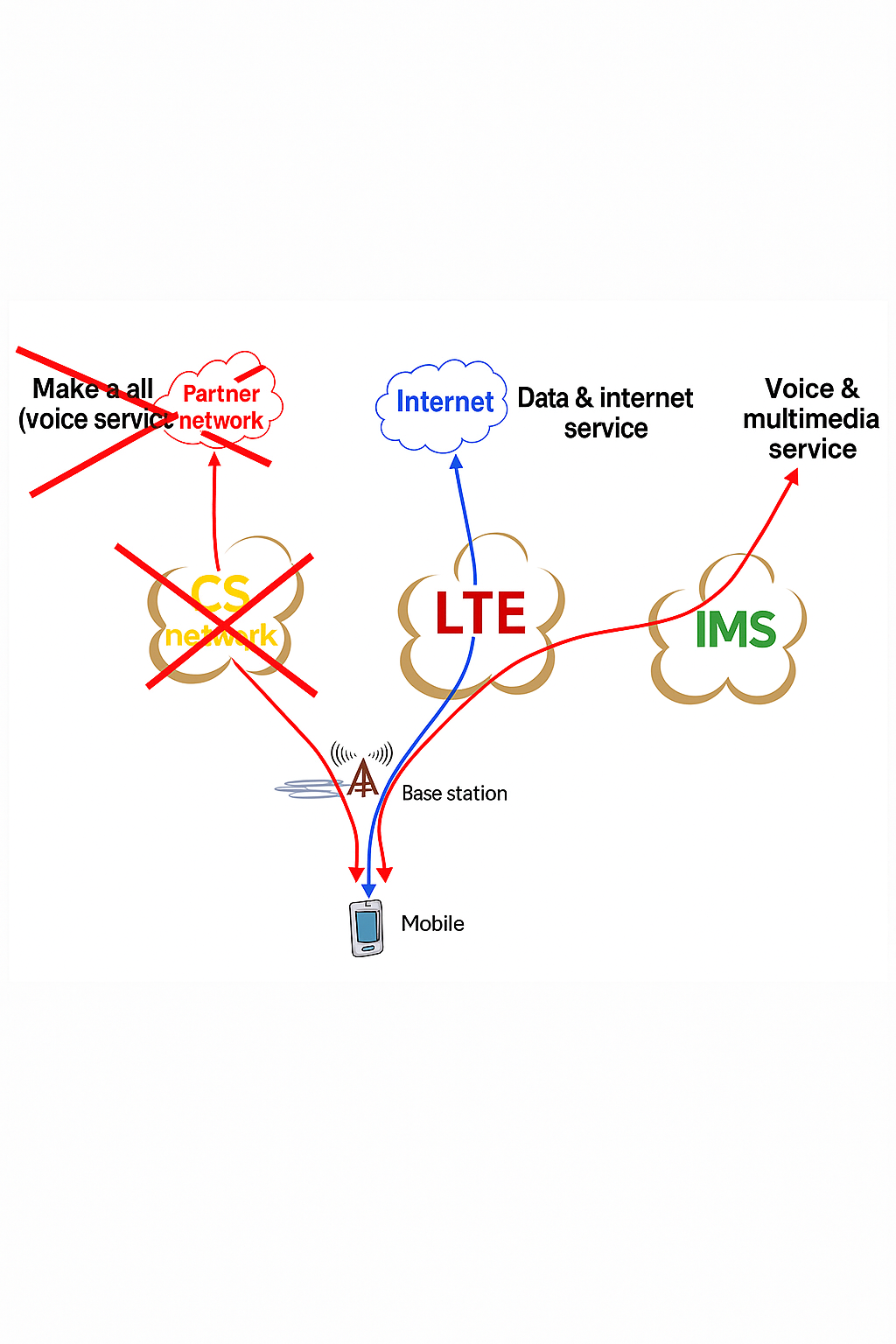
IMS acts as a "plugin" for the 4G LTE network: with IMS, 4G can support voice calls and SMS, and on top of IMS you get services such as VoLTE and RCS.
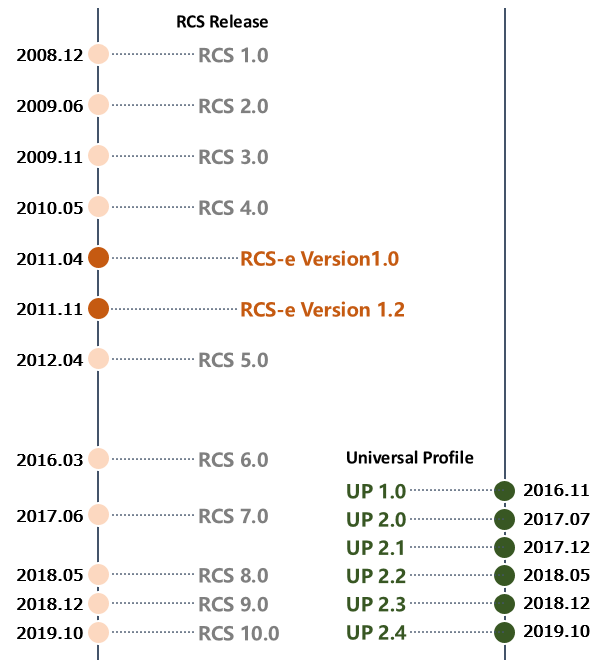
RCS was proposed by some GSMA members in 2007 to enable multimedia messaging interoperability between operators. In February 2008, GSMA formally launched the RCS project and named the initial specification "home." GSMA released multiple versions of RCS and RCS-e (enhanced) specifications. After the launch, many global operators adopted RCS. After the 4G LTE standard in 2008, RCS became a standard component for operators building 4G networks.
Around the same period, smartphones based on iOS and Android appeared and mobile internet usage exploded. By about 2011, OTT messaging apps such as WhatsApp, LINE, and Facebook Messenger emerged and rapidly eroded operators' voice and SMS revenue. Overseas operators turned to RCS as a way to compete with OTT apps. Operators such as Vodafone, Orange, SKT, Verizon, and O2 launched their own RCS solutions and brands.
In 2016, to promote RCS product development and global deployment, GSMA introduced the RCS Universal Profile (UP) and continued updating it. The latest published version is Version 2.4 from October 2019.
RCS and Its Development in the Chinese Market
China's 3G and 4G rollouts began later than those in Europe, Japan, and North America. China Mobile, as a major LTE builder, prioritized IMS, VoLTE, and RCS during large-scale LTE deployment from 2014. Learning from earlier services such as Fetion and facing OTT competition, operators sought new ways to capture user traffic and revenue.
After LTE coverage matured and IMS deployments progressed, operators needed to migrate voice and SMS off 2G/3G networks to free spectrum for 5G. This migration, combined with pressure from OTT services, created an opportunity to promote RCS under the "5G messaging" label, leveraging the 5G brand to emphasize the generational gap between RCS and traditional messaging.
RCS Functional Characteristics
China Mobile proposed the "three new" objectives based on RCS: new calling, new messaging, and new contacts. These correspond to the phone dialer, SMS, and address book on a mobile phone. "New calling" centers on VoLTE to improve voice quality and experience; "new messaging" integrates multiple media formats and interoperates with traditional SMS/MMS; "new contacts" uses real mobile numbers to build new social and public-information service entry points.
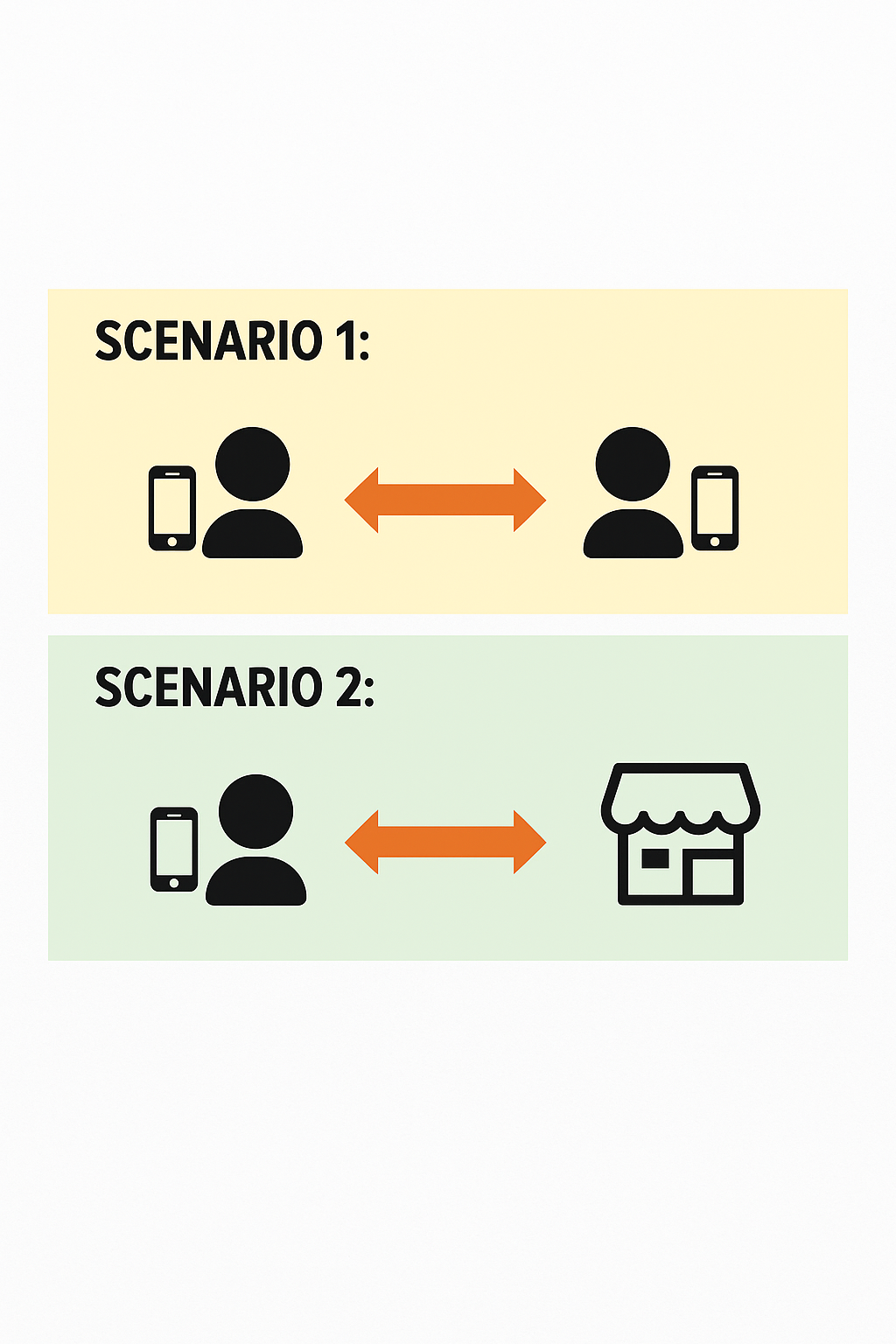
Broadly, RCS application scenarios fall into two categories: person-to-person messaging and business-to-person messaging.
For person-to-person scenarios, RCS supports one-to-one messages, group messaging and chat, and multimedia content including voice, images, and video. It also supports location sharing, contact cards, cloud backup of messages, and ephemeral messages. These features are similar to existing messaging apps, so it may be difficult for RCS to displace dominant apps given user habits. RCS may therefore play a complementary role.
The business-to-person scenario is of particular interest to operators and the broader ecosystem. In the UP 2.0 specification, GSMA introduced MaaP and released a MaaP white paper that defined RCS Business Messaging for A2P (application-to-person) services. MaaP stands for Messaging as a Platform. RCS Business Messaging provides APIs for businesses to exchange messages with users and adds interactive capabilities to images and video, enabling enterprises to deliver personalized services such as flight and hotel booking queries, logistics tracking, and e-commerce order status.
RCS Business Messaging creates a new channel for enterprises to reach users and for users to access services. In function it is similar to mini apps, service accounts, or even call center interactions. To enable RCS Business Messaging, operators deploy MaaP-enabled open platforms and chatbots. These platforms expose APIs to enterprises to deliver services. The typical architecture places MaaP and chatbot capabilities within operator networks to facilitate service delivery.
RCS Advantages and Ecosystem Challenges
RCS has several distinctive advantages. First, it does not require installation of a third-party app; it can be supported natively on the handset, lowering user adoption barriers and reducing distribution costs. Although many phones do not yet support 5G messaging, handset makers can add support via software updates to comply with RCS UP 2.4; even 4G phones can support RCS.
Second, RCS is directly linked to mobile phone numbers, so the phone number serves as the account and no separate registration is required. This simplifies user onboarding, addresses identity verification, and reduces platform fragmentation because users do not need separate accounts for each merchant.
Third, RCS leverages users' phone address books, enabling social connections without explicitly adding friends.
However, these technical advantages do not guarantee commercial success. The outcome depends on ecosystem development and business models. The RCS value chain includes operators, equipment vendors, handset manufacturers, platform providers, and content providers. Key uncertainties include whether platform and content providers will invest, how platforms and applications will be developed, what returns are possible, how to attract merchants, whether services should be charged for and how, and whether merchants will pay. If the ecosystem cannot scale, it will be difficult to cultivate RCS-based applications and monetize the service.
Conclusion
According to GSMA data, as of October 2020 there were 136 operators worldwide offering RCS commercially. By January 2022, global RCS monthly active users reached 421 million, with supported devices exceeding 1.2 billion.
With the continued rollout of 5G and ongoing handset updates, RCS is likely to become a standard feature on many phones. Whether the service achieves lasting commercial success will depend on how the ecosystem and business models evolve over time.