Background
Global 5G network deployment is proceeding rapidly. As of August 2020, 92 commercial 5G networks had been launched across 38 countries and regions. Most of these 5G networks use the TDD duplexing scheme. By contrast, 4G LTE networks were deployed as either FDD LTE or TDD LTE. FDD and TDD refer to frequency-division duplex and time-division duplex, respectively.
FDD uses two separate frequency bands for uplink (UE to base station) and downlink (base station to UE). TDD uses the same frequency band for both uplink and downlink, separated by time slots. Compared with FDD, TDD requires additional design for uplink/downlink time-slot allocation and interference suppression, making it more complex to implement, but TDD generally achieves higher spectrum efficiency.
Mobile traffic is typically asymmetric between downlink and uplink. For example, video consumption produces much larger downlink traffic than uplink. Under FDD this can leave the uplink band underused, while TDD allows flexible allocation of uplink and downlink time slots to better match traffic demand.
In the 4G era, FDD LTE deployments outnumbered TDD LTE globally. In the 5G era this has changed. Achieving high 5G data rates requires wide bandwidths. At higher frequency bands it is difficult to find two symmetric wide bands suitable for FDD, and the lower spectrum efficiency of FDD is less acceptable. In addition, TDD is favorable for large-scale antenna techniques such as Massive MIMO because of channel reciprocity, which simplifies design. For these reasons, many operators have favored TDD for 5G deployments.
What Is High–Low Frequency Networking
Using TDD at high frequencies introduces a key challenge: reduced network coverage, mainly due to limited uplink capability. Downlink coverage is typically less problematic because base stations have higher transmit power and use beamforming. Uplink, however, depends on UE transmit power, which is much lower, so uplink signal range is smaller and limits cell coverage.
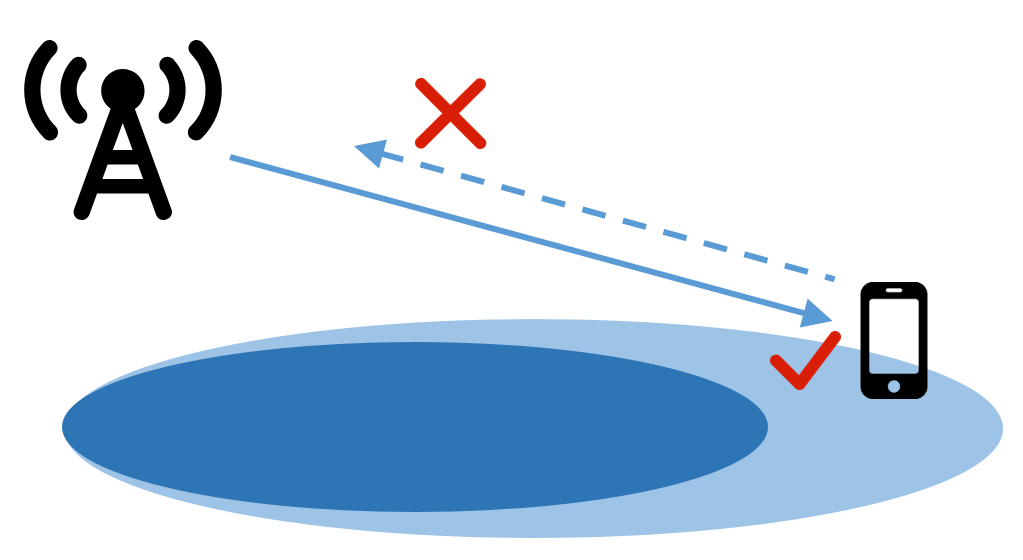
Higher frequency bands used in 5G, such as 3.5 GHz and 4.9 GHz, experience greater penetration loss and faster attenuation, which worsens coverage when using TDD. To address this, the industry proposed uplink/downlink decoupling and the supplementary uplink (SUL) approach: borrow mid/low-frequency spectrum for uplink when high-frequency uplink is insufficient.
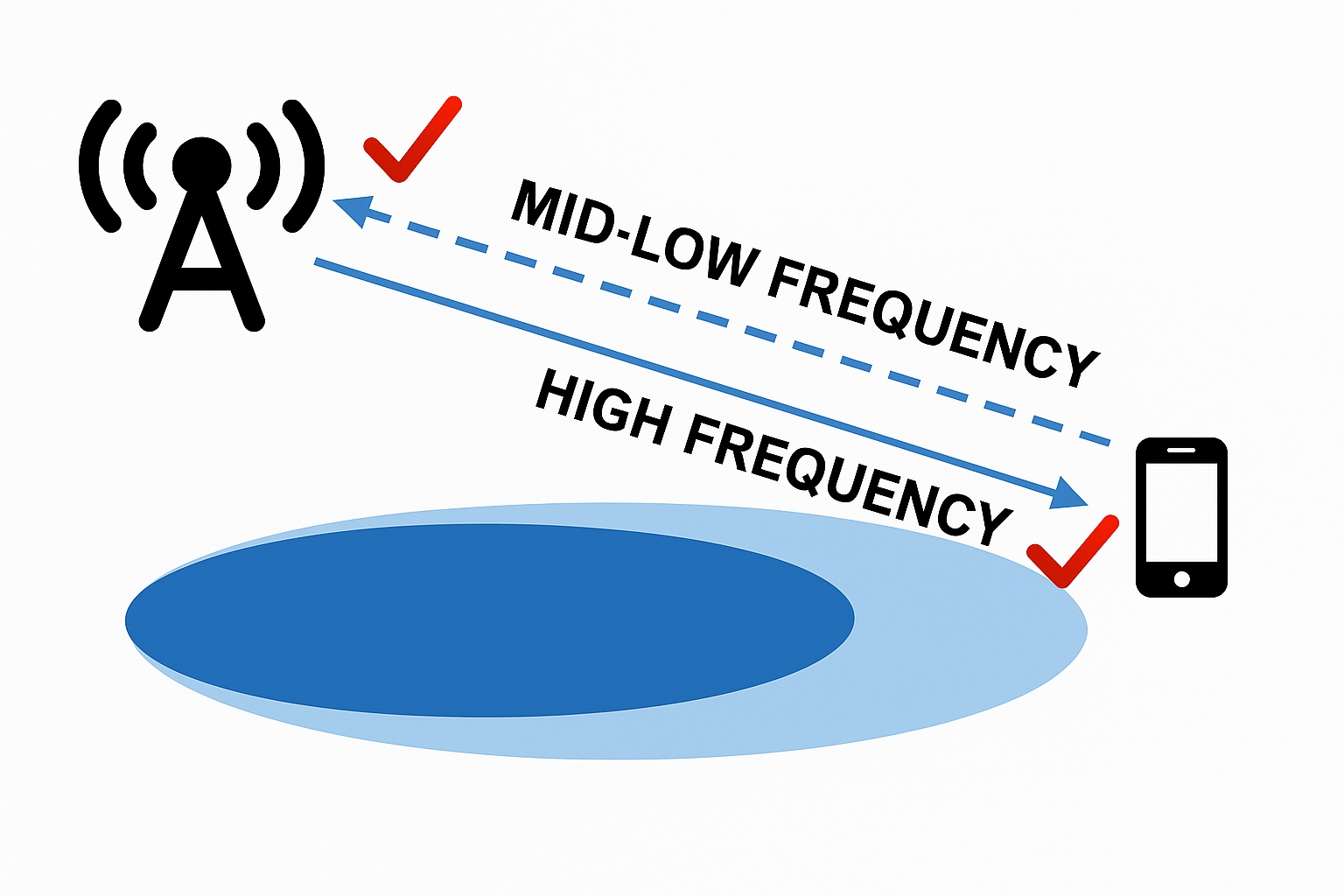
Mid and low frequencies have lower penetration loss and longer propagation distances, which can effectively extend 5G coverage. Although mid/low bands offer narrower bandwidth and cannot alone support multi-gigabit services, they are sufficient for many communication scenarios including uplink. For example, at 2.1 GHz some operators hold approximately 25 MHz and 20 MHz of spectrum that is currently used by 4G LTE but is a prime candidate for re-farming.
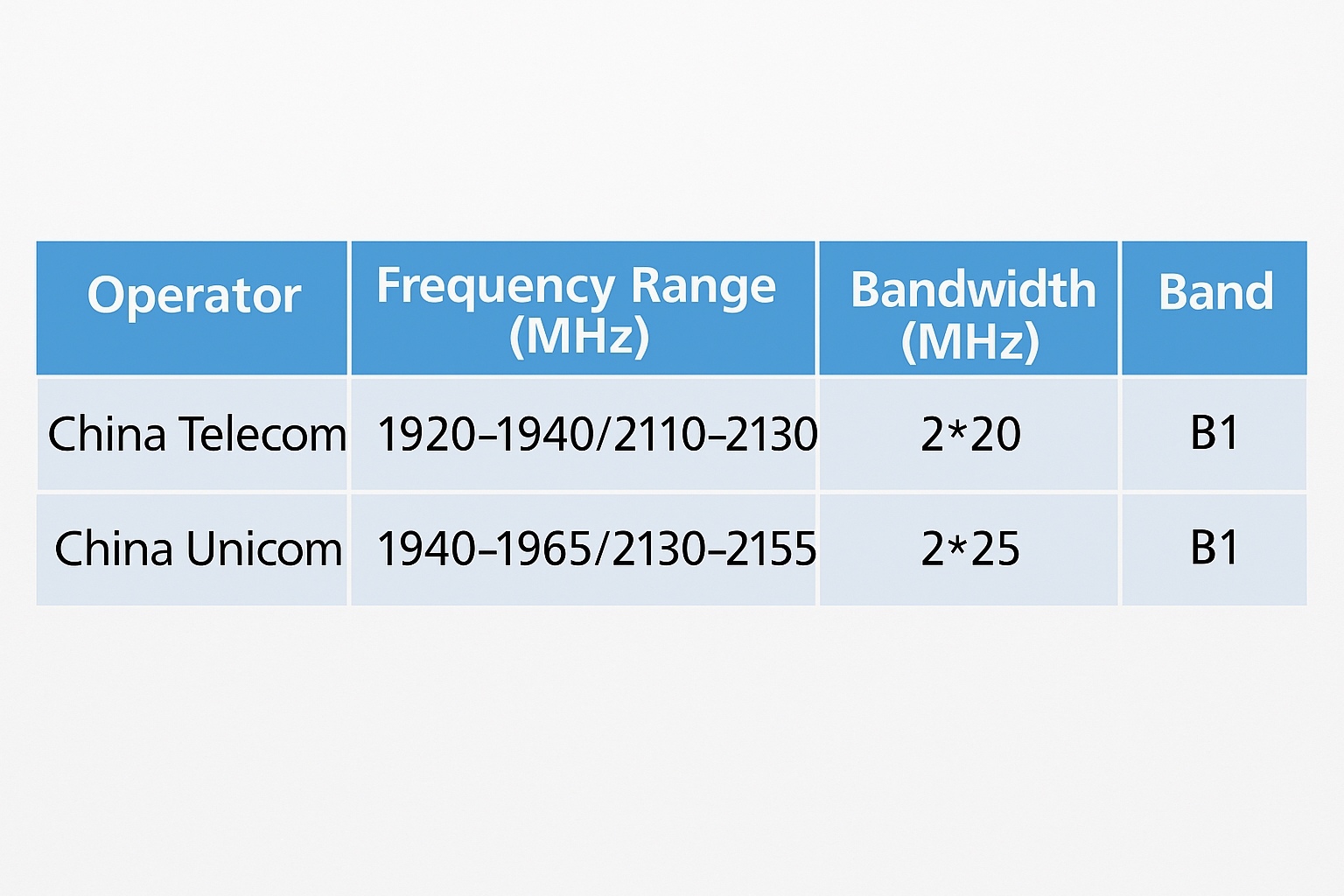
It is not feasible to simply reassign those bands to 5G NR without affecting existing 4G service. Dynamic spectrum sharing (DSS) allows 4G and 5G to share the same spectrum, enabling a smoother transition. Combining mid/low-frequency FDD NR with high-frequency TDD NR yields a hybrid deployment pattern often described as "mid/low FDD NR + high TDD NR," or simply high–low frequency networking.
Under traditional SUL, mid-range links use the high-frequency carrier (for example 3.5 GHz) for both uplink and downlink. When the UE moves farther away and the 3.5 GHz uplink becomes inadequate, SUL is activated and a lower frequency such as 2.1 GHz replaces the 3.5 GHz uplink to serve that UE.
Because the SUL resource is often idle in mid-range scenarios, some vendors have proposed using the SUL resource proactively together with the TDD primary carrier to schedule uplink transmissions in a round-robin or coordinated manner to boost uplink capacity. This approach relaxes the constraint that carrier aggregation requires contiguous or "bundled" spectrum.
Additional techniques include narrow-beam FDD 5G broadcast channel transmission instead of a single wide broadcast beam, and intelligent beam optimization for TDD broadcast channels. The narrow-beam approach uses multiple narrow broadcast beams in rotation to increase coverage gain, improving coverage depth for VoNR services. Intelligent broadcast beam selection applies beamforming and periodic scanning, using AI to recognize coverage scenarios and user distribution and then match beam combinations to optimize user experience and spectrum efficiency.
Standards and Device Support
Deploying "mid/low FDD NR + high TDD NR" depends on standardization and device support. 3GPP Release 16, finalized on July 3, 2020, included enhancements for FDD NR in various scenarios. NR/DSS FDD large-bandwidth standardization has been completed for bands such as 2.1 GHz and 700 MHz. Work on large-bandwidth FDD downlink carrier aggregation and supplementary uplink has been initiated and is progressing.
On the device side, mainstream chipset vendors have added support for NR in bands such as 3.5 GHz, 2.6 GHz, 2.1 GHz, and 1.8 GHz, with some devices supporting 700 MHz NR. Support for wideband FDD NR and large-bandwidth SUL on 5G chipsets is expected to become more widespread.
Role and Benefits of High–Low Frequency Networking
For different deployment scenarios such as urban cores and suburban or rural areas, a reasonable 5G network architecture pairs TDD NR for wide bandwidth with FDD NR for supplemental coverage and uplink enhancement. In addition to compensating for TDD NR's uplink limitations and extending coverage in rural areas, FDD NR helps deepen urban coverage. Using high and low frequencies together improves outdoor coverage and enhanced penetration can reduce the need for dedicated indoor distributed antenna systems, lowering deployment cost.
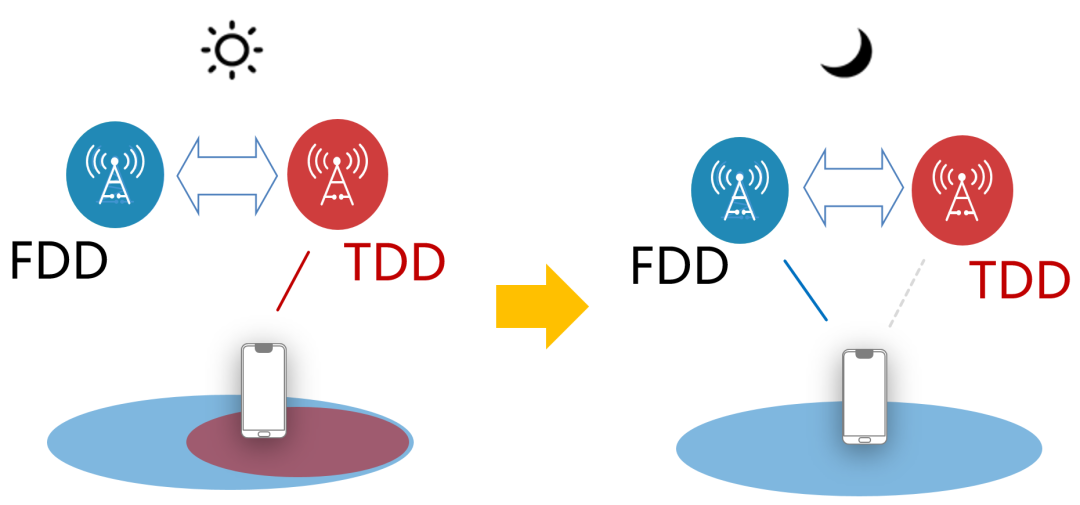
Coordinated operation also enables energy-saving strategies such as putting parts of the network to sleep during nighttime or periods of low load, while maintaining required performance KPIs.
In summary, high–low frequency networking combines the large bandwidth of TDD with the extended coverage of FDD and represents a practical 5G deployment strategy.