Introduction
Conformal coating plays a vital role in protecting printed circuit boards (PCBs) from environmental hazards like moisture, dust, and chemical exposure. Selecting the appropriate application method, whether spray, dip, or brush, directly impacts the coating's effectiveness and the reliability of electronic assemblies. Each technique, including conformal coating spray application, conformal coating dip application, and conformal coating brush application, offers unique advantages depending on project requirements, production volume, and component complexity. This article provides a detailed conformal coating method comparison to help electrical engineers make informed decisions. By exploring conformal coating application techniques, we aim to clarify the strengths and limitations of each method, ensuring optimal protection for your PCB designs in diverse operating conditions.
What Is Conformal Coating and Why It Matters
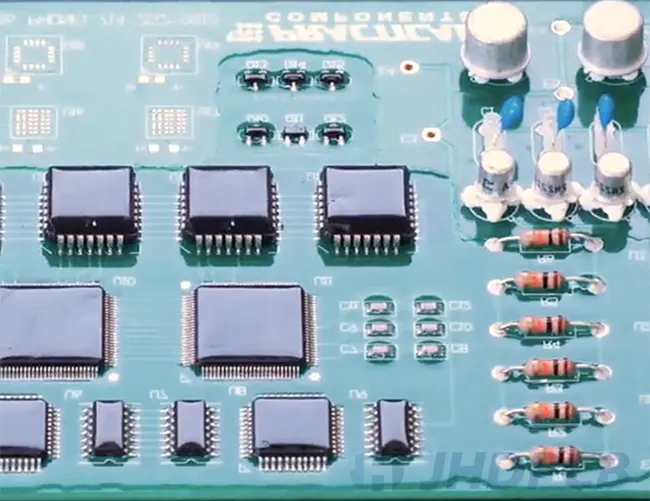
Conformal coating is a thin, protective polymeric film applied to PCBs to shield them from environmental stressors. These stressors include humidity, temperature extremes, corrosive gases, and mechanical vibrations, all of which can degrade electronic performance or cause failure. The coating conforms to the board's surface, creating a barrier without interfering with functionality. Its importance lies in enhancing reliability, especially for applications in automotive, aerospace, and industrial sectors where harsh conditions are common.
The choice of application method significantly affects the coating's uniformity, thickness, and adhesion. Standards like IPC-CC-830C provide guidelines for qualification and performance of conformal coatings, ensuring they meet industry expectations for protection. Understanding the nuances of each technique is critical for engineers aiming to balance cost, efficiency, and performance in their projects.
Technical Principles of Conformal Coating Application Techniques
Spray Application
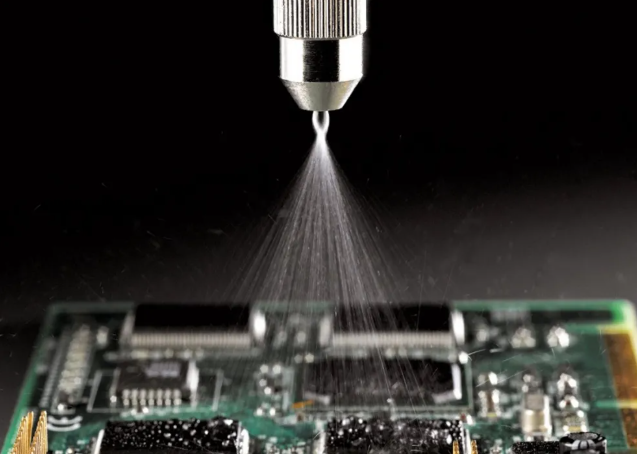
Conformal coating spray application involves using aerosol cans or automated spray systems to apply the coating material. This method atomizes the liquid coating into fine droplets, allowing for even distribution across the PCB surface. It works well for large-scale production due to its speed and ability to cover complex geometries. However, achieving consistent thickness can be challenging, especially in areas with dense components, as overspray or shadowing may occur.
Spray systems often require masking to protect areas like connectors or test points, adding to preparation time. The process is governed by standards such as IPC-A-600K, which outlines acceptability criteria for coated boards, ensuring no defects like bubbles or uneven layers compromise protection.
Dip Application
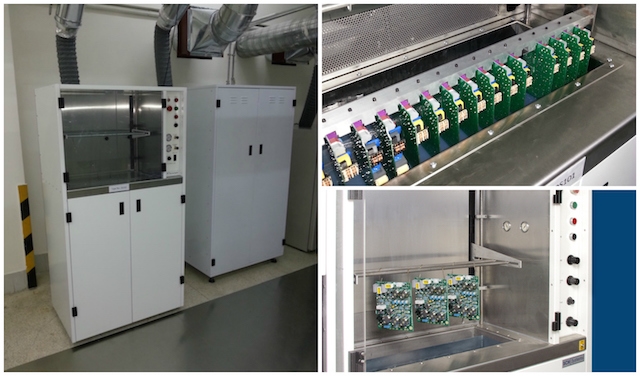
Conformal coating dip application entails immersing the entire PCB into a tank of liquid coating material. This method ensures complete coverage, even in hard-to-reach areas, making it ideal for high-reliability applications. The coating thickness depends on the viscosity of the material and the withdrawal speed from the tank. Dip coating is efficient for batch processing but may lead to excess material buildup on edges or low-lying areas, requiring careful control.
This technique minimizes waste compared to spraying, as excess coating drips back into the tank. Adherence to standards like IPC-CC-830C ensures the coating meets dielectric and environmental resistance requirements after application.
Brush Application
Conformal coating brush application uses a manual brush to apply the coating directly onto specific areas of the PCB. This method offers precision, making it suitable for small-scale projects or rework tasks where only certain components need protection. It allows engineers to control thickness and avoid sensitive areas without masking. However, it is labor-intensive and prone to inconsistencies due to human error, limiting its use in mass production.
Brush application aligns with guidelines in IPC-A-600K for visual inspection, ensuring no streaks or missed spots affect performance. It remains a practical choice for prototypes or repairs despite its slower pace.
Practical Guidance for Choosing the Right Method
Project Scale and Production Volume
For high-volume production, conformal coating spray application often proves most efficient. Automated spray systems can process numerous boards quickly, reducing labor costs. Dip application also suits batch processing, especially when uniform coverage is critical. Brush application, while precise, is better reserved for low-volume or custom projects due to its time-intensive nature.
Component Complexity and Geometry
Complex PCB designs with intricate layouts or dense component populations benefit from dip application. Immersion ensures the coating reaches under components and into tight spaces. Spray application can work but may require multiple passes to avoid shadowing. Brush application excels in targeted coating of specific areas, though it struggles with complex geometries due to accessibility issues.
Cost and Resource Considerations
Spray systems, particularly automated ones, involve higher initial equipment costs but lower per-unit expenses in large runs. Dip application requires tanks and controlled environments, adding to setup costs but minimizing material waste. Brush application has minimal equipment needs, making it cost-effective for small projects, though labor costs can accumulate over time.
Environmental and Safety Factors
Spray application often involves volatile organic compounds, necessitating proper ventilation and safety measures per industry standards. Dip application reduces overspray risks but requires handling of large coating volumes. Brush application poses fewer environmental concerns due to its manual nature, though care must be taken to avoid spills.
Related Reading: Dip vs. Spray: Selecting the Best Conformal Coating Machine for Your Application
Conformal Coating Method Comparison: Strengths and Limitations
- Spray Application — Strengths: Fast, suitable for high volume, automated. Limitations: Risk of overspray, uneven thickness.
- Dip Application — Strengths: Uniform coverage, ideal for complex PCBs. Limitations: Excess buildup, slower for small batches.
- Brush Application — Strengths: Precise, low equipment cost, good for rework. Limitations: Labor-intensive, inconsistent results.
This comparison highlights key considerations for each conformal coating application technique. Engineers must weigh these factors against project needs, ensuring alignment with standards like IPC-CC-830C for performance and reliability.
Troubleshooting Common Issues in Application
Uneven Coating Thickness
Uneven thickness often arises in spray application due to improper nozzle distance or speed. Adjusting equipment settings or using multiple thin layers can resolve this. For dip application, controlling withdrawal speed prevents excess buildup. Brush application requires consistent strokes to avoid streaks, with visual inspection per IPC-A-600K ensuring quality.
Bubbles or Voids
Bubbles can form during spray or dip application if air is trapped in the coating. Degassing the material before use or applying in a controlled environment mitigates this. Brush application rarely causes bubbles, though overworking the coating can introduce defects.
Insufficient Coverage
Insufficient coverage often occurs in spray application due to shadowing. Repositioning the board or using dip application can address this. Brush application risks missing areas if not applied meticulously, requiring thorough inspection.
Related Reading: The Engineer's Guide to Conformal Coating Failure Analysis: Identifying Root Causes and Prevention
Conclusion
Selecting the right conformal coating method, whether spray, dip, or brush, hinges on understanding project demands, production scale, and environmental conditions. Conformal coating spray application excels in high-volume scenarios, while conformal coating dip application ensures uniform protection for complex designs. Conformal coating brush application offers precision for small-scale or rework tasks. By evaluating the strengths and limitations of each conformal coating application technique, engineers can optimize PCB reliability. Adhering to industry standards like IPC-CC-830C and IPC-A-600K guarantees that the chosen method meets performance expectations, safeguarding electronics in challenging environments.
FAQs
Q1: What are the main advantages of conformal coating spray application for large-scale projects?
A1: Conformal coating spray application is ideal for large-scale projects due to its speed and efficiency. Automated spray systems can coat multiple PCBs quickly, reducing labor time. It covers large areas evenly when calibrated properly, though masking may be needed for sensitive components. Following standards like IPC-A-600K ensures consistent quality and protection across high-volume production runs.
Q2: How does conformal coating dip application ensure uniform coverage on complex PCBs?
A2: Conformal coating dip application provides uniform coverage by fully immersing the PCB in the coating material. This technique reaches under components and into tight spaces, critical for complex geometries. The coating thickness is controlled by material viscosity and withdrawal speed. Adherence to IPC-CC-830C ensures the applied layer meets dielectric and environmental resistance requirements for reliability.
Q3: When is conformal coating brush application the best choice for a project?
A3: Conformal coating brush application suits small-scale projects, prototypes, or rework tasks requiring precision. It allows targeted coating without masking, ideal for protecting specific areas. Though labor-intensive, it needs minimal equipment, keeping costs low. Visual inspection per IPC-A-600K helps ensure no streaks or missed spots, making it a practical option for limited production.
Q4: What factors should be considered in a conformal coating method comparison for cost efficiency?
A4: In a conformal coating method comparison, cost efficiency depends on production volume and resources. Spray application has high initial costs but saves on labor for large runs. Dip application minimizes material waste, balancing setup costs. Brush application avoids equipment expenses but increases labor costs. Evaluating project scale and long-term needs ensures the chosen method aligns with budget constraints.
References
IPC-CC-830C — Qualification and Performance Specification for Conformal Coatings. IPC, 2021.
IPC-A-600K — Acceptability of Printed Boards. IPC, 2020.