Introduction
Electric engineers frequently encounter the need for audible indicators in circuit designs, where selecting between piezo and magnetic buzzers becomes critical for performance and efficiency. The piezo buzzer vs magnetic buzzer debate centers on their distinct operating principles, which directly impact buzzer sound quality, buzzer power consumption, buzzer application suitability, and buzzer size comparison. Understanding these differences ensures optimal integration into printed circuit boards (PCBs) for applications ranging from alarms to user interfaces. This guide provides a structured comparison to aid decision-making, drawing on engineering principles without relying on unsubstantiated claims. By evaluating key parameters, engineers can align buzzer selection with project constraints like power budgets and enclosure space.
Understanding Piezo Buzzers: Principles and Characteristics
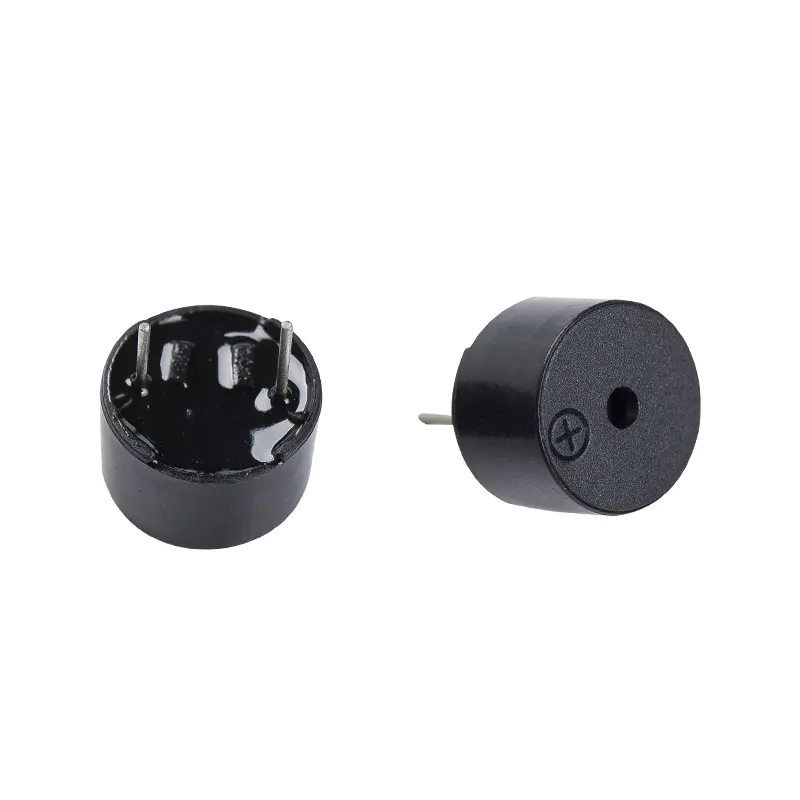
Piezo buzzers operate based on the piezoelectric effect, where an applied voltage causes a ceramic crystal to deform mechanically, vibrating an attached metal diaphragm to produce sound. This voltage-driven mechanism results in a transducer that requires an external oscillating signal for most designs, allowing precise frequency control. Engineers appreciate their ability to generate high sound pressure levels at resonant frequencies typically above 2 kHz, delivering a sharp, piercing tone suitable for attention-grabbing alerts. The absence of coils or armatures contributes to their robustness, withstanding mechanical shocks better than alternatives. Durability stems from solid-state construction, minimizing wear over millions of cycles. Overall, these buzzers excel in scenarios demanding high volume with minimal current draw.
Understanding Magnetic Buzzers: Principles and Characteristics
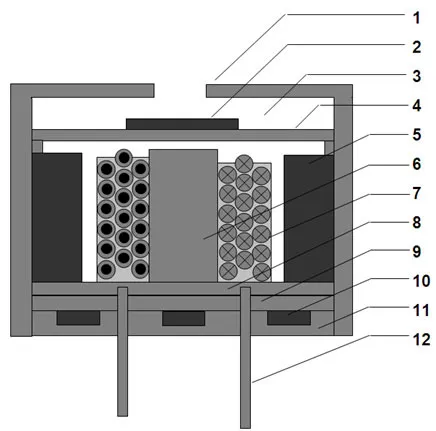
Magnetic buzzers, also known as electromagnetic buzzers, function through an oscillating coil and permanent magnet assembly that drives a ferromagnetic diaphragm. When direct current passes through the coil, it creates a magnetic field that alternately attracts and releases the diaphragm, producing a buzzing sound at frequencies around 1 to 3 kHz. Most magnetic buzzers are self-oscillating, simplifying drive circuitry since they generate their own frequency internally. This design yields a lower-pitched, more continuous tone compared to piezo types, often perceived as softer or fuller. The mechanical nature introduces moving parts, which can limit lifespan under continuous operation but suits applications needing steady signaling. Engineers value their straightforward integration at low voltages.
Piezo Buzzer vs Magnetic Buzzer: Key Technical Comparisons
Buzzer Sound Quality
Buzzer sound quality hinges on frequency response, sound pressure level (SPL), and tonal characteristics. Piezo buzzers produce a shrill, high-frequency tone due to their resonant behavior, often achieving higher SPL values that cut through ambient noise effectively. In contrast, magnetic buzzers generate a lower-frequency buzz with a more harmonic-rich profile, providing better perceived loudness in enclosed spaces but less penetration in noisy environments. The linear frequency-to-power relationship in piezo designs allows tunable tones via drive signals, while magnetic buzzers maintain a fixed tone. For critical alerts, piezo's piercing quality prevails, whereas magnetic suits notification chimes. Selection depends on acoustic requirements and listener proximity.
Buzzer Power Consumption
Buzzer power consumption varies significantly between technologies, influenced by voltage, current, and efficiency. Piezo buzzers typically operate across a wide voltage range from 3 to 250 V, drawing currents under 30 mA, which translates to low overall power for high SPL output. Magnetic buzzers function at narrower low voltages of 1.5 to 30 V but require higher currents, often 20 to 100 mA, increasing thermal demands on drive circuits. In battery-powered devices, piezo's lower current draw extends runtime, making it ideal for intermittent use. Continuous operation favors neither universally, as power equals voltage times current, but piezo generally offers better efficiency per decibel. Engineers must calculate based on duty cycle and supply limits.
- Typical Voltage: Piezo 3-250 V; Magnetic 1.5-30 V
- Typical Current: Piezo <30 mA; Magnetic 20-100 mA
- Power Efficiency: Piezo achieves high SPL at low current; Magnetic requires higher current for comparable SPL
Buzzer Size Comparison
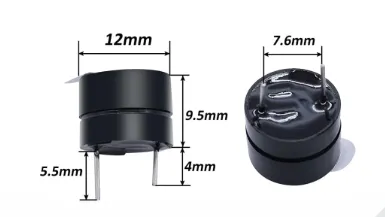
Buzzer size comparison reveals trade-offs in PCB real estate and enclosure fit. Piezo buzzers often feature larger diameters for enhanced diaphragm area, boosting SPL, but compact SMD versions exist for dense boards. Magnetic buzzers tend toward smaller footprints due to simpler coil-magnet stacks, easing integration in handheld devices. Height profiles differ too, with magnetic types sometimes shorter, aiding low-profile assemblies. During PCB layout, engineers consider land patterns per IPC-7351 standards to ensure reliable soldering. Ultimately, size dictates feasibility in space-constrained designs.
Buzzer Application Suitability
Buzzer application suitability aligns with environmental and functional demands. Piezo buzzers shine in high-volume alarms, smoke detectors, or medical devices needing piercing alerts over distance, thanks to their efficiency and durability. Magnetic buzzers fit keyboards, timers, or toys requiring soft, continuous tones at low voltages without complex drivers. Harsh environments favor piezo's shock resistance, while magnetic suits cost-sensitive, low-power fixed installations. Vibration-sensitive applications lean magnetic if tone consistency matters, but piezo handles better in mobiles. PCB integration considers reflow compatibility per J-STD-020 guidelines for moisture sensitivity.
Best Practices for Selecting and Integrating Buzzers on PCBs
When choosing between piezo and magnetic buzzers, start by defining SPL needs, power budget, and frequency profile. Prototype with oscilloscopes to verify tone and current draw under load. For PCB mounting, adhere to IPC-A-610 acceptability criteria for solder joints and component placement, ensuring no voids or bridges. Drive circuits matter: piezo often needs a 555 timer or microcontroller PWM for oscillation, while magnetic simplifies with direct DC. Test in enclosures to account for acoustic damping. Document trade-offs in design reviews for team alignment.
In assembly, follow soldering profiles from J-STD-001 to prevent diaphragm damage from overheating. Simulate thermal profiles to match buzzer ratings. Use decoupling capacitors near pins to mitigate EMI. For SMD types, verify MSL ratings during storage. Field testing confirms long-term reliability under vibration per ASTM standards if applicable.
Conclusion
Navigating piezo buzzer vs magnetic buzzer options equips electric engineers to optimize designs for sound, power, size, and fit. Piezo excels in loud, efficient alerts with low current, while magnetic offers compact, low-voltage buzzing. Evaluate via tables and prototypes, integrating per IPC and J-STD guidelines for robust PCBs. This structured approach minimizes iterations and enhances product performance across applications.
FAQs
Q1: What factors determine buzzer sound quality in piezo vs magnetic designs?
A1: Buzzer sound quality depends on resonant frequency and SPL, with piezo delivering sharp high tones above 2 kHz and magnetic producing lower-pitched buzzes around 1-3 kHz. Piezo offers better noise penetration, while magnetic provides fuller harmonics. Test in target environments for suitability.
Q2: How does buzzer power consumption compare between piezo and magnetic types?
A2: Piezo buzzers typically use less than 30 mA at higher voltages for efficient high SPL, suiting battery devices. Magnetic buzzers draw 20-100 mA at low voltages, demanding robust supplies. Calculate total power as V times I for duty cycles.
Q3: Which buzzer suits tight PCB spaces based on size comparison?
A3: Magnetic buzzers often have smaller footprints, ideal for compact electronics. Piezo may require larger areas for volume but offers SMD options. Check IPC-7351 land patterns during layout.
Q4: How to assess buzzer application suitability for alarms?
A4: For piercing alarms, select piezo for high SPL and low power. Continuous notifications favor magnetic's steady tone. Verify per assembly standards like IPC-A-610.
References
IPC-A-610H — Acceptability of Electronic Assemblies. IPC.
J-STD-001G — Requirements for Soldered Electrical and Electronic Assemblies. IPC.
IPC-7351D — Generic Requirements for Surface Mount Design and Land Pattern Standard. IPC.