Introduction
Conformal coating plays a vital role in protecting printed circuit boards (PCBs) from environmental hazards like moisture, dust, and temperature fluctuations. For electrical engineers, understanding conformal coating viscosity is critical to achieving uniform coverage and reliable performance. Viscosity directly influences the application process, impacting flow rate, thinning requirements, and the final protective layer's consistency. This article explores how conformal coating viscosity affects application techniques, offering insights into optimizing processes for consistent results. By addressing key aspects such as conformal coating thinning and flow rate, engineers can ensure robust protection for electronic assemblies in demanding conditions. The discussion aligns with recognized industry standards to provide accurate and practical guidance for professionals in the field.
What Is Conformal Coating Viscosity and Why It Matters
Conformal coating viscosity refers to the measure of a coating material's resistance to flow. It determines how easily the coating spreads over a PCB surface during application. Viscosity is typically measured in centipoise (cP) or millipascal-seconds (mPa·s), with lower values indicating a thinner, more fluid material and higher values indicating a thicker, more resistant substance. For electrical engineers, selecting a coating with the appropriate viscosity is essential for ensuring uniform coverage without defects like bubbles or uneven thickness.
The importance of viscosity lies in its direct impact on the application process and the final protective layer. A coating that is too viscous may not flow properly, leading to incomplete coverage or excessive buildup in certain areas. Conversely, a coating that is too thin may run off critical components, leaving them exposed. Achieving the right balance is crucial for protecting sensitive electronics from environmental stressors. Proper viscosity also affects the choice of application method, whether it is brushing, spraying, or dipping, each requiring specific flow characteristics for optimal results.
Technical Principles of Conformal Coating Viscosity
Viscosity in conformal coatings is influenced by several factors, including the chemical composition of the material, temperature, and any additives used for thinning. Most conformal coatings are polymeric solutions, and their viscosity depends on the type of resin, such as acrylic, silicone, or polyurethane, as outlined in standards like IPC-CC-830C. This standard provides guidelines for qualifying conformal coatings and includes considerations for their physical properties, including flow behavior.
Temperature plays a significant role in viscosity. As temperature increases, most coating materials become less viscous and flow more easily. Conversely, lower temperatures increase viscosity, potentially complicating the application process. Engineers must account for ambient conditions in the application environment to maintain consistent results. Additionally, shear rate, which relates to the force applied during application, can affect viscosity in non-Newtonian fluids, where flow behavior changes under stress. Understanding these principles helps in predicting how a coating will behave during application.
Another key factor is the interaction between viscosity and surface tension. High viscosity coatings may struggle to wet complex PCB geometries, leading to poor adhesion or voids. Low viscosity coatings, while better at wetting, may sag or drip, especially on vertical surfaces. Balancing these properties ensures conformal coating uniform coverage, protecting critical areas without compromising the assembly's integrity.
Related Reading: Dip vs. Spray: Selecting the Best Conformal Coating Machine for Your Application
Impact of Viscosity on Conformal Coating Application Methods
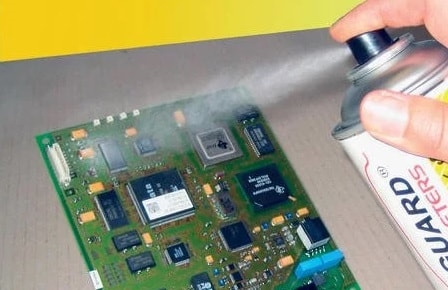
Conformal coating application methods vary widely, and viscosity directly influences which technique is most effective. Below are the primary methods and how viscosity impacts their performance:
- Brushing: This manual method requires a moderately viscous coating to prevent dripping while allowing smooth application. Too low a viscosity leads to runoff, while excessive viscosity causes uneven layers. Brushing is often used for small batches or rework, as it offers precision but is labor-intensive.
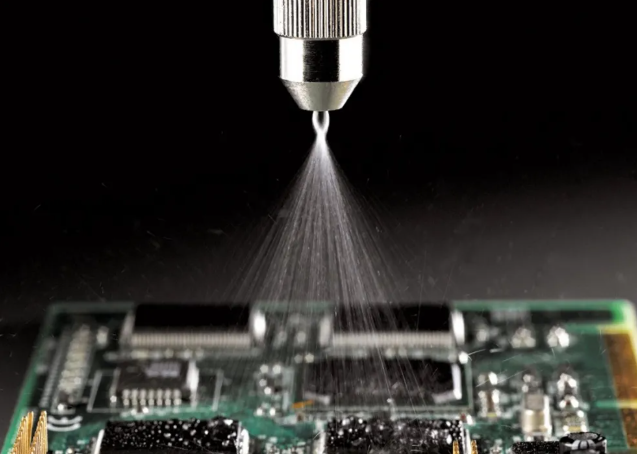
- Spraying: Spraying, whether manual or automated, demands a lower viscosity to ensure proper atomization through nozzles. Conformal coating thinning may be necessary to achieve the ideal flow rate for uniform mist distribution. Engineers must adjust viscosity to avoid clogging or overspray, which can waste material or compromise coverage.
- Dipping: This method involves immersing the PCB in a coating bath, requiring a specific viscosity range to control the thickness of the applied layer. Higher viscosity coatings form thicker layers, which may require longer curing times, while lower viscosity materials may not provide adequate protection. Conformal coating flow rate is critical here to prevent air entrapment or uneven buildup.
- Selective Coating: Automated selective coating systems use robotic dispensers to apply material only to designated areas. Viscosity must be tailored to the dispensing equipment, ensuring precise flow without stringing or clogging. Uniform coverage depends on consistent material behavior under controlled conditions.
Each method has unique demands, and engineers must match viscosity to the chosen technique to avoid defects. Standards like IPC-A-610, which governs the acceptability of electronic assemblies, provide criteria for inspecting conformal coating application, including thickness and coverage consistency.
Conformal Coating Thinning and Flow Rate Considerations
Conformal coating thinning is often necessary to adjust viscosity for specific application methods. Thinning involves adding solvents or diluents to reduce resistance to flow, making the coating easier to apply. However, excessive thinning can compromise the coating's protective properties by reducing solids content, leading to thinner layers that may not meet durability requirements. Engineers must follow manufacturer guidelines and test thinned coatings to ensure they still comply with standards like IPC-CC-830C, which specifies performance criteria for conformal coatings.
Flow rate, closely tied to viscosity, determines how quickly and evenly the coating spreads during application. A controlled flow rate is essential for achieving conformal coating uniform coverage, especially in automated systems where timing and precision are critical. If the flow rate is too high due to low viscosity, the coating may pool in low areas or run off edges. If too low, due to high viscosity, it may not reach tight spaces or cover complex geometries. Adjusting viscosity through thinning or temperature control can help optimize flow rate for consistent results.
Environmental factors also influence flow behavior. High humidity can affect solvent evaporation rates during application, altering viscosity and flow. Similarly, temperature variations in the workspace can cause fluctuations in material properties. Monitoring and controlling these conditions ensure repeatability in the coating process, aligning with quality management principles in standards like ISO 9001:2015.
Best Practices for Achieving Uniform Coverage
- Select Appropriate Viscosity: Choose a coating viscosity suited to the application method and PCB design. Refer to standards like IPC-CC-830C for guidance on material properties and performance expectations.
- Test and Adjust: Conduct trial applications to determine the ideal viscosity and flow rate for the specific assembly. Use viscometers to measure and adjust material properties as needed.
- Control Environment: Maintain stable temperature and humidity in the application area to prevent variations in viscosity and flow behavior. This aligns with quality control practices in ISO 9001:2015.
- Use Proper Equipment: Ensure application tools, such as spray nozzles or dipping tanks, are compatible with the coating's viscosity. Regular maintenance prevents clogs or inconsistent delivery.
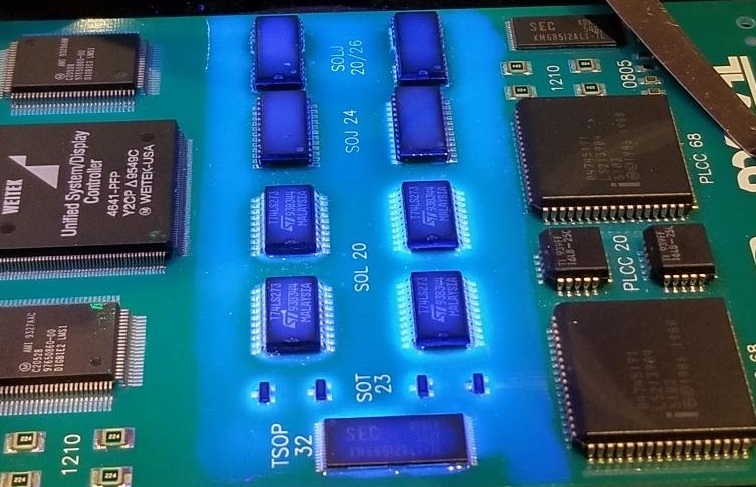
- Inspect Thoroughly: After application, inspect the coating for uniformity, thickness, and defects using criteria from IPC-A-610. Visual inspection under UV light can reveal coverage gaps if the coating contains fluorescent tracers.
By following these practices, engineers can minimize defects like bubbles, pinholes, or uneven thickness, ensuring reliable protection for electronic components. Consistent application also reduces rework costs and improves assembly reliability in harsh environments.
Troubleshooting Common Viscosity-Related Issues
Viscosity-related challenges often arise during conformal coating application, impacting coverage and performance. One common issue is incomplete coverage, often caused by high viscosity preventing the coating from flowing into tight spaces or around components. Reducing viscosity through thinning or increasing application temperature can help, but adjustments must be tested to avoid over-thinning.
Another issue is excessive buildup or sagging, typically resulting from low viscosity or high flow rate. This can lead to uneven layers, especially on vertical surfaces. Increasing viscosity or adjusting the application speed can mitigate this problem. Air entrapment, forming bubbles in the coating, often occurs during dipping with highly viscous materials. Slow immersion and withdrawal rates can reduce this defect.
Engineers should document process parameters and outcomes to identify patterns in viscosity-related issues. Adhering to inspection guidelines in IPC-A-610 ensures that defects are caught early, allowing for corrective action before assemblies reach the field.
Related Reading: The Engineer's Guide to Conformal Coating Failure Analysis: Identifying Root Causes and Prevention
Conclusion
Conformal coating viscosity is a fundamental factor in achieving effective protection for PCBs, directly influencing application success and long-term reliability. By understanding how viscosity affects flow rate, thinning needs, and uniform coverage, electrical engineers can optimize their processes to meet stringent performance requirements. Adhering to industry standards like IPC-CC-830C and IPC-A-610 ensures that coatings are applied consistently and inspected thoroughly. With careful selection of materials, control of environmental conditions, and attention to application techniques, engineers can overcome viscosity-related challenges and deliver robust electronic assemblies. This knowledge empowers professionals to safeguard critical systems in diverse and demanding environments.
FAQs
Q1: How does conformal coating viscosity impact the application process?
A1: Conformal coating viscosity determines how easily the material flows during application. High viscosity can cause incomplete coverage or uneven layers, while low viscosity may lead to runoff or sagging. Adjusting viscosity through thinning or temperature control ensures compatibility with methods like spraying or dipping, achieving consistent results as per standards like IPC-CC-830C.
Q2: What are the best methods for conformal coating thinning?
A2: Conformal coating thinning involves adding compatible solvents to reduce viscosity for easier application. Engineers must follow strict guidelines to avoid compromising protective properties. Testing the thinned coating for performance and adhesion, while adhering to standards like IPC-CC-830C, ensures reliability without sacrificing quality during the application process.
Q3: How can engineers ensure conformal coating uniform coverage on complex PCBs?
A3: To achieve conformal coating uniform coverage, engineers should select appropriate viscosity for the application method, control environmental factors like temperature, and use precise equipment. Thorough inspection under UV light, following IPC-A-610 criteria, helps detect gaps or defects, ensuring complete protection over intricate PCB geometries and components.
Q4: Why is conformal coating flow rate critical for automated systems?
A4: Conformal coating flow rate affects how evenly material is dispensed in automated systems like selective coating. Incorrect flow due to improper viscosity can cause uneven layers or missed areas. Adjusting viscosity and equipment settings ensures consistent delivery, maintaining coverage quality and aligning with industry expectations for reliable PCB protection.
References
IPC-CC-830C — Qualification and Performance Specification for Conformal Coatings. IPC, 2018.
IPC-A-610H — Acceptability of Electronic Assemblies. IPC, 2020.
ISO 9001:2015 — Quality Management Systems. ISO, 2015.