Introduction
The pressure sensor market continues to expand rapidly, driven by advancements in electronics and automation across industries. Electric engineers designing printed circuit boards (PCBs) for sensor applications must understand these trends to optimize integration and performance. Pressure sensors measure force per unit area, converting mechanical pressure into electrical signals essential for systems like automotive controls, medical devices, and industrial monitoring. As the pressure sensor market size grows, so does the demand for compact, reliable components mounted directly on PCBs. This article provides a pressure sensor market analysis, highlighting growth factors, technical principles, and best practices for PCB implementation. Key areas include the integration of Industry 4.0 technologies and the rise of wireless pressure sensors, which offer flexibility in smart manufacturing environments.
Pressure sensors play a critical role in enabling precise data collection for real-time decision-making. In PCB design, engineers face challenges like thermal management and signal integrity when incorporating these sensors. Market growth reflects broader shifts toward IoT and automation, influencing how PCBs are specified for sensor modules. Understanding these dynamics ensures designs meet reliability standards while supporting scalable production.
Fundamentals of Pressure Sensors
Pressure sensors operate on principles that detect changes in pressure through mechanical deformation or other physical effects. Common types include absolute, gauge, differential, and sealed sensors, each suited to specific applications. Absolute sensors measure pressure relative to a vacuum, ideal for altitude sensing in consumer electronics. Gauge sensors reference atmospheric pressure, widely used in tire pressure monitoring systems. Differential sensors compare two pressures, essential for flow measurement in industrial processes.
Technologies vary, with piezoresistive sensors dominating due to their high sensitivity and integration ease on silicon substrates. These sensors use strain gauges that change resistance under pressure, often fabricated via MEMS processes for miniaturization. Capacitive sensors detect diaphragm deflection altering capacitance, offering low power consumption for battery-operated devices. Optical sensors measure light modulation from pressure-induced changes, providing immunity to electromagnetic interference in harsh environments.
Electric engineers must consider sensor output types, such as analog voltage, current loops, or digital interfaces like I2C or SPI for PCB connectivity. Board-mount pressure sensors, designed for direct soldering, reduce assembly complexity but require careful handling during reflow. Compliance with moisture sensitivity levels ensures reliability during PCB manufacturing.
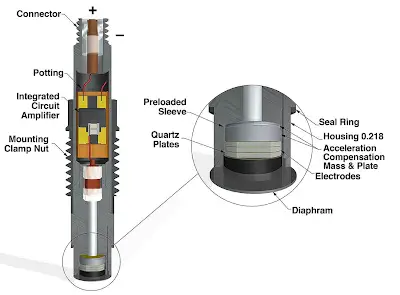
Resonant solid-state sensors use vibrating elements whose frequency shifts with pressure, delivering high accuracy for precision applications. Electromagnetic and potentiometric types serve niche high-pressure needs. Selection depends on range, accuracy, and environmental factors like temperature and vibration.
Pressure Sensor Market Size and Growth Analysis
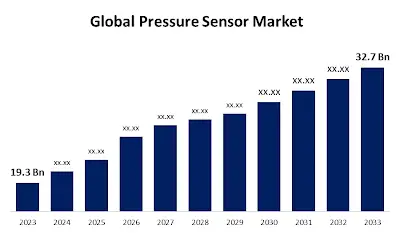
Recent analyses project steady expansion in the pressure sensor market. One report estimates the global pressure sensor market size at USD 20.60 billion in 2024, reaching USD 26.32 billion by 2030 with a CAGR of 4.1%. Another forecasts growth from USD 13.07 billion in 2025 to USD 17.70 billion by 2030 at a 6.2% CAGR, reflecting variances in segmentation methodologies. Higher estimates, such as USD 21.95 billion in 2025 expanding to USD 32.53 billion by 2034 at 4.4% CAGR, underscore automotive and industrial demand.
Segmentation reveals piezoresistive technology holding the largest share, around 39%, due to cost-effectiveness and automotive adoption. Absolute sensors command over 40% of the product type segment, vital for vacuum and altimetry uses. Applications break down with automotive leading at nearly 30%, followed by industrial and consumer electronics.
Wireless segments show the fastest growth, with CAGRs up to 9.63% through 2031, driven by IoT compatibility. Asia Pacific dominates regionally with about 39% share, fueled by electronics manufacturing. North America and Europe follow, supported by Industry 4.0 initiatives.
Key Drivers of Pressure Sensor Market Growth
Automotive applications propel the market, with sensors in TPMS, engine management, and EV powertrains ensuring safety and efficiency. Healthcare demands compact sensors for ventilators, wearables, and infusion pumps, accelerating post-pandemic. Industrial uses in process control, HVAC, and robotics benefit from rugged designs.
Miniaturization via MEMS enables smaller footprints, aligning with PCB trends toward dense layouts. IoT proliferation requires low-power, wireless-capable sensors for remote monitoring. Sustainability pushes for energy-efficient technologies, reducing operational costs.
Regional factors include Asia Pacific's electronics boom and Europe's regulatory focus on emissions. Overall, these drivers sustain double-digit growth in sub-segments like medical and wireless.
Integration of Industry 4.0 and Wireless Pressure Sensors
Industry 4.0 transforms manufacturing through cyber-physical systems, where pressure sensors provide real-time data for predictive maintenance. Integration enables machine-to-machine communication, optimizing processes like fluid flow in factories. Wireless pressure sensors facilitate this by eliminating cabling, ideal for retrofits in legacy equipment.
Wireless adoption grows at higher CAGRs, up to 5.8–9.6%, due to portability and safety in hazardous areas. Battery-powered units with energy harvesting support long-term deployment in IIoT networks. Protocols like Bluetooth Low Energy or LoRa enable seamless data transmission to cloud platforms.
For electric engineers, this means PCBs must accommodate RF modules alongside sensors, managing interference and power budgets. Smart factories in Germany exemplify deep Industry 4.0 integration, demanding rugged, intelligent sensors.

Challenges include latency and security, addressed by edge computing on PCBs.
PCB Design and Best Practices for Pressure Sensor Integration
Integrating pressure sensors on PCBs requires attention to mechanical stress, thermal cycling, and reflow processes. Board-mount sensors, often MEMS-based, solder directly via surface-mount technology, minimizing size. Engineers should position sensors away from high-stress areas to prevent diaphragm damage.
Signal conditioning circuits, including amplifiers and ADCs, ensure accurate readout. Multi-layer PCBs with ground planes reduce noise for analog outputs. For wireless variants, antenna placement and impedance matching are critical.
Compliance with standards like JEDEC J-STD-020E for moisture/reflow sensitivity prevents failures during assembly. IPC-A-610 guidelines define acceptability for sensor solder joints. ISO 9001:2015 supports quality in manufacturing sensor-equipped PCBs.
Testing involves environmental simulation per IPC-6012DS for rigid boards. Use finite element analysis for warpage prediction around sensor ports.
Best practices include thermal vias under sensors and conformal coating for humidity protection. These ensure longevity in automotive or industrial use.
Conclusion
The pressure sensor market growth reflects technological convergence in automation and connectivity. Electric engineers benefit from understanding market dynamics, from size projections to wireless trends. PCB designs optimized for sensor integration drive reliable, high-performance systems. As Industry 4.0 advances, wireless pressure sensors will dominate, demanding innovative PCB solutions. Staying aligned with standards ensures competitiveness in this evolving landscape.
FAQs
Q1: What is the current pressure sensor market size and projected growth?
A1: The pressure sensor market size varies by report but stands around USD 20–22 billion in 2024–2025, projected to reach USD 26–33 billion by 2030–2031 with CAGRs of 4–9%. Growth stems from automotive, healthcare, and industrial demand, per pressure sensor market analysis.
Q2: How does Industry 4.0 impact the pressure sensor market?
A2: Industry 4.0 boosts demand for pressure sensors in smart factories via real-time monitoring and predictive maintenance. Wireless integration enables flexible IIoT setups, accelerating market expansion in manufacturing automation.
Q3: What are wireless pressure sensors and their advantages?
A3: Wireless pressure sensors transmit data without cables, ideal for remote or hazardous monitoring. They offer portability, lower installation costs, and IoT compatibility, growing fastest in the pressure sensor market at higher CAGRs.
Q4: What PCB considerations apply to pressure sensor integration?
A4: Design for reflow per JEDEC J-STD-020E, manage thermal stress, and include noise isolation. Compliance with IPC standards ensures reliability in applications like automotive controls.
References
[1] Grand View Research — Pressure Sensors Market Report: https://www.grandviewresearch.com/industry-analysis/pressure-sensors-industry
[2] MarketsandMarkets — Pressure Sensor Market: https://www.marketsandmarkets.com/Market-Reports/pressure-sensor-market-871.html
[3] Fortune Business Insights — Pressure Sensor Market: https://www.fortunebusinessinsights.com/pressure-sensor-market-112730
[4] Mordor Intelligence — Pressure Sensors Market: https://www.mordorintelligence.com/industry-reports/pressure-sensors-market
JEDEC J-STD-020E — Moisture/Reflow Sensitivity Classification. JEDEC, 2014.
IPC-A-610H — Acceptability of Electronic Assemblies. IPC, 2019.
IPC-6012DS — Qualification and Performance Specification for Rigid Printed Boards. IPC, 2015.