Introduction
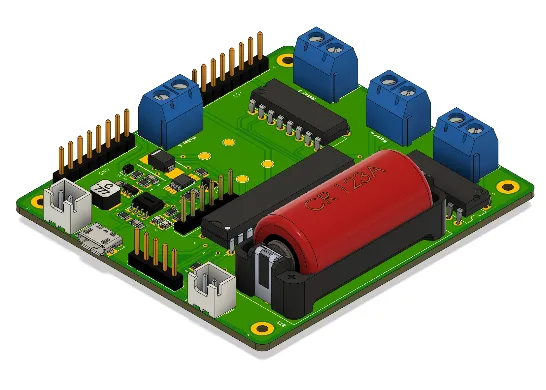
Robotics control printed circuit boards (PCBs) form the core of systems that manage precise movements, sensor data, and real-time decision-making in automated environments. These boards must endure continuous operation amid mechanical stresses, thermal fluctuations, and potential contaminants. Selecting the appropriate robotics PCB components directly impacts overall system reliability and performance, preventing failures that could halt production lines or compromise safety. Engineers face the challenge of balancing cost with durability, especially when deploying in industrial settings where downtime proves costly. This article explores key criteria for component selection, emphasizing features like industrial-grade components, extended temperature range capabilities, and protections such as vibration resistance and shock resistance. By focusing on these elements, designers can build robust control systems that meet demanding operational needs.
Why Component Selection Matters for Robotics Control PCBs
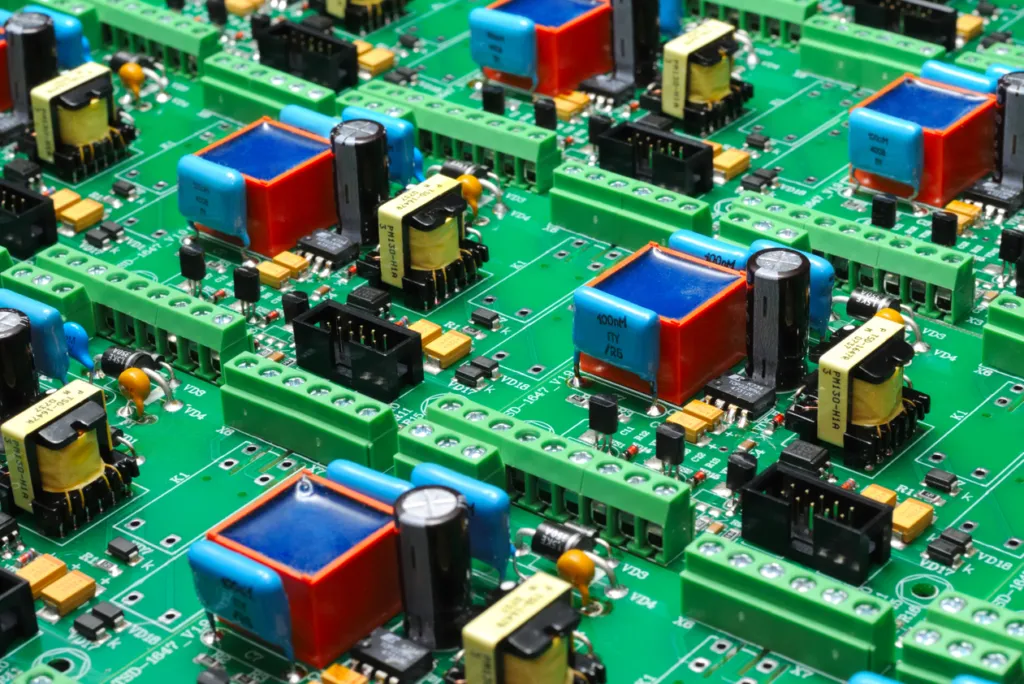
Robotics applications expose PCBs to unique stresses, including rapid accelerations, repetitive motions, and variable power demands, making component reliability paramount. Poorly chosen parts can lead to solder joint fatigue, signal integrity loss, or thermal runaway, resulting in erratic robot behavior or complete system shutdowns. Industrial-grade components stand out because they undergo rigorous qualification for harsh conditions, unlike consumer-grade alternatives that prioritize cost over longevity. Key attributes like extended temperature range ensure stable operation across factory floors or outdoor deployments, while vibration resistance and shock resistance safeguard against mechanical failures common in mobile robots. Conformal coating and potting further enhance protection by sealing components from dust, moisture, and corrosive agents. Prioritizing these factors aligns with engineering best practices, extending mean time between failures (MTBF) and reducing maintenance interventions.
In robotics control, components handle high-frequency signals for motor control and feedback loops, where even minor degradation affects precision. Designers must evaluate datasheets for specifications tailored to dynamic loads, avoiding assumptions based on static testing alone. Troubleshooting early failures often reveals mismatched components unable to cope with real-world harmonics from servo motors or conveyor vibrations. Selecting verified robotics PCB components mitigates these risks, supporting scalable production and field upgrades.
Key Environmental Challenges and Component Requirements
Robotics environments demand components that withstand extended temperature range variations, from cold storage to heated machinery compartments. Thermal cycling induces material expansion mismatches, potentially cracking solder joints or delaminating boards if parts lack sufficient tolerance. Industrial-grade components address this through specialized packaging, such as ceramic or high-Tg encapsulants, maintaining electrical performance without derating. Engineers should verify operating ranges that cover anticipated excursions, ensuring no hotspots form during peak loads.
Vibration resistance proves critical in wheeled or articulated robots, where resonant frequencies can amplify micro-movements into destructive forces. Components with flexible leads or damped internals absorb these energies, preventing wire bond lifts or capacitor shorts. Shock resistance complements this for sudden impacts, like collisions or drops during handling. Testing per established guidelines confirms these traits, guiding selection toward parts proven in similar applications.
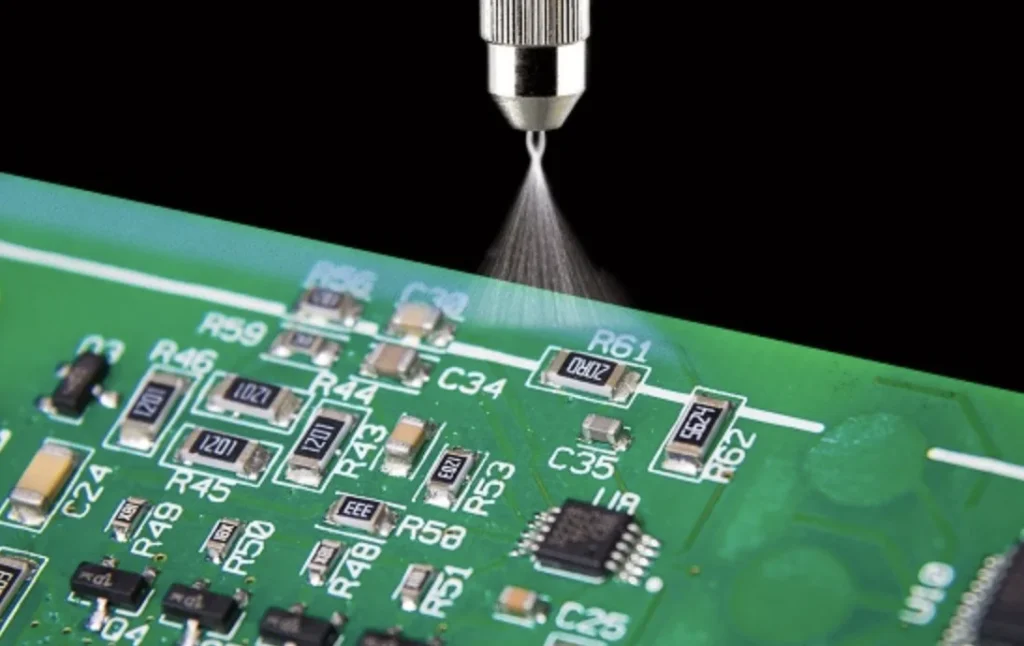
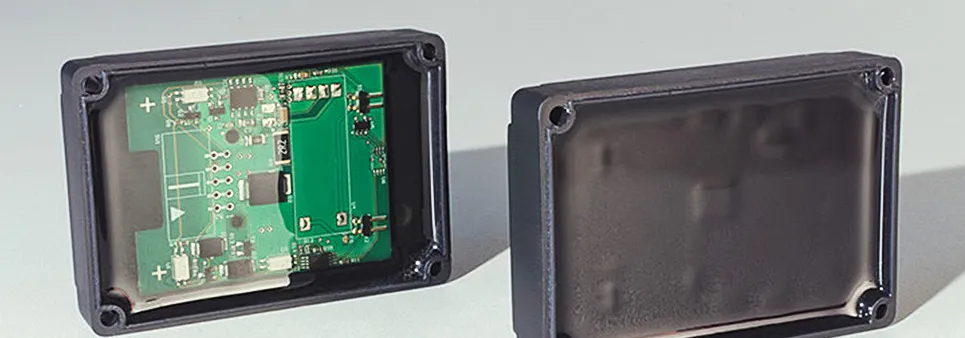
Conformal coating adds a thin protective layer over assembled boards, improving resistance to humidity and mild chemicals while allowing rework. For extreme cases, potting encapsulates the entire assembly in a solid compound, offering superior mechanical coupling and isolation from shocks. Each method trades off weight, thermal dissipation, and repairability, requiring application-specific choices.
Technical Principles Behind Reliable Robotics PCB Components
The reliability of robotics PCB components hinges on their ability to maintain integrity under combined stresses, governed by material science and mechanical engineering principles. Solder joints, for instance, experience shear forces from vibration, modeled as fatigue cycles where strain amplitude dictates lifespan. Industrial-grade resistors, capacitors, and ICs incorporate reinforced terminations, such as gull-wing leads with compliance zones, to flex without fracturing. Microcontrollers for control logic often feature on-chip safeguards like watchdog timers, but their external passives must match in robustness to avoid cascading failures.
Extended temperature range components use die-attach materials with low CTE mismatch, minimizing warpage during thermal ramps. Vibration induces acoustic noise in piezoelectrics, but screened parts suppress this through internal damping. Shock events create g-forces that test adhesion strength, with potting distributing loads evenly across the board. Understanding these interactions helps engineers simulate via finite element analysis, predicting weak points before prototyping.
Conformal coating works by forming a dielectric barrier, typically 25-250 microns thick, that flexes with the substrate to avoid cracking. Potting, conversely, rigidifies the assembly, converting it into a monolithic unit resistant to accelerations over 100g. Both enhance insulation resistance, but potting excels in fully immersive hazards. Practical troubleshooting involves sectioning failed units to inspect interfaces, revealing if delamination or voiding caused intermittent opens.
Best Practices for Selecting and Implementing Components
Start with a thorough requirements analysis, mapping mission profiles to component specs like MTBF ratings and derating curves. Opt for industrial-grade components qualified for Class 2 or higher assemblies per relevant guidelines, ensuring traceability from supplier datasheets. Cross-reference vibration resistance data from sinusoidal and random profiles, prioritizing those exceeding operational spectra by a safety margin.
For extended temperature range, select parts with junction temperatures at least 20% above max case estimates, incorporating thermal vias and heat spreaders on the PCB. Implement mechanical fixes like adhesive anchoring for heavy components and stress-relief bends in wiring. Apply conformal coating post-assembly via selective masking to protect sensitive areas without hindering cooling fins.
Potting suits high-vibration zones, such as arm joints, but requires vacuum degassing to eliminate air pockets that nucleate cracks under shock. Qualify assemblies through accelerated life testing, including temperature cycling and mechanical shock sequences. Document selection rationale in design reviews, facilitating audits and iterations.
Incorporate redundancy for critical control signals, using dual-in-line packages with proven shock resistance. Firmware updates should account for component tolerances, avoiding overclocking marginal parts. Field feedback loops refine future selections, addressing outliers like harmonic resonances unique to deployment sites.
Troubleshooting Common Issues in Robotics PCB Deployments
Engineers often encounter intermittent faults traced to vibration-induced microcracks in capacitors, manifesting as noise spikes in encoder readings. Inspect for fretting corrosion on contacts, mitigated by gold plating and conformal coating. Thermal shutdowns signal inadequate extended temperature range, prompting swaps to automotive-grade alternates with broader specs.
Shock failures appear as lifted pads post-drop tests; reinforce with underfill or potting. Use high-speed cameras during shaker runs to correlate visuals with telemetry drops. Datasheet creep—where real performance lags advertised—demands sample qualification lots before volume commit.
A practical case involved a picking robot where motor driver ICs failed under random vibration; switching to industrial-grade with compliant leads and adding potting resolved it, boosting uptime by observing fewer alarms.
Conclusion
Selecting robotics PCB components demands a holistic approach, prioritizing industrial-grade options with extended temperature range, vibration resistance, shock resistance, conformal coating, and potting where needed. These choices fortify control systems against real-world rigors, ensuring precise operation and longevity. By adhering to proven engineering practices and qualification methods, teams minimize risks and optimize performance. Future designs will leverage advancing materials, but fundamentals remain: match components to environment for reliable outcomes. Engineers equipped with this knowledge can confidently tackle demanding robotics projects.
FAQs
Q1: What makes industrial-grade components essential for robotics PCB components?
A1: Industrial-grade components excel in robotics due to their superior vibration resistance, shock resistance, and extended temperature range capabilities compared to commercial parts. They feature reinforced packaging and materials that withstand factory harmonics and thermal swings without degrading signal integrity. Troubleshooting reveals they reduce field returns by handling combined stresses effectively. Select them for control boards to ensure consistent motor feedback and processing.
Q2: How does conformal coating improve reliability in robotics control PCBs?
A2: Conformal coating protects robotics PCB components from moisture, dust, and mild corrosives, while enhancing vibration resistance through a flexible dielectric layer. It prevents dendritic growth and arcing in humid environments common to warehouses. Application post-cleaning ensures uniform coverage without voids. This boosts overall board longevity, especially when paired with industrial-grade parts.
Q3: When should potting be used over conformal coating for robotics PCBs?
A3: Potting provides maximum shock resistance and vibration resistance by fully encapsulating the assembly, ideal for high-acceleration robotics like collaborative arms. It seals against immersion but complicates rework and heat dissipation. Use it when conformal coating falls short in extreme mechanical loads. Qualification confirms strain distribution uniformity.
Q4: What role does extended temperature range play in component selection for robotics?
A4: Extended temperature range in robotics PCB components prevents performance drops during operation in varying climates or near heat sources. It maintains threshold voltages and timing accuracy for precise control loops. Verify via thermal profiling to avoid hotspots. This ensures reliability without active cooling additions.
References
IPC/JEDEC-9703 — Mechanical Shock Test Guideline for PCB Assemblies. IPC/JEDEC.
IPC-TM-650 2.6.7 — Thermal Shock. IPC.
J-STD-001GS — Requirements for Soldered Electrical and Electronic Assemblies. IPC, 2011.