Introduction
In the realm of printed circuit board design, selecting the appropriate copper thickness is a critical decision that impacts performance, cost, and reliability. Copper thickness, often measured in ounces per square foot, directly influences current carrying capacity, thermal management, and manufacturing complexity. For electrical engineers, the choice between 1oz copper PCB and 2oz copper PCB is often a balance of technical requirements and project constraints. This article provides a detailed comparison of 1oz and 2oz copper PCBs, focusing on their properties, applications, and key considerations. By understanding these factors, engineers can make informed decisions to optimize their designs for efficiency and durability. Whether working on low power circuits or high current applications, this guide offers practical insights tailored for technical professionals.
What Are 1oz and 2oz Copper PCBs and Why Do They Matter
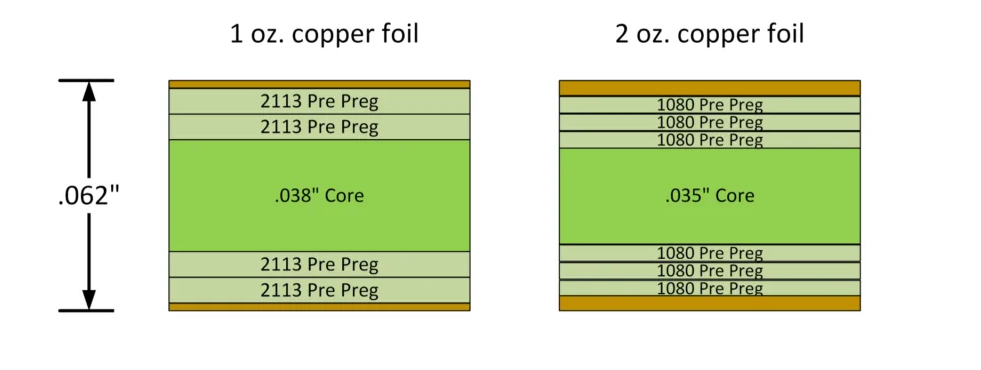
Copper thickness in PCBs refers to the weight of copper per square foot of board area. A 1oz copper PCB has a thickness of approximately 1.37 mils, representing 1 ounce of copper spread over one square foot. In contrast, a 2oz copper PCB doubles this weight, resulting in a thickness of about 2.74 mils. This seemingly small difference significantly affects the board's ability to handle electrical current and dissipate heat.
The choice of copper thickness matters because it directly impacts the PCB's performance in real world applications. Thinner copper, like 1oz, is suitable for standard electronics with moderate current needs, while thicker 2oz copper excels in high power scenarios requiring robust current carrying capacity. Selecting the right thickness ensures reliability, prevents overheating, and avoids unnecessary costs. For engineers, understanding these differences is essential for meeting design specifications and maintaining product quality.
Technical Principles of Copper Thickness in PCBs
Copper thickness in PCBs influences several key electrical and thermal properties. First, it determines the current carrying capacity of the traces. Thicker copper, such as 2oz, can handle higher currents without excessive voltage drop or overheating. This is due to lower electrical resistance in thicker layers, which reduces power loss. Standards like IPC-2221B provide guidelines for calculating trace width and thickness based on current requirements and temperature rise.
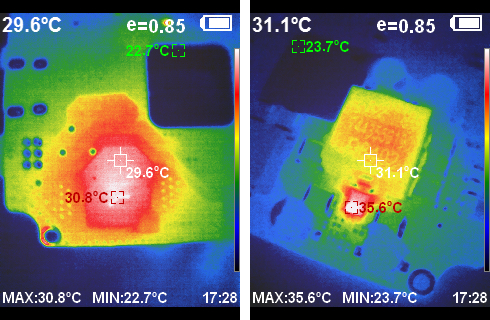
Second, thermal management is another critical factor. Thicker copper layers in a 2oz copper PCB dissipate heat more effectively, reducing the risk of thermal hotspots. This is vital in high power designs where components generate significant heat. Conversely, 1oz copper may suffice for low power applications with minimal thermal stress.
Finally, copper thickness affects impedance control in high frequency designs. Thicker copper can alter signal integrity due to changes in trace geometry. Engineers must account for these effects when designing for specific impedance requirements, often referencing standards like IPC-2141A for controlled impedance calculations.
Related Reading: Inner Layer Copper Thickness: A Key to Effective PCB Heat Dissipation
Key Differences in 1oz and 2oz Copper PCBs
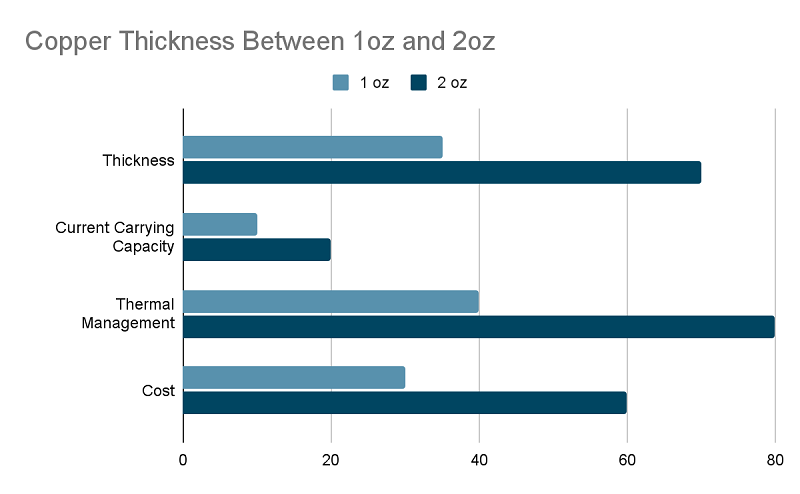
To aid in decision making, a detailed comparison of 1oz and 2oz copper PCBs across various parameters is essential. Below is a structured analysis of their differences.
Current Carrying Capacity
A 2oz copper PCB can carry approximately twice the current of a 1oz copper PCB for the same trace width. This makes 2oz ideal for power electronics, motor controls, and LED lighting systems. Standards such as IPC-2221B offer detailed charts for determining safe current limits based on copper thickness and temperature rise.
Thermal Performance
With greater mass, 2oz copper dissipates heat more efficiently than 1oz copper. This reduces the risk of thermal failure in high power applications. For designs operating at elevated temperatures, 2oz copper provides a safer margin, aligning with thermal management guidelines in IPC-6012E.
Cost and Manufacturing Complexity
Thicker copper in a 2oz PCB increases material costs and manufacturing complexity. Etching thicker layers requires more precise control, potentially leading to higher production expenses. In contrast, 1oz copper is more cost effective and easier to fabricate, making it a default choice for standard applications.
Mechanical Strength
A 2oz copper PCB offers greater mechanical strength due to the thicker conductive layer. This can enhance durability in environments subject to vibration or mechanical stress. However, 1oz copper is often sufficient for most consumer electronics with minimal physical demands.
Application Suitability
While 1oz copper suits low to medium power applications like sensors and microcontrollers, 2oz copper is preferred for high current systems such as power supplies and automotive electronics. Choosing the right thickness ensures compliance with performance specifications outlined in standards like IPC-A-600K.
Practical Considerations for Choosing Between 1oz and 2oz Copper PCBs
Selecting between a 1oz copper PCB and a 2oz copper PCB involves evaluating project specific needs. Below are actionable steps to guide engineers in this process.
Assess Current and Power Requirements
Begin by calculating the expected current load of your design. Use standards like IPC-2221B to determine the minimum copper thickness and trace width needed to handle the current without exceeding acceptable temperature rise limits. For high power designs, 2oz copper often provides the necessary capacity.
Evaluate Thermal Constraints
Consider the operating environment and heat dissipation needs. If components generate significant heat or the PCB operates in a confined space, a 2oz copper PCB can mitigate thermal risks. Thermal simulation tools aligned with IPC-6012E guidelines can assist in this analysis.
Balance Cost and Performance
Thicker copper increases costs, so weigh this against performance benefits. For prototypes or low power applications, a 1oz copper PCB may suffice, keeping expenses low. Reserve 2oz copper for production runs or designs where reliability under high current is critical.
Consider Signal Integrity
In high frequency designs, copper thickness affects impedance and signal quality. Ensure that the chosen thickness aligns with impedance requirements as per IPC-2141A. A 1oz copper layer is often preferred for controlled impedance in RF applications due to easier trace geometry management.
Review Manufacturing Capabilities
Confirm that your design aligns with manufacturing tolerances for copper thickness. Thicker 2oz layers may require adjustments in etching and plating processes, potentially affecting lead times. Refer to acceptability criteria in IPC-A-600K to ensure manufacturability.
Related Reading: Choosing PCB Copper Weight: 1oz vs. 2oz for Optimal Performance
Applications and Use Cases for 1oz and 2oz Copper PCBs
Understanding where each copper thickness excels helps in making an informed choice. A 1oz copper PCB is commonly used in consumer electronics, such as smartphones, wearables, and IoT devices. These applications typically involve low to moderate current and prioritize cost efficiency. The thinner copper layer supports compact designs with fine traces, adhering to standards like IPC-6012E for performance and reliability.
On the other hand, a 2oz copper PCB is suited for industrial and automotive applications. Power converters, battery management systems, and high power LED arrays benefit from the enhanced current capacity and thermal performance of thicker copper. These use cases often demand robust designs capable of withstanding harsh conditions, aligning with durability specifications in IPC-A-600K.
Conclusion
Choosing between a 1oz copper PCB and a 2oz copper PCB requires careful consideration of current capacity, thermal needs, cost, and application demands. A 1oz copper PCB offers a cost effective solution for standard electronics with moderate power requirements, while a 2oz copper PCB provides superior performance for high current and thermally intensive designs. By referencing industry standards like IPC-2221B and IPC-6012E, engineers can ensure their selections meet technical and reliability criteria. Ultimately, aligning copper thickness with project goals optimizes both functionality and budget, ensuring successful outcomes in PCB design and implementation.
FAQs
Q1: What are the main differences in current capacity between a 1oz copper PCB and a 2oz copper PCB?
A1: A 2oz copper PCB can handle roughly twice the current of a 1oz copper PCB for the same trace width, due to lower resistance. This makes 2oz ideal for high power applications. Engineers can refer to standards like IPC-2221B for precise calculations on safe current limits based on copper thickness and temperature constraints.
Q2: When should I choose a 2oz copper PCB over a 1oz copper PCB for my design?
A2: Opt for a 2oz copper PCB when your design involves high current loads or significant heat generation, such as in power electronics or automotive systems. It offers better thermal dissipation and durability. For low power or cost sensitive projects, a 1oz copper PCB is often sufficient and more economical.
Q3: How does copper thickness impact the cost of a copper PCB in manufacturing?
A3: Thicker copper, like in a 2oz copper PCB, increases material costs and manufacturing complexity due to precise etching requirements. A 1oz copper PCB is more affordable and easier to produce, making it a common choice for standard applications unless higher performance justifies the additional expense.
Q4: What standards guide the selection of copper thickness for a copper PCB?
A4: Standards such as IPC-2221B for current capacity and trace design, IPC-6012E for performance specifications, and IPC-A-600K for acceptability criteria provide detailed guidance. These ensure that the chosen copper thickness meets electrical, thermal, and manufacturing requirements for reliable PCB performance in various applications.
References
IPC-2221B — Generic Standard on Printed Board Design. IPC, 2012.
IPC-6012E — Qualification and Performance Specification for Rigid Printed Boards. IPC, 2020.
IPC-A-600K — Acceptability of Printed Boards. IPC, 2020.
IPC-2141A — Design Guide for High-Speed Controlled Impedance Circuit Boards. IPC, 2004.