Introduction
Polyimide PCBs stand out in demanding applications due to their exceptional thermal stability and flexibility, making them ideal for aerospace, automotive, and high-reliability electronics. However, these boards face significant challenges from environmental moisture, which can compromise their performance during manufacturing and operation. Polyimide PCB moisture absorption occurs more readily than in some other laminates, leading to potential reliability issues if not managed properly. This article explores the moisture effects on polyimide, detailing the underlying mechanisms and offering factory-proven prevention and mitigation strategies. Engineers working with these materials must prioritize moisture control to ensure compliance with industry standards and long-term board integrity. By understanding these factors, teams can implement robust processes to safeguard production yields.
Understanding Polyimide PCB Moisture Absorption
Polyimide materials, prized for their high glass transition temperature and mechanical resilience, exhibit a notable affinity for moisture compared to standard epoxy-based laminates. This polyimide PCB moisture absorption stems from the polymer's polar groups, which attract water molecules from humid environments. In factory settings, exposure during storage or handling allows diffusion into the laminate, particularly at edges and vias where barriers are thinner. Over time, this absorbed moisture alters the material's dielectric properties and dimensional stability. The relevance intensifies in high-volume production, where uncontrolled humidity can lead to batch failures during reflow soldering. Addressing this early in the supply chain aligns with quality control protocols essential for electric engineers.
Why Moisture Effects on Polyimide Matter in Manufacturing
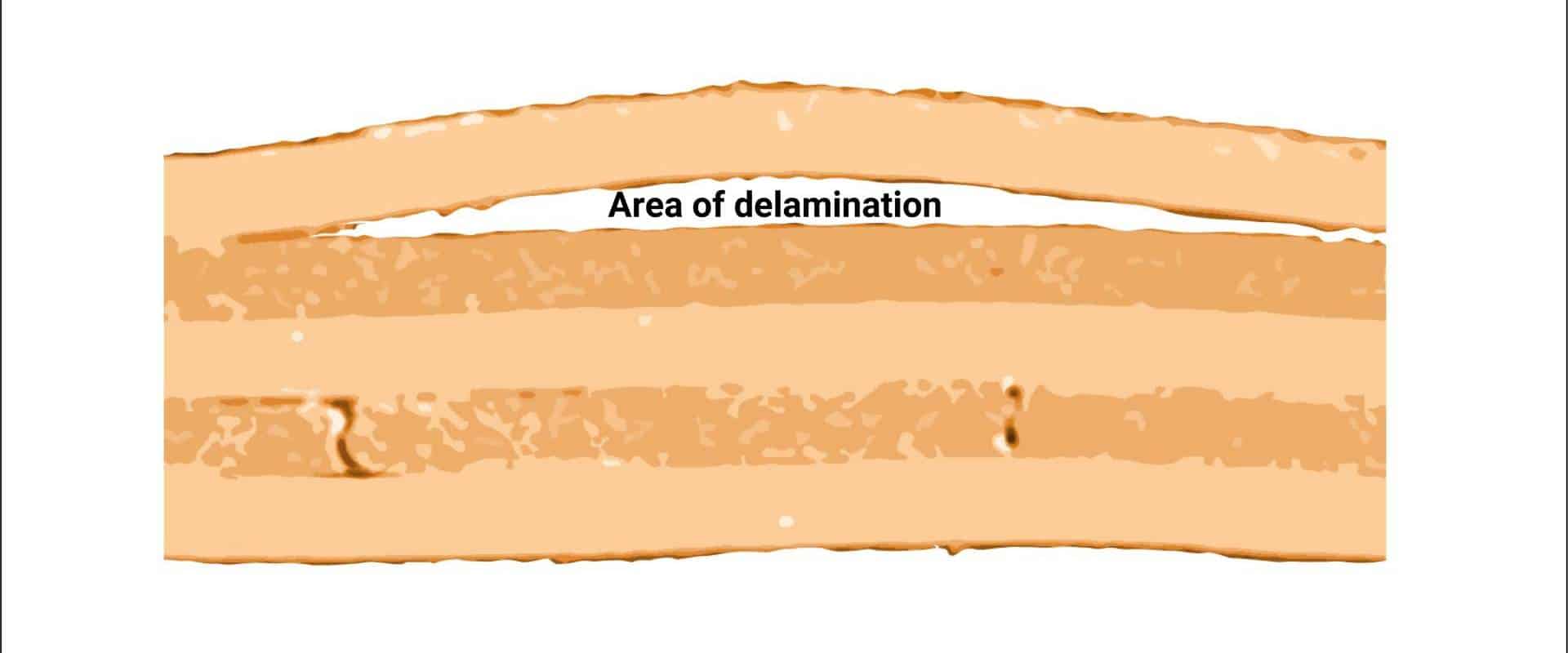
Moisture effects on polyimide manifest critically during thermal processes like soldering, where trapped water vaporizes rapidly. This expansion generates internal pressures that exceed the adhesive strength between layers, resulting in delamination or blistering. Warpage becomes another concern as uneven moisture distribution causes hygroscopic swelling, distorting fine-pitch features and misaligning components. In operational environments, residual moisture accelerates ionic migration, promoting corrosion and shorts under bias. These failures not only reduce yield but also undermine field reliability in mission-critical systems. Factory insights emphasize proactive monitoring to meet performance specifications from the outset.
Mechanisms of Moisture-Induced Damage in Polyimide PCBs
Moisture ingress follows Fickian diffusion principles, with absorption rates influenced by relative humidity and exposure duration. In polyimide, water molecules penetrate the resin matrix, plasticizing the material and lowering its Tg temporarily. During reflow, as per IPC/JEDEC J-STD-033 guidelines for moisture-sensitive handling, this leads to popcorn cracking in thicker sections or adhesive voids. Vias and plated-through holes suffer barrel cracking from volumetric expansion mismatches between copper and polyimide. Hygroscopic stress also induces microcracks at interfaces, propagating under thermal cycling. Engineers must model these interactions using factory data to predict failure modes accurately.
High humidity exacerbates these issues by saturating the laminate faster, especially in multilayer rigid-flex designs common with polyimide. The vapor pressure buildup follows the ideal gas law, where rapid heating multiplies internal forces. This mechanism aligns with observations in JEDEC J-STD-020 classifications for reflow sensitivity. Prevention hinges on quantifying absorption through weight gain tests before processing. Such factory-driven analysis ensures boards remain within safe moisture thresholds.
Key Effects: Delamination, Warpage, and Reliability Degradation
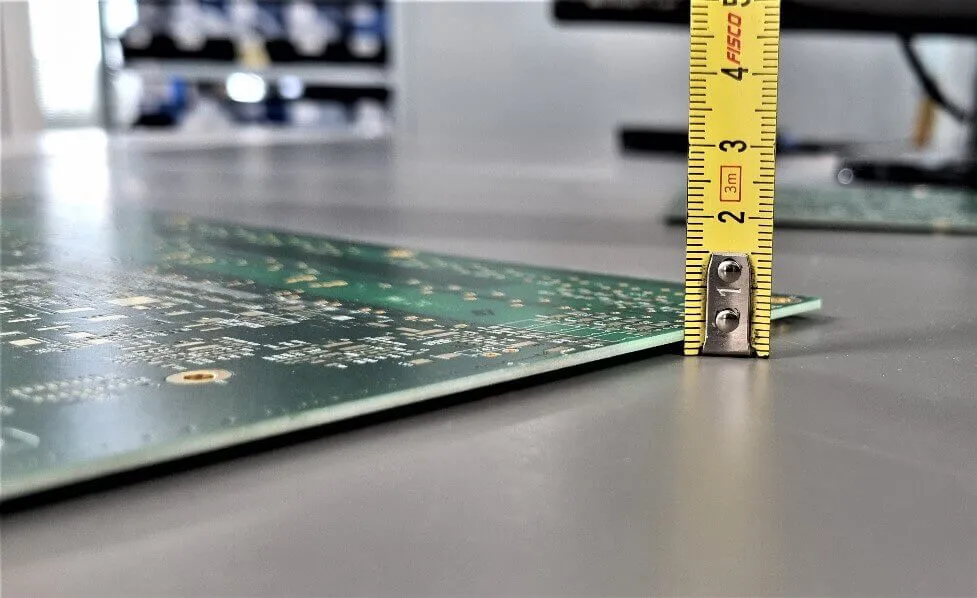
Delamination represents one of the most visible moisture effects on polyimide, occurring when vapor pressure separates copper foil from the substrate. Warpage follows as absorbed moisture causes asymmetric expansion, measurable via shadow moiré techniques in quality labs. Reliability degrades through accelerated electromigration and dendrite formation in humid conditions. These compounded issues elevate scrap rates and rework costs in assembly lines. Electric engineers benefit from understanding these failure signatures to refine process controls.
Prevention Strategies: Optimizing Storage and Handling
Effective prevention starts with dry storage environments below 10% RH, using desiccated cabinets to limit polyimide PCB moisture absorption from the factory floor. Implementing moisture barrier bags with humidity indicator cards provides visual verification of seal integrity. Dehumidifying polyimide PCBs through controlled atmospheres during transport minimizes exposure risks. Factory protocols dictate immediate resealing after unpacking to extend shelf life. These measures, rooted in standardized handling, protect incoming materials before fabrication begins.
Polyimide PCB Baking: Essential Dehumidification Process
Polyimide PCB baking serves as a cornerstone for moisture removal prior to soldering or lamination. Factories preheat boards in convection ovens under vacuum or inert gas to accelerate desorption without oxidation. This process follows established time-temperature profiles tailored to polyimide's thermal profile, ensuring uniform drying. Post-bake handling windows prevent reabsorption, typically requiring assembly within hours. Verification via weight loss or capacitance shifts confirms efficacy. Integrating baking into workflows upholds IPC/JEDEC J-STD-033 requirements for process-sensitive materials.
Multiple bake cycles risk degrading resin properties, so single-step optimization proves factory-efficient. Monitoring chamber humidity during baking enhances outcomes. Engineers should calibrate based on board thickness and prior exposure.
Implementing Moisture Barriers for Polyimide PCBs
A moisture barrier for polyimide enhances protection during extended storage or high-humidity shipping. These multilayer films, paired with desiccants, block diffusion while allowing outgassing. Factory application involves vacuum sealing post-inspection to trap dry conditions. For multilayer stacks, barriers prevent interlayer moisture gradients. Combining with HIC monitoring ensures traceability. This strategy proves vital for global supply chains.
Best Practices for Mitigation in Production
Routine factory audits of humidity levels guide mitigation efforts across lamination, drilling, and plating. Pre-laminate baking of cores reduces baseline moisture in polyimide stacks. Plasma cleaning post-drill removes residues that trap humidity. Solder mask formulations with low permeability add surface protection. Process validation through cross-section analysis detects early delamination risks. These layered approaches align with quality standards, boosting first-pass yields.
In assembly, nitrogen reflow atmospheres suppress oxidation alongside moisture effects. Tooling design accommodates potential warpage via fiducials. Data logging from environmental chambers informs continuous improvement.
Troubleshooting Common Moisture-Related Failures
When delamination appears, cross-sections reveal void patterns indicative of moisture vapor. Warped boards signal storage lapses, correctable by re-baking if within limits. Ionic contamination tests post-cleaning flag residue amplification. Factory root-cause analysis often traces to unpackaged floor time. Corrective actions include supplier audits for incoming dryness. Engineers apply these diagnostics systematically.
Conclusion
Moisture poses a persistent threat to polyimide PCBs, driving delamination, warpage, and reliability shortfalls if unchecked. Through rigorous storage, baking, and barrier strategies, factories can mitigate polyimide PCB moisture absorption effectively. Adhering to IPC/JEDEC J-STD-033 and related standards ensures compliance and performance. Electric engineers gain from integrating these practices into design-for-manufacturability reviews. Proactive management not only safeguards yields but elevates product longevity in harsh applications. Prioritizing moisture control remains a hallmark of professional PCB engineering.
FAQs
Q1: What are the primary moisture effects on polyimide PCBs during reflow?
A1: Moisture effects on polyimide include vapor expansion leading to delamination and blistering as water turns to steam at high temperatures. This compromises interlayer adhesion and via integrity. Factories mitigate by pre-baking boards per standard guidelines, ensuring safe processing windows. Proper handling prevents these failures upstream.
Q2: How does polyimide PCB baking help with moisture control?
A2: Polyimide PCB baking desorbs absorbed moisture through controlled heating, restoring dry conditions before assembly. It follows profiles that balance efficiency and material stability. Verification confirms reduced weight gain risks. This step integrates seamlessly into factory flows for high-reliability builds.
Q3: What is an effective moisture barrier for polyimide in storage?
A3: A moisture barrier for polyimide uses sealed bags with desiccants and indicators to block humidity ingress. These maintain low RH during shipping and shelving. Factories pair them with dry cabinets for optimal protection. This prevents reabsorption post-baking effectively.
Q4: Why is dehumidifying polyimide PCBs critical in humid environments?
A4: Dehumidifying polyimide PCBs curbs absorption that causes warpage and ionic issues in high-humidity factories. Controlled cabinets below 5% RH extend usability. It aligns with handling standards, reducing rework. Engineers monitor via indicators for compliance.
References
IPC/JEDEC J-STD-033D — Handling, Packing, Shipping and Use of Moisture/Reflow Sensitive Surface Mount Devices. IPC/JEDEC, 2021
JEDEC J-STD-020E — Moisture/Reflow Sensitivity Classification for Nonhermetic Surface Mount Devices. JEDEC, 2014
IPC-1601 — Printed Board Handling and Storage Guidelines. IPC, 2018