What is IPC-4101 and How Does It Influence PCB Material Selection?
IPC-4101 is a critical specification developed by the Institute of Printed Circuits (IPC), a leading global association that establishes standards for the electronics manufacturing industry. This document specifically details the requirements for base materials—encompassing laminates and prepregs—that are essential in the fabrication of rigid and the multilayer printed circuit board. These foundational materials provide both structural integrity and electrical insulation between the conductive layers of a PCB.
The importance of this standard lies in its ability to ensure consistency, dependability, and high performance throughout the PCB manufacturing process. By adhering to IPC-4101, manufacturers can guarantee that their chosen materials meet precise thermal, mechanical, and electrical specifications. This significantly minimizes the potential for costly failures, such as delamination or compromised signal integrity, particularly in demanding high-performance applications. For engineers and designers, consulting IPC-4101 helps in identifying materials that are perfectly suited to their project's demands, whether for consumer electronics, automotive systems, or advanced aerospace technology.
What Are the Core Categories of PCB Base Materials?
PCB base materials are the non-conductive substrates that form the fundamental structure of a printed circuit board. These materials are crucial as they dictate the board's durability, thermal resilience, and electrical characteristics. IPC-4101 categorizes base materials primarily into two types: laminates and prepregs.
Laminates for Structural Integrity
Laminates are rigid sheets created by applying heat and pressure to bond layers of resin-impregnated fabric, typically fiberglass. They serve as the core or outer layers of a PCB, contributing mechanical strength and electrical insulation. FR-4 is a widely used laminate, valued for its balanced cost and performance, and commonly features a dielectric constant (Dk) between 4.2 and 4.5 at 1 MHz.
Prepregs for Layer Adhesion
Prepregs, short for "pre-impregnated," are sheets of reinforcing fabric (like fiberglass) that are saturated with resin but not yet fully cured. They are indispensable for binding layers together in multilayer PCBs during the lamination process, ensuring uniform thickness and robust adhesion between each layer.
IPC-4101 includes an extensive set of specification sheets—over 70 in its most recent revision (IPC-4101E-WAM1)—that detail the properties of various base materials. These comprehensive sheets enable designers to select materials based on specific project needs, such as requirements for high-frequency operation or enhanced thermal stability.
How Do Rigid PCB Laminates and Multilayer Materials Differ?
Rigid PCB Laminates: Foundations for Simpler Boards
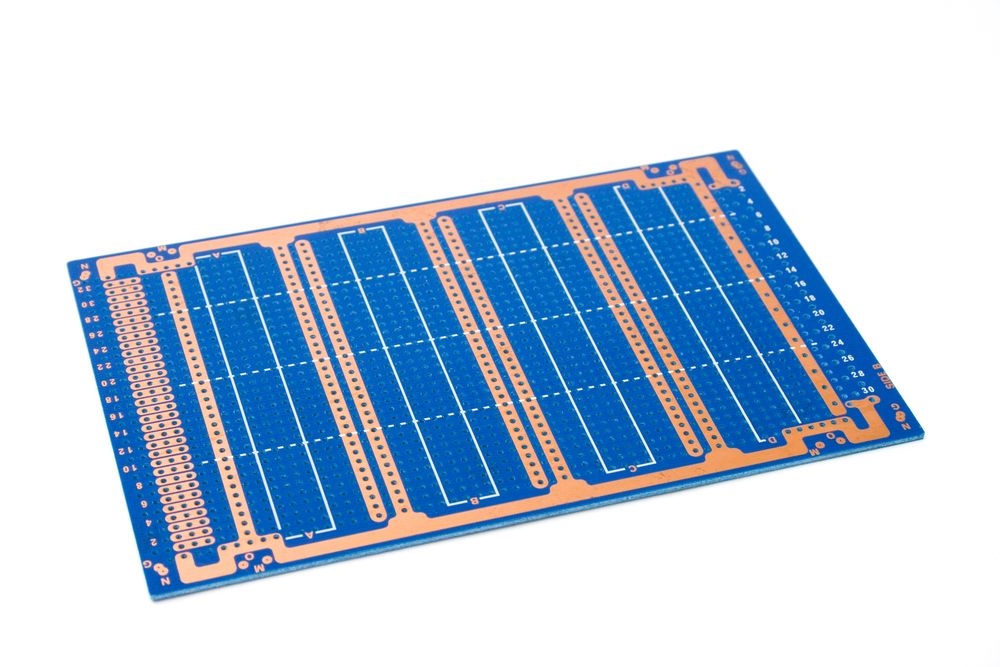
Rigid PCB laminates form the backbone of single-sided and double-sided circuit boards, providing the necessary stiffness and durability for most electronic applications. These laminates are typically composed of epoxy resin reinforced with materials like woven fiberglass. FR-4, the most common rigid laminate, is flame-retardant and exhibits a glass transition temperature (Tg) typically ranging from 130°C to 140°C, making it suitable for general-purpose use.
IPC-4101 classifies rigid laminates based on several key properties:
● Thermal Performance: Assessed by Tg (glass transition temperature) and Td (decomposition temperature). Applications in high-heat environments may necessitate materials with a Tg exceeding 170°C.
● Electrical Properties: Including dielectric constant (Dk) and dissipation factor (Df). High-frequency circuits, for instance, often require laminates with a Dk below 3.5 to minimize signal loss.
● Mechanical Strength: Critical for ensuring the board can withstand physical stresses during manufacturing and operational use.
Utilizing IPC-4101 slash sheets—specific material designations—allows designers to accurately identify the ideal laminate for their rigid PCB, preventing costly material mismatches. For example, a telecommunications device operating at 5 GHz might demand a low-loss laminate with a Df of 0.002 or less to maintain signal integrity.
Multilayer PCB Materials: Enabling Complex Circuitry
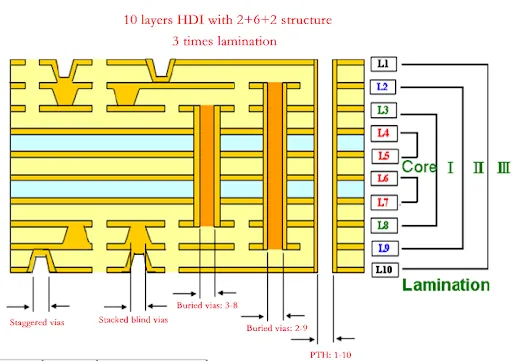
Multilayer PCBs are integral to advanced electronics where space is at a premium and high functionality is required. These boards are constructed from multiple layers of conductive copper and insulating base materials, all stacked and bonded together. The precise assembly of multilayer PCBs heavily relies on both laminates and prepregs, as specified by IPC-4101, to ensure secure bonding and accurate alignment of each layer.
In a typical 4-layer PCB construction, for example, the design might feature two outer layers of copper foil bonded to rigid laminates, with inner copper layers separated and insulated by prepreg. The lamination process, involving controlled heat and pressure, fuses these distinct layers into a single, cohesive board. IPC-4101 guarantees that all materials used in multilayer PCBs adhere to stringent standards for thickness consistency, resin flow, and thermal expansion. Incompatible materials can lead to critical issues such as delamination or warping, which severely compromise the board's reliability. For high-performance multilayer PCBs, specialized materials are often necessary. In applications like 5G infrastructure, for instance, materials with a dielectric constant as low as 3.0 and a dissipation factor of 0.0015 are frequently chosen to support ultra-high-speed signal transmission. IPC-4101 provides the essential framework for accurately identifying and specifying these advanced materials.
What Key Properties of PCB Base Materials Does IPC-4101 Detail?
IPC-4101 highlights several critical properties that define the performance characteristics of PCB base materials. A thorough understanding of these properties is crucial for making informed material selection decisions.
Here are the most important ones:
● Dielectric Constant (Dk): This metric quantifies a material's capacity to store electrical energy. Lower Dk values (e.g., 3.0 to 3.5) are generally preferred for high-frequency applications to minimize signal propagation delay.
● Dissipation Factor (Df): This indicates the amount of electrical energy lost as heat within the material. A lower Df (e.g., 0.002) is essential for preserving signal integrity in high-speed circuits.
● Glass Transition Temperature (Tg): This is the temperature at which a material transitions from a rigid, glassy state to a more flexible, rubbery state. Higher Tg values (e.g., 170°C) are often necessary for compatibility with lead-free soldering processes.
● Coefficient of Thermal Expansion (CTE): This measures how much a material expands or contracts in response to temperature changes. A lower CTE helps reduce stress on vias and mounted components during thermal cycling.
● Moisture Absorption: Excessive moisture uptake can degrade a material's electrical performance. IPC-4101 specifies limits for moisture absorption to ensure reliability, particularly in humid operating environments.
These properties are comprehensively detailed in the specification sheets within IPC-4101, allowing engineers to precisely match materials to their specific design requirements. For instance, a PCB destined for an automotive control unit might prioritize a high Tg and low CTE to withstand engine heat and vibrations.
How Does IPC-4101 Aid in Material Selection and Problem Solving?
A Structured Approach to Material Selection
Choosing the correct PCB base material is fundamental to the success of your project. IPC-4101 streamlines this process by offering a standardized method for specifying materials.
Here’s a practical, step-by-step approach:
1. Define Project Requirements: Clearly identify the electrical, thermal, and mechanical demands of your application. For example, will your design operate at 10 GHz, or must it endure temperatures exceeding 150°C?
2. Consult IPC-4101 Slash Sheets: Utilize the specification sheets to pinpoint materials that align with your requirements. Each sheet provides detailed properties such as Dk, Tg, and CTE for a specific material type.
3. Assess Manufacturing Compatibility: Verify that the chosen material is compatible with your intended fabrication processes, including lamination temperatures and drilling methods.
4. Prototype and Validate: Before committing to full-scale production, create a prototype using the selected material to confirm its performance under actual operating conditions.
By adhering to IPC-4101 guidelines, you can effectively avoid common pitfalls, such as selecting a material with inadequate thermal stability, which could lead to failures during soldering or long-term operation.
Addressing Common Material Challenges
Working with PCB base materials can sometimes present challenges, but IPC-4101 offers clear guidance to overcome them.
Common issues and how IPC-4101 helps:
● Delamination: This occurs when layers separate due to insufficient bonding or thermal stress. IPC-4101 provides specifications for prepreg resin content and flow properties to ensure robust adhesion.
● Signal Loss: High-frequency designs are susceptible to signal degradation. IPC-4101 lists materials with low Dk and Df values, which are critical for minimizing such losses.
● Thermal Stress: Temperature fluctuations can cause materials to expand and contract, potentially leading to cracking. IPC-4101 defines CTE limits to help match materials with components and reduce internal stress.
Through its standardization of material properties, IPC-4101 empowers both manufacturers and designers to mitigate these issues, ultimately contributing to the creation of reliable and high-performing PCBs.
Conclusion: IPC-4101 is an indispensable resource for anyone involved in the design and manufacturing of printed circuit boards. By providing exhaustive specifications for PCB base materials, rigid PCB laminates, and multilayer PCB materials, it guarantees that the very foundation of your circuit board meets the most stringent standards of quality and performance. Whether you're engineering a straightforward single-layer board or a sophisticated multilayer system, referencing IPC-4101 is key to selecting the ideal materials that precisely match your project's demands. A thorough understanding of the properties detailed in IPC-4101—such as dielectric constant, glass transition temperature, and thermal expansion—equips you to make highly informed decisions. This not only significantly enhances the reliability of your PCBs but also minimizes the risk of costly failures. As you embark on your next project, keep this comprehensive guide readily available to confidently navigate the intricate world of PCB base materials. At AIVON, we are dedicated to supporting your endeavors with superior manufacturing solutions that strictly adhere to industry benchmarks like IPC-4101. Together, let's innovate the future of electronics with unparalleled precision and unwavering reliability.