Introduction
Wind turbine control systems depend on printed circuit boards (PCBs) to manage critical functions like pitch adjustment, yaw control, and power monitoring. These PCBs operate in harsh offshore and onshore environments, facing extreme temperatures, vibration, and humidity. As wind energy expands globally, controlling the wind turbine PCB manufacturing cost becomes essential for project viability. Engineers seek PCB cost reduction strategies that maintain reliability without inflating budgets. Optimizing PCB production through smart design and process choices directly impacts turbine levelized cost of energy. This article explores practical approaches to achieve cost-effective PCB design tailored for electric engineers.
The Critical Role of PCBs in Wind Turbine Controls
PCBs in wind turbine controls integrate sensors, microcontrollers, and power electronics to ensure stable operation. They process data from anemometers, accelerometers, and generators, enabling real-time adjustments for maximum efficiency. High-reliability requirements demand robust construction to withstand cyclic loads and thermal cycling. Factors like board size, layer count, and trace density influence both performance and expense. Without optimization, complex designs drive up wind turbine PCB manufacturing cost through extended fabrication times and higher material use. Understanding these elements helps engineers balance functionality with economy.
Control PCBs often feature multi-layer stackups to separate power and signal planes, reducing electromagnetic interference. Vibration-resistant mounting and conformal coatings protect against environmental stressors. Procurement teams must evaluate how design choices affect overall system costs. Streamlining these aspects forms the foundation of PCB supply chain management. Effective strategies emerge from aligning design intent with manufacturing capabilities early in the process.
Key Factors Driving Wind Turbine PCB Manufacturing Costs
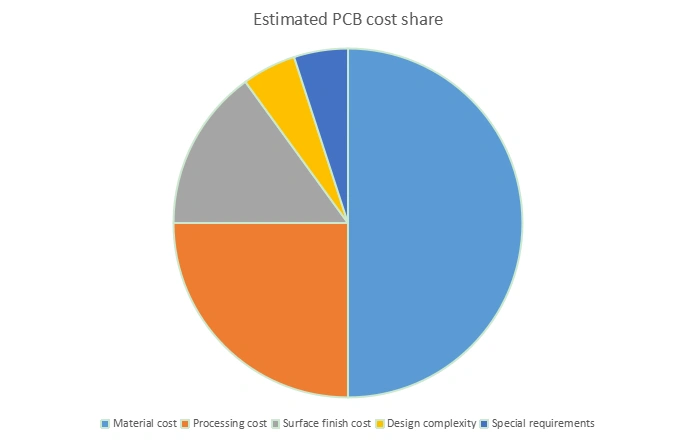
Material selection significantly affects costs, with standard laminates suiting most control applications while specialized high-Tg materials add expense for extreme conditions. Layer count directly correlates with fabrication complexity; reducing from eight to six layers can lower costs without compromising integrity. Hole density and via types, such as blind or buried vias, increase drilling and plating operations. Surface finishes like HASL or ENIG impact solderability and shelf life but vary in price. Testing protocols for continuity, insulation resistance, and thermal shock further contribute to the total.
Board dimensions and panelization efficiency play a major role in yield optimization. Larger panels maximize throughput, but improper nesting leads to scrap. Tolerances for trace width, spacing, and registration tighten processes, raising expenses. Supply chain disruptions amplify these factors, making PCB supply chain management vital. Engineers must quantify these elements during design reviews to identify savings opportunities.
Environmental compliance adds layers of cost, including lead-free processes and RoHS adherence. Power handling in control sections often requires heavier copper weights, balancing thermal dissipation against material premiums. Fabrication yields drop with finer features, necessitating design trade-offs.
PCB Cost Reduction Strategies for Wind Turbine Applications
Design for manufacturability (DFM) stands as a primary PCB cost reduction strategy. Simplifying layouts reduces layer count by optimizing component placement and routing efficiency. Standardizing footprints and pad sizes aligns with automated assembly lines, minimizing programming changes. Engineers should simulate signal integrity and thermal performance early to avoid costly iterations. Incorporating DFM guidelines prevents issues like insufficient annular rings or asymmetric stackups that cause warpage.
Material choices offer substantial savings. Selecting FR-4 with adequate glass transition temperature meets most wind turbine needs, avoiding premium polyimides unless flex-rigid hybrids prove essential. Thinner cores and prepregs reduce weight and cost while maintaining rigidity. Panel utilization improves economy; grouping multiple boards per panel boosts throughput and cuts per-unit expenses.
Adhering to IPC-6012 qualification specifications ensures quality without over-specifying features. This standard guides performance criteria for rigid boards, helping avoid unnecessary enhancements.
Process consolidation merges steps like routing and scoring, streamlining production. Volume forecasting enables long-term agreements in PCB supply chain management, stabilizing pricing amid material fluctuations.
Optimizing PCB Production Through Supply Chain and Assembly Practices
Effective PCB supply chain management involves qualifying vendors based on ISO 9001:2015 quality systems. This certification promotes consistent processes, reducing defect rates and rework. Multi-sourcing critical materials mitigates risks from raw copper or resin shortages. Lead time alignment with turbine assembly schedules prevents expedited fees.
Assembly optimization focuses on surface-mount technology (SMT) compatibility. Fiducials and tooling holes facilitate precise pick-and-place operations. Reflow profiling per J-STD-001 soldering standards minimizes voids and bridges. Conformal coating application post-assembly protects without separate handling steps.
Testing strategies shift to functional over exhaustive, using boundary scan for in-circuit verification. This cuts handling and equipment time. Prototype runs validate designs before full production, catching yield killers early.
Advanced Techniques for Cost-Effective PCB Design
Heavy copper traces handle power sections efficiently, but optimizing width and thickness via simulation avoids excess material. Embedded passives reduce board real estate, though integration feasibility depends on application. High-density interconnects suit compact controls, but standard vias often suffice for cost savings.
Thermal vias and ground planes dissipate heat without added layers. Enclosure integration considers airflow, easing PCB thermal demands. Lifecycle analysis weighs initial costs against maintenance savings in remote turbine sites.
Factory-driven insights emphasize yield monitoring. Statistical process control tracks metrics like bow and twist per IPC-A-610 acceptability criteria. This standard defines visual and dimensional allowances, guiding inspections without overkill.
Challenges and Mitigation in Harsh Environments
Wind sites impose vibration profiles exceeding 5g RMS, necessitating reinforced vias and anchor points. Humidity control via coatings prevents dendritic growth. Salt mist in offshore units demands robust finishes.
Cost-effective mitigations include selective plating and edge plating for connectors. Modular designs allow field replacement, extending system life.
Conclusion
Optimizing wind turbine control PCBs requires integrated PCB cost reduction strategies from design through supply chain. DFM, material efficiency, and standards compliance like IPC-6012 deliver reliable boards at lower costs. Engineers achieve optimizing PCB production by prioritizing manufacturability and yield. PCB supply chain management stabilizes expenses amid volatility. Implementing these practices enhances turbine competitiveness, supporting sustainable energy goals. Focus on holistic optimization yields the greatest returns.
FAQs
Q1: What are effective PCB cost reduction strategies for wind turbine controls?
A1: Key strategies include minimizing layer count through efficient routing, standardizing component footprints for automated assembly, and maximizing panel utilization to boost yields. Early DFM reviews prevent fabrication issues like warpage or drill breakout. Adhering to standards reduces rework, while volume-based supply agreements lower unit prices. These approaches maintain high reliability in harsh environments without excess spending.
Q2: How does PCB supply chain management impact wind turbine PCB manufacturing cost?
A2: Strong management involves vendor qualification under ISO 9001:2015, multi-sourcing materials, and aligning lead times with production schedules. Long-term contracts stabilize pricing against commodity swings. Forecasting demand avoids rush orders and premiums. Integrated logistics cut transportation costs. Overall, it ensures consistent quality and availability, directly lowering total wind turbine PCB manufacturing cost.
Q3: Why is cost-effective PCB design crucial for optimizing PCB production in wind turbines?
A3: It balances performance needs like vibration resistance with economical choices such as standard laminates and via types. Simplified stackups reduce fabrication steps and materials. Simulation tools verify integrity before production, avoiding prototypes. This design philosophy enhances yield and scalability, making optimizing PCB production feasible for large-scale deployments. Reliability standards guide without over-engineering.
Q4: What role do industry standards play in PCB cost reduction strategies?
A4: Standards like IPC-6012 define qualification levels, preventing over-specification that inflates costs. IPC-A-610 sets acceptability criteria, streamlining inspections. J-STD-001 ensures reliable soldering without trial-and-error. They promote proven processes, improving yields and reducing defects. Compliance fosters supplier consistency in PCB supply chain management, supporting sustainable cost savings.
References
IPC-6012E — Qualification and Performance Specification for Rigid Printed Boards. IPC, 2015
IPC-A-610H — Acceptability of Electronic Assemblies. IPC, 2019
ISO 9001:2015 — Quality Management Systems. ISO, 2015
J-STD-001H — Requirements for Soldered Electrical and Electronic Assemblies. IPC, 2018