Abstract
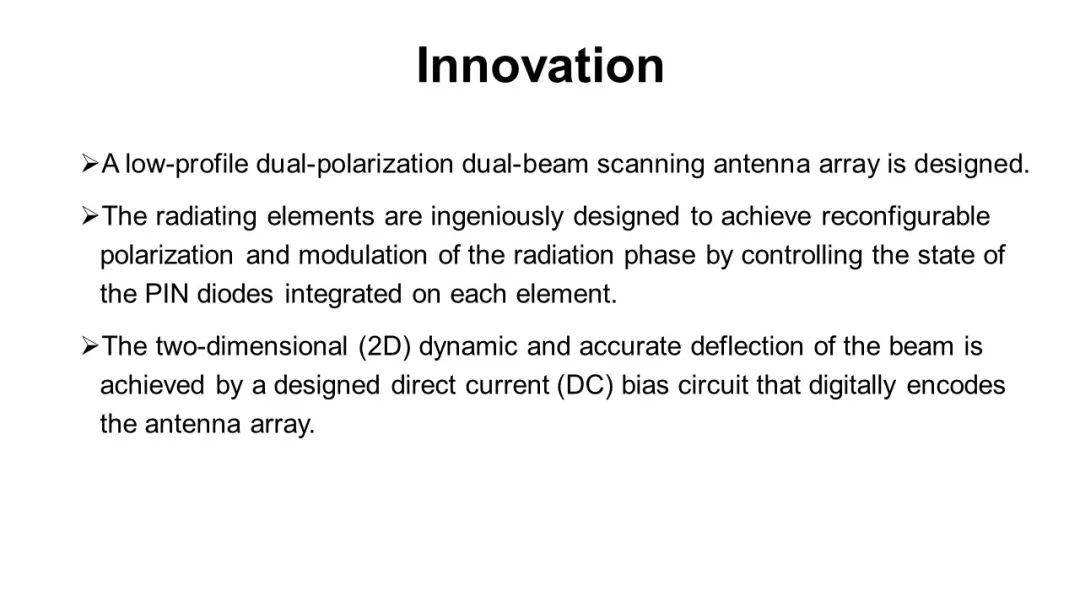
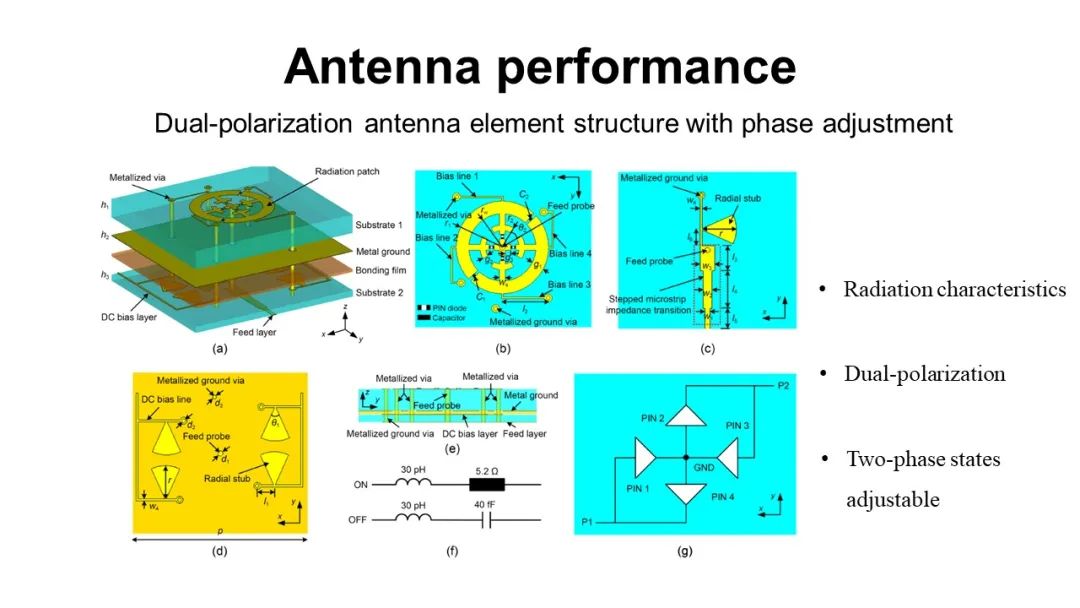
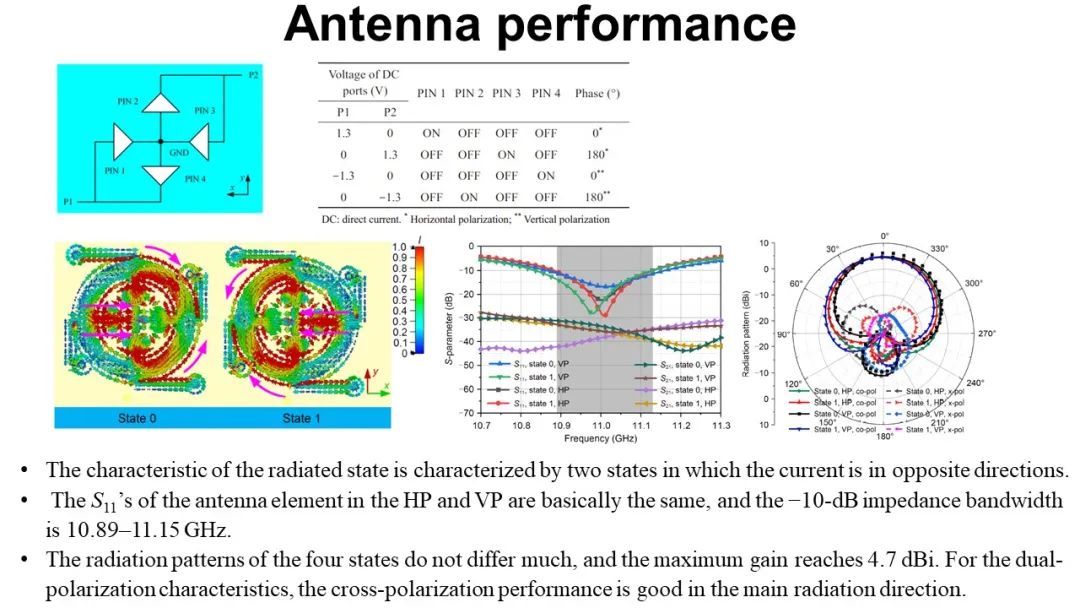
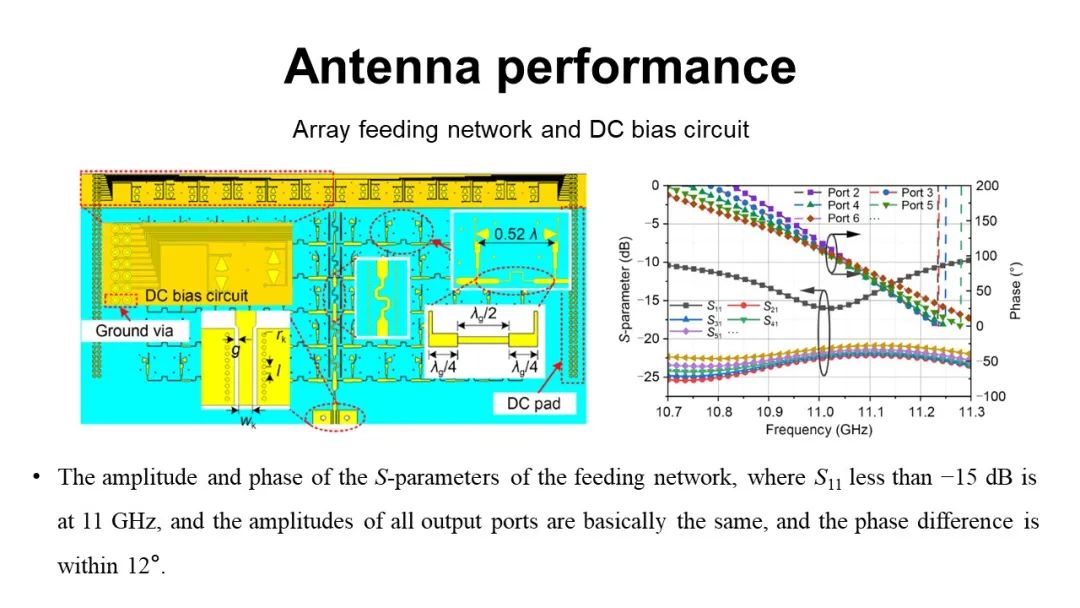
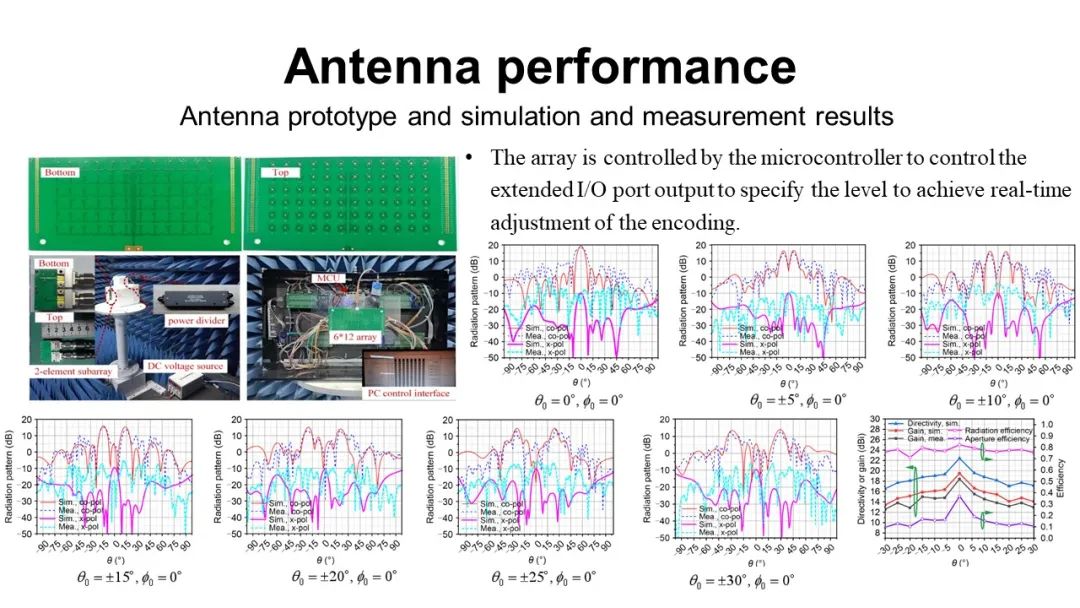
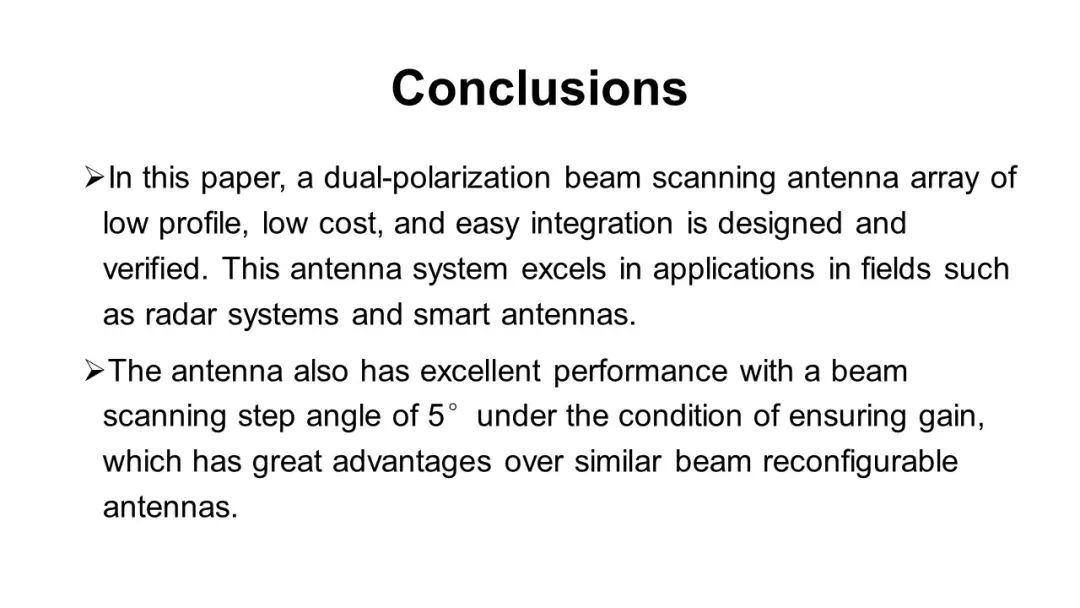
A low-profile dual-polarized dual-beam scanning antenna array based on holographic control theory is presented. Radiating elements are designed so that, by controlling the states of PIN diodes integrated in each element, reconfigurable polarization and radiation phase modulation are achieved. A 72-channel series-parallel equal-amplitude in-phase feeding network is integrated with the radiating array to realize the low-profile characteristic. By designing DC bias circuits and digitally encoding the array with a microcontroller, two-dimensional dynamic and accurate beam steering is achieved. A 2-element subarray and a 6x12 array were fabricated, and the digitally controllable radiation pattern characteristics were experimentally validated. The antenna system can scan beams from -30 to 30 degrees at 11 GHz with 5-degree step increments. The system features compact size, low cost, ease of integration, and accurate beam control, with applications in radar systems and smart antennas.
Design and Implementation
To meet the increasing demand for high-speed connectivity in the transportation sector, this design employs specially configured radiating units whose polarization and radiation phase are reconfigured by switching PIN diodes embedded in each element. Integration of a 72-channel series-parallel equal-amplitude in-phase feeding network with the radiating array produces a low-profile form factor. DC bias networks were designed to enable microcontroller-based digital encoding of the array, providing two-dimensional dynamic beam steering with precise angular control. Prototypes included a 2-element subarray and a full 6x12 array, and measurements validated the digitally controlled radiation pattern performance.
Experimental Results
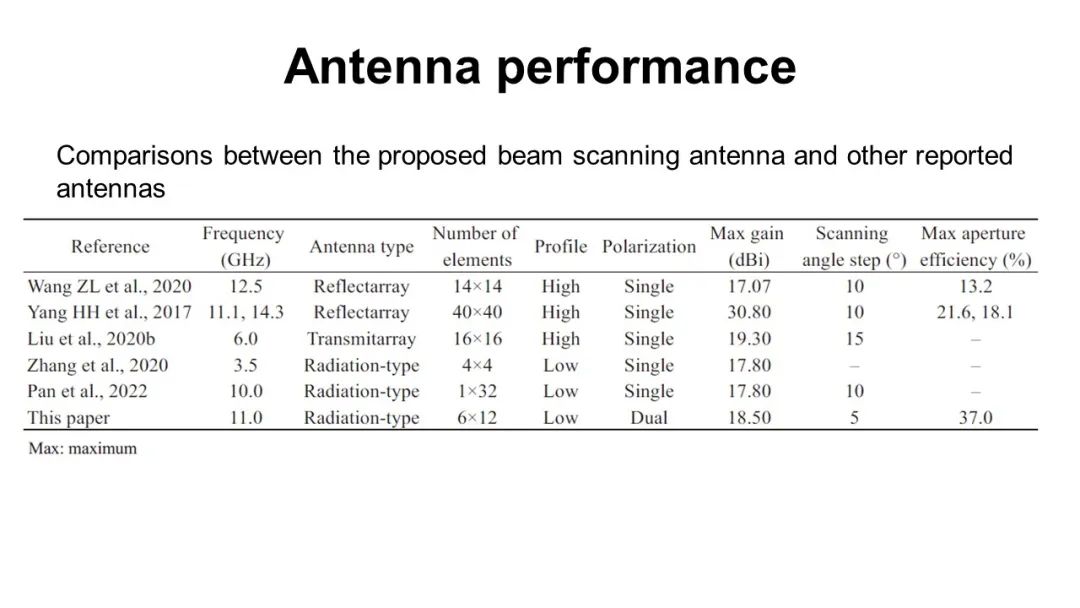
Measured results show beam scanning from -30 to 30 degrees at 11 GHz with 5-degree step resolution. The array demonstrates compact size, manufacturability, and accurate beam control suitable for integration into radar and smart antenna systems.
Related Reading: Overview of Vision Sensors, Millimeter-Wave Radar, and LiDAR