Overview
RF circuits are circuits in which the electromagnetic wavelength of the signal is on the same order of magnitude as the dimensions of the circuit or components. In such cases, because of the relationship between device sizes and conductor lengths, the circuit must be analyzed using distributed-parameter theory. RF theory is used based on geometry and wavelength rather than a strict frequency threshold; for example, long AC transmission lines sometimes require RF-related theory despite operating at 50 or 60 Hz.
Common RF Circuit Components
RF circuits typically include the following parts:
- Excitation source: A signal source that generates the RF signal used as the circuit input. This can be an RF signal generator or another signal source.
- Amplifier: Amplifiers increase the amplitude of the input signal. In RF circuits, amplifiers often use specialized amplifier devices or integrated circuits, such as RF power amplifiers.
- Filter: Filters remove unwanted frequency components or reduce interference. Depending on the application, different filter types are used, such as bandpass or band-stop filters.
- Coupler: Couplers transfer signals between parts of the RF circuit. They can perform signal splitting, combining, and switching functions.
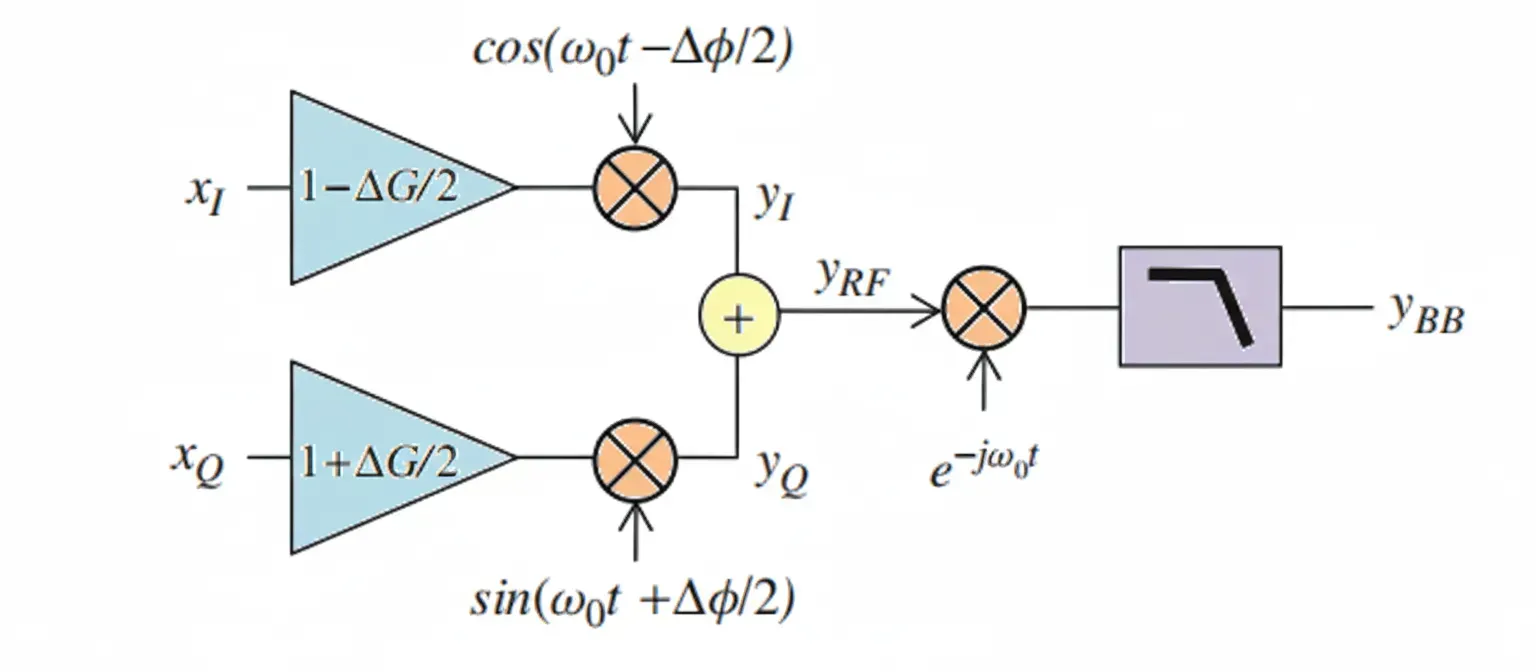
- Mixer: Mixers are used in RF communication systems to combine different RF signals and generate new frequency components. Their main functions are frequency conversion and modulation/demodulation.
- Reflector: Reflectors control the propagation direction of signals within an RF circuit. They can reflect signals toward specific directions to achieve transmission, blocking, or distribution.
- Coupler and decoupler: Couplers and decouplers perform coupling and decoupling operations for signals, commonly at input/output interfaces and for signal distribution and separation.
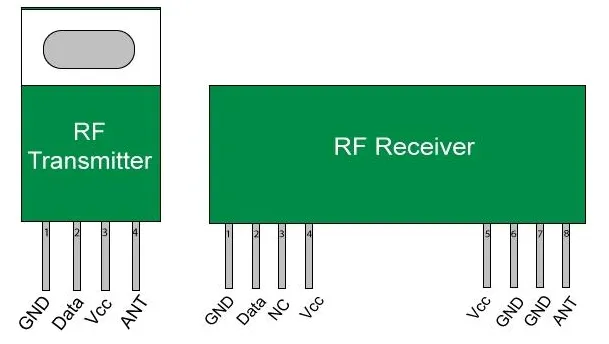
- Transceiver: A transceiver integrates transmit and receive functions in one device. It interfaces with an antenna to send and receive RF signals.
- Control and tuning elements: Various control and tuning components may be included, such as variable capacitors, variable inductors, and switches. These components adjust and control RF circuit characteristics and parameters to meet application requirements.
The above items are common RF circuit components. Specific RF systems and applications may include additional functional devices and modules as needed.
Role of MOS Devices in RF Circuits
Adding MOS devices (metal-oxide-semiconductor) to an RF circuit can provide multiple functions. The importance of MOS devices depends on the specific RF application and circuit design. Typical roles include:
- Amplification: MOS devices can be used to build RF amplifiers, helping to increase signal amplitude and power. MOS transistors can serve as core components of power amplifiers, offering gain, low noise, and linearity when appropriately designed.
- Switching: MOS devices are widely used in RF switching circuits. By controlling the MOS conduction state, RF signals can be switched, routed, gated, or redirected for functions such as path selection.
- Frequency synthesis: MOS devices combined with other components such as inductors and capacitors can form RF oscillator circuits for frequency synthesis and tuning. Adjusting the operating state of MOS devices enables generation of different RF frequencies.
- Modulation and demodulation: MOS devices can implement modulation and demodulation functions for RF signals. In RF communications, MOS transistors can be used for amplitude modulation, frequency modulation, phase modulation, and related processing.
- Frequency conversion: MOS devices can be used in frequency converters to translate an input signal to a required frequency. When combined with other circuits and filters, MOS transistors support frequency conversion and signal switching.
MOS devices play a significant role in RF circuits by enabling amplification, switching, modulation, demodulation, and frequency conversion. Specific device selection and design must be optimized according to the RF system and circuit requirements.