Key metrics for RF receiver systems
The important metrics for RF receiver systems depend on application requirements and system design. Common metrics include:
- Sensitivity: The minimum input signal power or voltage that the receiver can reliably detect and demodulate. Higher sensitivity enables the system to receive and decode weaker signals.
- Noise figure: A measure of the receiver's noise performance, often expressed as noise factor or noise temperature. A lower noise figure indicates lower added noise during amplification and processing, improving signal-to-noise ratio.
- Dynamic range: The range between the highest and lowest input signal powers the receiver can handle. A larger dynamic range allows the receiver to process both strong and weak signals without compression or saturation.
- Selectivity: The receiver's ability to suppress interference and spurious signals at other frequencies while receiving the desired signal. Good selectivity enables rejection of unrelated signals and interference, improving demodulation quality.
- Interference rejection: The receiver's resilience to external interference. A receiver should provide effective suppression of interference from other wireless devices or environmental sources to ensure stable and reliable reception.
- Frequency range: The range of frequencies the receiver can receive and process. Different applications require different frequency coverage; the receiver must support the required bands.
- Bandwidth: The frequency range over which the receiver can effectively process signals. A larger bandwidth supports concurrent signal processing, higher data rates, and wideband communications.
Structure and operation of the receiver circuit
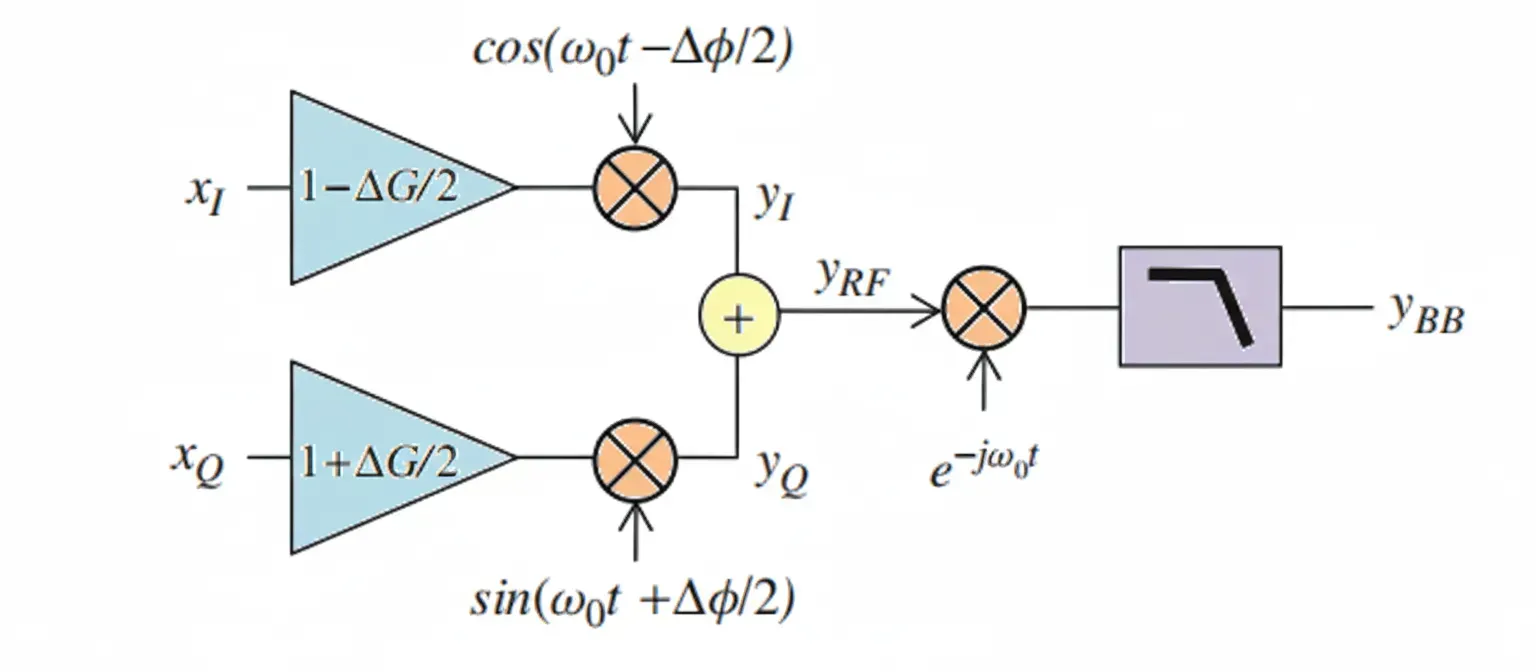
During reception, the antenna converts electromagnetic waves from the base station into a weak alternating current signal. After filtering and RF amplification, the signal is downconverted to intermediate frequency (IF) for demodulation to recover baseband information (RXL-P, RXI-N, RXQ-P, RXQ-N). The recovered signals are then sent to logic and audio circuits for further processing.
Circuit analysis
1. Circuit structure
The receiver circuit consists of the antenna, antenna switch, filters, RF amplification stages (low-noise amplifier), and IF integrated blocks (receiver demodulator), among other components. Early mobile phones used one- or two-stage frequency conversion, reducing the received RF frequency before demodulation.
2. Design improvements and test strategies
Improvements and test designs for RF receiver circuits should be tailored to application needs and performance requirements. Possible approaches include:
- Improve sensitivity and selectivity: Use dedicated RF amplifiers and filters to enhance sensitivity and selectivity, helping the receiver suppress noise and interference. Perform power balance and noise figure measurements to validate performance and optimize design parameters.
- Improve demodulation efficiency: Use efficient demodulators and algorithms such as synchronous detection, coherent demodulation, and digital signal processing to increase demodulation efficiency and reduce bit error rate. Test demodulation efficiency and bit error rate to verify circuit and algorithm performance.
- Enhance interference resilience: Apply techniques such as spatial diversity and multi-antenna reception, increase receive paths, and introduce adaptive filtering. Test interference rejection using parameters like peak total signal power, duty cycle, carrier frequency, and amplitude.
- Increase signal level and dynamic range: Select appropriate amplifiers and filters, and implement power-balancing and distribution circuits to raise signal level and dynamic range. Use signal analyzers to evaluate signal performance and detection sensitivity.
- Support wider bandwidth and frequency response: For high-speed data and wide-area communications, adopt wideband RF receiver designs and test the dynamic performance of components to verify that bandwidth and frequency response meet requirements.
To validate circuit performance and optimize design parameters, combine appropriate test equipment and measurement methods to assess the RF receiver circuit's performance and reliability.