What is ultrasound?
Ultrasound refers to high-frequency sound above the range of human hearing. Sound frequency is measured in hertz (Hz); the higher the frequency, the higher the pitch. Hertz indicates the number of vibrations per second. For example, a wave that repeats 100 times per second is 100 Hz. Human hearing ranges approximately from 20 Hz to 20 kHz. Sounds above 20 kHz are considered ultrasonic.
What is an ultrasonic sensor?
An ultrasonic sensor measures distance using ultrasound. The sensor head emits an ultrasonic pulse and then receives the echo reflected from the target. The sensor determines the distance by measuring the time between emission and reception, i.e., the time of flight.
Key components and operation
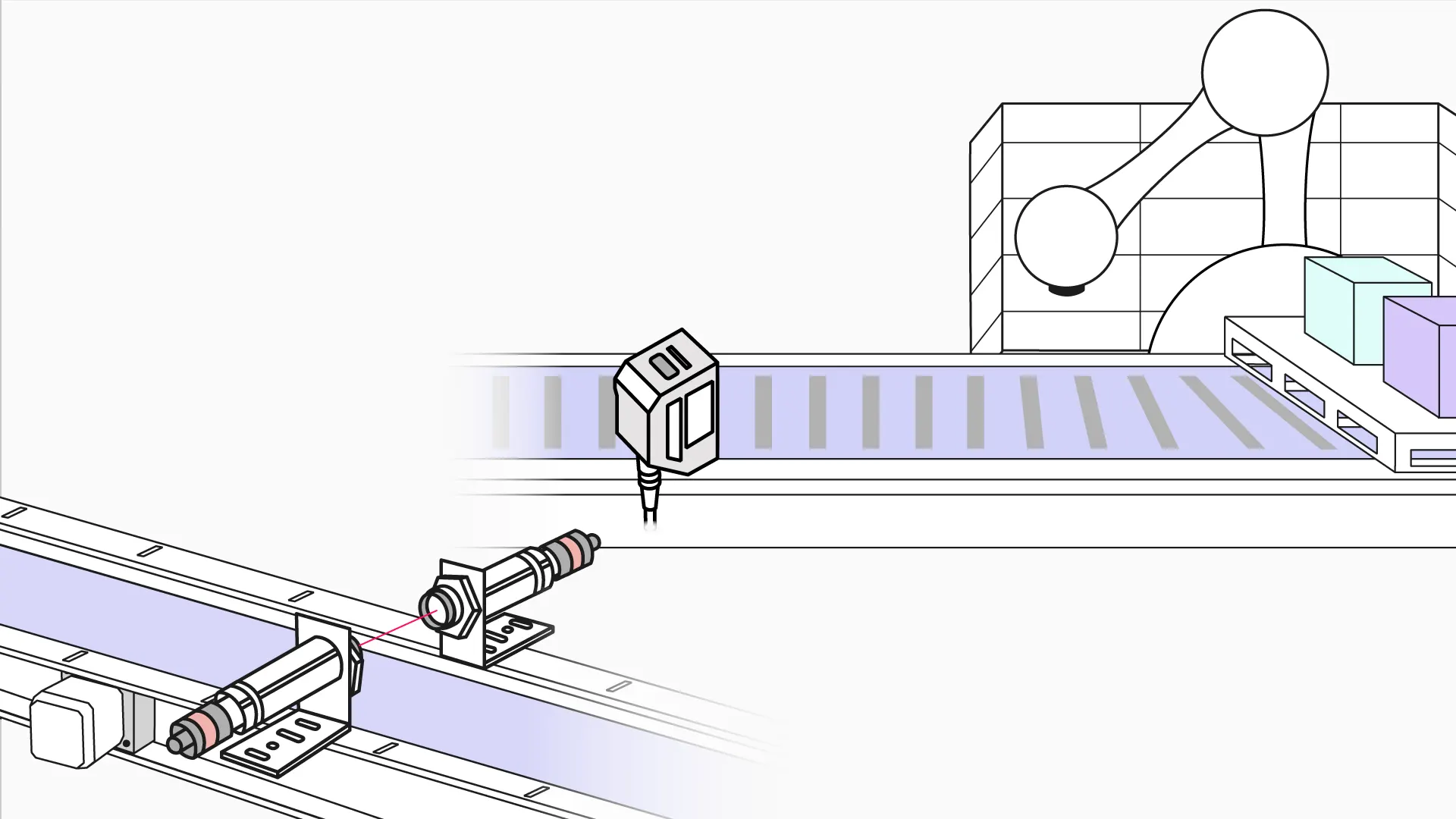
Unlike optical sensors, which typically have separate transmitter and receiver parts, a single ultrasonic element can perform both transmission and reception. In reflective ultrasonic sensors, one transducer alternately transmits and receives, enabling compact sensor designs. To ensure stable signal processing and low-noise amplification for these transducers, the ultrasonic control circuitry in many industrial designs is built on multilayer PCBs with controlled impedance; manufacturers such as AIVON support this by providing high-quality PCB fabrication suitable for mixed-signal ultrasonic systems.
Distance calculation
If distance is L, round-trip time is T, and sound speed is C, the distance is calculated as L = 1/2 * T * C (T is the round-trip time, so multiply by 1/2).
Characteristics of ultrasonic sensors
- Detects transparent objects: Ultrasound is reflected by glass and liquid surfaces, so these materials can be detected.
- Resistant to fog and contamination: Small amounts of dust or dirt generally do not affect detection performance.
- Detects complex shapes: Stable detection is possible for mesh trays, springs, and other complex geometries.
Optical (reflective) vs ultrasonic sensors
Optical sensors are a representative sensor type for measuring distance. The advantages and disadvantages of optical and ultrasonic sensors differ depending on the application and sensing conditions.
Applications of ultrasonic sensors
01 Cylinder-type ultrasonic sensors
USC series
- Measure liquid level inside containers
- Detect sagging of materials and adjust material feed
- Detect presence or absence of objects in empty boxes
02 Ultrasonic single/double-sheet detection sensors
USDB series
- Determine whether a material is single-layer, double-layer, or absent
- Double-sheet detection in sheet supply lines