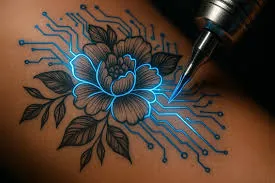
From one perspective, the ultimate form of wearable devices is invisible, whether implanted or applied via temporary tattoo technology. The goal is to make devices less obtrusive, easier to use, and lower in cost. Below are four electronic tattoo projects currently under development.
1. Reconfigurable NFC metal tattoo
Tattio is a decorative wearable technology. Microsoft Research and the MIT Media Lab are currently involved in the project, which uses conductive tape, bent wires, and faux gold-foil metal to create a customizable accessory. It can authenticate via NFC and supports customized graphics and patterns, allowing users to achieve personalized body decoration without a permanent tattoo. The unit cost is about $1.50.
Development status: Unknown. Testers described it as feeling like an "electronic person."
2. Temporary electronic tattoo for alcohol detection
A development team at the University of California is working on a noninvasive alcohol-detection electronic tattoo. The system uses printed electrode tattoo stickers to attach a flexible electronics board to the skin, combined with a sweat-proof thin adhesive strip and an electrochemical sensor to detect blood-alcohol levels and send the data to a smartphone. Although the current design is disposable, the cost is only a few cents per unit.
Development status: The team is refining the device to achieve 24-hour alcohol monitoring.
3. Temporary electronic tattoo for activity tracking
A development team at a US technology university is building a "biochemical wearable" called Chaotic Moon. It uses conductive ink to connect miniature motion-tracking sensors to monitor heart rate and vital signs for periods ranging from six months to a year. The collected data can be shared with medical professionals. Chaotic Moon has potential applications in payments and soldier identification.
Development status: Chaotic Moon has secured investors and partners and will pursue commercial development of electronic tattoos.
4. Temporary facial-expression reading electronic tattoo
This facial electronic tattoo uses nanotechnology with carbon electrodes and a conductive polymer coating applied to the user’s face to read and analyze facial muscle movements for expression recognition. Its primary application is medical, targeting patients with brain injury and stroke.
Development status: The technology has been used at the Tel Aviv Medical Center in the neurogenetics department.