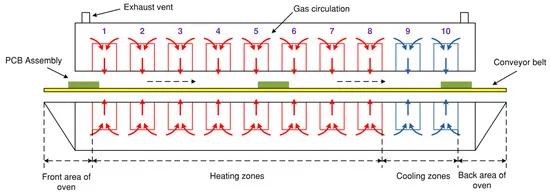
Reflow Profiling
Reflow profiling is a critical process in printed circuit board (PCB) assembly, involving the precise control of temperature curves during soldering to ensure optimal joint formation and component integrity. This technique is essential for manufacturers and engineers working with surface-mount technology (SMT), where components are heated in a reflow oven to melt solder paste without causing thermal damage. By understanding reflow profiling, professionals can minimize defects such as tombstoning, bridging, or insufficient wetting, leading to higher yield rates and more reliable electronic products. For those searching for guidance on reflow profiling, this tag offers practical insights into creating effective temperature profiles tailored to specific solder alloys, board designs, and component types. Key topics include selecting appropriate preheat, soak, reflow, and cooling phases, as well as using thermocouples and profiling software to monitor and adjust parameters in real time. Best practices emphasize the importance of aligning profiles with industry standards like IPC-7530, which helps avoid common pitfalls such as overheating sensitive components or uneven heat distribution across dense assemblies. Whether you are optimizing a production line or troubleshooting assembly issues in a prototype lab, these strategies provide actionable steps to enhance process control and product quality. Our articles under this tag delve into real-world applications, from automated reflow systems in high-volume manufacturing to DIY setups for small-scale projects. Readers can find detailed case studies, tool recommendations, and tips for integrating reflow profiling with quality assurance methods, empowering you to refine your techniques and achieve consistent results in electronics fabrication.
Video Guide
No videos found for this tag.
Technical Articles
Get in Touch
Send Message
- Products & Service
- Company
- About AIVON
- Contact
- News
- Blog
- Certification
-


- Payment
-


2026 AIVON.COM All Rights Reserved