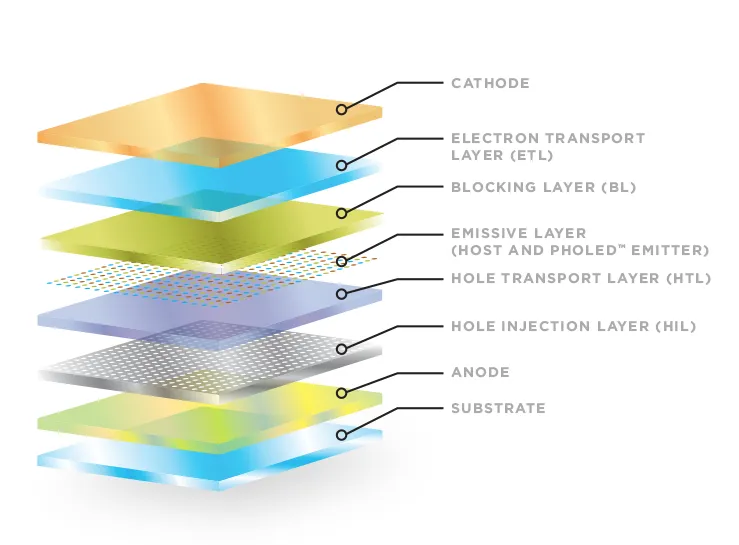
Overview
A light-emitting diode (LED) is a semiconductor device that converts electrical signals into light and exhibits the electronic behavior of a diode. LEDs are typically made from compound semiconductor materials such as gallium phosphide or gallium arsenide. When current flows through the PN junction and electrons recombine with holes, visible light is emitted. LEDs offer benefits including low energy consumption, small size, good shock resistance, environmental friendliness, long lifetime, a variety of colors, and fast response. They are widely used in lighting, automotive, traffic signals, signage, and indicator lamps.
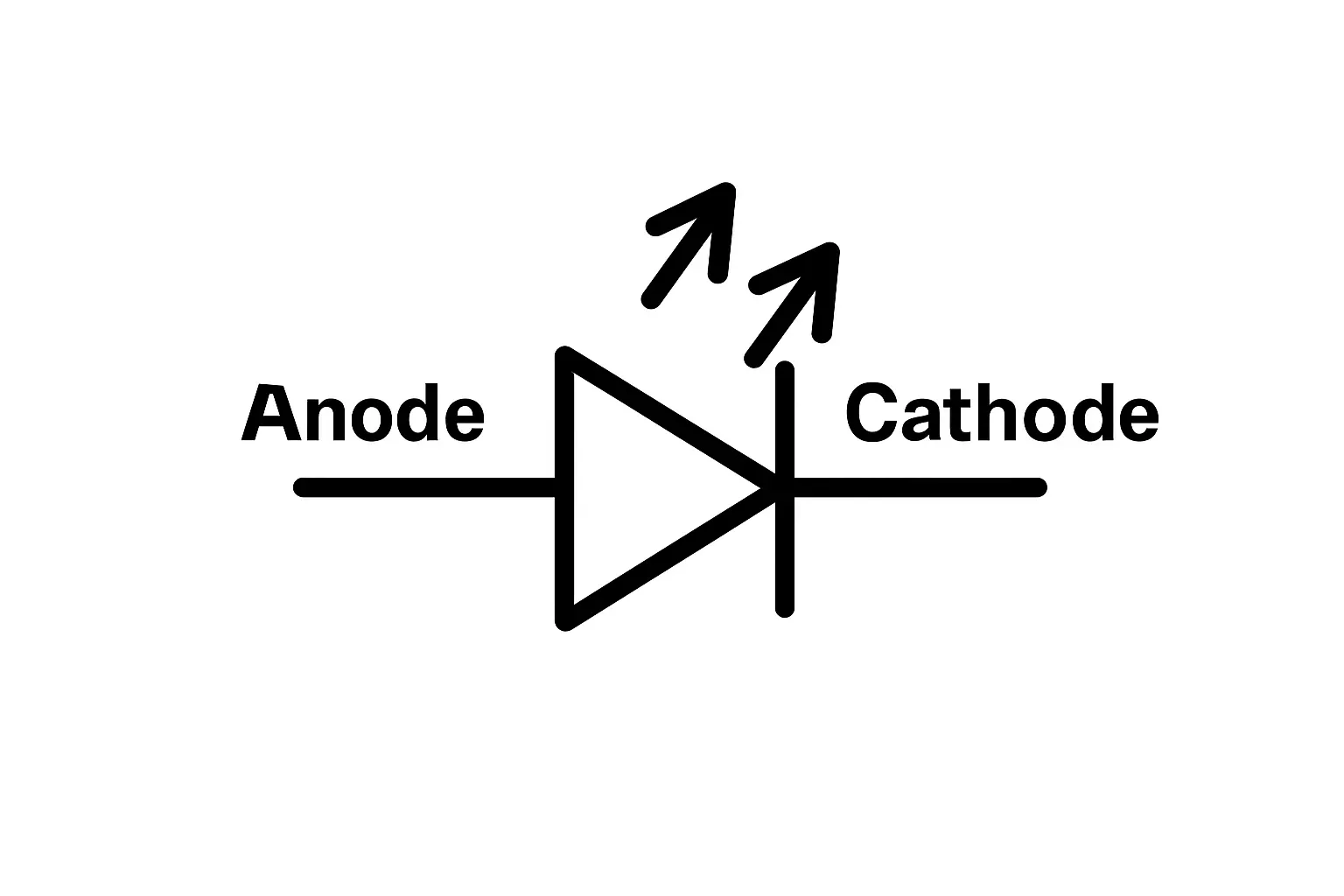
LED circuit symbol
Working Principle
LEDs are PN-junction diodes made from compound semiconductor materials. When forward biased, electrons and holes recombine at the junction and release energy in the form of photons. The emitted wavelength depends on the semiconductor material and bandgap, which determines the LED color.
Types and Packaging
By package structure, LEDs can be categorized as surface-mount devices (SMD) or through-hole types.
- SMD sizes: 0603, 0805, 1210, 3528, 5050, 5730, etc.
- Through-hole sizes: 3 mm, 5 mm, 8 mm, 10 mm, etc.
In 1998, white LEDs were produced by combining red, green, and blue LEDs, a milestone for LED lighting development.
LEDs can also be classified by light distribution angle:
- High-directivity: Usually sharp epoxy lens or metal reflector packaging without diffuser. Half-intensity angle typically 5° to 20° or smaller, providing strong directionality.
- Standard: Commonly used as indicator lamps, with half-intensity angles of 20° to 45°.
- Diffused: Large viewing-angle indicators, with half-intensity angles of 45° to 90° or greater, using a larger amount of diffuser.
Circuit Applications
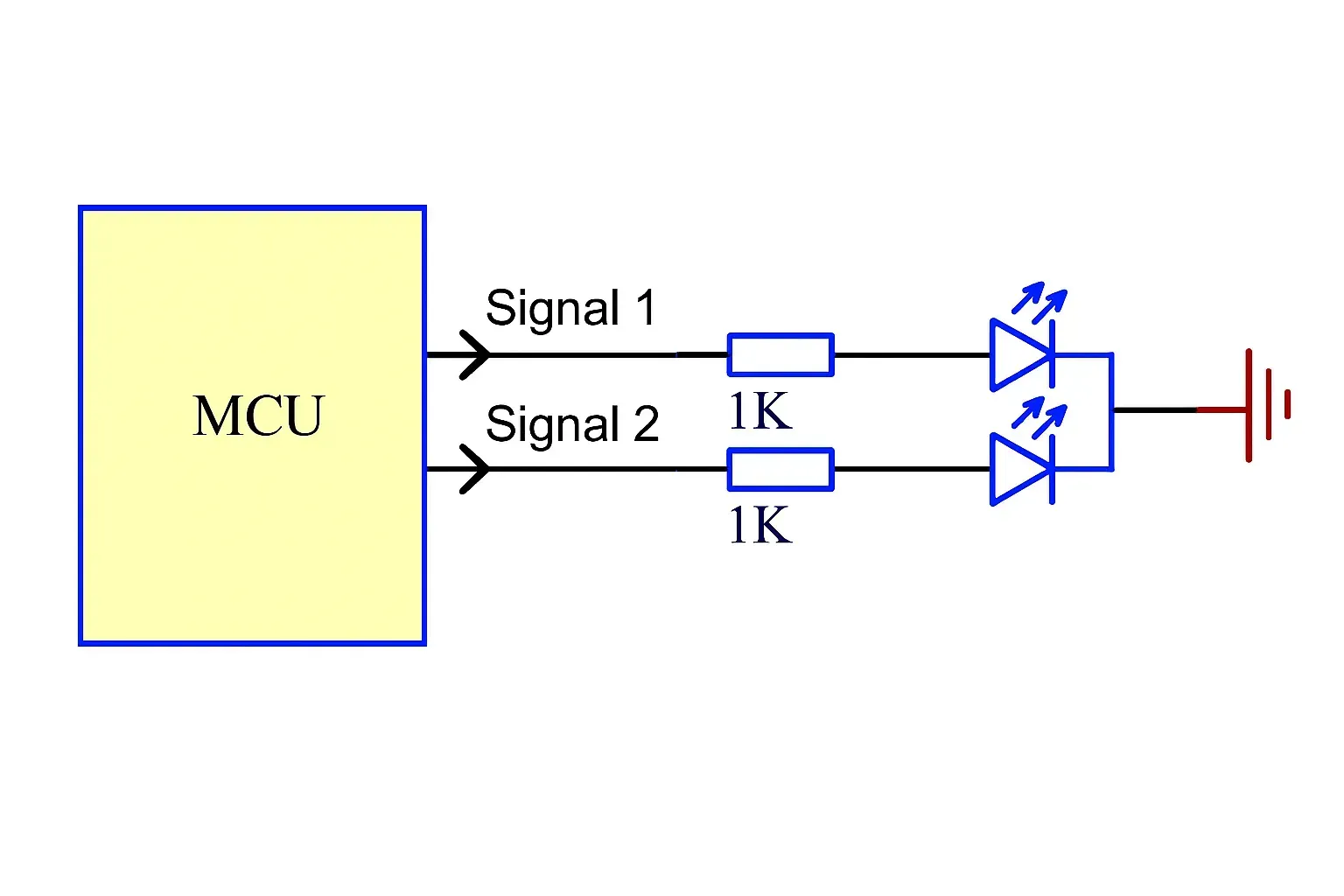
Typical forward voltage for an LED is around 2 V, and the nominal operating current is commonly 5–20 mA. Excessive current will damage the LED, so a series current-limiting resistor is usually required to protect the diode and set the operating current. The resistor value can be approximated by:
R > (U - 2 V) / 20 mA
LED brightness is approximately proportional to current, and very small currents (microamp range) can produce visible light. For indicator applications where high brightness is not required, increasing the series resistor to run the LED below 5 mA reduces power consumption and can extend LED life.
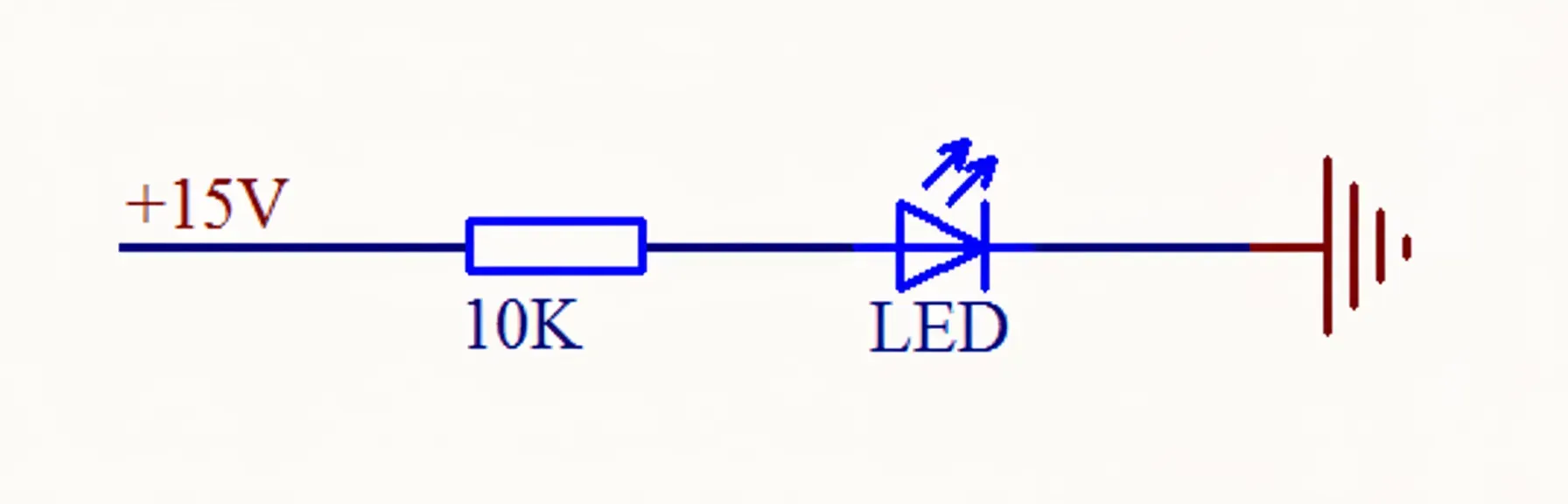
Example: current-limiting resistor for LED
DC power indicator circuit
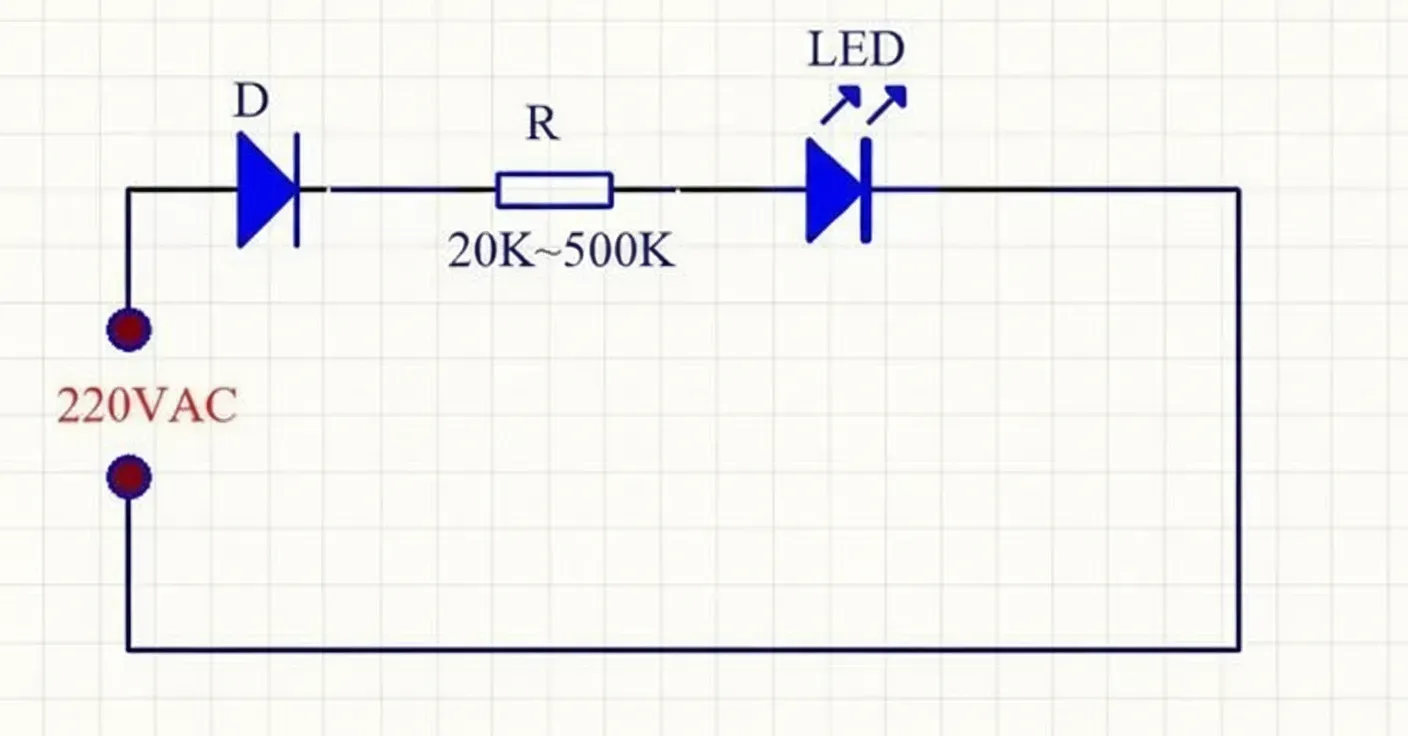
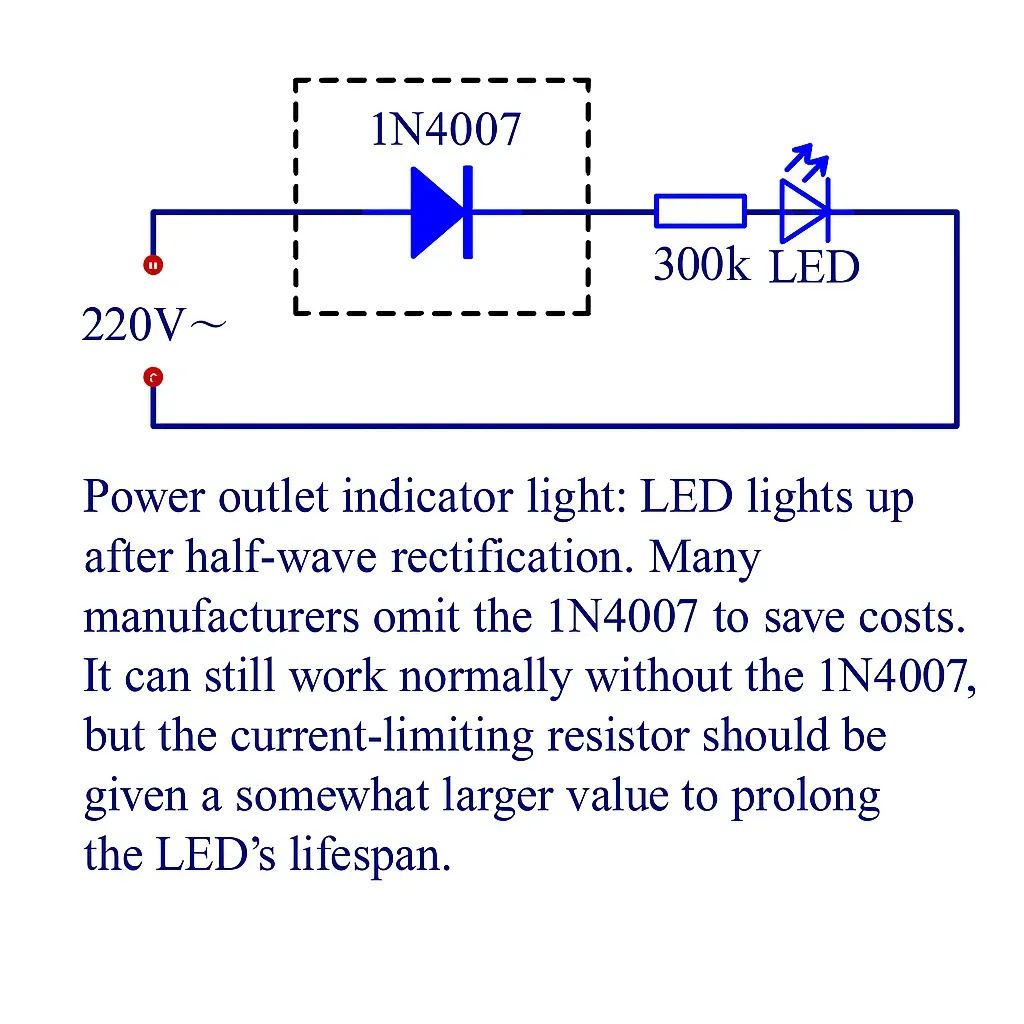
AC power indicator circuit
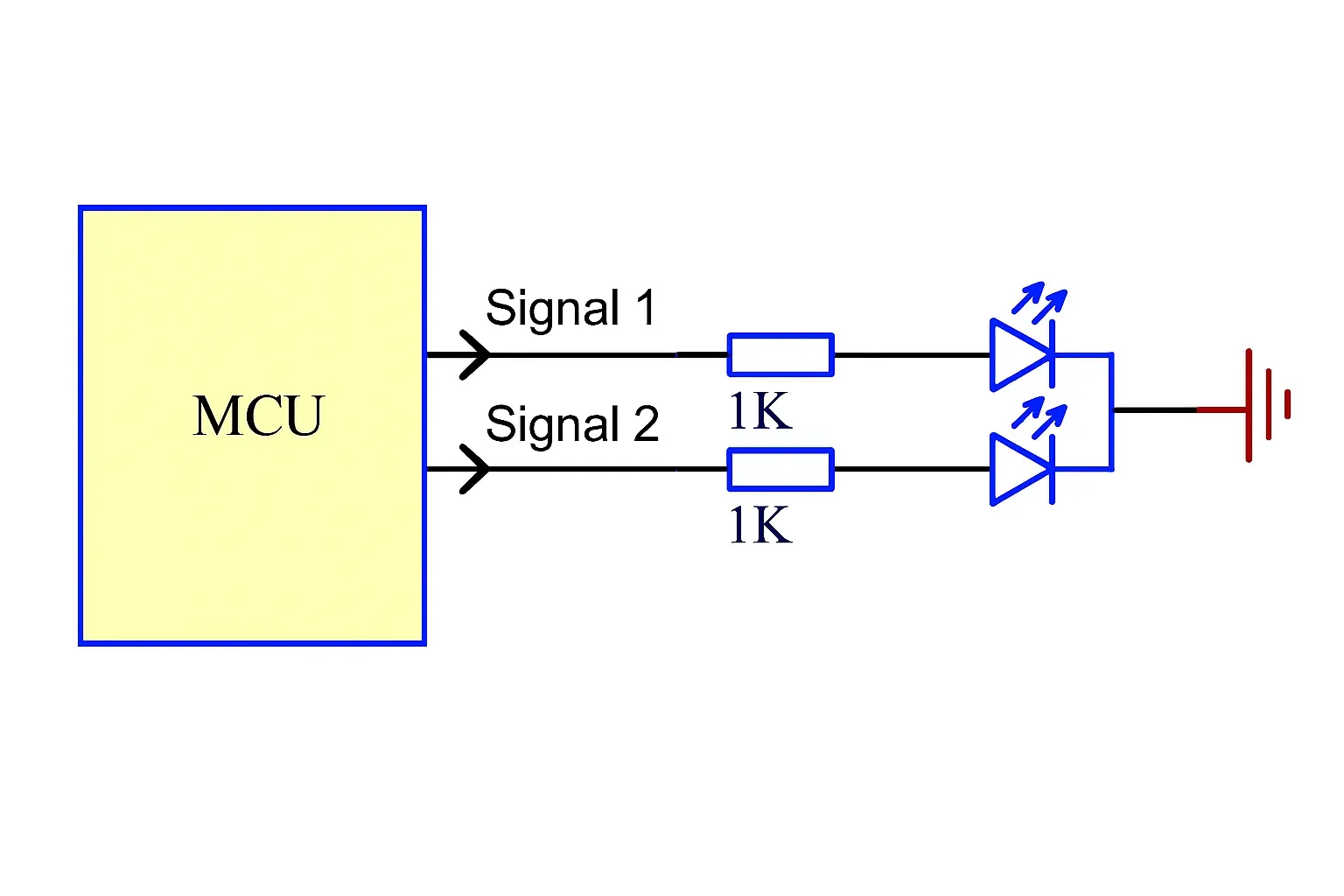
Bi-color LED indicator circuit