LED displays dominate large-format advertising, indoor/outdoor signage, rental events, and creative installations due to their brightness, flexibility, and scalability. Behind every high-performance LED display — whether small-pitch, transparent, full-color, or creative-shaped — lies a sophisticated printed circuit board (PCB) system. The PCB serves as the critical backbone that integrates LED drivers, power distribution, control logic, signal processing, and thermal management.
Proper PCB design and manufacturing directly determine display uniformity, refresh rate, power efficiency, heat dissipation, and long-term reliability.

Types of LED Displays and Their PCB Requirements
LED displays are categorized by application, pixel pitch, color capability, and installation method. Each type imposes specific demands on the PCB:
- Small-Pitch LED Displays (P2.5 and below): High pixel density requires fine-line multilayer PCBs with precise impedance control for high-speed data transmission. Driver ICs must support low grayscale and high refresh rates, demanding clean power planes and minimal crosstalk.
- Rental and Creative Displays: Lightweight, modular designs favor rigid-flex or thin multilayer PCBs for repeated assembly/disassembly and irregular shapes (cylindrical, spherical, wave). Mechanical stability and connector reliability are essential.
- Transparent and Outdoor Displays: These need robust weatherproofing, often with conformal coatings and high-Tg materials. PCBs must handle higher power for brightness while maintaining transparency or structural integrity.
- Monochrome, Bicolor, and Full-Color Displays: Full-color RGB designs use complex constant-current driver matrices. PCB layout must ensure uniform current distribution across thousands of LEDs to prevent color shift and brightness variation.
Driving Circuits and Control Systems on PCB
Modern LED displays rely on high-performance driver ICs and control architectures. PCB design plays a central role in signal integrity and timing precision:
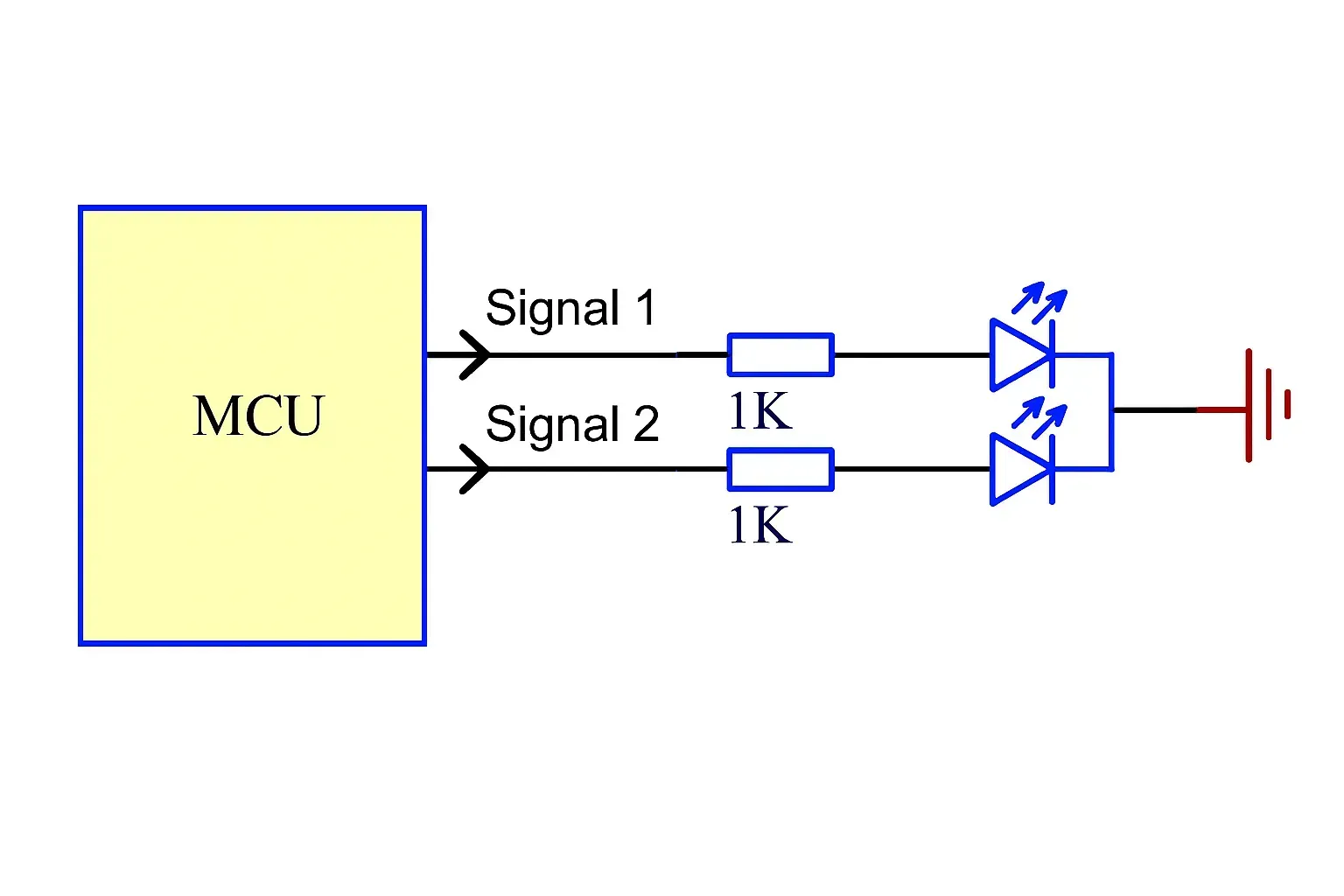
- Constant-Current Drivers: Row/column scanning or matrix driving requires careful trace routing to minimize voltage drop and ensure uniform LED current.
- High-Speed Data Interfaces: For high-refresh small-pitch displays, PCBs incorporate differential signaling, controlled-impedance traces, and dedicated ground planes to maintain signal integrity.
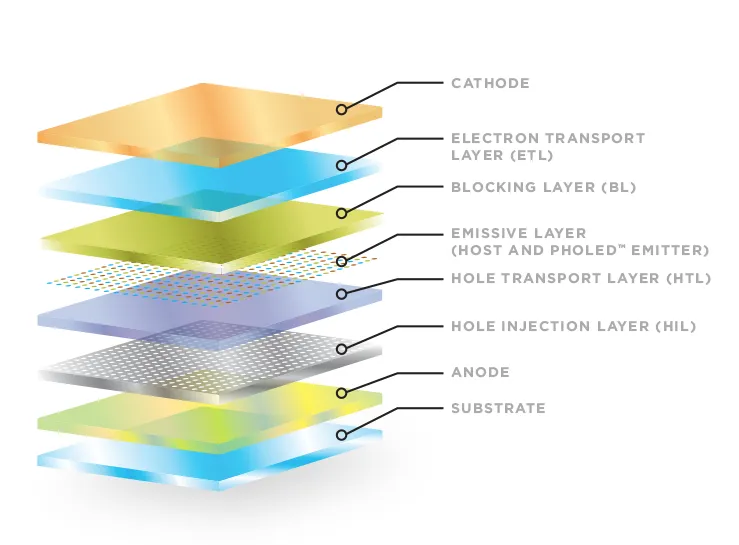
- TFT-LCD vs LED Comparison Context: While TFT-LCD panels use backlight + liquid crystal layers driven via RGB interfaces (with HSYNC, VSYNC, DE, and CLK signals), self-emissive LED and OLED technologies shift the focus to direct pixel-level current control. This increases PCB power density but eliminates separate backlight layers.

Microcontrollers or dedicated controllers (such as those using parallel 8080-style or FSMC interfaces) transfer frame buffer data to driver ICs. Proper PCB implementation of these buses prevents timing issues that cause flickering or ghosting.
Power Distribution and Thermal Management Challenges
LEDs are point light sources with notable thermal and electrical considerations compared to other technologies:
- Heat Dissipation: LEDs convert a significant portion of energy into heat. High-power displays require thick copper planes (2 oz or heavier), thermal vias under LED packages and driver ICs, and optimized component placement to prevent hotspots that reduce brightness and lifespan.
- Power Integrity: Multiple voltage rails (for logic, drivers, and LEDs) need robust decoupling and low-impedance distribution. Poor design leads to voltage droop, brightness inconsistency, and reduced efficiency.
- Lifetime Factors: Operating temperature, drive current, and voltage stability heavily influence LED degradation. Well-designed LED PCBs with proper thermal relief and current regulation extend operational life significantly.
Comparison with Other Display Technologies: PCB Perspective
- TFT-LCD: Requires backlight PCB (often edge-lit or direct-lit LED arrays) plus main control board. Lower power density but more complex optical stack. PCB focus is on backlight uniformity and RGB timing control.
- OLED: Self-emissive with per-pixel control. PCBs benefit from thinner profiles but must manage higher current peaks and address burn-in risks through uniform driving.
- Micro-LED: Offers superior performance but presents manufacturing challenges, including mass transfer and low-current driver precision. PCBs need extremely fine features and advanced materials to support dense arrays.
LED displays excel in brightness and outdoor visibility but demand superior thermal and power PCB engineering compared to many alternatives.

Key PCB Design and Manufacturing Best Practices for LED Displays
Successful LED display projects require close attention to:
- Multilayer Stack-up: Dedicated power and ground planes for noise reduction and current carrying capacity.
- Material Selection: High-Tg FR-4, metal-core PCBs (MCPCB) for high-power modules, or flexible materials for creative/rental applications.
- Thermal Solutions: Arrays of thermal vias, heat sinks, and copper pours to manage junction temperatures.
- Signal Integrity: Controlled impedance routing, shielding, and strategic placement of driver ICs close to LED matrices.
- Reliability Features: ENIG surface finish for corrosion resistance (especially outdoor), conformal coating, and robust connector designs for modular systems.
- Manufacturing Precision: Tight tolerances on trace width/spacing for small-pitch designs and high-accuracy SMT assembly for dense LED placement.
Applications Across Industries
From commercial advertising and stage performances to transportation hubs, conference rooms, and architectural integration, LED displays rely on tailored PCB solutions. Automotive, industrial, and consumer electronics sectors increasingly adopt similar LED technologies, benefiting from shared engineering expertise in high-reliability driving circuits and thermal management.
Expert PCB design and manufacturing enable higher brightness, better uniformity, lower power consumption, and longer service life — turning advanced display concepts into reliable, high-performance products.
Aivon delivers specialized PCB fabrication and assembly services optimized for LED display applications, supporting rapid prototyping through volume production with the precision and reliability these demanding systems require.