Sensors serve as the critical interface between the physical world and electronic systems. They detect physical, chemical, or biological quantities and convert them into usable electrical signals for processing, analysis, and decision-making. As foundational components in IoT, automotive, industrial automation, consumer electronics, and medical devices, sensor selection and integration significantly impact overall system performance and reliability.
What Is a Sensor?
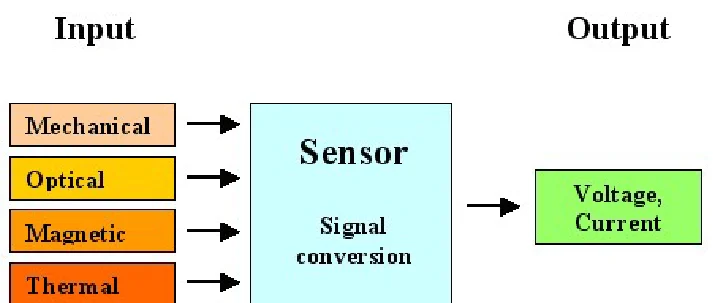
A sensor typically performs three core functions: sensing the target parameter, converting the detected change into an electrical (or optical) signal, and outputting that signal for further handling. Modern sensors often incorporate signal conditioning, amplification, and digital interfaces directly, evolving from simple transducers to intelligent nodes.
Sensor Classification
Sensors can be categorized using multiple criteria:
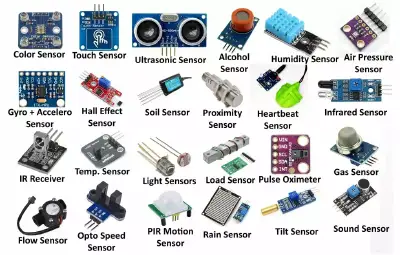
By Measured Quantity
- Physical Sensors: Temperature, pressure, displacement, acceleration, light, etc.
- Chemical Sensors: Detect gases, pH, humidity, or specific compounds.
- Biosensors: Identify biological elements such as enzymes, antibodies, or pathogens.
By Operating Principle
- Resistive: Changes in resistance (e.g., thermistors, strain gauges).
- Capacitive: Variations in capacitance (proximity, humidity, accelerometers).
- Inductive: Changes in inductance or eddy currents (position, speed).
- Piezoelectric: Generation of charge under mechanical stress (vibration, pressure).
- Optical, Magnetic (Hall), and Semiconductor-based: Leveraging photoelectric, Hall effect, or junction properties.
By Output Signal
- Analog: Continuous voltage or current output.
- Digital: Direct digital communication (I2C, SPI, etc.) with built-in processing.
By Application Domain
Industrial, automotive, medical, environmental, consumer, and aerospace sensors are optimized for specific environmental, accuracy, and reliability requirements.
By Manufacturing Technology
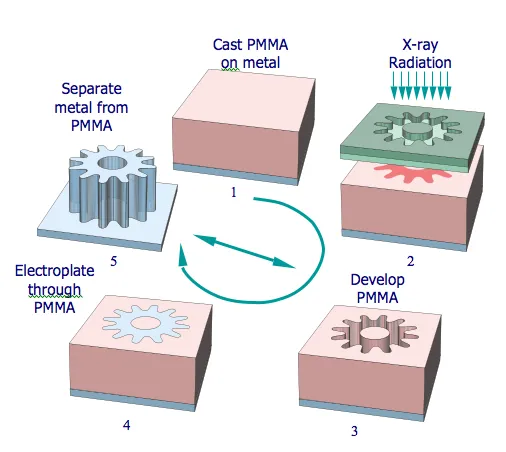
Traditional mechanical/thermal sensors versus MEMS (Micro-Electro-Mechanical Systems) and integrated semiconductor solutions.
Working Principles
Most sensors follow a common signal chain: detection -> transduction -> conditioning -> output. Specific mechanisms vary widely. For instance, resistive sensors exploit material property changes with temperature or strain, while capacitive types measure dielectric or distance variations between plates. Piezoelectric sensors generate voltage from mechanical deformation, and Hall sensors detect magnetic fields as described in related technical discussions.
Advanced designs incorporate compensation for temperature, nonlinearity, and drift, often using onboard microcontrollers or analog front-ends.
Key Applications
Sensors enable functionality across industries:
- Consumer Electronics: Accelerometers, gyroscopes, and ambient light sensors for user interfaces and power management in smartphones and wearables.
- Automotive: Position, speed, pressure, and environmental sensors for safety, engine control, and ADAS.
- Industrial: Process monitoring, predictive maintenance, and automation.
- Medical: Vital signs monitoring, diagnostics, and implantable devices.
Design and Manufacturing Considerations for Sensor Integration
Successful sensor deployment depends heavily on the supporting electronics hardware. PCB design must address several challenges:
- Signal Integrity: Low-noise layouts, short analog traces, proper grounding, and shielding to preserve weak sensor signals.
- Power Management: Stable, low-noise supplies, especially for precision analog sensors; support for low-power modes in battery-operated devices.
- Thermal and Mechanical Stability: Minimizing self-heating effects and board-induced stress on sensitive MEMS structures.
- Assembly Processes: Precise SMT placement for miniature packages, controlled reflow to prevent damage, and selective encapsulation where needed.
High-density interconnect (HDI) and rigid-flex PCBs are frequently used to achieve compact form factors while maintaining performance in wearable or space-constrained applications. Material selection (e.g., low-loss dielectrics, high Tg laminates) further enhances reliability under environmental stress.
Future Trends
Sensors are advancing toward greater miniaturization, intelligence, and integration. MEMS and CMOS-compatible processes enable multi-axis, multi-function devices with embedded processing. The proliferation of IoT and AI drives demand for energy-efficient, wirelessly connected, self-diagnostic sensors capable of edge computing and data fusion.
Role of PCB Technologies in Sensor Systems
Printed circuit boards provide the mechanical, electrical, and thermal foundation for sensor performance. Advanced fabrication techniques ensure the trace geometries, impedance control, and layer stackups necessary for high-speed digital interfaces and sensitive analog sections. Reliable assembly and testing processes directly contribute to the long-term accuracy, stability, and manufacturability of sensor-enabled electronic products across all major industries.
Frequently Asked Questions
Q1: How are sensors typically classified?
A1: By measured quantity (physical/chemical/bio), operating principle (resistive/capacitive/etc.), output type (analog/digital), and application domain.
Q2: What PCB design factors are critical for sensor performance?
A2: Signal integrity, noise reduction, thermal management, and mechanical stability are essential to maintain accuracy and reliability.
Q3: Why are MEMS sensors increasingly common?
A3: They offer miniaturization, integration with electronics, lower power consumption, and cost-effective volume manufacturing suitable for modern PCB assemblies.