Overview
Flexible electronic devices extend the ability to sense the environment in a convenient and comfortable way. Flexible magnetic sensors are important for detecting changes in external magnetic fields. However, current state-of-the-art flexible magnetoelectronic devices cannot simultaneously achieve a low detection limit and a wide detection range, which limits their application potential.
According to Mims Consulting, a team led by Runwei Li and Yiwei Liu at the Ningbo Institute of Materials Technology and Engineering, Chinese Academy of Sciences, published a paper in Advanced Science titled "Wearable Magnetic Field Sensor with Low Detection Limit and Wide Operation Range for Electronic Skin Applications." The paper reports a flexible magnetic sensor with a measurement range from 22 nT to 400 mT and a detection limit as low as 22 nT. Compared with existing flexible magnetic sensors, the proposed sensor extends the detection range by at least one order of magnitude, reaching seven orders of magnitude. The device uses a cantilever structure that accommodates a flexible permanent-magnet composite and an amorphous magnetic wire to provide sensitivity at low fields. To detect high fields, the researchers exploited the anisotropy of the giant magnetoimpedance (GMI) effect in the amorphous wire with respect to field direction. Thanks to the sensor's mechanical flexibility and wide detection range, potential applications were demonstrated in geomagnetic navigation, non-contact interaction, rehabilitation devices, and safety interfaces that warn of high magnetic field exposure.
Measurement Principle
Applying the sensor to a fingertip is a natural fit for interactive applications such as pointing at objects or interacting with a smartphone screen (Figure 1a). Figure 1b shows the sensor measurement principle.
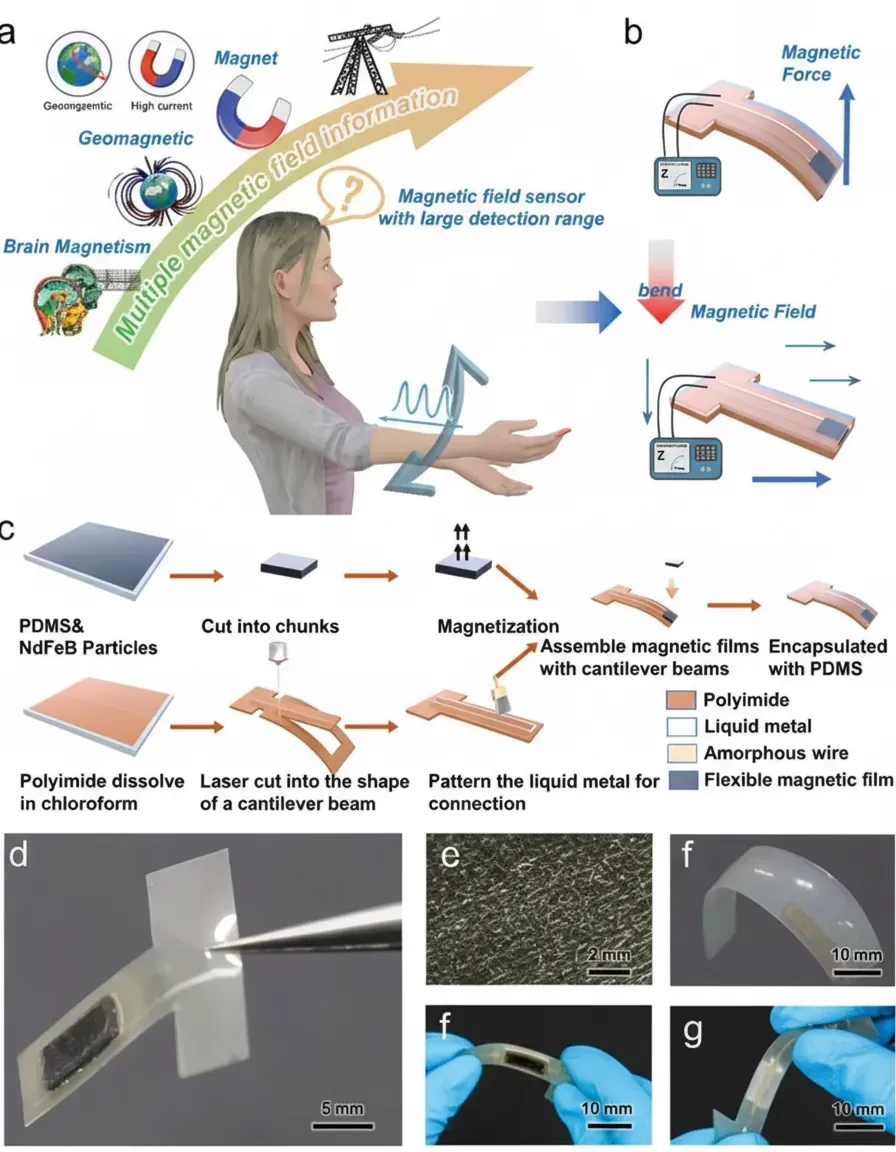
Figure 1. Flexible amorphous-wire magnetic sensor for wide-range detection and low detection limit.
When the magnetic field is small and insufficient to bend the cantilever that holds the GMI wire, the sensing mechanism is based on the giant magnetoimpedance effect of the amorphous magnetic wire; the cantilever shape remains unchanged. As the magnetic field increases, the amorphous wire becomes magnetically saturated. The interaction force between the permanent magnet block and the external field increases and becomes significant. Under this magnetic force, the cantilever bends along the field direction. The angle between the amorphous wire and the field changes accordingly, which alters the sensor's impedance in the saturated regime. In this way, bending of the cantilever enables detection of stronger magnetic fields.
Fabrication
The fabrication flow of the flexible magnetic sensor includes making a mechanically flexible cantilever structure that accommodates a cobalt (Co)-based amorphous wire and a flexible permanent magnet.
The device's mechanical stability comes from flexible amorphous wires connected by liquid-metal interconnects that have excellent tensile properties. The cobalt wire and liquid-metal interconnects are encapsulated in a polyimide cantilever. The flexible permanent magnet is based on NdFeB rigid magnetic particles (9 wt%) dispersed in an elastomer matrix (PDMS) and is placed at one end of the cantilever. The entire sensor structure is encapsulated in PDMS to ensure mechanical integrity and biocompatibility.
The final cantilever sensor is shown in Figure 1d. The amorphous wire and liquid-metal interconnects are distributed along both sides of the cantilever (Figure 1e). In the initial state the cantilever is bent (Figure 1f). The sensing unit is compact and can be integrated into decorative fingernails for real-time, wide-range magnetic-field detection. The device is flexible and can withstand bending in different directions (Figure 1g and 1h), which is relevant for electronic skin and smart textiles.
Structural and Performance Characterization
The team tested the sensor response across a range of magnetic-field strengths . Compared with previously reported flexible magnetic sensors, the proposed device has the lowest detection limit and can measure magnetic fields across seven orders of magnitude.
Wearable Demonstrations
The researchers mounted the flexible magnetic sensor on a fingertip (Figure 2a and 2c) and integrated it into decorative fingernails (Figure 2e) to demonstrate everyday use cases. When the sensor-equipped finger moves, the angle between the amorphous wire and the geomagnetic field changes, producing up to a 2.7% change in sensor impedance (Figure 2b). Real-time impedance measurement combined with computer input enables non-contact human-machine interaction.
Figure 2d shows how the sensor impedance responds to pulse waveforms. The impedance changes identify key peaks labeled P1, P2, and P3 within the pulse waveform. With this setup, a wearable device can capture and analyze pulses for health monitoring or other applications. The sensor also has potential for safety and security applications: the impedance increases when approaching a strong magnetic source, as shown in Figure 2f.
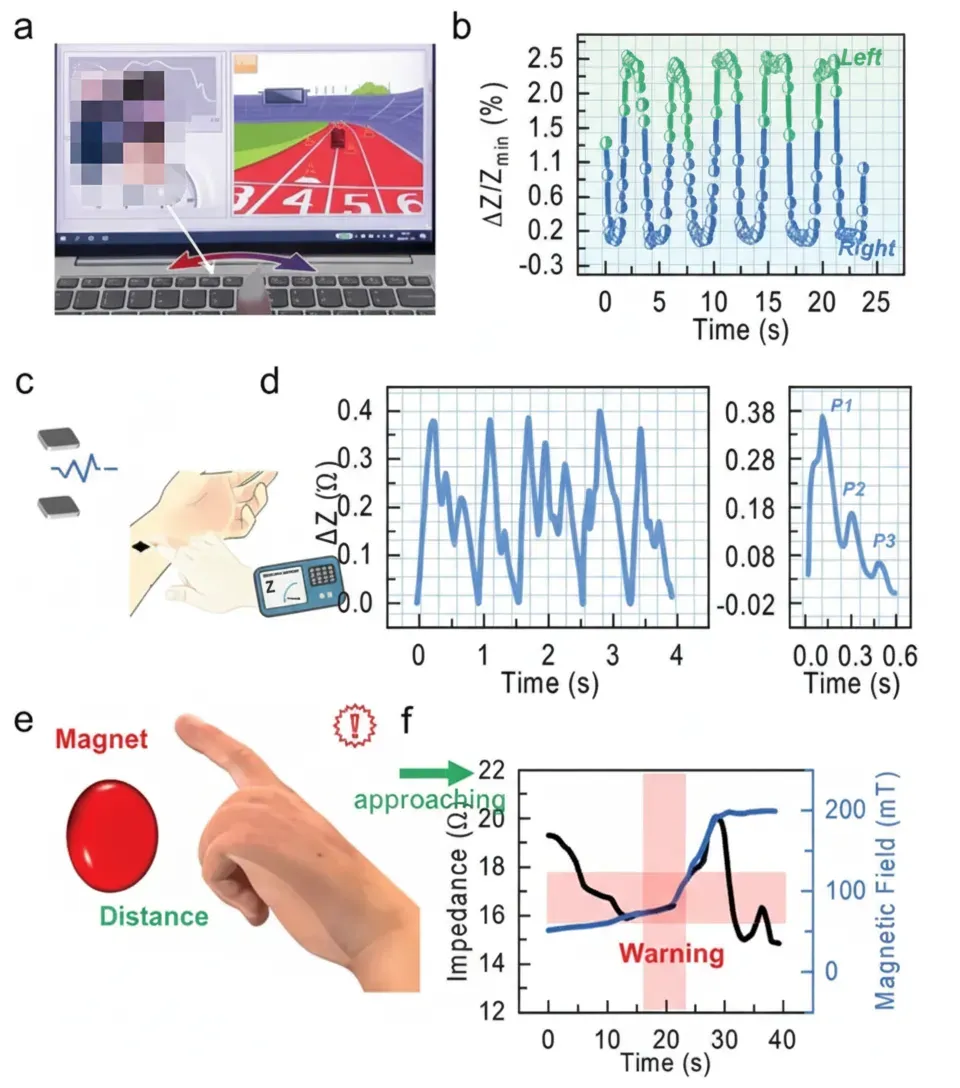
Figure 2. Application scenarios for the wearable magnetic sensor.
Conclusion
This work presents a wearable magnetic sensor with a detection limit as low as 22 nT and an operating range from 22 nT to 400 mT. The sensor benefits from the giant magnetoimpedance effect of the amorphous wire and from anisotropic magnetoimpedance responses when exposed to fields from different directions. At low fields the device uses the magnetoimpedance effect of the amorphous wire for precise measurement. At higher fields, wire saturation causes the cantilever structure to convert field changes into interaction forces between the flexible magnet and the field, driving cantilever bending and changing the wire-field angle. By exploiting the anisotropic magnetic response, the sensor continues to measure fields beyond wire saturation. This design enables detection of a wide variety of magnetic fields encountered in daily life and points to potential applications of wearable magnetic sensors in interactive electronics, bioelectronics, and safety and security systems.