Summary
A long-standing challenge is early warning of thermal runaway in lithium-ion batteries. A research team led by Professor Tuan Guo at Jinan University, together with Researcher Qingsong Wang's team at the State Key Laboratory of Fire Science, University of Science and Technology of China, developed a multimodal integrated fiber-optic in-situ monitoring technique that can be embedded inside commercial lithium-ion cells. The team designed and fabricated a multimodal fiber-optic sensor capable of operating in a high-temperature, high-pressure environment up to 1000 °C, enabling synchronous, high-precision measurement of internal temperature and pressure during the full thermal runaway sequence. They addressed signal crosstalk between temperature and pressure under extreme conditions, proposed a method to decouple heat generation and pressure-change rates, and identified characteristic inflection points that trigger chain reactions during thermal runaway. The method allows precise discrimination of irreversible internal reactions and provides a basis for rapid interruption of chain reactions to keep cells operating within a safe range. The results were published in Nature Communications. Wenxin Mei (USTC) and Zhì Liu (Jinan University) are co-first authors; Tuan Guo (Jinan University) and Qingsong Wang (USTC) are co-corresponding authors. The study was conducted by teams from the University of Science and Technology of China, Jinan University, the Royal Society of Canada, Hong Kong Polytechnic University, and Carleton University.
Background
With the advancement of carbon neutrality goals, lithium-ion batteries play an increasingly important role in the transition from fossil fuels to renewable energy. Recent fire and safety incidents caused by battery thermal runaway have hindered large-scale deployment in electric vehicles and energy storage, underscoring the need to understand thermal runaway mechanisms for early warning and prevention of fires and explosions. Existing monitoring methods rely on external electrical, thermal, acoustic, or gas signals that have delayed responses and cannot capture rapid internal changes in temperature and heat generation. This limitation obstructs accurate interpretation of thermal runaway mechanisms and reliable early warning. Therefore, there is an urgent need for an in-situ safety-detection technique suitable for early warning of battery thermal runaway.
Multimodal Fiber-optic Sensor
The multimodal fiber-optic sensor integrates a fiber Bragg grating (FBG) and an open-cavity Fabry-Perot interferometer (FPI) to enable synchronous monitoring of internal temperature and pressure in a cell. The FBG reflected spectrum center wavelength is proportional to the core refractive index and grating period; temperature changes modify the grating period and the core refractive index via thermo-mechanical and thermo-optic effects, causing the center wavelength to shift. Thus, temperature is demodulated from the FBG center-wavelength shift. External pressure changes alter the gas refractive index inside the open FPI cavity and therefore shift the interference spectrum wavelength; pressure is demodulated from that spectral shift.
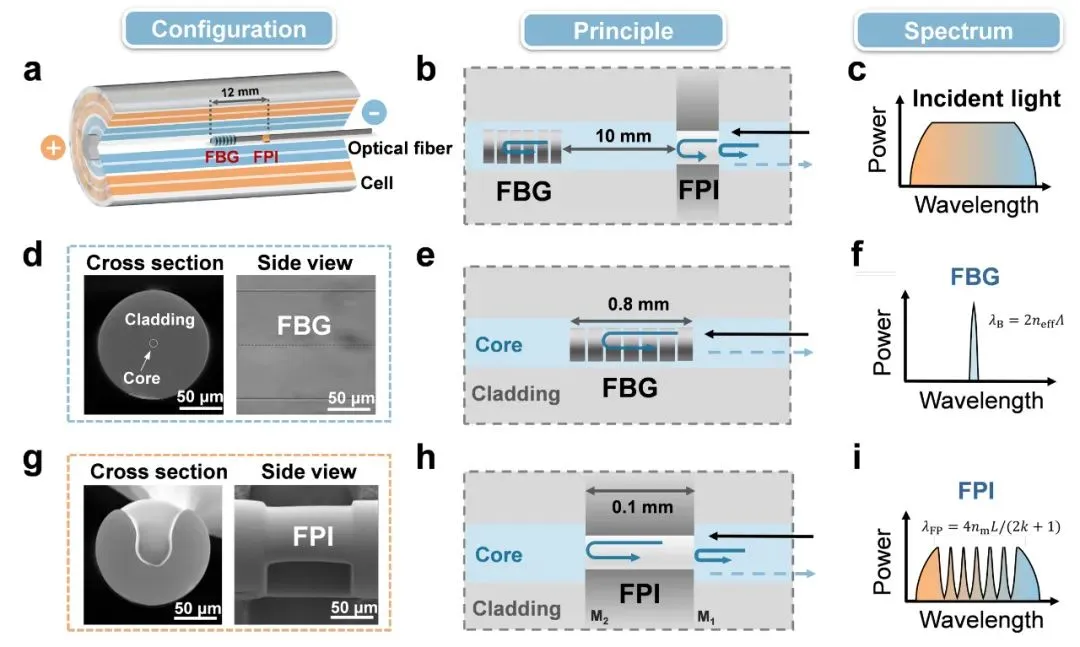
Figure 2. Principle of temperature and pressure measurement with the integrated FBG-FPI multifunctional fiber sensor.
Calibration tests for the FBG-FPI integrated sensor show a highly linear relationship between FBG center wavelength and temperature with a linear sensitivity of 10.3 pm °C-1. The FPI wavelength shifts linearly with pressure, with a sensitivity of 4188.4 pm MPa-1. Crucially, the FBG and FPI elements are selectively sensitive: the FBG is insensitive to pressure and the FPI is insensitive to temperature, enabling accurate independent measurement of temperature and pressure. The multifunctional sensor was implanted through a hole at the center of the anode in an 18650 cell. Rate capability and cycle-life tests showed that implanting the sensor did not affect cell performance.
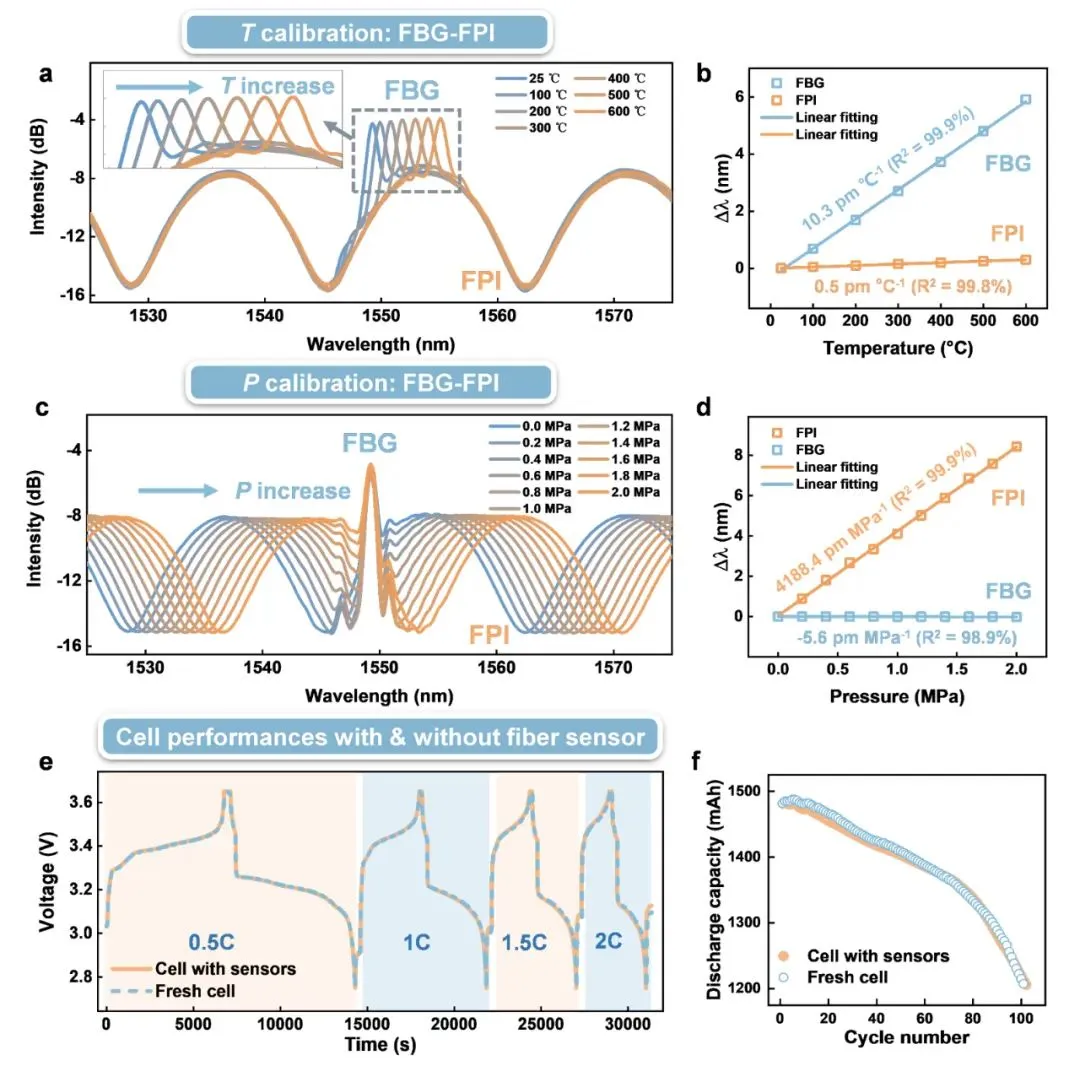
Figure 3. Calibration of the multifunctional fiber sensor and evaluation of cell performance after implantation.
In-situ Monitoring of Internal Temperature and Pressure During Thermal Runaway
Internal temperature and pressure evolution were recorded during thermal runaway in cells at 100% state of charge (SOC), 50% SOC, and 0% SOC. Thermal abuse was initiated by a cylindrical heating rod of the same diameter as the cell. Pressure traces show two peaks corresponding to safety-valve opening and the thermal runaway event. The 0% SOC cell did not undergo thermal runaway and thus did not show a second pressure peak. Localized zoom-ins reveal that a voltage drop, indicating internal short-circuiting, coincides with an instantaneous release of Joule heat and an internal temperature step increase of about 20 °C. Surface temperature shows only a minor or negligible step due to thermal lag, indicating that internal temperature steps can predict internal short circuits. In a 100% SOC cell the peak internal temperature reached 509.8 °C while external temperature only reached 328.8 °C due to rapid internal heat release, a difference of up to 180 °C. These results highlight serious lag and limitations when monitoring thermal runaway via external temperature alone.
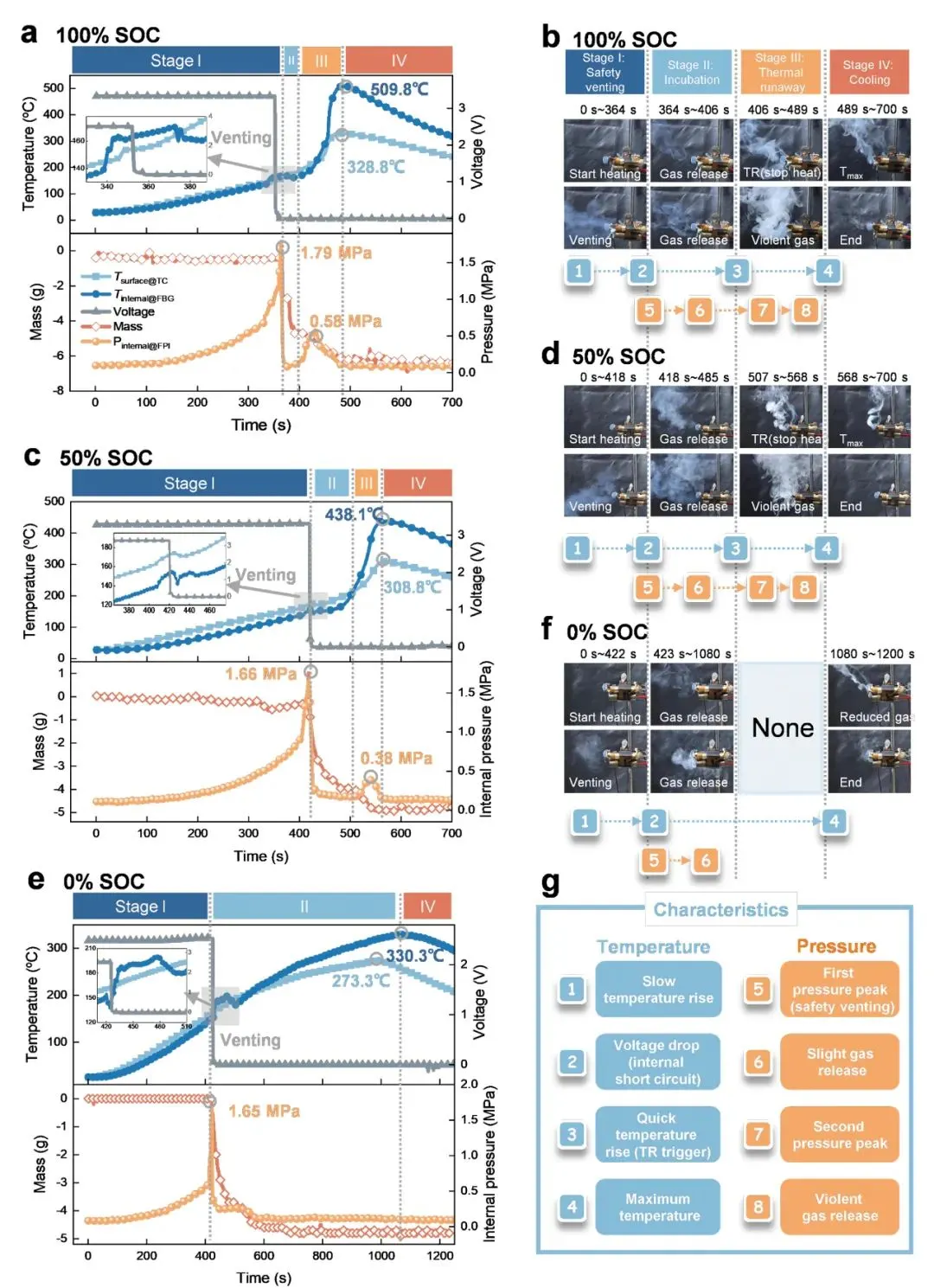
Figure 4. In-situ monitoring of internal temperature and pressure during thermal runaway of an 18650 lithium-ion cell.
Early Warning of Thermal Runaway
Conventional early warning relies on gas release after safety-valve opening or voltage drops from internal shorts. By the time these signals appear, irreversible chemical changes have already occurred. This work aims to provide early warning before irreversible chemistry begins, preserving the cell's ability to continue safe operation.
To analyze precursors occurring before safety-valve opening, the internal temperature and pressure curves were differentiated with respect to time to obtain their rates of change. The differentiated curves reveal two stages: stage 1, where the temperature-increase rate rises while the pressure-change rate remains stable; and stage 2, where the temperature-increase rate stabilizes while the pressure-change rate begins to rise.
Plotting temperature and pressure rates together forms a "diamond region" due to their opposite trends; the diamond's inflection point is defined as the start of the warning window. The underlying mechanisms are: in stage 1 temperature changes dominate as the cell heats from an external heating source; in stage 2 pressure changes dominate because the earlier rapid temperature increase raises pressure and causes electrolyte evaporation, which further increases pressure. During stage 2 the cell still undergoes reversible physical changes. Further increases in internal temperature and pressure lead to SEI decomposition and the onset of irreversible chemical reactions. The proposed warning window thus begins at electrolyte evaporation (the diamond inflection) and ends at SEI decomposition, corresponding to temperatures around 70 to 80 °C. This warning window is insensitive to SOC and therefore applicable as a general early-warning signal for thermal runaway.
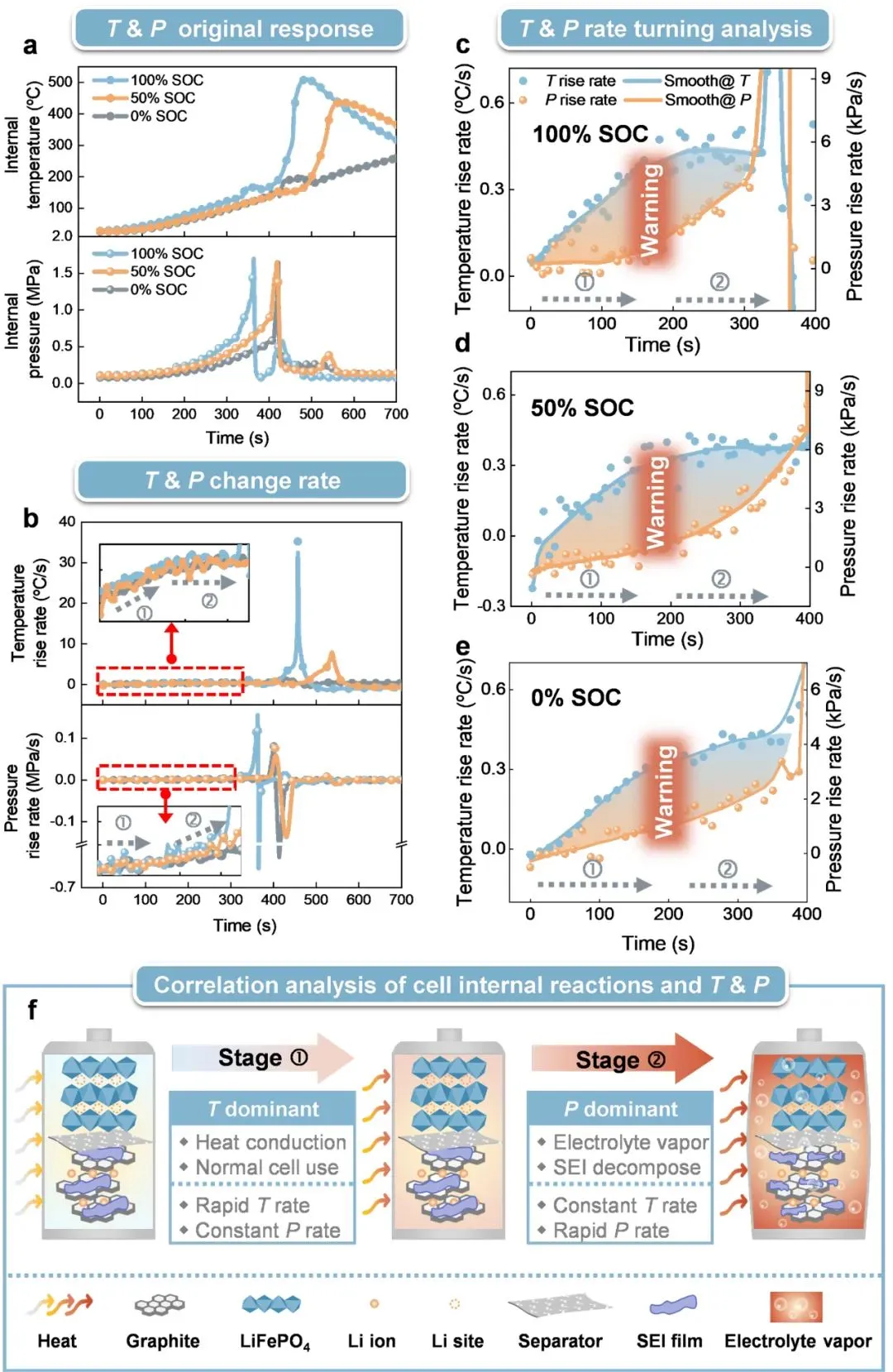
Figure 5. Using time derivatives of temperature and pressure to detect the transition from reversible to irreversible internal reactions and to establish an early-warning window.
Applications and Outlook
This work developed an integrated FBG-FPI multifunctional fiber sensor that performs noninvasive, in-situ, real-time, high-precision monitoring of internal temperature and pressure in commercial lithium-ion cells, and quantitatively links thermal runaway dynamics to optical signals with stable and repeatable correlations. Figure 6 summarizes the internal temperature-pressure evolution and its relation to complex internal reactions during thermal runaway, including electrolyte evaporation, SEI decomposition, separator melting, internal shorting, safety-valve opening, and chain reactions among electrodes and electrolyte. By identifying the "diamond" region in the derivative curves of temperature and pressure, a thermal runaway early-warning scheme based on recognizing the conversion from reversible to irreversible internal reactions is proposed to improve cell safety.
Given the small size, immunity to electromagnetic interference, remote operation capability, compatibility with standard mass-manufacturing processes, and the ability to multiplex multiple sensing points along a single fiber to monitor temperature, pressure, refractive index, gas, and ion concentrations, fiber-optic sensing is suitable for large-scale deployment. Integration of fiber-optic sensing with battery systems could play an important role in safety monitoring for electric vehicles and energy storage facilities.
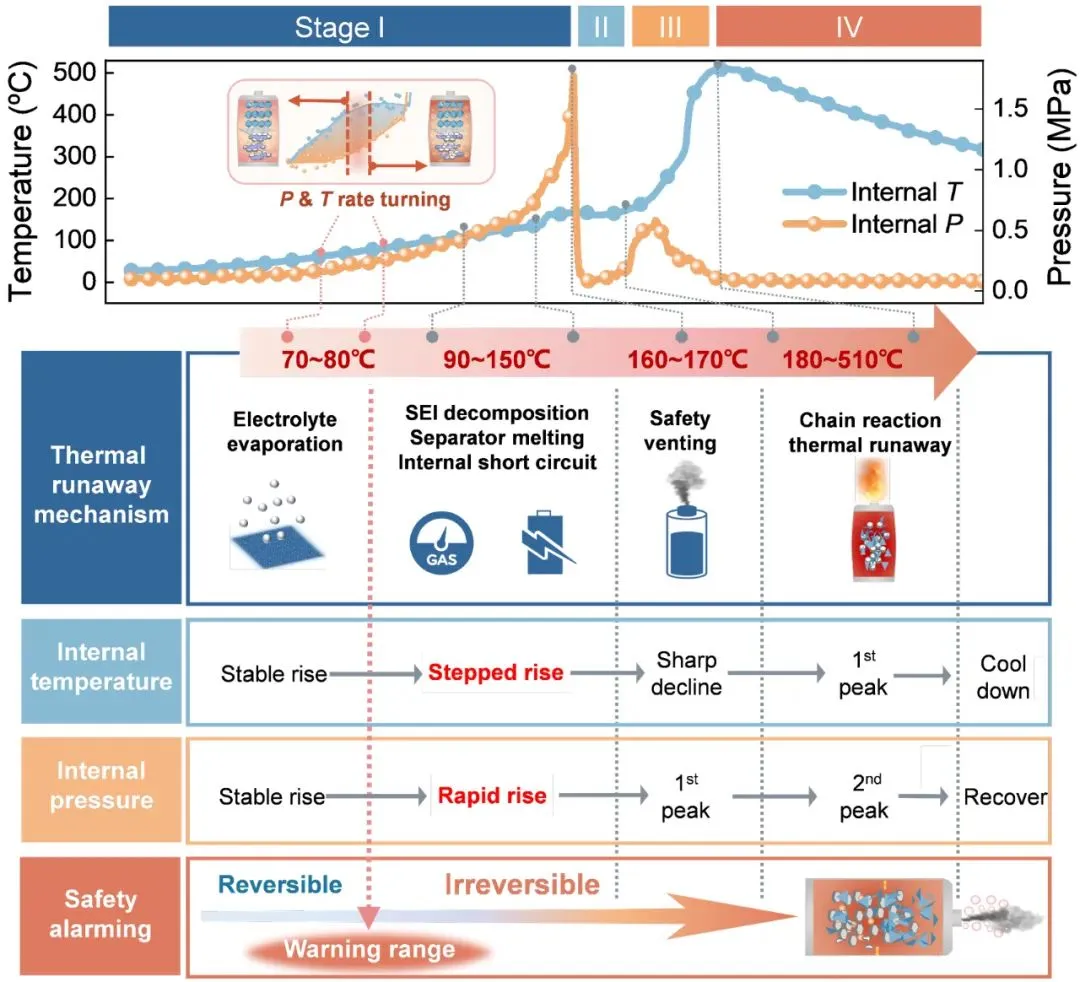
Figure 6. Mechanisms of thermal runaway in lithium-ion batteries and the established early-warning window.