5G LAN extends 5G capabilities to deliver local-area networking functions with the bandwidth, latency, mobility, and security advantages of cellular networks. It supports Ethernet-type and IP-type connectivity, enabling private mobile LAN and VPN-like services that meet the stringent demands of industrial automation, enterprise environments, and smart-home deployments.
Technical Principles and Standards Evolution
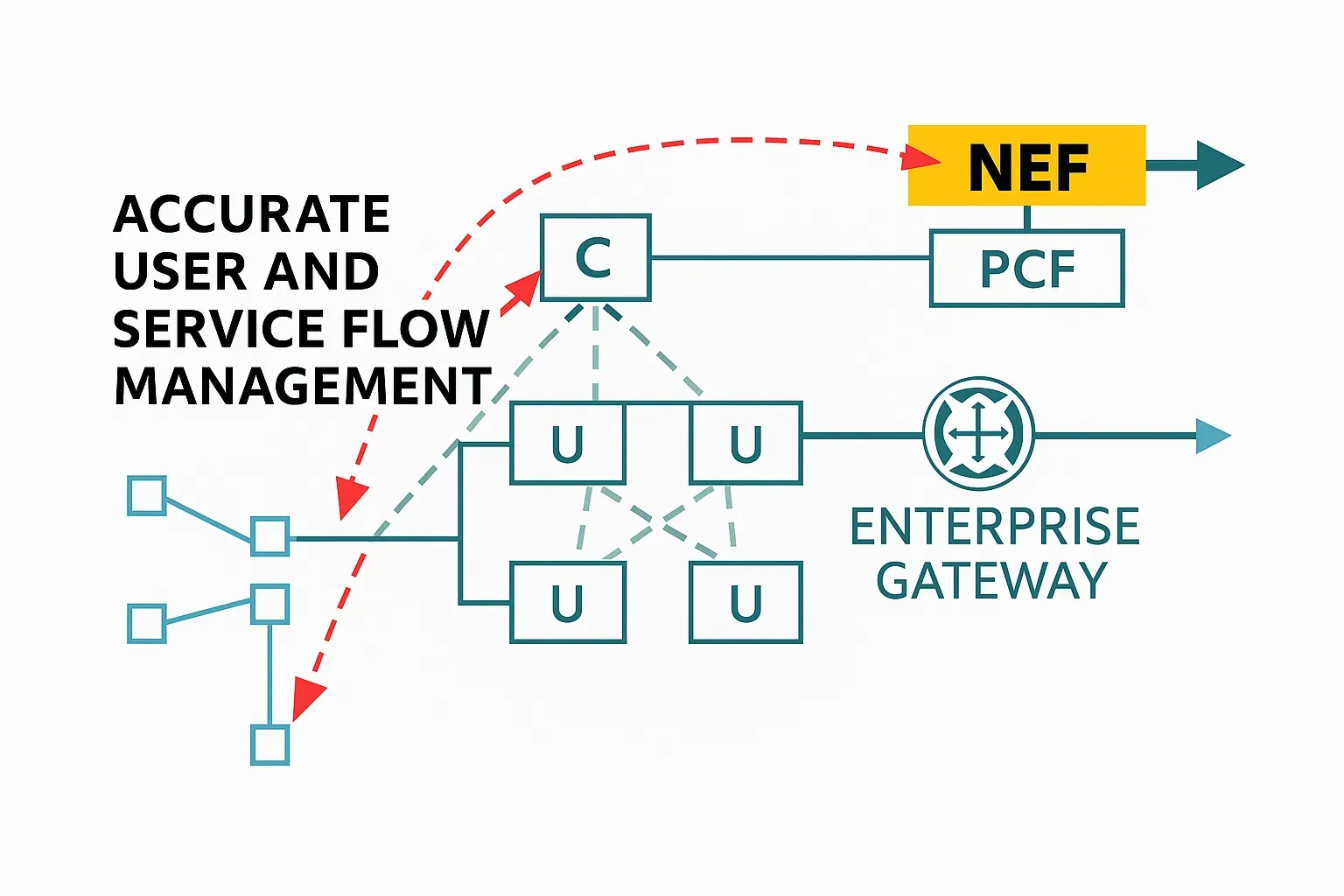
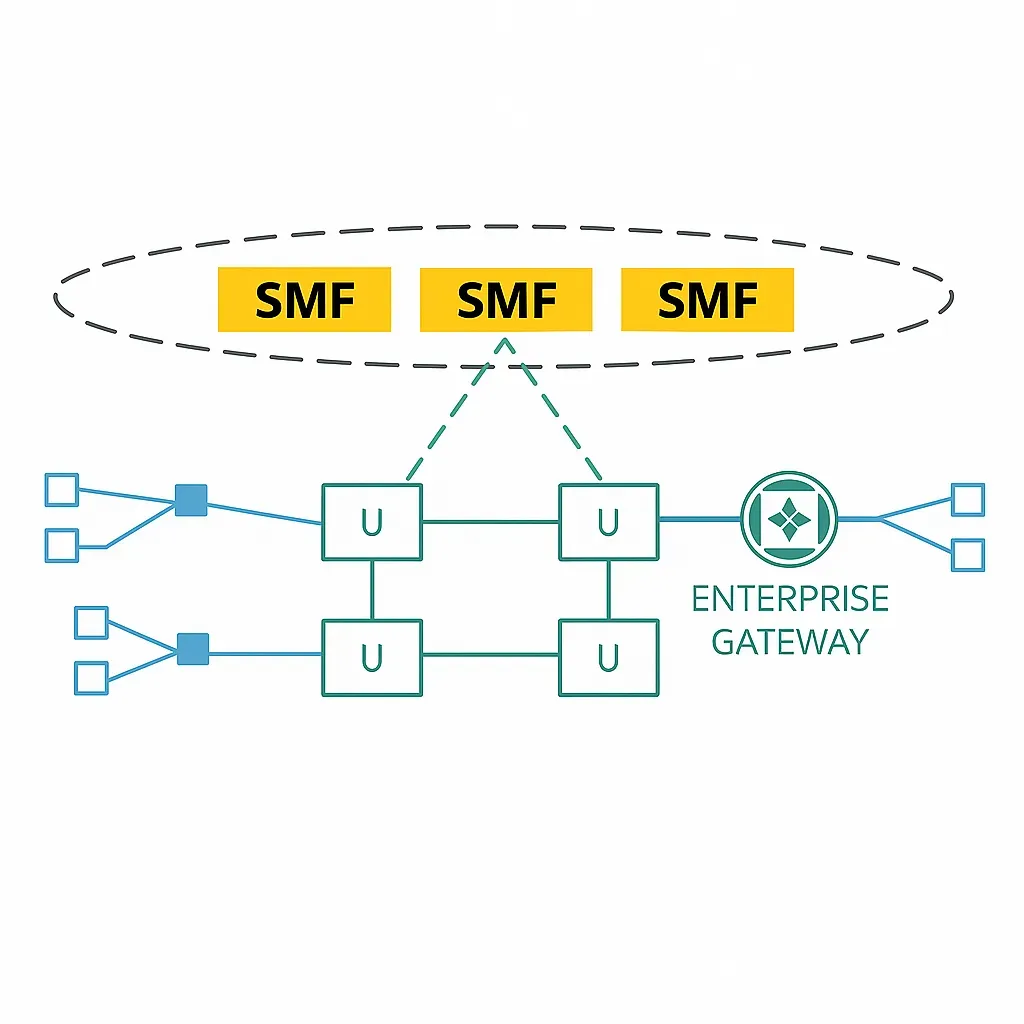
5G LAN organizes user equipment into virtual networks (VN Groups) that support layer-2 Ethernet forwarding, broadcast/multicast, UE-to-UE communication, and dynamic group management. From Release 16 through Release 18, 3GPP has progressively enhanced these functions. Release 18 introduces cross-SMF VN Group management for improved fault tolerance, cross-VN Group communication for interconnected domains, granular traffic and performance monitoring, and advanced group status reporting. These capabilities provide the visibility, reliability, and flexibility required for industrial control and enterprise segmentation.
Industrial Application Requirements
Industrial environments demand high throughput, sub-millisecond latency, deterministic communication, and strong isolation. 5G LAN addresses these needs by supporting raw Ethernet protocols such as PROFINET, EtherCAT, and Modbus TCP at layer 2, eliminating the overhead of IP routing while preserving real-time performance. Key use cases include synchronized PLC control of distributed I/O, multicast for production-line management, dynamic grouping of AGVs and wearables, and secure segmentation between operational technology and information technology networks. Layer-2 VLAN support enables logical isolation without complex routing, while high-reliability wireless links replace or augment wired industrial Ethernet in flexible manufacturing cells.
Network Architecture and Wireless Integration
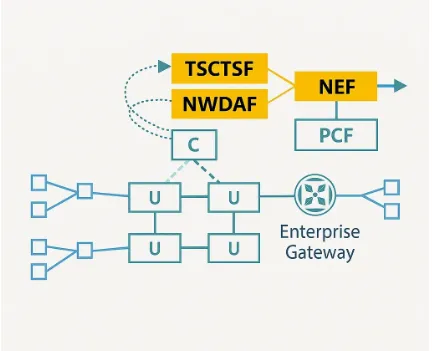
Many industrial protocols operate purely at the data-link and physical layers, making IP-based layer-3 networks unsuitable. 5G LAN's Ethernet-type access simplifies device configuration and supports direct layer-2 bridging to Time-Sensitive Networking (TSN). Gateways translate between 5G LAN and TSN domains, extending precise clock synchronization, traffic shaping, and bandwidth reservation across wide-area 5G coverage. This hybrid architecture enables remote monitoring of offshore or sparsely populated sites, network-level roaming for mobile industrial devices, and seamless integration of legacy TSN endpoints with 5G infrastructure.
Design and Manufacturing Challenges
5G LAN equipment—base stations, customer-premises gateways, TSN bridges, and industrial routers—must maintain stable RF performance across wide temperature ranges, high vibration, and electromagnetic interference typical of factory floors. High channel counts, millimeter-wave or sub-6 GHz operation, and dense integration of digital processing increase the complexity of power distribution, thermal management, and signal integrity. Yield and calibration requirements grow with the number of RF chains, while long-term reliability under continuous operation demands robust material and process controls.
Materials and PCB/FPC Relevance
High-frequency PCBs for 5G LAN modules require low-loss dielectrics such as PTFE, hydrocarbon ceramics, or specialized high-frequency laminates to minimize insertion loss and maintain stable dielectric constant across temperature and frequency. Controlled copper roughness and foil type reduce conductor losses at millimeter-wave bands. High-density interconnect (HDI) techniques support the dense routing of multiple RF channels, control lines, and power planes within compact gateways and base-station boards. Flexible printed circuits enable conformable antenna feeds or interconnects in space-constrained or mechanically stressed installations. Metal-core or embedded-copper substrates provide thermal paths for power amplifiers and processors. Environmental qualification—thermal cycling, vibration, humidity, and ingress protection—guides substrate Tg, coefficient-of-thermal-expansion matching, surface finishes, and conformal coatings to ensure long-term stability of RF performance and layer-2 forwarding integrity.
Industry Trends and System Integration
The convergence of 5G LAN with TSN, private 5G networks, and industrial IoT is accelerating the transition from wired to wireless deterministic networking. Release 18 enhancements in multicast optimization, capability exposure, and cross-SMF resilience support larger-scale deployments in smart factories and critical infrastructure. Hybrid architectures that combine 5G LAN with Wi-Fi 7 or wired TSN backbones are emerging to balance coverage, latency, and cost. These trends increase demand for scalable, high-reliability 5G PCB solutions that meet both RF and industrial environmental standards.
PCB and Electronic Manufacturing Relevance
PCB fabrication and assembly processes are fundamental to realizing the performance targets of 5G LAN equipment. Precise impedance control, low-loss dielectric selection, laser-drilled microvias, and advanced surface finishes enable the high-frequency transmission lines and dense interconnects required for stable RF links and layer-2 Ethernet forwarding. Thermal management solutions and rigorous process controls maintain signal integrity and component longevity under factory conditions. Automated optical inspection, electrical testing, and environmental stress screening verify that boards meet the reliability and performance requirements of industrial deployments. These manufacturing capabilities allow electronics suppliers to deliver RF modules, gateways, and TSN-bridge boards that support the stringent electrical, thermal, and mechanical demands of modern 5G LAN infrastructure.
Conclusion
5G LAN combines cellular mobility and security with local-area Ethernet functionality, meeting the deterministic, high-reliability, and isolation requirements of industrial automation while extending TSN capabilities across wide areas. Success in production systems depends on precise RF design, stable layer-2 forwarding, and robust hardware integration. PCB material selection, controlled-impedance fabrication, high-density interconnects, and thermal-management solutions directly determine whether theoretical 5G LAN performance is achieved in deployed equipment. As private 5G and hybrid TSN networks expand, the partnership between system designers and high-reliability PCB manufacturers remains essential for scalable, dependable 5G LAN solutions.