As the communications industry, especially mobile communications, advances rapidly, the low-frequency radio spectrum has become saturated. Expanding system capacity and improving spectral efficiency through more complex modulation or multiple-access techniques will not meet future needs. High-frequency microwave bands are being explored to access new spectrum resources. Millimeter waves, with short wavelengths and wide bandwidths, can address many issues for high-speed, wideband wireless access and thus have broad applications in short-range wireless communications.
Overview
Semiconductor devices form the hardware foundation of information and communication technology. Innovative development of semiconductor technologies and circuits for millimeter-wave wireless communications is essential to increase system capacity and to address key challenges in next-generation communications. This article follows the evolution of millimeter-wave semiconductor device innovation and analyzes system architectures such as phased arrays, semiconductor materials and processes, device design, packaging and testing. It summarizes technology trends for millimeter-wave systems and devices relevant to 5G and 6G mobile communications. The U.S. DARPA MIDAS program is used as an example to illustrate research frontiers and recent progress in military millimeter-wave devices.
The main challenge in the information era is the mismatch between massive data generation and limited communications capacity. By 2032, an estimated 45 trillion sensors per year will collect vast amounts of analog information. Existing networks cannot satisfy future transmission capacity demands. One common approach has been to introduce a new wireless standard every few years with more complex modulation to increase throughput. However, increasing modulation complexity has diminishing returns, making new solutions urgent.
The Shannon–Hartley theorem indicates that system capacity scales linearly with bandwidth. A long-term method to increase throughput is to expand the modulated signal bandwidth into higher frequency ranges. Current cellular networks operate mainly below 6 GHz, where available spectrum is limited. Therefore, expanding operation into higher frequency bands is inevitable. The millimeter-wave band (roughly 30–300 GHz) offers wide spectrum and effective line-of-sight capability, enabling significant increases in bandwidth, data rate, and reductions in end-to-end latency. Consequently, millimeter-wave bands above 6 GHz are receiving more attention and the millimeter-wave ecosystem is developing rapidly.
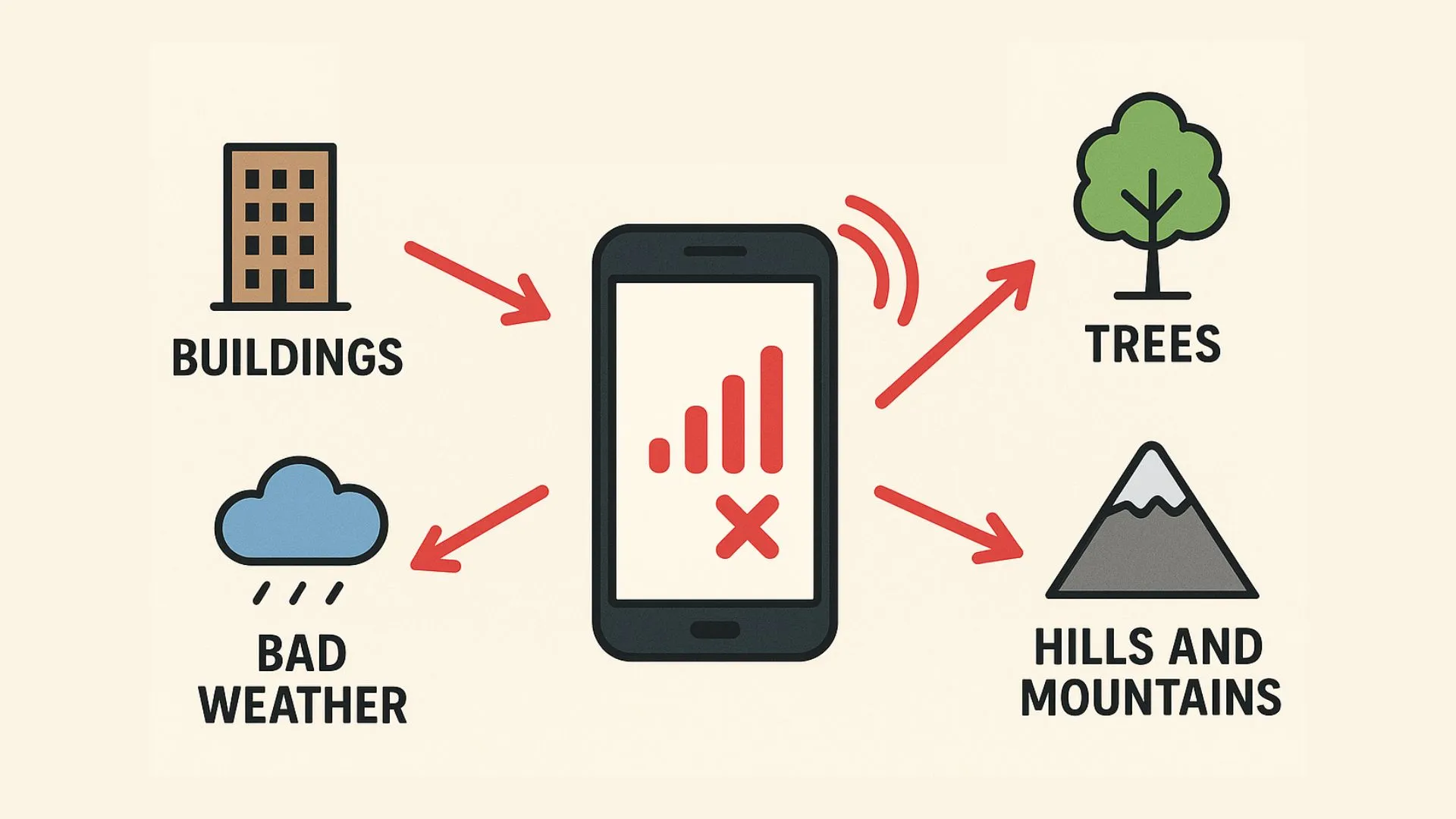
It is generally expected that 5G will deploy millimeter-wave spectrum and 6G will extend into the terahertz range (0.1–10 THz). To increase backhaul capacity from 10 Gbit/s to 100 Gbit/s, systems will operate at higher modulation formats and wider bandwidths available in millimeter-wave bands. Achieving this requires semiconductor innovation to develop devices, materials, and architectures for millimeter-wave and terahertz operation. Some technologies long used in military systems, such as phased arrays, are ideal for 5G. Phased arrays help overcome millimeter-wave signals' susceptibility to blockage by buildings or obstacles. Military applications, which often operate over tens to hundreds of kilometers, also demand high system capacity and data rates. Millimeter-wave phased arrays are important for military communications, radar, and electromagnetic spectrum operations. Civilian and military developments can mutually reinforce one another.
1. Millimeter-wave Technology Trends
From the current international 5G development perspective, the sub-6 GHz bands are largely commercialized. To achieve higher data capacity and bandwidth, efforts focus on millimeter-wave bands above approximately 24.25 GHz. At the 2019 World Radiocommunication Conference (WRC-19), representatives agreed on candidate millimeter-wave bands for IMT and 5G, including 24.25–27.5 GHz, 37–43.5 GHz, and 66–71 GHz, totaling 14.75 GHz of spectrum. This allocation supports 5G/6G ecosystem development and accelerates global deployment.
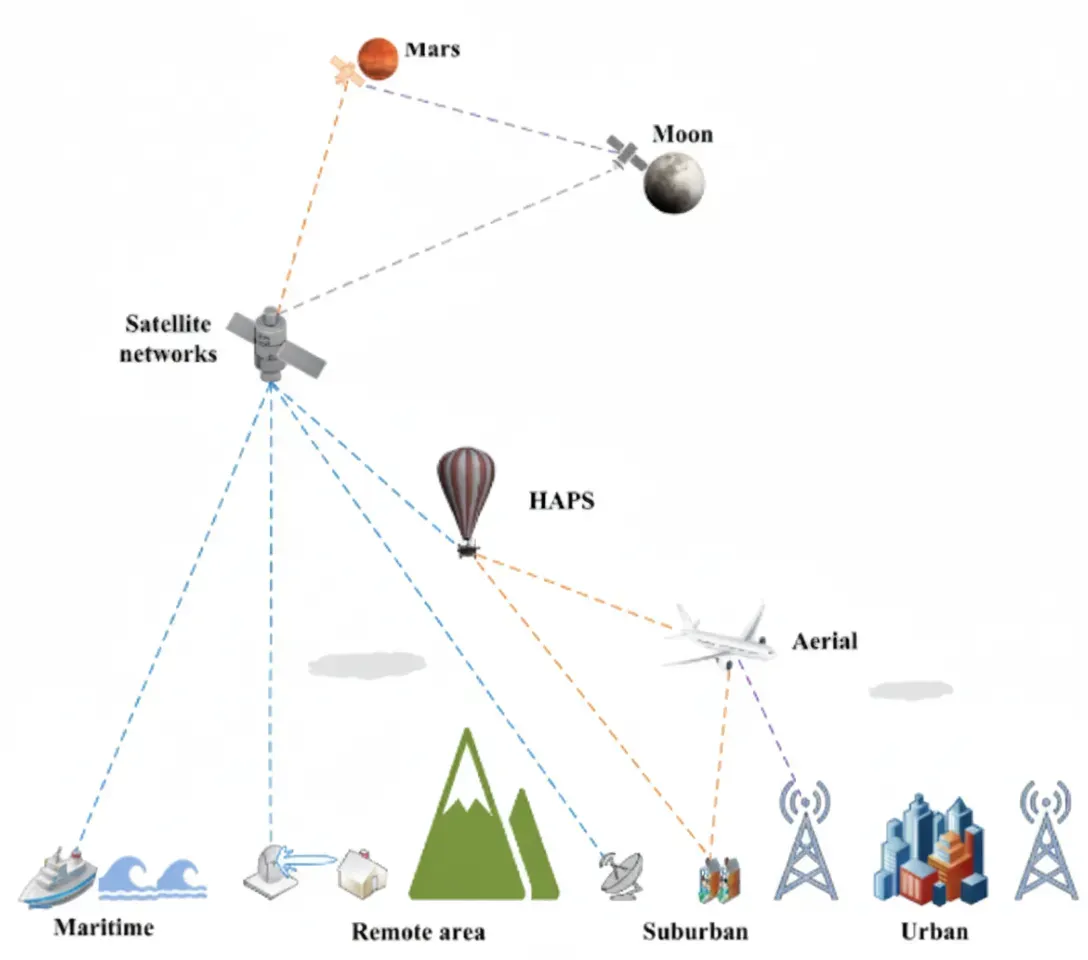
The semiconductor industry faces the challenge of providing technologies that enable higher throughput, wider coverage, and longer transmission distances for 5G and 6G networks. Requirements translate into device-level demands for RF and baseband bandwidth, operating frequency, power consumption, gain, noise figure, linearity, and transmit power. Beyond the commonly deployed 26/28/39 GHz bands, industry attention has expanded to V-band (57–66 GHz), E-band (71–86 GHz), and W-band (75–110 GHz). Frequencies above 90 GHz and up to 300 GHz are also under development. 6G network bands are expected to extend into the terahertz range and three-dimensional coverage to connect satellites, aircraft, vessels, and terrestrial infrastructure for global coverage.
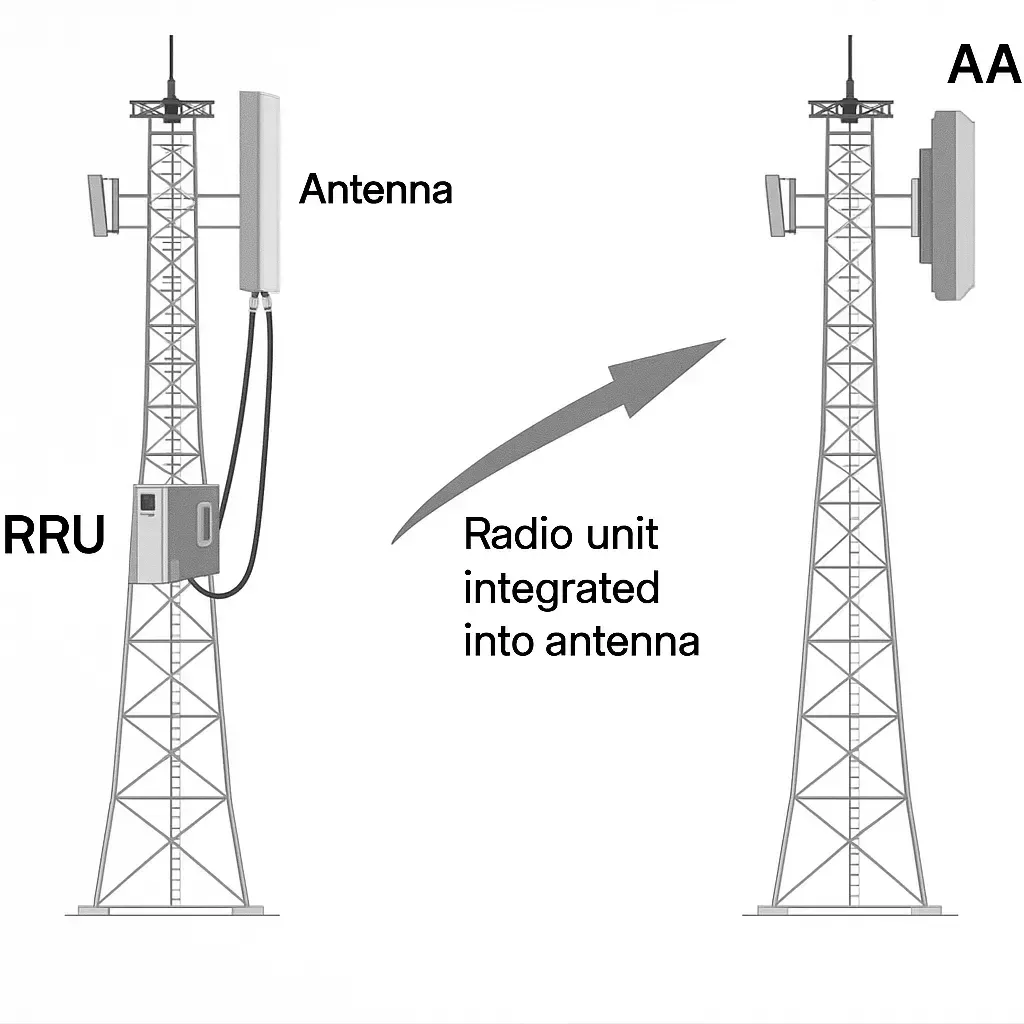
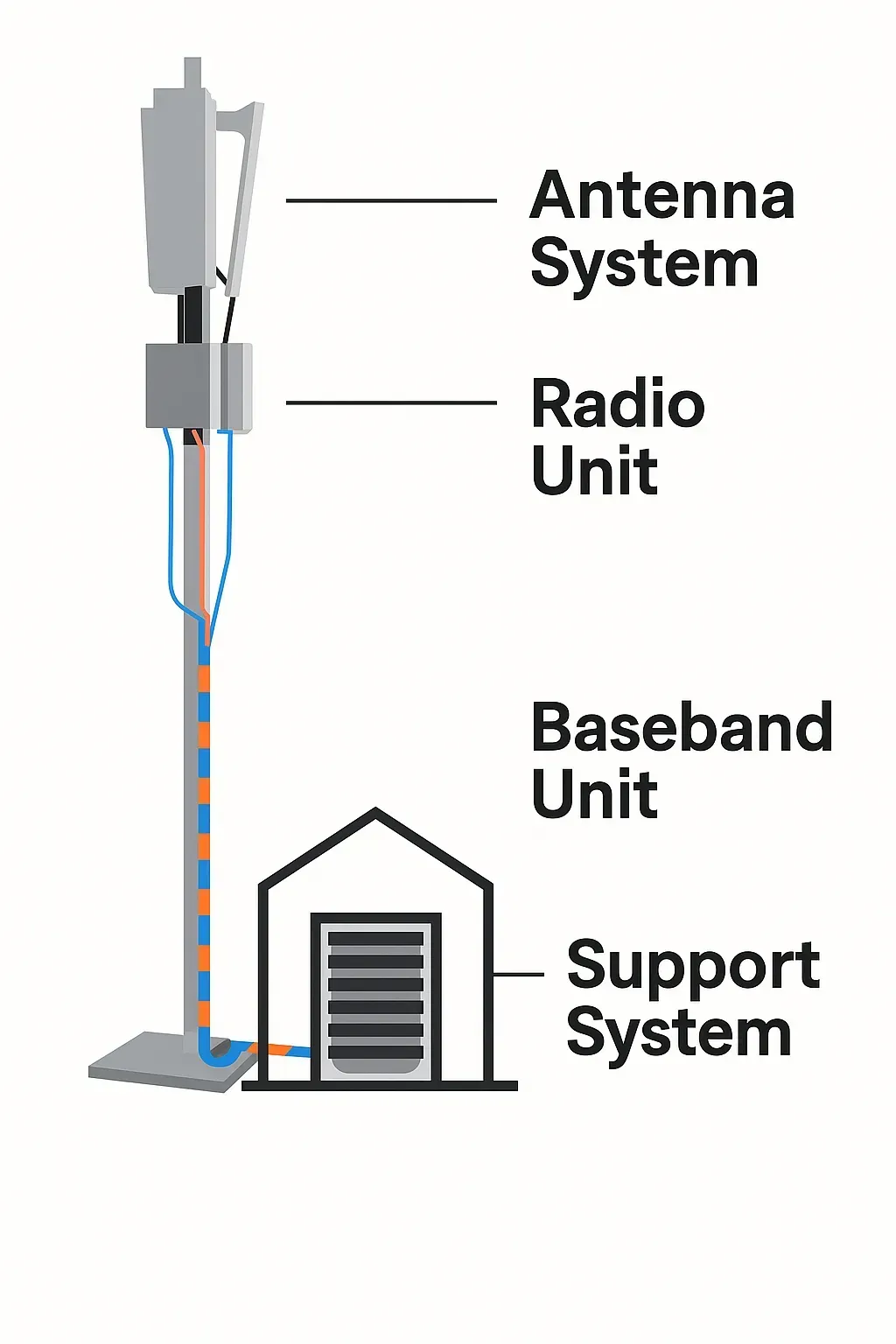
Next-generation millimeter-wave systems include large-scale MIMO architectures, beamforming chips, base station and user antenna systems, system measurement and calibration techniques, and wireless channel characterization. The base station is a critical infrastructure element. Figure 3 illustrates a typical core network 5G millimeter-wave base station baseband unit and active antenna unit (BBU-AAU) architecture, which performs conversion between NR baseband and RF signals and handles NR RF transmit/receive processing.
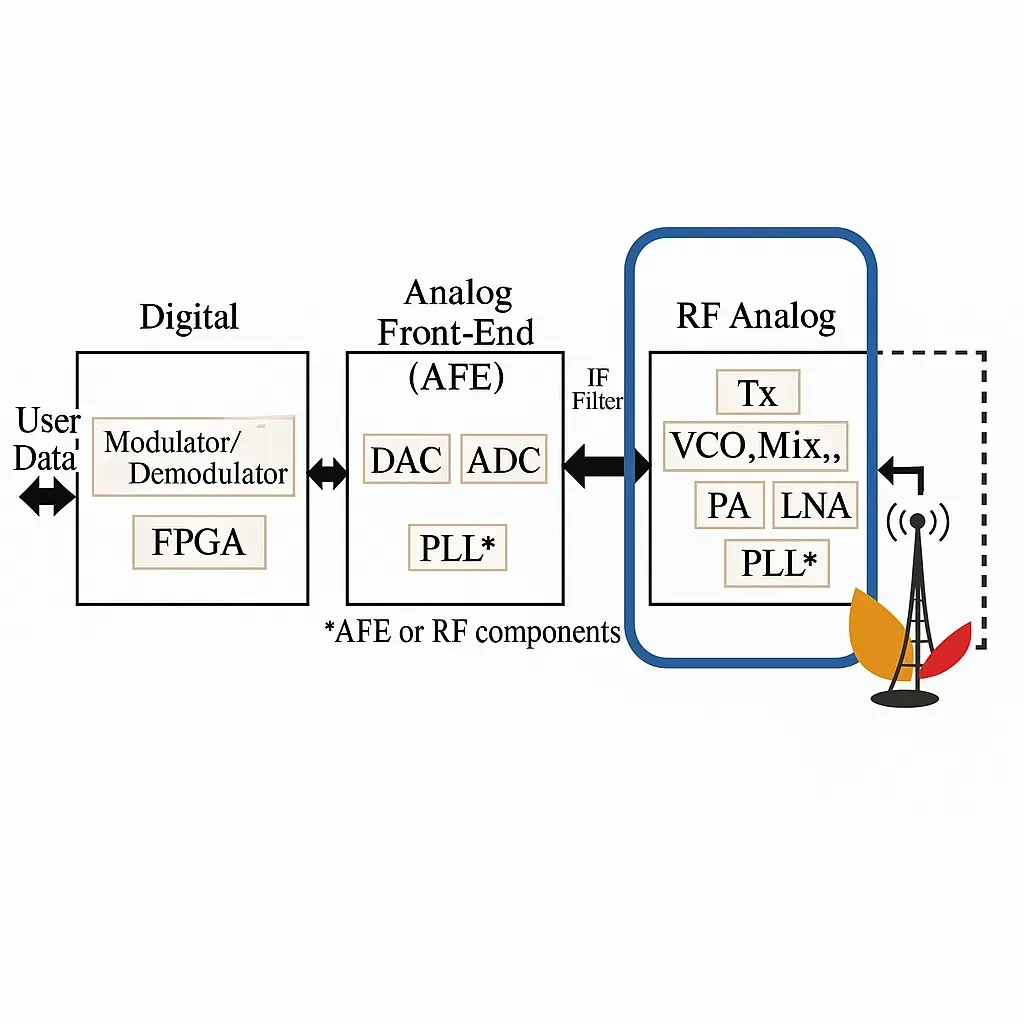
On transmission, baseband signals from the 5G baseband unit are upconverted, D/A converted, RF modulated, filtered, and amplified through the transmit chain (TX) before being switched and radiated by the antenna unit. On reception, RF signals received by the antenna unit are amplified by low-noise amplifiers, filtered and demodulated in the receive chain (RX), then A/D converted and downconverted to baseband for the 5G baseband unit.
2. Millimeter-wave Beamforming System Components
Based on per-element phase control, 5G beamforming architectures are categorized into three types: analog beamforming, fully digital beamforming, and hybrid beamforming.
2.1 Analog and Digital Beamforming Architectures
Analog phased-array beamforming implements phase shifts in the analog domain. An analog beamforming system comprises three modules: the digital module, bit-to-millimeter-wave module, and beamforming module. Depending on where analog phase shifting occurs, it can be done at IF, LO, or RF. Phase shifts are realized with digitally controlled phase shifters (e.g., 6-bit phase shifters) or static analog beamforming structures such as Butler matrices, Blass matrices, and lenses. Figure 4(a) shows an RF beamforming receiver architecture in which signals from antenna elements are weighted and combined into a single beam, then processed by mixers and the remainder of the signal chain. This traditional phased-array implementation has low cost and simple deployment, but it is difficult to form multiple beams.
Fully digital beamforming digitizes each element’s signal and implements phase shifts entirely in the digital domain, as shown in Figure 4(b). A transceiver array feeds the antenna array. Fully digital phased arrays are considered the most promising architecture. Each antenna element connects to a dedicated high-speed, high-precision ADC or DAC. Using low-resolution ADC/DACs can significantly reduce power consumption. Because all signal paths are digitized, digital beamforming supports fast beam management, simultaneous multi-beam creation, exhaustive directional search, and robustness to blockages.

Figure 1. Comparison of analog and digital beamforming architectures
2.2 Hybrid Beamforming Architecture
Hybrid beamforming (HBF) combines analog and digital beamforming as a middle-ground solution that balances cost/hardware complexity and system performance. One approach divides the array into smaller subarrays and performs analog beamforming within each subarray. Each subarray acts as a super-element with a directed radiation pattern. Digital beamforming is then applied across subarray outputs to synthesize high-gain, narrow beams using the full aperture. Hybrid beamforming is the mainstream solution for current 5G systems.
2.3 Functional Blocks and Electronic Components
Figure 6 shows an antenna module configuration for 5G and recommended semiconductor technologies for each functional block. A variety of functional blocks and semiconductor solutions are used to build phased arrays. Signals received by the antenna array are amplified by front-end low-noise amplifiers, then conditioned and combined within the RF beamformer. The combined signal is frequency-converted to IF and ADC converted to digital signals for processing. Conversely, digital signals are DAC converted to analog, upconverted to RF, split into phase-adjusted signals by the RF beamformer, amplified by power amplifiers, and radiated by the antenna array.
RF integrated circuits (RFICs) are key components. Examples include a 4 TRX RFIC implemented in 65 nm bulk CMOS that converts between IF and RF and controls RF phase by changing LO phase to reduce IC size. A 16-channel RFIC implemented in 28 nm bulk CMOS provides IF-to-front-end conversion. IBM and Ericsson developed an SiGe BiCMOS RFIC that performs IF-to-front-end conversion and uses a real-time delay circuit as a phase shifter, integrating 32 TRX with strong beamforming performance. MixComm developed an 8 TRX RFIC in 45 nm PD-SOI technology that integrates RF beamforming and front-end functions. Vertical stacking has been used to increase PA output on SOI to offset power loss from transistor scaling. GaAs and GaN technologies have produced RFICs with favorable high-frequency analog performance, suitable for PAs and LNAs, but currently not for digital circuitry.

Figure 2. RFIC layout with 16 signal chains
3. Advances in Millimeter-wave Semiconductor Technologies
Systematic improvements in information transmission and processing efficiency require coordinated research across materials, processes, systems and circuit design, packaging and testing, and software.
3.1 Materials
Future communication platforms rely on process technologies such as RF-SOI, FinFET, and SOI/SiGe-based optoelectronic approaches. Material innovation is central to advancing millimeter-wave circuits. Mainstream analog/RFIC semiconductor materials include:
- III-V compounds. GaAs pHEMT and InGaP HBT are widely used, and wide-bandgap materials like GaN are emerging. GaN has thermal conductivity comparable to silicon, much higher breakdown voltage, higher electron mobility, greater power gain, lower noise, and better power efficiency, making it suitable for PAs, LNAs, and low-phase-noise oscillators in millimeter-wave front ends.
- Silicon-based materials. CMOS and SiGe/BiCMOS enable high integration and cost-effectiveness for low-power devices. Fully depleted SOI (FDSOI) compatible with planar CMOS offers promising high-frequency operation at low voltage and supports SOC integration for beamforming with high overall power efficiency. SiGe BiCMOS integrates high-performance bipolar transistors with CMOS on a single die, enabling performance comparable to more expensive processes like GaAs.
- Heterogeneous multi-material integration. Co-integration of III-V and silicon has two approaches: CMOS-compatible GaN processes and silicon-based III-V wafer-level integration, both on 200 mm silicon wafers. One approach uses heterogeneous packaging of III-V chips with silicon chips; the other integrates III-V and silicon devices on the same die using silicon-compatible processes. Both are active research directions.
3.2 Process Technologies
Foundries are moving toward cost-effective optical lithography and developing new process technologies to compete in 5G chip processing or to integrate new functionality into a single node to reduce cost. Figure 9 shows the evolution of silicon technologies applied in 5G. For 28 GHz and 39 GHz millimeter-wave cellular applications, notable silicon-based technologies include 28 nm RFCMOS and 130/90 nm SiGe BiCMOS. The 28 nm node uses strained gen-4 nFET structures and immersion lithography. High-k metal gate (HKMG) processing provides improved Ion and gm while reducing gate resistance. 28 nm bulk CMOS has demonstrated advanced SOC transceivers and wideband digital PAs for 60 GHz with reasonable RF front-end performance.
SiGe BiCMOS is used for WiFi front ends, automotive radar, photonic ICs, and 5G millimeter-wave base stations. SiGe BiCMOS often adds SiGe HBTs to larger CMOS nodes and optimizes HBTs, interconnect, and substrate loss to maximize performance. For example, 350 nm SiGe BiCMOS can still meet demanding WiFi PA requirements. SiGe BiCMOS will be an important technology for millimeter-wave applications above 100 GHz.
In commercial deployment, the choice of semiconductor technology must balance performance and integration potential against process maturity and potential return on investment across application markets. Therefore technology selection should trade off performance, system complexity, and cost.
3.3 IC Design Techniques
IC design evolves with new process nodes. Designers add functionality within a single node, combine functions into one product, or extract higher performance from core transistors, increasing integration and easing deployment. Key design challenges for millimeter-wave phased arrays are transmitter power efficiency and overall thermal power budget. For silicon-based designs, differences primarily arise from PA maximum saturated output (Psat), power-added efficiency (PAE), and losses between the antenna and the transceiver.
Beamforming architecture and chip partitioning are determined by equivalent isotropic radiated power (EIRP), bandwidth, and DC power consumption. SOC area scaling must trade off against dissipated heat density. Among PA technologies, GaN stands out with the highest output power, highest PAE, widest bandwidth, greatest power density, and strong reliability. Challenges include vector error vector magnitude (EVM) degradation caused by trap-related charge filling and release time constants, and demonstrating device performance above 120 GHz. Future work aims to extend GaN device and PA operation toward 200 GHz with power levels of ~40 dBm at ~30% PAE. Challenges increase at higher millimeter-wave bands.
Key device design considerations include high-frequency techniques, low-loss back-end processes to optimize on-chip RF passives, advanced modeling and simulation that account for routing correlation effects, and transmission-line-based devices and cross-coupling. A practical rule is to set the upper operating frequency limit around one-third of fmax or fT to tolerate process, voltage, and temperature variations while maintaining adequate gain. For CMOS devices, scaling below 20 nm yields limited improvement due to gate and interconnect resistance; CMOS fmax may peak around 450 GHz near ~20 nm. CMOS is suitable for small-signal RF and has been shown to support millimeter-wave operation near 100 GHz. Compared to CMOS, SiGe offers higher fmax at elevated temperatures, higher breakdown voltage, and higher output power. Some SiGe DOT750 devices have demonstrated fmax up to 700 GHz, far exceeding typical CMOS performance.
3.4 Packaging and Testing
RF applications have driven growth in advanced electronic packaging across industries. With automotive radar, high-end smartphones, and WiGig devices, the RF packaging market is expected to expand. Wafer-level packaging (WLP), 3D through-silicon vias (TSV), system-in-package (SiP), and EMI shielding are key enablers for small form factor, high-speed operation, and heterogeneous integration in RF devices. Optimizing SiP-based packaging for millimeter-wave bands is a major challenge for communications ICs. New packaging and manufacturing solutions are needed for thermal management and electrical performance. Power, size, and integration constraints are stricter for handheld devices than for base stations, while cost efficiency remains critical.
Millimeter-wave 5G requires highly miniaturized antenna packaging for large-scale MIMO arrays with wide instantaneous bandwidths (>400 MHz). European IPCEI projects are developing wafer-level FOWLP antenna modules for millimeter-wave base station applications. Figure 12 illustrates a dual-mode stacked FOWLP RDL chip-post process with two copper layers (antenna 2 and antenna 1) that include integrated antenna arrays and their ground planes. Two package layers serve as antenna substrates and insert layers. An analog front-end IC manufactured in GlobalFoundries 22FDX is integrated into the insert layer and connected to the antennas through stacked vias and RDL to the system board. The package measures 10 mm × 10 mm and integrates a 2 × 2 patch antenna array. The device operates in dual 28 GHz and 39 GHz bands with minimum impedance bandwidths of 400 MHz for each band.

Figure 3. Dual-mode FOWLP package structure
Millimeter-wave testing includes system-level evaluation, RF and digital circuit testing, new materials (including those developed at advanced nodes), new packaging methods, antenna arrays, SiP and antenna-in-package (AiP), and over-the-air (OTA) testing unique to millimeter-wave air interfaces. Millimeter-wave testing is nascent; high circuit complexity and multiple process access points make test, inspection, and metrology time-consuming. MIMO performance is measured in real or isolated environments. Real-world indoor/outdoor channel measurements yield impulse responses for specific scenarios and provide comprehensive system knowledge but are scenario-specific. OTA testing in isolated environments is essential for millimeter-wave systems. Literature describes various OTA methods and proposes OTA test solutions for 28 GHz and 39 GHz phased arrays and their ICs.
4. Military Millimeter-wave Digital Phased-array Research Frontiers
4.1 Technical Directions
Military demand has strongly driven millimeter-wave technology. Phased-array antennas for communications and radar first matured in defense contexts and have become mainstream for 5G. Military millimeter-wave research focuses on digital phased-array frontiers in three application-aligned directions:
- Longer-range wideband transmission. DARPA's MIDAS program is developing 18–50 GHz, highly integrated unit-level digital phased arrays for communications and remote sensing. MIDAS aims to create fast, secure communications between mobile tactical platforms with higher speed and longer-range bandwidth. Other work has demonstrated 100 Gbit/s wireless links at 20 km on millimeter-wave bands (e.g., 71–76 GHz and 81–86 GHz) with 5 GHz bandwidth.
- Higher resolution and miniaturization. Many airborne radars operate in the X band (8–12 GHz), while missile guidance and targeting radars often use the Ka band (33–37 GHz). Higher resolution and smaller antennas improve performance. Development is underway for systems operating near 94 GHz.
- Expanded frequency coverage. Traditional electronic warfare systems operate between 2 and 18 GHz. With longer detection ranges, listening equipment expands. Since 5G devices operating at 28 GHz and 39 GHz could overlap with missile-guidance Ka-band, electronic warfare systems are exploring expanded coverage from 24 to 44 GHz to reduce spectral conflicts. Increased bandwidth and higher frequencies enable development of higher-performance military electronic systems.
4.2 Key Objectives
DARPA's MIDAS program aims to develop unit-level digital beamforming arrays at millimeter-wave frequencies to enable frequency-agile multi-beam networks, reduce network discovery time, and increase throughput. The project integrates advanced RF and mixed-signal CMOS ASIC design, compound semiconductor devices, and heterogeneous integration to produce thin digital phased arrays for aerospace and defense. TA1 (2018–2021) developed wideband millimeter-wave digital "tiles" including T/R components such as LNAs, PAs, T/R switches, radiators, packaging and thermal infrastructure, and compute resources for digital beamforming. The goal was a demonstrator with more than 256 elements. TA2 (2018–2022) used TA1 tiles to build wideband millimeter-wave apertures. TA3 (2018–2021) funded foundational array research addressing core innovations in digital and hybrid beamforming.
4.3 Research Progress
Northrop Grumman and Jariet Technologies cooperated on an 18–50 GHz scalable digital phased array for MIDAS, with other participants including Qorvo, Micross, Tower Semiconductor, and Protolabs. Northrop Grumman planned heterogeneous integration using bare-die 3D stacking and TSV vertical interconnects. Stacked components include 3D-printed radiators, silicon feed plates, a GaAs T/R MMIC layer, an SiGe RFIC layer, and a CMOS tile layer. Data and power enter CMOS through silicon TSVs; output signals go to the SiGe BiCMOS RFIC, which provides biasing, control, test, and calibration distribution to the GaAs MMICs. The GaAs T/R MMIC layer comprises 8-channel quarter-circle sections flip-chip bonded to the SiGe IC, which acts as an active interposer between the GaAs MMIC and the CMOS tile. Jariet-designed TA1 digital tiles later replaced the CMOS tiles in subsequent integration. Research on alloy properties, bonding, and thermal behavior was required to ensure assembly reliability.
Jariet developed the TA1 mixed-signal ASIC in GlobalFoundries 12 nm FinFET (12LP) CMOS, balancing digital and RF/analog performance for compact, low-power mixed-signal and digital designs. Efficient logic is critical for digital downconverters/upconverters (DDC/DUC) and digital beamforming. To demonstrate an 8-transceiver channel quarter-tile testbed, a high-IF range around 6 GHz was used with ADC sampling at 8 GS/s in the second Nyquist zone. The transmit path used DACs with return-to-zero or hybrid waveforms to maximize signal energy in the second Nyquist zone. Although first-stage targets were 200 MHz bandwidth, Jariet’s data converters achieved 4 GHz Nyquist bandwidth, easing second-stage targets.
So far, participants have used two advanced CMOS processes, 3D-printed wide-scan radiators, InP HBT/HEMT and GaAs pHEMT LNAs and high-power PAs, low-loss T/R switches, and developed multi-channel transceiver ASICs. Northrop Grumman employed groove antenna arrays 3D printed via stereolithography and copper metallized for TA2 aperture research. Advanced packaging with die stacking, copper pillars, solder bumps, and redistribution layers integrated all components into a housing. The demonstrator was a scalable 256-element millimeter-wave antenna "tile" suitable for tactical platforms and LEO satellite phased-array communications.
Conclusion
Building next-generation high-speed, ubiquitous, integrated, intelligent, energy-efficient, and secure high-capacity communication networks depends on semiconductor innovation and breakthroughs. Millimeter-wave wireless communications are a key technology for sustainable ICT development and face unprecedented technical challenges. Many challenges stem from semiconductor progress approaching fundamental limits, which constrains energy-efficiency improvements needed for information processing, communication, storage, sensing, and actuation. China’s millimeter-wave technology development should be application-driven with government support and coordinated efforts across industry, academia, and research institutes. Multidisciplinary research spanning systems, materials, architectures, circuits, devices, and software is needed to achieve breakthrough progress toward anticipated goals.