Definition
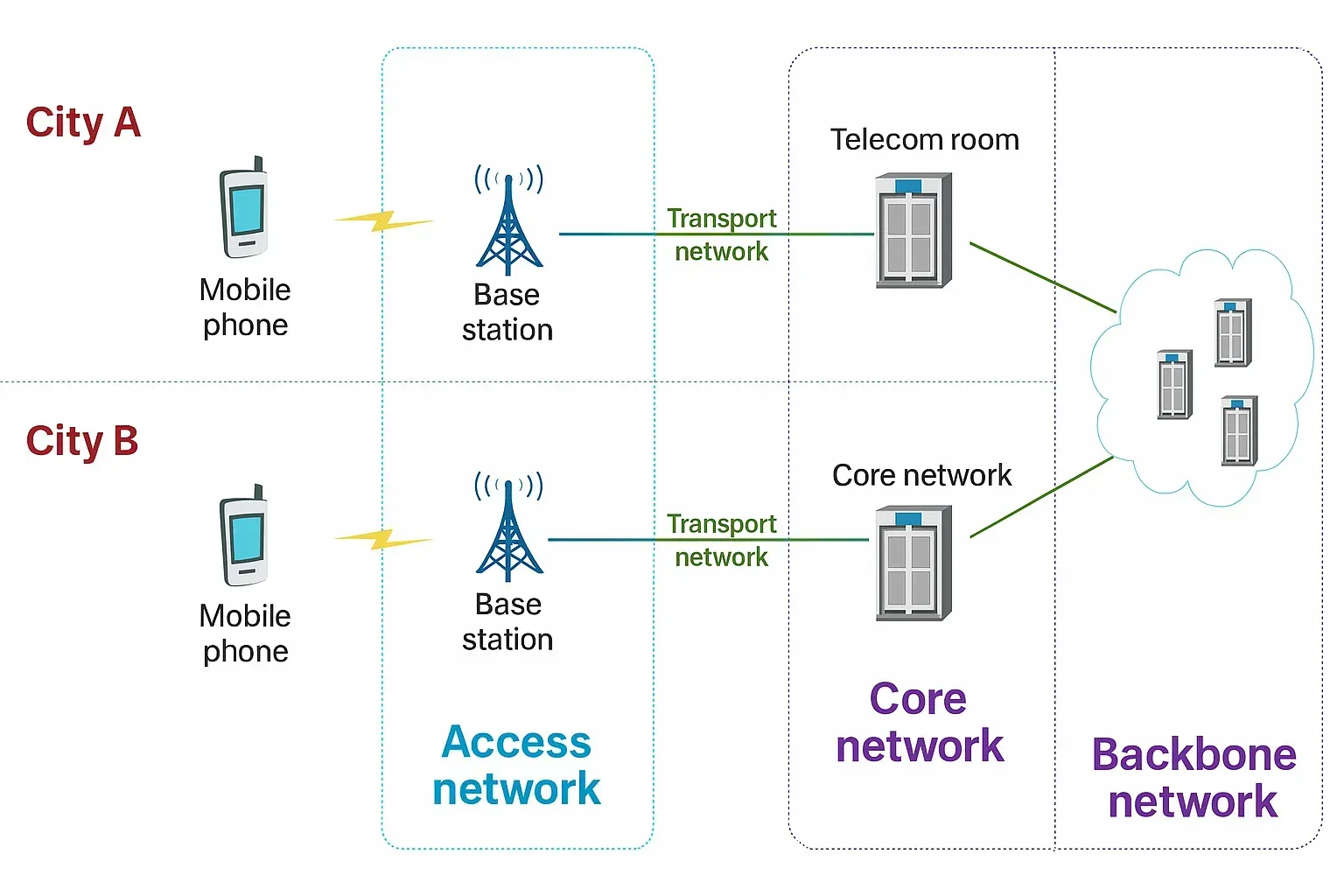
A mobile compute network is a computing network built on mobile devices such as smartphones and tablets. It leverages the computing and communication capabilities of these devices to connect multiple nodes into a distributed computing system, enabling more efficient computation and communication.
Key characteristics
- Distributed computing: The network connects multiple mobile devices to form a distributed computing system, using the advantages of distributed processing for more efficient computation and data handling.
- Mobility: Nodes are mobile devices that can move freely, allowing computation and communication to occur at different locations.
- Self-organization: Nodes can discover and join the network automatically, creating a self-organizing network topology.
- Resource sharing: Nodes can share computing, storage, and communication resources to improve overall resource utilization.
Applications
- Mobile cloud computing: Using the distributed computing and communication capabilities of mobile compute networks to provide cloud services to mobile devices.
- Mobile Internet of Things: Employing self-organization and resource sharing to support data processing and communication for mobile IoT deployments.
- Mobile edge computing: Integrating mobile compute networks into edge computing architectures to deliver more efficient edge services.
- Mobile social networks: Using mobility and self-organization to handle data processing and communication in mobile social platforms.
Is compute power related to network speed?
Compute power and network speed are related but not directly equivalent. Compute power refers to a device's processing capability, while network speed refers to the rate of data transmission.
When a computation requires data transfer between devices, network speed affects task completion time but does not change a device's intrinsic processing capability. In distributed computing, tasks are split across multiple devices and data must be transmitted over the network; therefore, network speed influences the overall efficiency of the distributed computation. Similarly, cloud computing requires uploading data to remote servers, so network speed impacts cloud processing efficiency.
In some scenarios, network speed can be more critical than compute power. For example, real-time video streaming requires stable, low-latency data transmission, so network performance directly affects stream quality. The relative importance of compute power and network speed depends on the application.
How compute networks work
- Task allocation: A management node assigns tasks to computation nodes, which accept tasks based on their compute power and available resources.
- Task execution: Each node executes its assigned tasks, reading input data, performing computations, and outputting results to designated locations.
- Data transmission: Data may need to be transferred between nodes during execution. Transmission must account for security, speed, and reliability.
- Result aggregation: After all nodes complete their tasks, the management node aggregates the results to produce the final output.
Performance and stability of compute networks are affected by factors such as network latency, node reliability, and task allocation algorithms. Optimizing and managing these factors is necessary to improve overall system performance.