Introduction
As engineers, we often study hypothetical scenarios to ensure our designs function across a wide range of conditions. When a design does not behave as intended, at a minimum we want the product not to be damaged or to avoid damaging other components. A common question when using a power supply is: what happens if the load current exceeds the supply's rated current? This article discusses common approaches used in power supply designs to handle loads that exceed ratings.
Ideal Sources
Although we commonly call them "power supplies," in practice these devices are usually voltage sources. The difference between a power source and a voltage source is that an ideal power source supplies constant power regardless of load voltage or current, while an ideal voltage source supplies constant voltage regardless of load current. An ideal voltage source is unobtainable because it would need to supply infinite current and power. Even though this discussion focuses on voltage sources rather than power sources, the term "power supply" will be used broadly throughout.
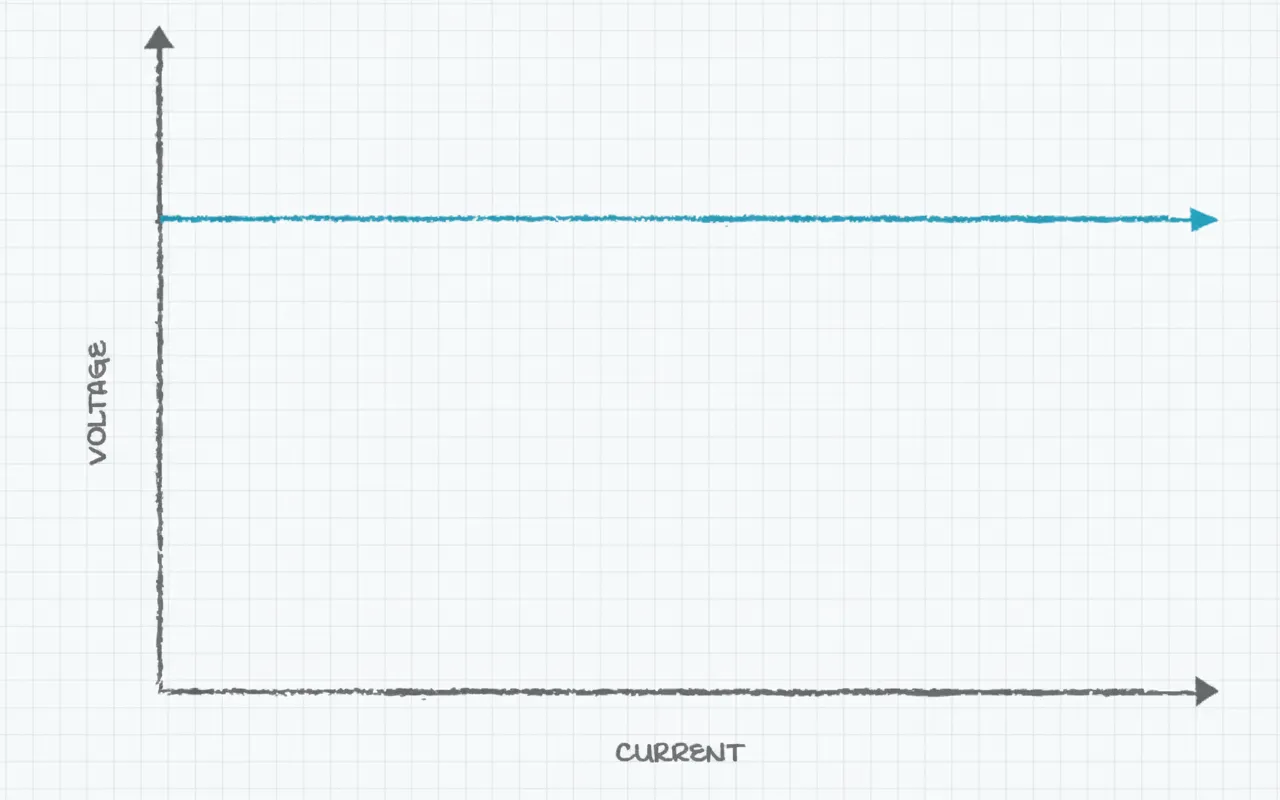
Figure 1: Constant voltage
Output Current Limiting
All power supplies incorporate some form of current limiting, usually controllable and harmless. This article focuses on methods that limit the supply's output current to protect the supply itself from damage when the load demands excessive current. Input-side current limiting is often implemented by placing a fuse in series with one or two input conductors. That measure protects upstream sources and conductors, and assumes that a supply with a blown input fuse is already damaged. Some applications, such as battery charging, require tightly controlled current limits; in those cases the supply vendor should be consulted. Most supplies provide relatively loose current limiting intended only to protect the supply. Common methods to limit output current include fuse-based limiting, constant-current limiting, foldback limiting, and hiccup/discontinuous limiting.
Fuse-Based Output Limiting
The simplest way to limit output current is to place a fuse in series with the supply output terminal. This method can be effective but is not often used because it is susceptible to nuisance blows from short-term high inrush currents and may not protect internal semiconductor components. Internal current-limiting functions are better suited to protect semiconductors from overcurrent. It can be difficult to choose a fuse that will blow quickly enough to protect semiconductors while surviving legitimate inrush events such as motor start or charging of bulk capacitors. Fuses are good at protecting conductors, but less effective at protecting semiconductors.
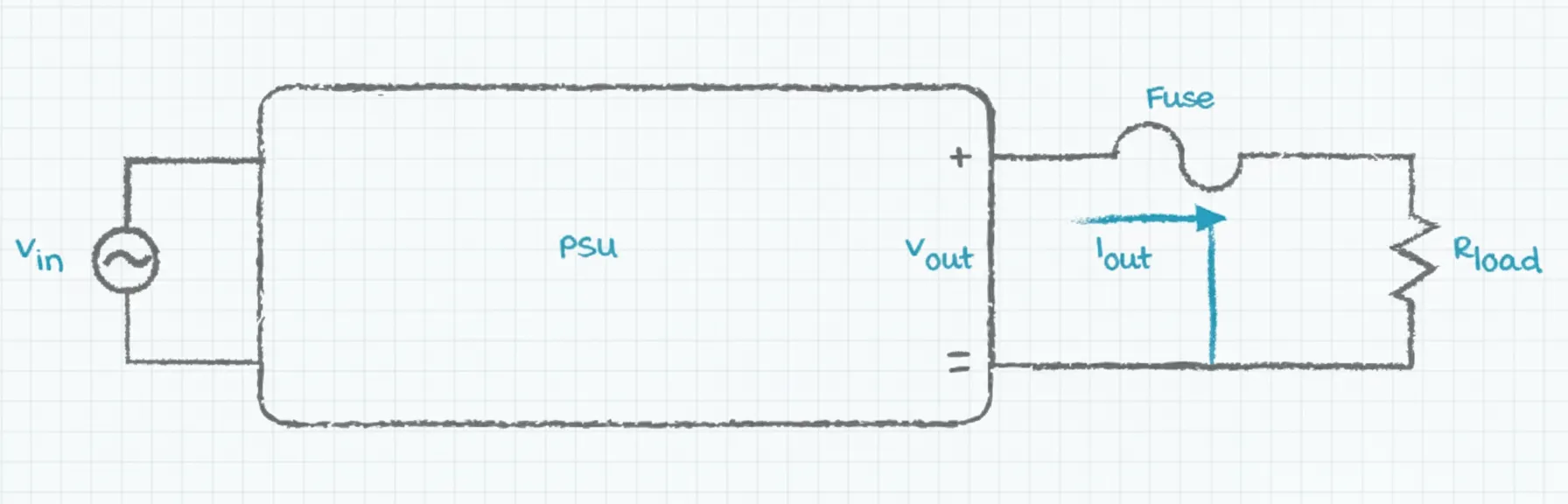
Figure 2: Fuse at the supply output terminal
Constant-Current Limiting
A common approach to limit output current is to monitor the output current and reduce the output voltage when the current reaches the set limit, thereby holding the current near the maximum allowed value. During current-limited operation, the output voltage depends on the load impedance. This method is relatively easy to implement, but components in the output current path are subjected to stress when the supply operates continuously at the maximum current. Constant-current limiting is often appropriate for handling short-duration inrush, such as motor start or charging bypass capacitors. Users unaware that the supply is in current-limit mode may perceive the supply as malfunctioning because the output voltage will be lower than the datasheet nominal voltage while limiting.
Foldback Current Limiting
To address component stress during continuous constant-current limiting, some supplies implement foldback current limiting. In this implementation, once the maximum output current is detected, both output voltage and output current are reduced. Foldback behavior can confuse users because the supply does not have a single, simple limiting characteristic; the datasheet should be consulted. Foldback limiting may cause problems when the load is a motor starting or a large input bypass capacitor being charged. If a user is troubleshooting poor output voltage or current without realizing the supply is in current-limited mode, foldback behavior can be especially puzzling.
Hiccup / Discontinuous Mode Limiting
The most common current-limiting implementation in modern supplies is the so-called hiccup or discontinuous mode. This overcurrent protection operates like an active version of a fuse. When an overcurrent is detected, the supply shuts down its output voltage. After a specified wait time it attempts to restore the output. If the overcurrent persists, the supply repeats the shutdown/wait/attempt cycle. If the fault has cleared, the supply continues normal operation.
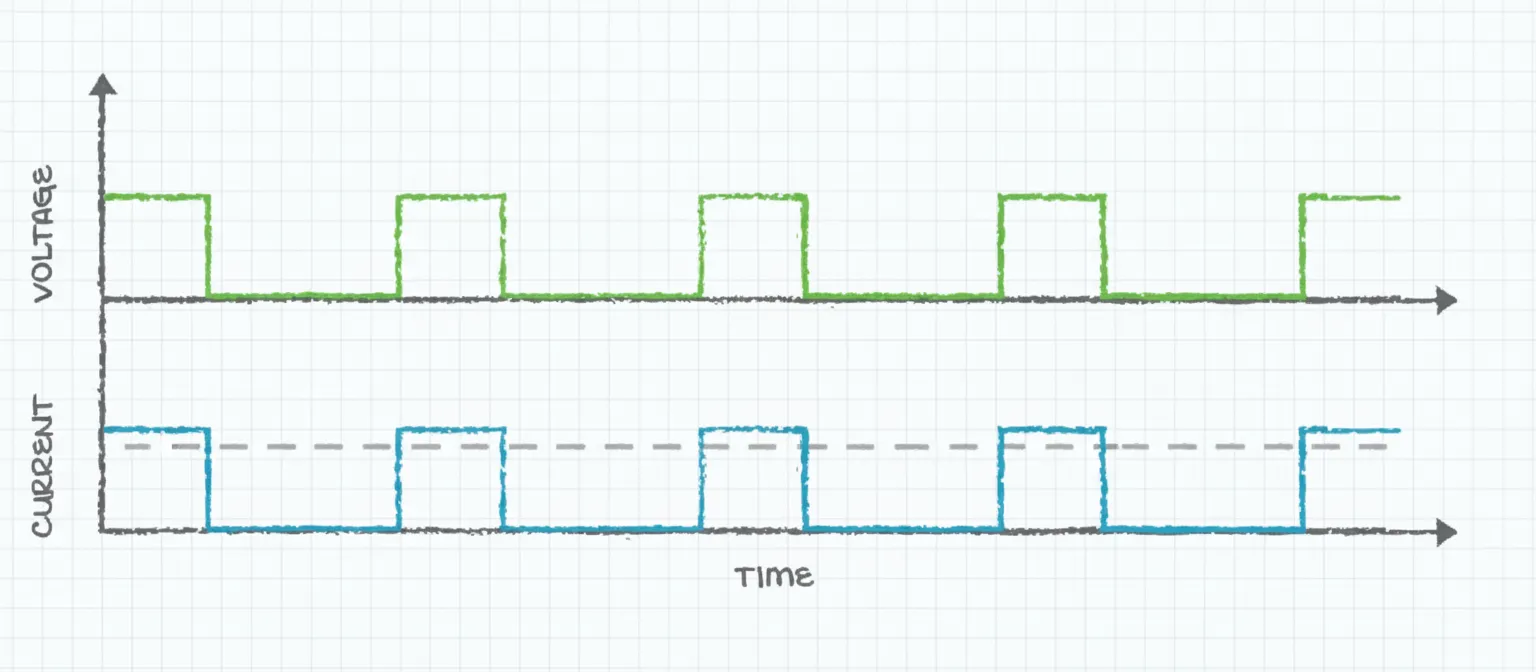
Figure 3: Hiccup-mode overcurrent limiting
Hiccup-mode protection is easy to implement in regulator controller ICs and minimizes stress on components in the power path. Motor-start loads and systems with large input filter capacitor banks can experience issues with hiccup protection. For motor-driven applications, if the motor fails to start during the supply's initial output period, the motor slows while the supply output is off and may not have a chance to accelerate in the next cycle, resulting in continuous failure to start due to the on/off timing of the supply output.
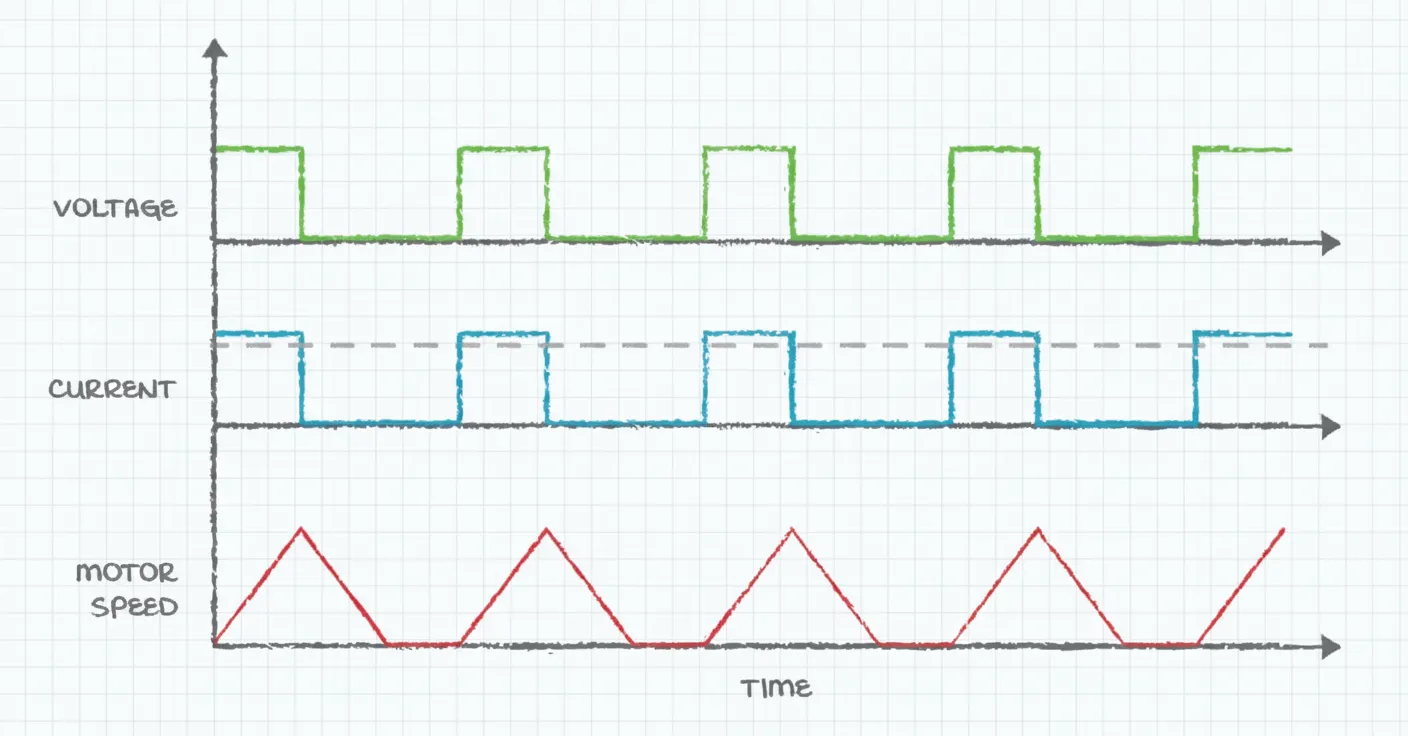
Figure 4: Motor start failure
Similar issues occur when the load includes large input filter capacitors together with a load current. If a discharged capacitor bank is first exposed to the supply output, the capacitors can draw sufficient current to put the supply into overcurrent mode. During the supply-off period, if a separate load current discharges the capacitors, the capacitors never charge to the output voltage, preventing startup.
If the load current is low enough or absent, the capacitors may charge in steps with each output pulse and the system can start successfully after an initial delay.
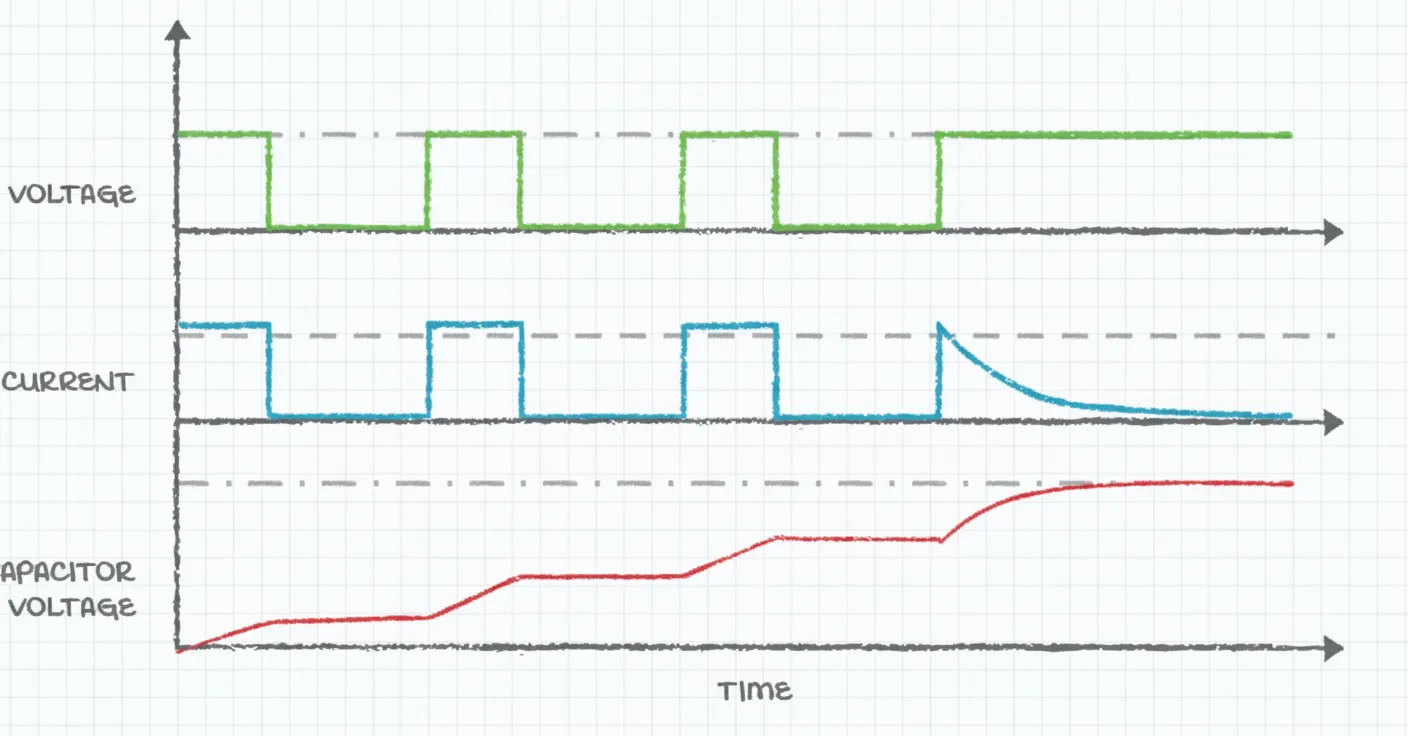
Figure 5: Capacitor delayed (but successful) start