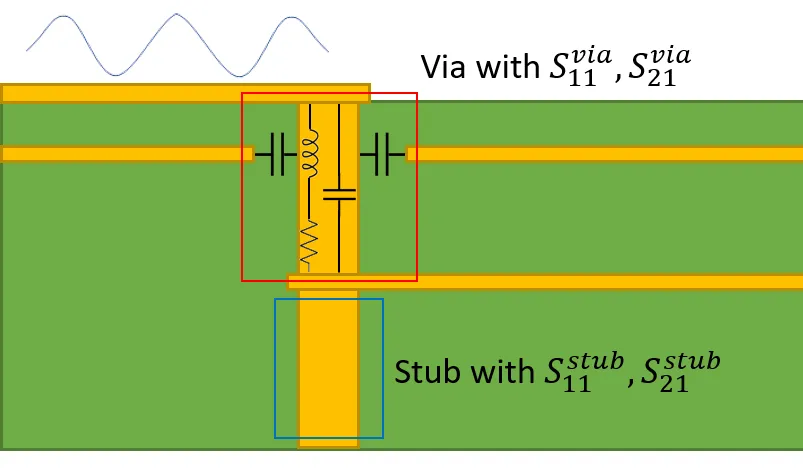
Via Stub Effect
The Via Stub Effect is a critical consideration in printed circuit board (PCB) design, particularly for high-speed and high-frequency applications where signal integrity can make or break performance. In multilayer PCBs, vias connect different layers, but when a via extends beyond the signal path, it creates a stub—a dangling segment that acts as an open-ended transmission line. This stub can introduce resonances, reflections, and signal attenuation, leading to issues like increased bit error rates, jitter, and overall degradation in data transmission quality. Engineers and designers searching for information on the Via Stub Effect often encounter these problems in designs involving DDR memory, PCIe interfaces, or RF circuits, where even small impedance mismatches can amplify errors at gigahertz frequencies. Understanding and mitigating the Via Stub Effect is essential for achieving reliable PCB performance. One practical approach involves calculating the stub length relative to the signal wavelength; if the stub exceeds one-sixth of the wavelength, it can cause significant distortions. Best practices include using back-drilling to remove excess via stubs, implementing blind or buried vias to minimize stub formation, or employing simulation tools like SPICE or electromagnetic field solvers to predict and optimize via structures before fabrication. These techniques not only enhance signal integrity but also reduce manufacturing costs by avoiding rework. For instance, in high-speed serial links, shortening via stubs through precise layer stacking can improve eye diagram openings and ensure compliance with standards like USB 4.0 or Ethernet protocols. This tag page gathers in-depth articles that delve into the causes, measurement methods, and solutions for the Via Stub Effect, providing valuable resources for PCB designers tackling real-world challenges. By reviewing these discussions, you can gain insights into advanced topics such as differential signaling impacts or integration with impedance control strategies, helping refine your designs for optimal results.
Video Guide
No videos found for this tag.
Technical Articles
Get in Touch
Send Message
- Products & Service
- Company
- About AIVON
- Contact
- News
- Blog
- Certification
-


- Payment
-


2026 AIVON.COM All Rights Reserved