Introduction
High Tg (Glass Transition Temperature) FR4 materials are essential for PCB designs that must withstand rigorous thermal cycling and lead-free assembly processes. While these materials offer superior dimensional stability and heat resistance, they also introduce specific manufacturing complexities that are often overlooked during the design phase. At AIVON, our engineering team frequently encounters design files that lack the specific details required to process high-performance laminates effectively. These gaps in documentation lead to Engineering Queries (EQ), which can pause production and delay delivery timelines. Understanding the relationship between material properties and fabrication steps is the first step toward a more efficient manufacturing workflow.
Why Engineering Queries Matter for High Tg FR4: Ensuring Thermal Reliability
Engineering Queries represent the formal communication channel between the factory's Front-End Engineering (CAM) department and the PCB designer when technical ambiguities are discovered in the design data. For High Tg PCBs, these queries are particularly critical because the material's mechanical behavior differs significantly from standard FR4 during drilling, desmear, and lamination. If a manufacturer proceeds with assumptions rather than clarifications, the risk of laminate voiding, delamination, or misregistration increases significantly. High Tg designs are typically chosen for high-reliability applications, meaning any unaddressed EQ could compromise the long-term integrity of the finished product. By resolving these questions early, we ensure that the physical board aligns perfectly with the intended electrical performance and environmental durability.
High Tg FR4 PCB Engineering Queries Overview
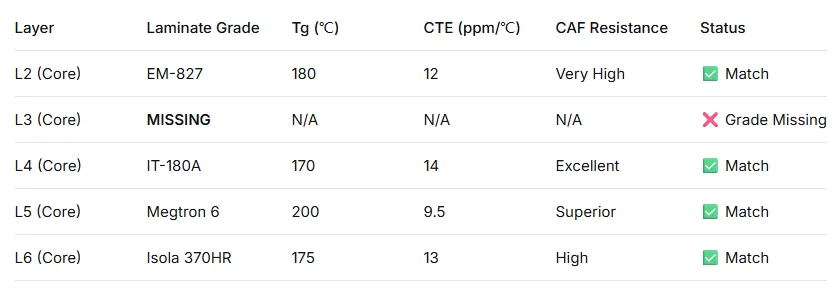
A frequent EQ involves the lack of specific laminate brand or grade identification in the fabrication notes when High Tg is requested. Designers often specify a generic Tg value without accounting for the fact that different High Tg PCB materials have varying resin systems and CTE values. During the CAM review, engineers detect this ambiguity when the stack-up requirements do not align with the available material inventory or the specific mechanical properties needed for the design's complexity. Without clarification on the preferred material series, the factory may select a laminate that meets the Tg requirement but fails to provide the necessary CAF resistance or thermal robustness for the end application. This risk often manifests as pad lifting or barrel cracking during repeated soldering cycles if the wrong material grade is utilized.
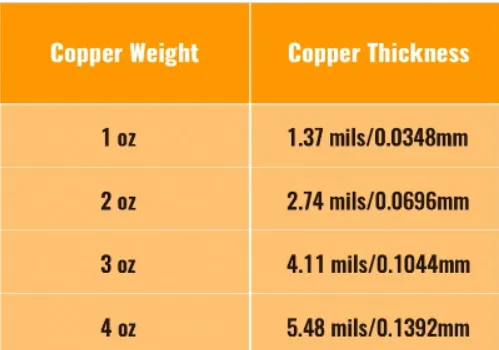
Another common issue is the conflict between specified dielectric thicknesses and the required resin content for filling heavy copper layers. In High Tg designs, copper weights are often increased for power distribution, but the design data may call for thin prepreg layers that lack sufficient resin to encapsulate the copper traces. Our engineering team identifies these risks during DFM checks by calculating the resin fill capacity against the copper density on internal layers. If the calculation shows a deficit, we must issue an EQ to suggest a stack-up modification to avoid inner-layer delamination or micro-voids. Ignoring this balance leads to structural reliability issues that are often only detectable through cross-sectioning or thermal stress testing after the boards are completed.
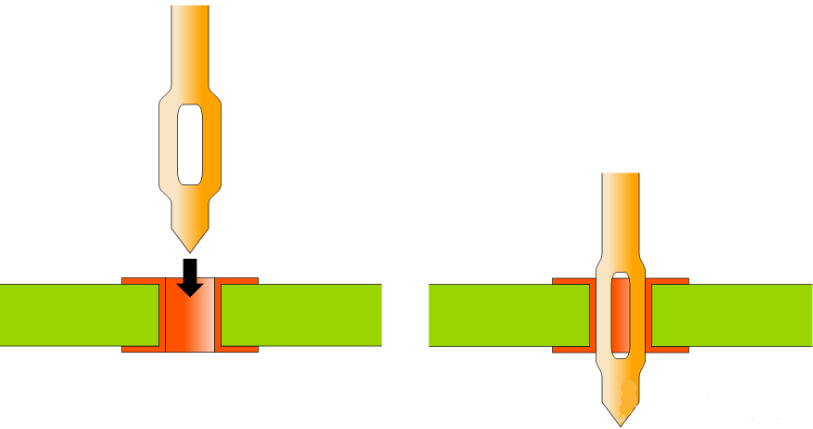
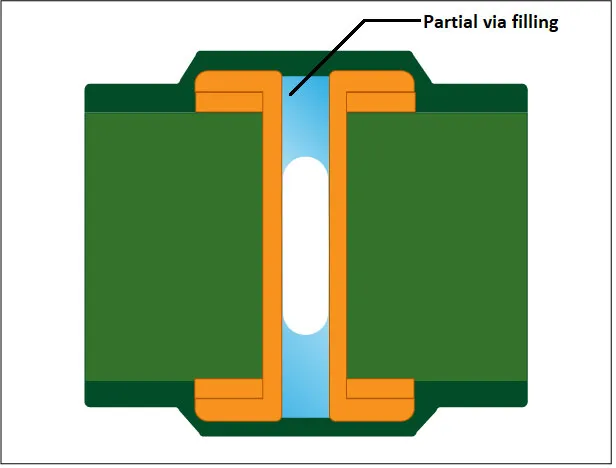
Via plugging and solder mask clearance requirements often trigger queries when they do not account for the higher thermal expansion characteristics of the material's Z-axis. Factory teams frequently observe designs where via-in-pad structures are specified without clear instructions on the filling material or the required surface finish planarity. During engineering review, CAM operators identify that the provided solder mask openings for these vias are either too small to ensure proper plugging or too large to prevent solder theft. This creates a risk of poor solderability during assembly or potential outgassing issues if air is trapped within the via barrel. Clear communication regarding the plugging method is essential to ensure the high-reliability benefits of the High Tg substrate are not negated by assembly-level defects.
Registration tolerances and annular ring requirements are often a source of EQ due to the specific scaling factors required for High Tg materials. High Tg laminates undergo different dimensional changes during the high-pressure lamination process compared to standard materials, which requires precise scaling in the CAM software. If a design features extremely tight annular ring tolerances without accounting for the material's movement, the engineering team must query the minimum acceptable ring size. This is detected when the netlist check identifies potential breakouts on inner layers during the simulated drilling process. Failure to resolve these tolerance questions can lead to low yield rates or latent shorts caused by misalignment between the drill and the internal pads.
| Issue | Typical Cause | Potential Risk |
|---|---|---|
| Missing Laminate Brand | Generic Tg specification only | Incompatible CTE or CAF resistance |
| Resin Fill Deficit | Thin prepreg with heavy copper | Inner layer voids or delamination |
| Via Plugging Ambiguity | Unspecified fill type | Solderability or outgassing issues |
Why EQ Occur in High Tg PCB Design
Engineering queries regarding High Tg FR4 PCBs typically arise because the design software defaults do not always reflect the physical realities of high-temperature laminates. Designers may prioritize electrical performance and layout density while assuming the fabrication process is a direct mirror of standard FR4 production. However, High Tg materials are more brittle and require specialized drill parameters, longer cure times, and specific chemical desmear cycles. When the Gerber files and fabrication drawings provide "standard" instructions for a "non-standard" material, the factory must stop and verify the intent. Furthermore, the lack of communication regarding the assembly environment—a scenario we often document in our PCB engineering cases—means the manufacturer must ask questions to ensure the chosen material and process flow are appropriate for the intended use.
How to Reduce EQ in High Tg PCB
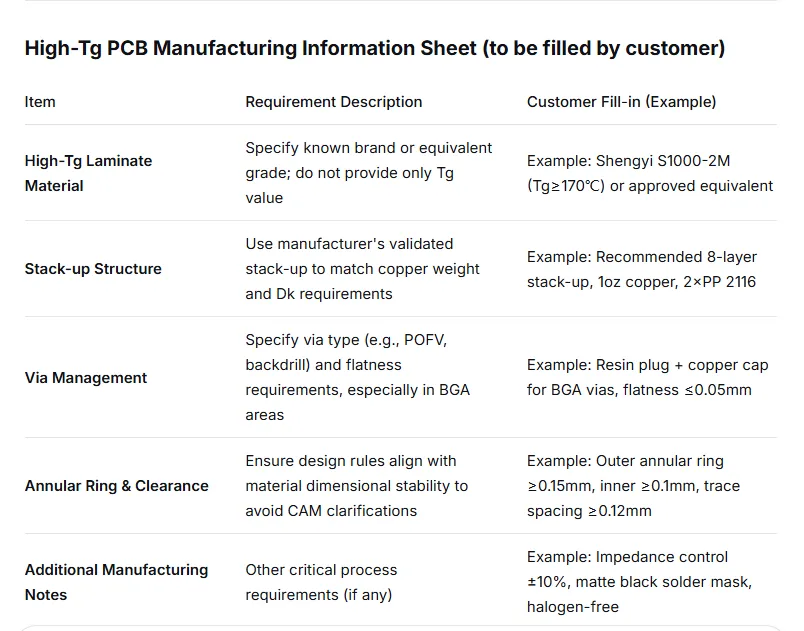
To minimize the volume of engineering queries and ensure a smooth production cycle, designers should adopt several best practices before submitting their data. First, always specify a known High Tg laminate brand or an equivalent grade in the fabrication notes, rather than just a generic Tg value. This allows the factory to match the design to their existing material certifications and processing recipes immediately. Second, involve the manufacturer in the stack-up design early in the process; we can provide a validated stack-up that balances dielectric requirements with resin fill needs for your specific copper weights. Third, provide clear instructions for via management, including plugging types and planarity requirements, especially for BGA areas. Finally, ensure that your design rules for annular rings and clearances are realistic for the material's dimensional stability, which reduces the need for "best effort" clarifications during CAM processing.
Conclusion
The production of High Tg FR4 PCBs requires a higher level of precision and detail than standard board manufacturing. Engineering queries are not just administrative hurdles; they are vital safeguards that protect the quality and reliability of the final product. By understanding the common pitfalls related to material selection, stack-up balance, and via management, designers can provide more robust data packages that move through the factory without delay. At AIVON, our goal is to partner with engineers to resolve these technical challenges before they reach the shop floor, ensuring that every High Tg board we manufacture meets the highest industry standards for thermal and mechanical performance.
FAQs
Q1: Why does the factory ask for a specific High Tg brand instead of just the Tg value?
A1: Different brands have unique resin compositions and Coefficient of Thermal Expansion (CTE) values. Providing a specific brand ensures the factory uses the correct processing parameters for drilling and lamination, which is essential for maintaining dimensional stability and reliability.
Q2: Can I use standard FR4 design rules for a High Tg PCB?
A2: While many rules are similar, High Tg materials are more prone to brittleness and have different scaling requirements. It is recommended to increase minimum annular rings and clearances slightly to compensate for material movement during the high-temperature lamination cycles.
Q3: How does copper thickness affect the EQ process for High Tg boards?
A3: Heavy copper requires more resin to fill the gaps between traces. If the stack-up doesn't provide enough prepreg resin, the factory will issue an EQ to suggest thicker prepregs or different glass styles to prevent internal voids and delamination.
Q4: What is the most common reason for production delays in High Tg orders?
A4: Delays are usually caused by incomplete fabrication notes regarding via plugging and surface finish compatibility. Resolving these ambiguities through the EQ process takes time, but it is necessary to avoid manufacturing defects that could compromise the board's heat resistance.
Reference
IPC-6012E — Qualification and Performance Specification for Rigid Printed Boards. IPC, 2017
IPC-4101E-WAM1 — Specification for Base Materials for Rigid and Multilayer Printed Boards. IPC, 2017