Introduction
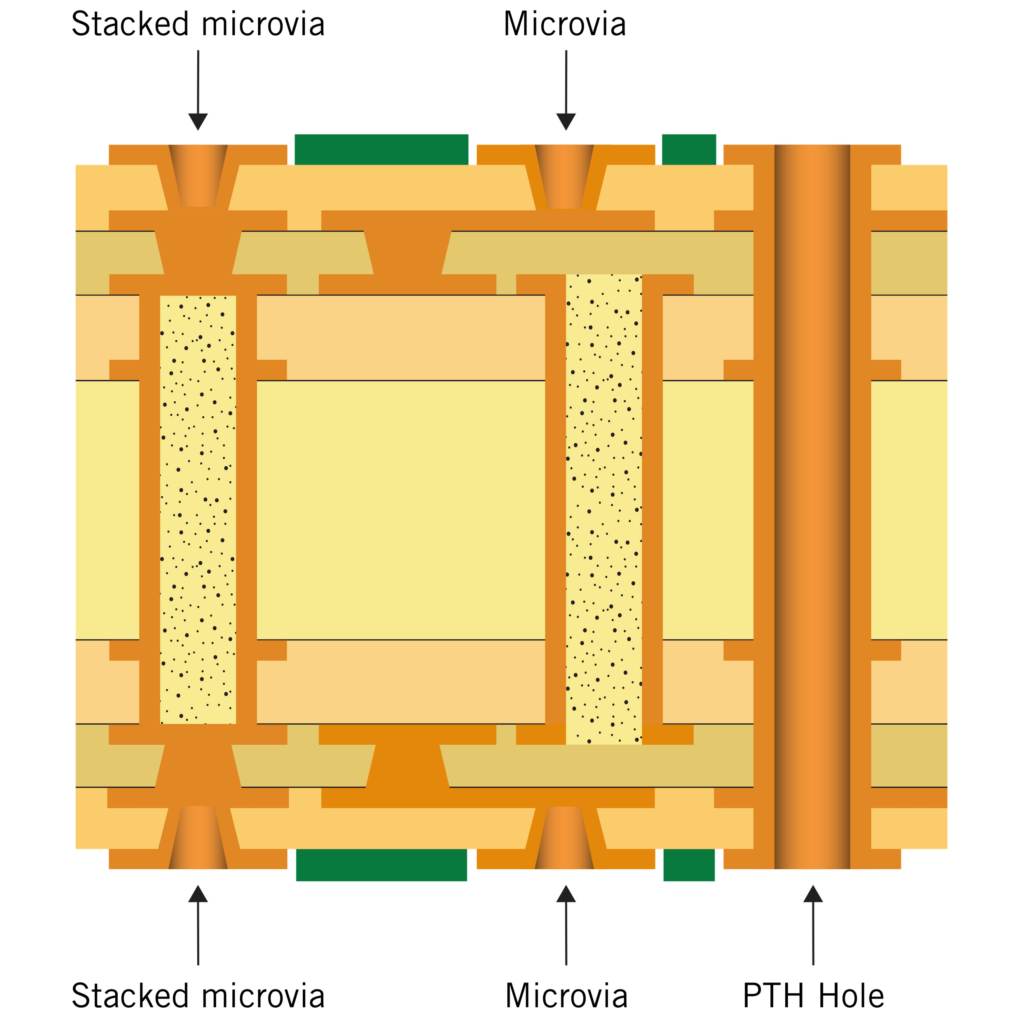
Multilayer HDI (High Density Interconnect) PCBs represent one of the most technically demanding product categories at AIVON. With microvias, blind and buried vias, tight tolerances, and complex stack-ups, these boards are widely used in smartphones, wearables, automotive electronics, 5G infrastructure, and high-speed computing devices where space and signal integrity are critical.
During PCB CAM review and engineering file processing, Multilayer HDI boards generate significantly more EQs than standard multilayer FR4 due to the precision required for laser drilling, plating, registration, and impedance control. Common issues include via spacing violations, via-in-pad treatment, stack-up mismatches, and impedance line adjustments.
This article consolidates the most frequent real-world EQs observed in Multilayer HDI production, drawn directly from CAM experience and order data, and provides clear design-side prevention strategies to help engineers reduce clarification cycles and improve first-pass yield.
Case 1: PCB CAM Review of Microvia-to-Via and Via-to-Trace Spacing in Dense HDI Builds
Case Overview
In high-density Multilayer HDI designs, microvias are frequently placed too close to each other or to adjacent traces to maximize routing density, especially in 6+ layer builds with multiple via levels.
Engineering Observation
During PCB CAM review, CAM software flags numerous locations where via-to-via or via-to-trace spacing falls below manufacturable limits for laser-drilled microvias.
Root Cause Analysis
Designers often apply standard via rules without fully considering HDI-specific constraints such as laser drilling accuracy, plating uniformity, and registration tolerances across multiple lamination cycles.
Design Impact
Insufficient spacing leads to plating defects, short circuits, compromised impedance control, reduced yield, and potential reliability failures under thermal or mechanical stress.
Recommended Solution
The spacing between vias is too small in your design. Via-to-via spacing must be no less than 0.2mm and via-to-trace no less than 0.15mm. Please advise whether we should revise the file to maintain safe spacing.
These minimums account for laser-drill positional tolerance, copper plating thickness variation, and cumulative registration error across sequential laminations. Designs that push closer frequently show necking or voids in the via barrel after plating, especially in 6-layer and higher constructions with multiple microvia levels.
Engineering Takeaway
In Multilayer HDI designs, always maintain via-to-via spacing ≥ 0.2mm and via-to-trace spacing ≥ 0.15mm to ensure reliable plating and high yield.
| Feature Pair | Minimum Spacing | Primary Risk if Violated |
|---|---|---|
| Via-to-via | 0.2 mm | Plating shorts, barrel voids, reduced yield |
| Via-to-trace | 0.15 mm | Impedance deviation, potential short under thermal stress |
Case 2: Via-in-Pad Without Resin Plugging on Multilayer HDI Boards
Case Overview
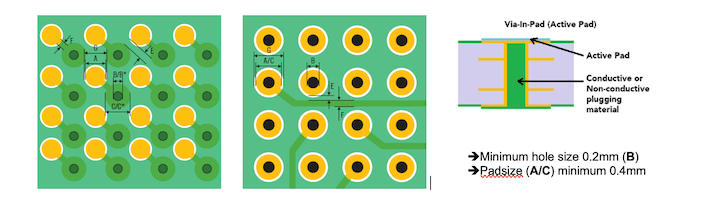
BGA or fine-pitch areas in Multilayer HDI boards commonly feature vias placed directly in pads to save space and improve signal integrity.
Engineering Observation
Engineering review identifies vias-in-pad without explicit tenting or plugging strategy specified in the files.
Root Cause Analysis
Design files often omit detailed via treatment instructions while HDI processes require explicit handling to prevent solder wicking during assembly.
Design Impact
Without proper resin plugging, risks include solder voids, shorts during reflow, and reduced long-term reliability under thermal cycling.
During reflow the open via acts as a capillary path that draws solder away from the joint, creating voids or insufficient fillet volume. In fine-pitch BGA packages this can produce intermittent opens that only appear after thermal cycling or mechanical shock.
Recommended Solution
There are vias designed on pads. It is recommended to plug these vias with resin. Please confirm whether you accept resin plugging and any associated extra cost.
Engineering Takeaway
For vias-in-pad in Multilayer HDI designs, always specify resin plugging to ensure flat pads and reliable assembly performance.
| Treatment | Pad Flatness | Assembly Risk | Recommendation |
|---|---|---|---|
| No plugging / open via | Poor (solder wicking) | Voids, shorts, thermal-cycle opens | Not recommended |
| Resin plugging + planarization | Excellent | Minimal | Preferred for HDI |
Case 3: Factory Stack-up Adjustments Versus Customer-Requested HDI Build
Case Overview
Customers provide initial stack-up requirements for Multilayer HDI boards that may not perfectly align with available materials and press parameters.
Engineering Observation
Layer press confirmation shows differences between requested and proposed stack-up, particularly outer layer copper thickness and dielectric materials.
Root Cause Analysis
Material inventory and HDI lamination constraints often require minor adjustments to the ideal stack-up provided in the design files.
Available core and prepreg thicknesses, copper weights, and press-cycle limitations frequently force a practical compromise. Confirming the factory proposal early prevents impedance shifts that would otherwise require a respin after the first article.
Design Impact
Unconfirmed stack-up can cause impedance deviation, registration issues, or warpage in the final board.
Recommended Solution
Please kindly check whether the adjusted stack-up and impedance control is ok for you or not.
Engineering Takeaway
Review and approve the final factory stack-up early for all Multilayer HDI projects to avoid downstream impedance and registration problems.
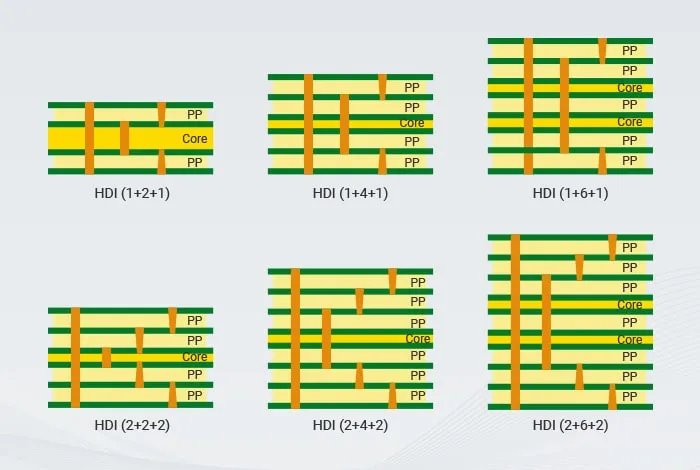
Case 4: Impedance Control in HDI PCB Multilayer Structure
Case Overview
High-speed signals in Multilayer HDI PCBs require controlled impedance lines, but files often lack clear target values or proper reference layers.
Engineering Observation
DFM check reveals impedance lines without dedicated reference planes or shielding layers.
Root Cause Analysis
Designers sometimes assume automatic impedance control without providing target values or ensuring continuous reference layers across the HDI structure.
Design Impact
Uncontrolled or deviated impedance leads to signal integrity problems, board respins, and project delays.
Recommended Solution
Please advise whether we should do impedance control for the highlighted lines and provide target values (typical single-ended 50ohm, differential 90/100ohm). Adjustments to trace width/spacing may be needed.
Without explicit targets the fabricator cannot guarantee the correct dielectric height or copper geometry. Providing the values and accepting minor width/spacing tweaks allows the stack-up to be locked before laser drilling begins.
Engineering Takeaway
Always specify impedance targets and ensure dedicated, continuous reference layers for critical traces in Multilayer HDI designs.
Related Case: How to Avoid Common Solder Mask & Stackup Issues in 6-Layer HDI PCBs
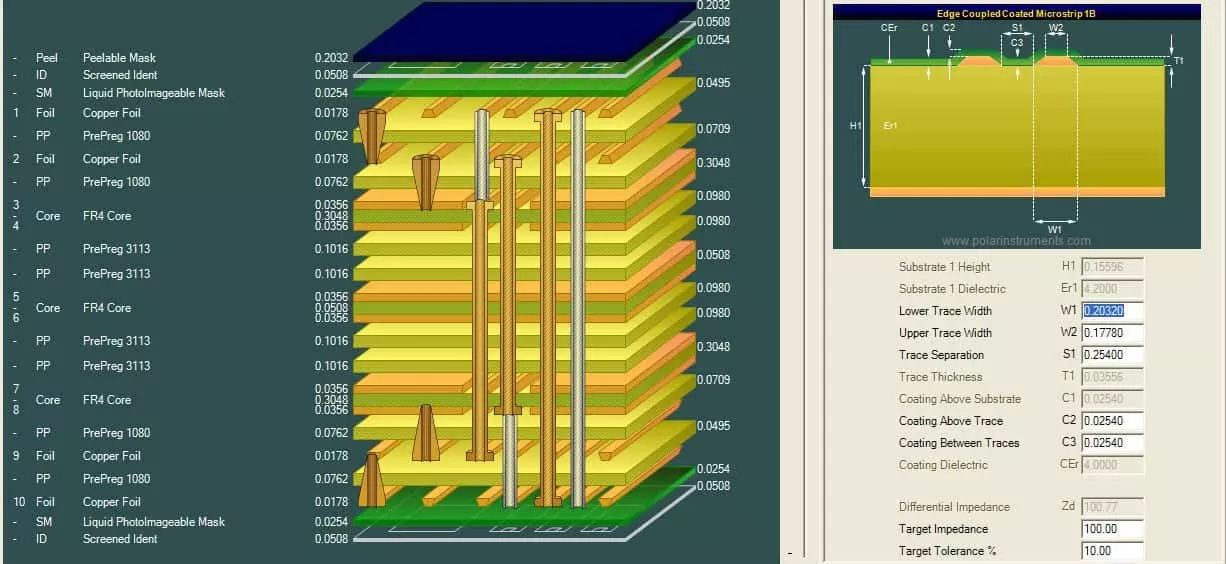
Case 5: Hole Attribute Confirmation in Complex HDI PCB Multilayer Structures
Case Overview
Multilayer HDI designs contain multiple via types (blind, buried, through) creating ambiguity in plating requirements.
Engineering Observation
Drill drawings and Gerber files show conflicting or unclear hole attributes at critical locations.
Root Cause Analysis
Complex HDI structures make it easy for design tools to produce unclear plating specifications between different via levels.
Design Impact
Incorrect plating decisions cause shorts, opens, or assembly problems that are difficult to debug in dense HDI boards.
Recommended Solution
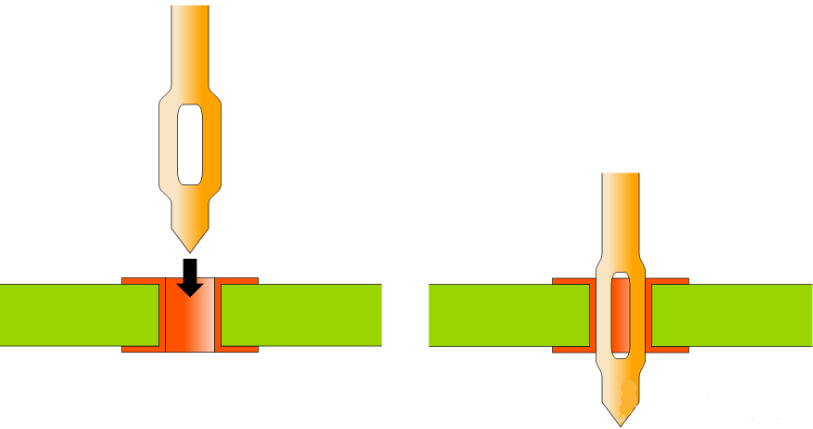
Please advise whether the indicated holes should be Plated through holes or Non-plated through holes.
Engineering Takeaway
Clearly specify plating requirements (PTH/NPTH) for every hole type in Multilayer HDI Gerber files and drill drawings.
Related Case: How Conflicting Via Data and Soldermask Definitions Triggered CAM Review in a 4-Layer HDI PCB
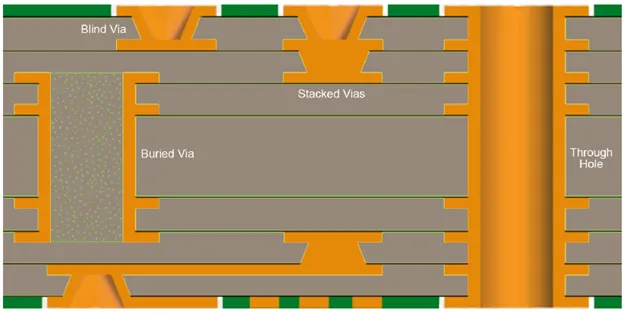
Case 6: Half-Hole Spacing and Manufacturing Issues in HDI PCB Design
Half-hole structures can be used in compact PCB designs where plated half holes are required for edge connections or mechanical integration. However, the half-hole geometry and spacing need to be clearly defined in the manufacturing documentation. During PCB CAM review, unclear half-hole requirements can create significant risks after compensation and manufacturing data preparation.
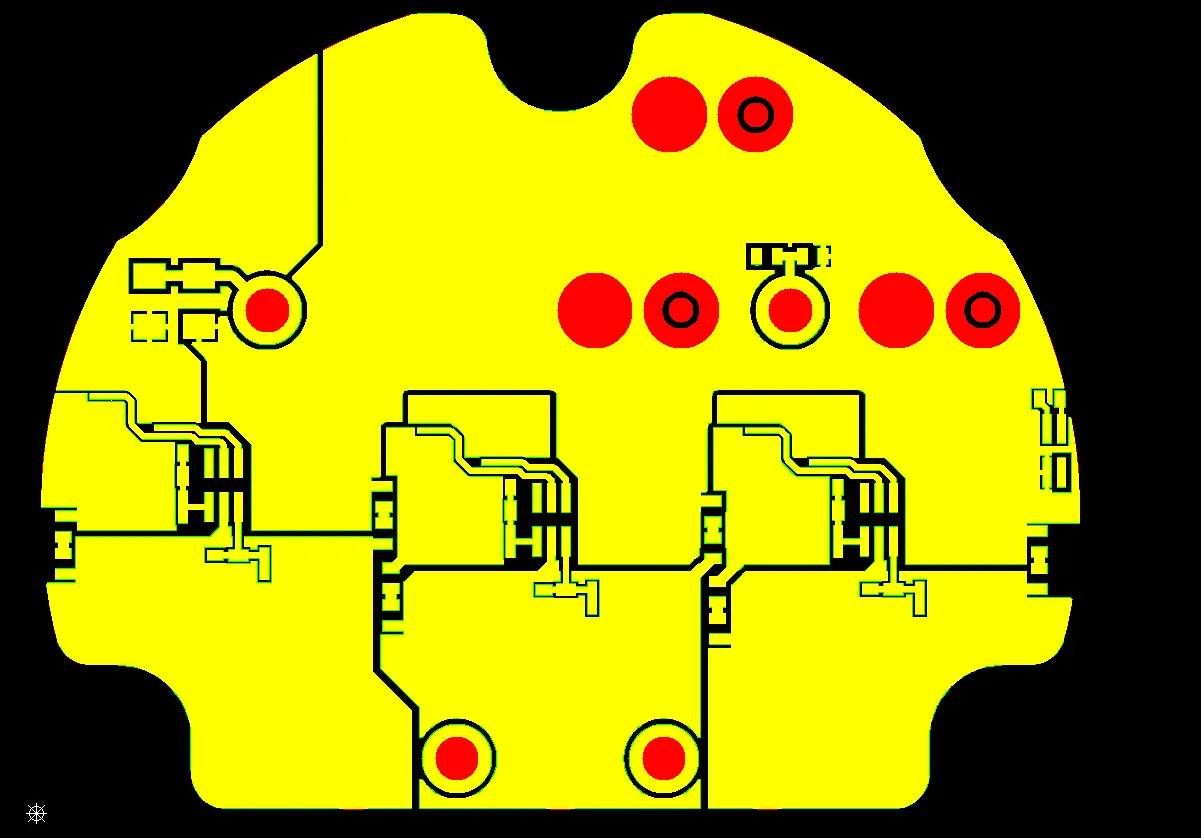
In this case, the original design showed a 1.3 mm-wide half-hole structure at the indicated location. However, the customer's purchase order did not specify whether the indicated holes should be manufactured as half holes. This created an engineering clarification requirement before production.
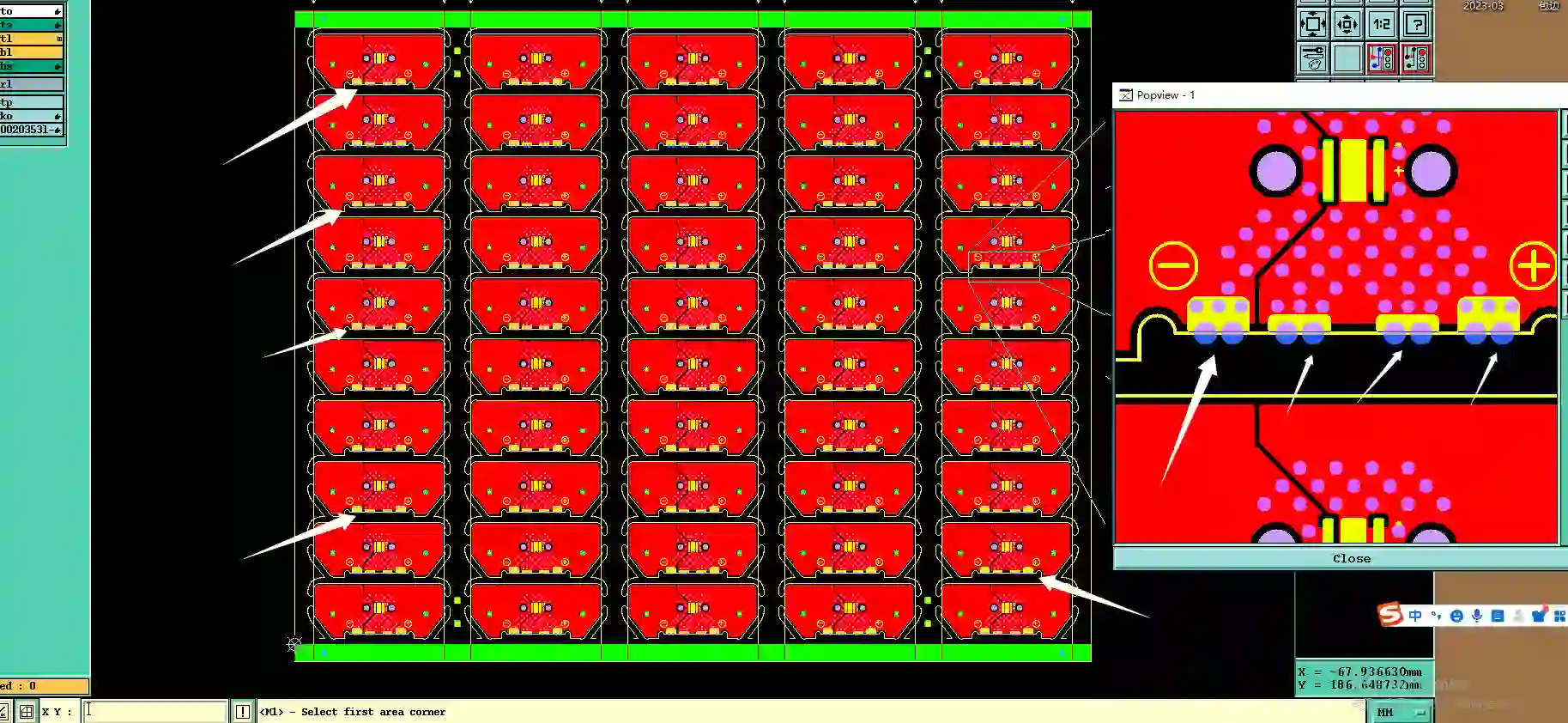
The original spacing between the half holes at the indicated location was approximately 0.2 mm. After applying the necessary manufacturing compensation, the remaining spacing would be less than 0.05 mm, which did not meet the minimum process capability of the production line.
Such a narrow gap can create manufacturing risks, including burrs around the hole wall and hole edge, rough copper surfaces, and insufficient separation between adjacent copper features. These issues may affect both manufacturing yield and the final appearance and reliability of the board.
To make the design manufacturable, the production data was adjusted by reducing the half-hole diameter by 0.1 mm and increasing the spacing to 0.5 mm. Before releasing the final manufacturing files, the customer was asked to confirm whether this adjusted half-hole structure was acceptable.
This case highlights an important consideration in half hole HDI PCB design: the nominal geometry shown in the original design does not always represent the final manufacturable geometry. Half-hole dimensions, spacing, plating requirements, and manufacturing compensation should be reviewed together during CAM and DFM engineering.
Key CAM Review Points
- Half-hole definition: Confirm whether the indicated holes are intended to be manufactured as plated half holes.
- Original spacing: Check the nominal spacing before applying manufacturing compensation.
- Compensation impact: Verify the remaining clearance after compensation rather than relying only on the original CAD dimensions.
- Minimum process capability: Ensure the final spacing meets the manufacturer's minimum production requirements.
- Edge and hole quality: Insufficient spacing can increase the risk of burrs, rough copper, and other edge-quality issues.
- Customer confirmation: When the production data requires a dimensional adjustment, obtain customer approval before final file release.
For complex half hole HDI PCB design, early clarification of the intended hole structure can prevent unnecessary engineering queries and reduce the risk of manufacturing deviations.
Best Practices for AnyLayer PCB and Multilayer HDI Design
- Provide a complete and clearly labeled stack-up drawing with target impedance values.
- Maintain strict via spacing rules suitable for laser drilling.
- Specify via-in-pad treatment (resin plugging) early.
- Ensure continuous reference layers for all impedance-controlled traces.
- Clearly define plating attributes for all via types.
- Upload files early for a free DFM review. 7. Refer to our Multilayer HDI Manufacturing Insights before finalizing complex designs.
Conclusion
Multilayer HDI PCBs offer outstanding density and performance but require meticulous attention to via structures, stack-up, and impedance during design. By addressing the common EQs outlined above, engineers can achieve smoother production, higher yields, and faster time-to-market. For real production examples of stable HDI delivery, visit our Production Records. Ready to start your Multilayer HDI project? Get a Quote today or upload your files for a detailed engineering review.
FAQs
Q1: What is the minimum via spacing for Multilayer HDI?
A1: For multilayer HDI PCBs, a via-to-via spacing of ≥0.20 mm and via-to-trace spacing of ≥0.15 mm is recommended. The actual spacing depends on via diameter, pad size, copper thickness, and layer structure. AIVON supports layer-to-layer registration of ≤50 μm and laser-drilled microvias down to 70 μm in standard production, with 60 μm available for samples.
Q2: Should vias-in-pad be resin plugged in HDI designs?
A2: Yes. Resin-filled and capped vias-in-pad are recommended for BGA and fine-pitch HDI applications to reduce solder wicking and provide a flatter surface. AIVON supports vacuum resin plugging with ≥95% plugging fullness in standard production and ≥100% for samples. Standard plugging hole diameter is 0.15–0.55 mm, while sample capability extends from 0.1–0.6 mm.
Q3: How early should stack-up be confirmed for HDI boards?
A3: The HDI PCB stack-up should be confirmed early, preferably before layout is finalized. Material selection, sequential lamination, dielectric thickness, copper weight, and microvia structures can affect the final design. AIVON supports 3+N+3 HDI structures as standard and 6+N+6 for samples, with up to 16 layers in standard production and 20 layers for sample builds.
Q4: Why is impedance control more challenging in HDI PCB multilayer structure?
A4: Impedance control can be more challenging in multilayer HDI PCBs because thin dielectrics, fine traces, microvias, copper thickness, and reference-plane spacing all affect impedance. AIVON supports multiple PP constructions, including 7628, 2116, 1080, 106, 3313, and 1067. During CAM/DFM review, trace width, copper thickness, dielectric thickness, reference layers, and target impedance should be evaluated together.
Q5: Can HDI PCB design support different copper thickness options?
A5: Yes. HDI PCBs can use different copper thicknesses according to current requirements, impedance targets, layer structure, and via design. AIVON supports up to 3 oz inner-layer copper and 4 oz outer-layer copper in standard production, with 5 oz and 6 oz available for samples. Standard copper foil options include 1/3 oz, 1/2 oz, 1 oz, 1.5 oz, and 2 oz.
References
IPC-6012E — Qualification and Performance Specification for Rigid Printed Boards.
IPC-6013E — Qualification and Performance Specification for Flexible Printed Boards.