Introduction
Voice recognition access control systems represent a significant advancement in security technology, enabling hands-free authentication through spoken commands. These systems integrate speech recognition circuits directly into custom printed circuit boards (PCBs), allowing for compact, reliable operation in various environments. For electrical engineers designing ai embedded systems, building such a system on a custom PCB offers full control over hardware integration, from audio input to processing algorithms. This approach ensures optimized performance for pcb voice control applications, reducing latency and enhancing security. Custom PCBs also facilitate scalability, making them ideal for deployment in doors, gates, or restricted areas. By focusing on voice recognition access control, engineers can create robust solutions that outperform generic modules.
Why Voice Recognition Access Control Matters in Modern Security
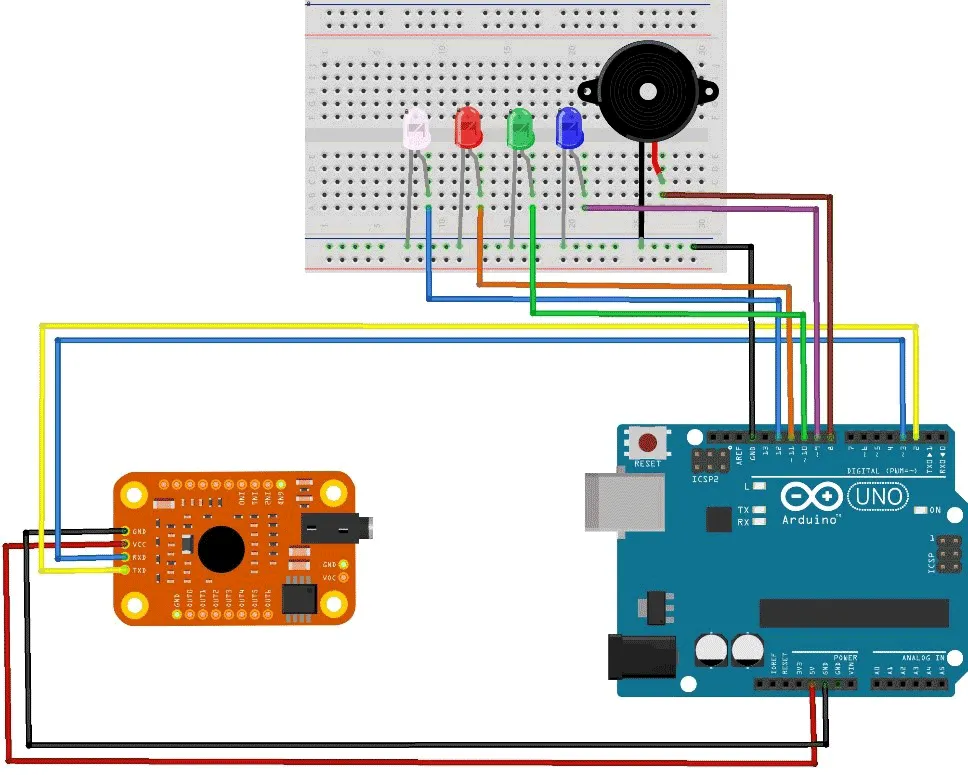
Voice recognition access control systems provide a seamless, contactless alternative to traditional keycards or biometrics, particularly in high-traffic or hygiene-sensitive settings. They leverage speech recognition circuits to verify users via unique voice patterns, minimizing unauthorized access risks. In ai embedded systems, this technology integrates with microcontrollers for real-time processing, supporting features like multi-user enrollment and noise-robust authentication. For electrical engineers, the relevance lies in the need for custom PCBs that handle analog audio signals alongside digital computation without interference. Hands-free security systems built this way improve user experience while meeting stringent reliability demands in industrial or commercial applications. As security evolves, pcb voice control becomes essential for future-proof designs.
The demand for such systems grows with IoT proliferation, where voice commands trigger actions like unlocking mechanisms. Engineers must consider power efficiency and environmental durability, as PCBs form the backbone of these deployments. This integration not only enhances accessibility but also reduces mechanical wear compared to physical locks.
Core Technical Principles of Speech Recognition Circuits
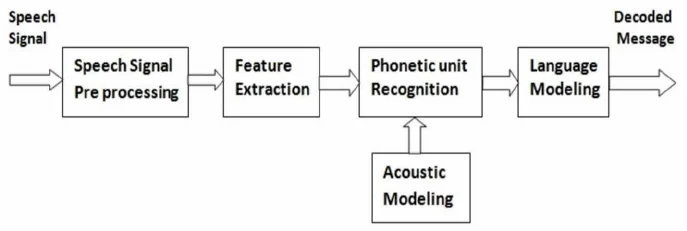
Speech recognition circuits in voice recognition access control begin with an analog front-end capturing audio via a microphone. The signal undergoes amplification and filtering to achieve sufficient signal-to-noise ratio (SNR) before analog-to-digital conversion. Digital processing follows on a microcontroller or digital signal processor (DSP), employing feature extraction techniques like Mel-frequency cepstral coefficients (MFCCs). Machine learning models, such as hidden Markov models or neural networks, then match patterns against enrolled voice templates. On a custom PCB, engineers route high-impedance audio traces separately from digital lines to prevent crosstalk. Power supply decoupling ensures stable operation, critical for low-power ai embedded systems.
Layout considerations dominate PCB design for these circuits. Multi-layer boards isolate audio grounds from digital grounds, adhering to signal integrity best practices. Clock frequencies must align with sampling rates typically used in voice processing, avoiding aliasing. Security features, like encrypted storage for voice templates, integrate via dedicated chips. EMI shielding around the microphone prevents external noise pickup, vital for reliable hands-free security systems. Testing verifies end-to-end performance under varying acoustic conditions.
Firmware plays a pivotal role, implementing wake-word detection to conserve energy. Algorithms adapt to speaker variations, such as accents or aging voices, through periodic retraining. Hardware acceleration via DSP instructions speeds up feature matching. Custom PCBs allow fine-tuning trace widths for impedance matching in audio paths. Compliance with IPC-A-600 ensures board acceptability, focusing on solder joint quality and conductor integrity.
Designing the Custom PCB: Key Components and Layout Strategies
Selecting components starts with a low-noise MEMS microphone for capturing voice inputs in speech recognition circuits. An audio codec handles conversion, supporting sample rates suitable for human speech bandwidth. A microcontroller with floating-point unit (FPU) and DSP extensions processes recognition algorithms efficiently. Power management ICs regulate supplies for peripherals, including relays for lock actuation. Passive components like capacitors filter noise, while crystals provide precise timing. For voice recognition access control, include tamper-detection switches connected to the MCU interrupt pins.
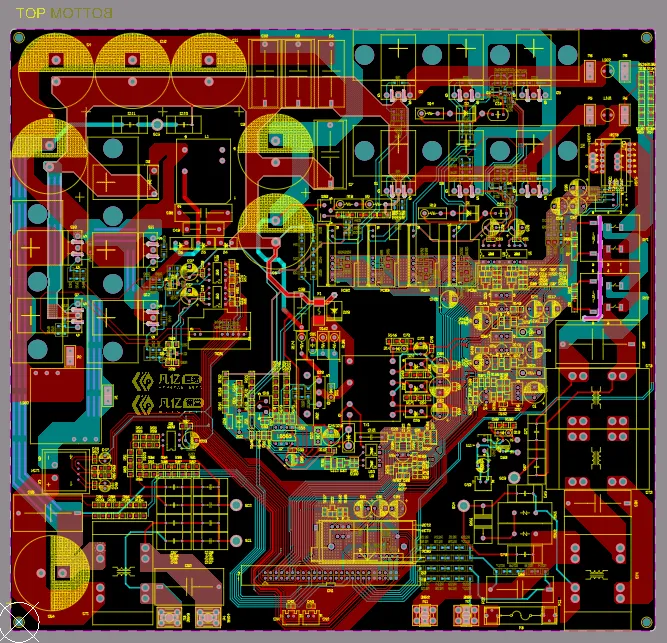
PCB stackup design requires at least four layers: signal, ground, power, and mixed. Place the microphone near the board edge for optimal sound capture, with guarded traces to the codec. Digital sections centralize around the MCU, with decoupling caps under each IC. Route high-speed SPI or I2C buses away from audio lines to minimize coupling. Vias stitching grounds reduce inductance, enhancing stability in ai embedded systems. Thermal vias under power regulators prevent hotspots during prolonged operation.
Fabrication tolerances follow IPC-6012DS specifications for rigid boards, ensuring conductor width and spacing support 50-ohm audio lines. Solder mask openings align precisely for component leads. Assembly uses J-STD-001 requirements for hand-soldering or reflow, verifying no bridges on fine-pitch parts. Post-assembly, conformal coating protects against humidity in outdoor hands-free security systems. Engineers perform in-circuit testing for continuity and shorts before programming.
Best Practices for Implementation and Integration
Begin prototyping with a modular approach, separating audio capture from processing on daughterboards for easier debugging. Simulate PCB layouts for crosstalk using field solvers, adjusting trace geometries as needed. Firmware development includes over-the-air updates for model refinements without hardware changes. Integrate with actuators via optically isolated drivers to safeguard the PCB from back-EMF. Calibration routines adjust gain for ambient noise levels, improving accuracy in pcb voice control setups.
Power budgeting is crucial; calculate quiescent currents for battery-operated units. Use low-dropout regulators for 3.3V rails feeding analog sections. Enclosure design incorporates acoustic ports aligned with the microphone. Field testing evaluates false acceptance rates under real-world echoes or wind. Scaling production involves design for manufacturability (DFM) reviews, checking pad sizes per IPC-7351B land pattern standards.
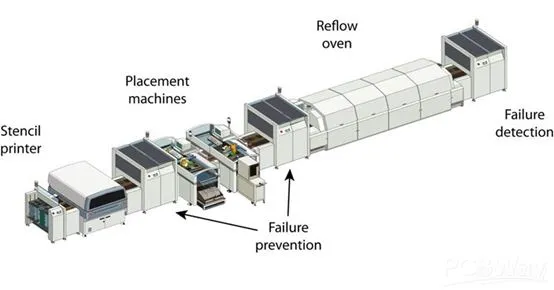
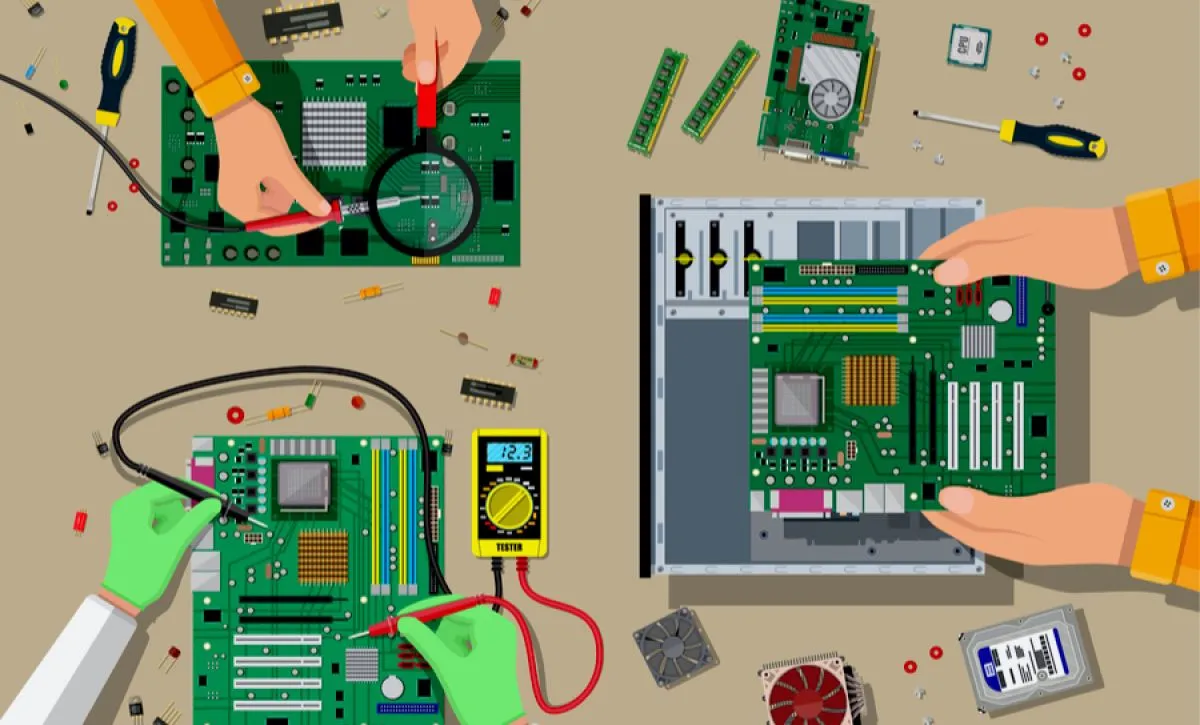
Troubleshooting common issues starts with oscilloscope checks on audio waveforms for clipping. If recognition fails, verify clock stability and memory allocation for templates. Ground loops manifest as hum; resolve by single-point grounding schemes. Overheating signals inadequate heatsinking on the MCU during intensive processing. Software debouncing prevents relay chatter from partial voice matches.
Real-World Troubleshooting Insights
In practice, electrical engineers encounter noise from fluorescent lights coupling into audio traces. Mitigate by ferrite beads on power inputs and shielded enclosures. Voice mismatch in humid environments traces to microphone sensitivity drift; specify parts with stable characteristics. Integration with existing systems requires level shifting for varying logic voltages. Firmware bugs like buffer overflows halt processing; use watchdogs for recovery.
A typical debug flow involves logging raw audio samples via UART for offline analysis. Spectrum analyzers reveal frequency-domain issues, guiding filter tweaks. For ai embedded systems, profile CPU load to optimize algorithms. Board revisions address via failures under thermal cycling. Long-term reliability testing simulates years of door cycles.
Conclusion
Building a voice recognition access control system on a custom PCB empowers electrical engineers to deliver high-performance, tailored solutions. From speech recognition circuits to hands-free security integration, careful design ensures reliability and efficiency. Key principles like signal isolation and standards compliance drive success in ai embedded systems and pcb voice control. Practical steps, from component selection to troubleshooting, minimize risks and accelerate deployment. This approach not only meets security needs but also sets a foundation for advanced features like multi-modal authentication. Engineers gain versatility, making custom PCBs indispensable for innovative security applications.
FAQs
Q1: How does a speech recognition circuit on a custom PCB improve voice recognition access control reliability?
A1: Speech recognition circuits benefit from optimized layouts that reduce noise and latency, ensuring accurate voice matching even in noisy environments. Custom PCBs allow precise component placement, like isolating audio paths from digital noise sources. This setup supports robust feature extraction and model inference on embedded processors. Hands-free security systems gain from power-efficient designs, extending battery life. Following assembly standards like J-STD-001 prevents defects that could degrade performance.
Q2: What PCB design considerations are critical for a hands-free security system with voice control?
A2: Key considerations include multi-layer stackups for ground planes and EMI shielding around the microphone. Route analog traces with controlled impedance to maintain audio fidelity. Place decoupling capacitors close to ICs for stable supplies. Thermal management prevents MCU throttling during continuous processing. Compliance with IPC-6012DS ensures fabrication quality for reliable ai embedded systems.
Q3: How can engineers troubleshoot false positives in pcb voice control systems?
A3: Examine audio SNR with scopes to identify clipping or interference. Update firmware for better wake-word discrimination and noise suppression. Test in varied acoustics to tune thresholds. Verify microphone alignment and enclosure seals. Profile algorithms for computational efficiency, avoiding overloads.
Q4: Why choose a custom PCB for ai embedded systems in access control?
A4: Custom PCBs enable integration of specific components like low-power DSPs and secure elements, outperforming off-the-shelf modules. Engineers control size, power, and interfaces for seamless system fit. Scalable designs support production volumes with DFM. Enhanced signal integrity boosts voice recognition accuracy in demanding settings.
References
IPC-A-600K — Acceptability of Printed Boards. IPC, 2020
IPC-6012DS — Qualification and Performance Specification for Rigid Printed Boards. IPC, 2015
IPC J-STD-001G — Requirements for Soldered Electrical and Electronic Assemblies. IPC, 2018