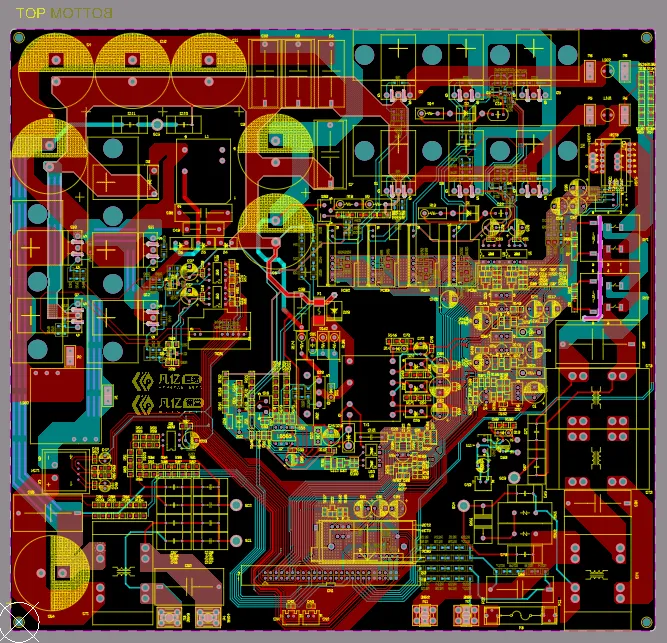
Introduction
Train protection systems form the backbone of modern railway safety, preventing collisions, overspeeding, and signal passed at danger incidents through automated oversight and intervention. Printed circuit boards in these systems handle critical functions like signal processing, sensor integration, and control logic, operating in environments marked by constant vibration, thermal cycling, and electromagnetic interference. PCB design for such safety-critical railway applications demands meticulous attention to reliability and fault tolerance to ensure uninterrupted performance over decades. Engineers must balance compactness with robustness, incorporating redundancy and protective measures from the outset. This guide outlines structured approaches to PCB design tailored for train protection systems, drawing on established engineering principles to meet the rigors of railway operations.
What Are Train Protection Systems and Why PCBs Matter
Train protection systems encompass hardware and software that monitor train speed, position, and authority limits, enforcing safe braking if operators fail to respond. These systems qualify as safety-critical due to their role in averting catastrophic failures, requiring components that withstand harsh railway conditions without compromising integrity. PCBs serve as the core platform, integrating microcontrollers, power supplies, and interfaces for real-time data handling. Poorly designed boards can lead to latent faults, signal loss, or electromagnetic susceptibility, directly impacting system availability. In railway applications, PCB failures amplify risks across interconnected networks, underscoring the need for fault-tolerant designs that prioritize long-term stability.
The relevance intensifies with the push toward higher automation levels, where TPS PCBs must support diverse inputs from balises, radio systems, and onboard sensors. Engineers face challenges like mechanical stress from track irregularities and electrical noise from traction systems. Effective PCB design mitigates these by embedding resilience into layout, materials, and assembly. Ultimately, robust PCBs enable compliance with functional safety frameworks, ensuring train protection systems deliver predictable behavior under all conditions.

Key Technical Principles for Safety-Critical Railway PCBs
Safety-critical PCB design begins with material selection suited to railway demands, favoring laminates with high glass transition temperatures for thermal stability and mechanical strength. Substrates like enhanced FR-4 or polyimide resist delamination during vibration and temperature swings common in rolling stock. Copper weights increase on power layers to handle currents while minimizing resistance and stress on vias. Surface finishes such as ENIG provide corrosion resistance and reliable solder joints essential for long-life applications. These choices form the foundation for boards that maintain electrical performance amid environmental stressors.
Layout principles emphasize signal integrity and mechanical durability, with traces routed to avoid high-stress zones near board edges or mounting points. Ground planes on inner layers shield sensitive signals from EMI generated by nearby power electronics in TPS units. Component placement orients leads perpendicular to primary vibration axes, reducing solder joint fatigue. Thermal vias under high-power devices dissipate heat, preventing hotspots that could degrade nearby circuits. This structured approach ensures fault propagation is contained, aligning with principles of functional safety.
Fault tolerance integrates redundancy at multiple levels, duplicating critical paths for power, control logic, and communication interfaces. Self-diagnostic circuits monitor voltage rails and detect anomalies, triggering safe states if discrepancies arise. Segregated partitions isolate analog, digital, and power domains, limiting fault spread. These mechanisms draw from IEC 61508 guidelines for safety integrity, where probabilistic failure analysis guides architecture decisions. Vibration damping through board stiffeners or embedded anchors further bolsters resilience against dynamic loads.
Best Practices in PCB Design for Railway Applications
Start with a multilayer stackup optimized for EMI suppression and power distribution, incorporating dedicated planes for ground and supply to maintain low impedance paths. Controlled impedance traces for high-speed signals in TPS data links prevent reflections and crosstalk. Wider power traces accommodate inrush currents, with teardrops at vias to avoid cracking under shock. Simulate layouts for thermal and mechanical stress using finite element analysis to identify weak points early. This proactive step refines the design before prototyping, ensuring alignment with railway durability needs.
Conformal coatings add a protective barrier against humidity, dust, and contaminants prevalent in underfloor or trackside TPS installations. Options like polyurethane or silicone provide flexibility to accommodate board flexing without cracking. Apply uniformly via spray or dip methods, curing fully to avoid outgassing issues. Pair with robust enclosures featuring gaskets for IP-rated sealing. Mechanical mounting uses evenly spaced holes with shock-absorbing isolators, distributing loads to prevent warping.

Assembly follows high-reliability processes, emphasizing underfill for BGA packages and adhesive anchoring for large components. Solder joint profiles adhere to IPC-A-600 criteria for acceptability, minimizing voids that accelerate fatigue. Post-assembly, boards undergo environmental stress screening including vibration profiles simulating track conditions. Functional testing verifies fault-tolerant behaviors, such as redundant path switching. These practices collectively elevate PCB reliability for train protection systems.
Ensuring Fault Tolerance in TPS PCBs
Fault tolerance in TPS demands architectures that detect, isolate, and recover from failures without compromising safety functions. Dual-channel designs with cross-monitoring compare outputs, defaulting to conservative states on mismatch. Watchdog timers reset processors during hangs, while diverse redundancy avoids common-mode failures. Power systems employ diode-OR configurations for seamless failover between supplies. These layered defenses align with safety lifecycle management, reducing diagnostic coverage gaps.
Environmental hardening complements electrical fault tolerance through vibration-resistant features like anchored passives and flexible interconnects. Thicker cores resist resonance amplification, while damping materials absorb energy. Thermal management includes spread planes and vias to equalize temperatures across the board. In railway applications, such integrations ensure TPS PCBs operate through prolonged exposure to shock and cycling. Regular self-tests during idle periods log anomalies for predictive maintenance.

Validation via accelerated life testing replicates decades of service, confirming mean time between failures meets safety targets. Compliance with IPC-6012 qualification specs verifies performance under qualified conditions. This rigorous verification closes the design loop, delivering PCBs ready for deployment.
Conclusion
Designing PCBs for train protection systems requires a holistic integration of material resilience, layout precision, and fault-tolerant architectures to thrive in railway harshness. Key principles like multilayer shielding, conformal protection, and redundancy directly address safety-critical demands. Best practices from stackup planning to environmental screening ensure long-term reliability without downtime. Engineers achieve this through structured methodologies that prioritize fault isolation and robust mechanical design. Ultimately, these PCBs enable train protection systems to safeguard lives and operations effectively.
FAQs
Q1: What materials best suit PCB design for train protection systems?
A1: High-stability laminates like enhanced FR-4 or polyimide excel in railway applications due to their resistance to thermal cycling and vibration. Thicker copper on power layers enhances current handling and durability. Conformal coatings such as polyurethane protect against moisture in safety-critical environments. Select based on specific fault tolerance needs to maintain signal integrity over extended lifecycles.
Q2: How does vibration impact PCB design in railway TPS?
A2: Vibration fatigues solder joints and traces, risking intermittent faults in train protection systems. Orient components perpendicular to dominant axes and use anchors to minimize flex. Thicker boards and damping mounts reduce resonance effects. These measures ensure fault tolerance in dynamic railway settings.
Q3: Why prioritize fault tolerance in safety-critical railway PCBs?
A3: Fault tolerance prevents single failures from escalating in train protection systems, enforcing safe states automatically. Redundant channels and diagnostics detect anomalies early. This aligns with functional safety requirements, bolstering overall system reliability in harsh railway applications.
Q4: What role do standards play in TPS PCB design?
A4: Standards like IEC 61508 guide functional safety architectures for railway PCBs. IPC-6012 ensures performance qualification under stress. They provide frameworks for verification, promoting consistent fault tolerance across designs.
References
IEC 61508 — Functional safety of electrical/electronic/programmable electronic safety-related systems. IEC, 2010
IPC-6012E — Qualification and Performance Specification for Rigid Printed Boards. IPC, 2017
IPC-A-600K — Acceptability of Printed Boards. IPC, 2020