Introduction
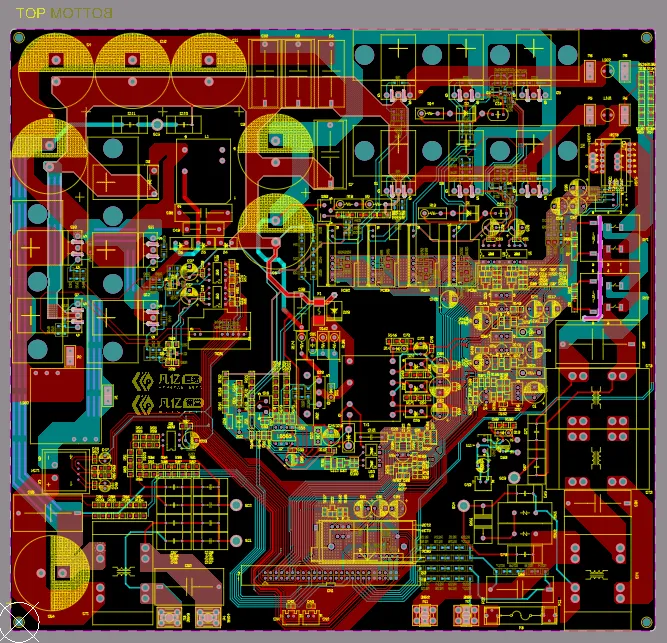
Multilayer printed circuit boards form the backbone of automotive electronics in today's vehicles, supporting everything from advanced driver-assistance systems to electric powertrains. These boards integrate multiple layers of conductive traces and insulating materials to handle complex circuitry in compact spaces. As vehicles incorporate more sensors, processors, and power electronics, the need for robust automotive PCB design grows critical. High-reliability PCBs for automotive must withstand extreme conditions like vibration, temperature swings, and electromagnetic interference. This article explores how multilayer PCBs meet these demands through material choices, design strategies, and compliance with automotive PCB standards. Engineers designing for automotive applications benefit from understanding these principles to ensure long-term performance.
Understanding Multilayer PCBs in Automotive Contexts
Multilayer PCBs consist of three or more conductive layers bonded together with dielectric materials, enabling high-density interconnections essential for modern automotive systems. In vehicles, these boards manage high-speed data signals for infotainment, radar, and camera modules while powering high-current components in battery management systems. The layered structure reduces overall board size compared to single or double-sided designs, which is vital in space-constrained engine compartments or dashboards. Automotive PCB design requires careful layer stackup to balance signal integrity and mechanical stability. Troubleshooting issues like crosstalk or impedance mismatches often traces back to improper layer sequencing during initial layout. By optimizing via placement and plane assignments, designers achieve reliable operation under dynamic loads.

Key Challenges for Automotive Multilayer PCBs
Automotive electronics operate in environments that can expose PCBs to vibration, temperature changes, moisture, electrical noise, and mechanical stress. The PCB structure therefore needs to provide reliable electrical performance throughout the expected operating conditions.
For multilayer boards, reliability depends not only on the individual materials but also on the relationship between layers, vias, copper structures, components, and the final assembly.
Vibration and Mechanical Stress
Vehicle operation can expose electronic assemblies to continuous vibration as well as mechanical shock. These conditions can place stress on solder joints, plated vias, copper traces, and connections between different PCB layers.
A reliable automotive PCB design should therefore consider mechanical support, component placement, via structures, and the interaction between the PCB and its enclosure.
For applications involving movement or curved installation areas, a flexible or rigid-flex structure may provide a more suitable solution than forcing a rigid multilayer board into an unsuitable mechanical configuration.
Thermal Cycling and Heat Dissipation
Automotive electronics can experience repeated temperature changes during vehicle operation. Power components and other heat-generating devices can create localized thermal stress within the PCB assembly.
Thermal vias, copper planes, appropriate component placement, and suitable materials can help manage heat. The thermal design should be evaluated together with the stack-up and mechanical structure rather than treated as a separate PCB feature.
EMI and Signal Integrity
The increasing use of high-speed communication, radar, cameras, sensors, and computing systems makes electromagnetic compatibility an important consideration in automotive PCB design.
A suitable multilayer stack-up can provide controlled signal paths and stable reference planes. Designers should also consider return paths, via placement, grounding, trace spacing, and the physical separation of sensitive and noisy circuits.
Selecting PCB Materials for Automotive Applications
Material selection affects the mechanical stability, thermal behavior, electrical performance, and long-term reliability of automotive PCBs.
Rigid automotive multilayer boards may use appropriate FR-4-based materials or other material systems depending on the operating environment and electrical requirements. Flexible applications require a different material approach because the substrate and copper system must accommodate bending as well as electrical performance.
Material Selection for Reliability
Automotive PCB materials should be selected according to the expected temperature conditions, moisture exposure, mechanical stress, electrical requirements, and manufacturing process.
For multilayer boards, dielectric properties and dimensional stability are important for stack-up consistency and signal integrity. Material compatibility between layers is also important because differences in thermal expansion can contribute to mechanical stress during manufacturing and operation.
Materials for Multilayer and Flexible Automotive PCBs
Flexible automotive circuits commonly use polyimide-based constructions with copper conductors and protective coverlay. These materials allow the circuit to bend or conform to the mechanical structure of the vehicle.
For applications requiring both rigid component areas and flexible interconnects, rigid-flex construction can combine stable areas for component assembly with flexible sections for routing between different parts of the system.
Material selection should therefore follow the actual mechanical requirements of the application. A conventional rigid multilayer material may be appropriate for a fixed control module, while a flexible or rigid-flex construction may be more suitable for a compact sensor, display, or moving assembly.

Flexible PCB for Automotive Electronics
Automotive electronics increasingly need to fit into curved, compact, or mechanically constrained areas. Flexible circuits can provide an alternative to conventional wiring and rigid boards by allowing electrical connections to follow the physical structure of the vehicle system.
A flexible PCB for automotive applications can connect sensors, displays, control electronics, lighting systems, and other vehicle components while occupying less constrained routing space.
Flexible circuits can also reduce the need for separate wires and connectors in some designs. However, the appropriate construction depends on the required bend conditions, electrical performance, temperature environment, component placement, and manufacturing process.
Why Flexible PCBs Are Used in Automotive Systems
FPCBs are particularly useful when the electronic assembly needs to follow a curved surface, pass through a narrow space, or connect components positioned in different areas of the vehicle.
Compared with a conventional rigid board and separate wiring harness, a flexible circuit can integrate multiple electrical connections into one structured interconnect. This can simplify routing and provide greater freedom during mechanical integration.
Potential applications include automotive sensors, displays, control panels, lighting assemblies, camera modules, and other compact electronic systems.
The design should still distinguish between areas that remain stationary and areas that experience movement. Components and mechanically sensitive features should generally be located away from sections that undergo repeated bending.
Automotive Multilayer Flexible PCB Design
An automotive multilayer flexible PCB can combine the routing capacity of a multilayer structure with the mechanical adaptability of a flexible circuit.
Multilayer flex designs can be useful when a single flexible layer does not provide enough routing capacity for the application. However, additional layers can affect the flexibility and mechanical behavior of the circuit, so the stack-up should be selected according to the required movement and installation conditions.
The flexible PCB design should consider bend areas, copper distribution, layer transitions, vias, coverlay, stiffeners, connectors, and component placement together. This helps prevent a situation where the electrical design meets the routing requirements but the finished circuit is difficult to bend or assemble reliably.

Rigid-Flex PCBs for Automotive Applications
Rigid-flex PCBs combine rigid sections for component mounting with flexible sections for electrical interconnection. This can be useful in automotive assemblies where some areas require mechanical stability while other sections need to conform to a curved or compact structure.
Rigid-flex construction can also reduce the number of separate connectors or wire connections between different PCB sections. The final design should consider bend zones, rigid-to-flex transitions, component placement, layer structure, and assembly requirements from the beginning.
For vehicle electronics with complex mechanical layouts, rigid-flex can provide a practical alternative to using multiple rigid boards connected by separate cables.
Automotive PCB Design Best Practices
Effective automotive PCB design requires electrical, mechanical, thermal, and manufacturing requirements to be considered together. The appropriate approach depends on whether the application uses a conventional rigid multilayer board, a flexible circuit, or a rigid-flex structure.
Stack-Up and Layer Planning
The stack-up should be planned according to the required routing density, signal integrity, power distribution, thermal behavior, and mechanical structure.
Multilayer automotive boards may use dedicated power and ground structures to provide stable reference paths and support high-speed interfaces. For flexible circuits, the stack-up also needs to account for the required bending conditions.
The final layer arrangement should balance electrical performance with manufacturing feasibility rather than maximizing layer count or routing density alone.
Signal Integrity and Power Distribution
High-speed automotive interfaces require controlled routing and stable return paths. Differential pairs, reference planes, via transitions, and grounding structures should be considered during the initial layout.
Power distribution should also be planned according to the electrical load of the system. High-current areas may require appropriate copper structures and thermal paths, while sensitive signal sections should be protected from unnecessary interference.
Component Placement and Mechanical Considerations
Component placement has both electrical and mechanical consequences. Components that generate significant heat may require dedicated thermal structures, while sensitive components should be positioned according to their signal and grounding requirements.
In flexible and rigid-flex designs, components should generally be kept away from repeated bend areas. Connectors and other mechanically sensitive areas may require local stiffeners or rigid sections to provide additional support.
Suggeted Reading: Beyond the Basics: Advanced Automotive PCB Design Techniques
Thermal Management in Automotive PCBs
Thermal management is particularly important for automotive electronics that contain power devices, processors, motor drivers, or other heat-generating components.
Thermal Management for Multilayer Boards
Multilayer PCBs can use copper planes, thermal vias, and appropriate layer structures to distribute heat away from localized hotspots.
The thermal design should begin with component placement and continue through the PCB stack-up and mechanical enclosure. Thermal paths should be evaluated together with the available cooling structure of the complete assembly.
Thermal Considerations for Flexible and Rigid-Flex PCBs
Flexible circuits generally have less material available for heat spreading than large rigid multilayer boards, so thermal requirements should be considered carefully when selecting a flex structure.
Heat-generating components may be placed on rigid sections where possible, while flexible sections are primarily used for interconnection. This approach can help separate mechanically flexible areas from components that require stronger thermal and mechanical support.
For automotive flexible PCB applications, material selection, copper distribution, component placement, and the surrounding mechanical structure should all be considered as part of the thermal design.

High-Reliability Automotive PCB Manufacturing
Automotive PCB manufacturing requires consistent control of materials, layer registration, copper structures, plating, solderability, and inspection.
Multilayer PCB Manufacturing Considerations
Complex multilayer boards require careful control of lamination, layer alignment, drilling, plating, and final inspection.
Designers should work with the manufacturer's process capabilities when defining stack-ups, via structures, copper distribution, and critical dimensions. This can reduce manufacturing risks and improve consistency during production.
Flexible PCB Manufacturing and Reliability
Flexible PCB manufacturing requires additional attention to material handling, coverlay application, copper processing, bending areas, stiffeners, and flexible-to-rigid transitions.
For an automotive multilayer flexible PCB, manufacturing quality is particularly important because the circuit must maintain both multilayer electrical connections and the required mechanical flexibility.
Design-for-manufacturing review should therefore evaluate the entire structure before fabrication. Bend areas, component zones, connectors, vias, stiffeners, and rigid-flex transitions should be reviewed together rather than independently.
Automotive PCB Standards and Compliance
Automotive PCB standards like IPC-6012DA outline stringent qualification criteria for rigid boards in vehicle applications, covering bow, twist, and conductor spacing. Assembly follows IPC-A-610 Class 3 provisions for visual acceptability under harsh conditions. Soldering adheres to IPC J-STD-001 requirements, with automotive addendums addressing vibration and thermal cycling. These standards guide troubleshooting by defining defect thresholds. Compliance testing includes thermal shock and humidity bias to simulate real-world exposure. Integrating these early prevents costly redesigns.
Troubleshooting Common Issues in Automotive Multilayer PCBs
Common automotive multilayer PCB problems can involve thermal stress, vibration, delamination, via reliability, warpage, signal interference, or manufacturing variation.
When troubleshooting, engineers should consider the complete PCB structure rather than focusing only on the visible defect. Layer stack-up, material selection, copper distribution, via construction, component placement, and assembly conditions may all contribute to the final result.
For flexible and rigid-flex circuits, mechanical stress should also be considered. Failures may occur when components, vias, or other sensitive features are placed too close to areas that experience repeated bending.
Future Directions in Automotive PCB Technology
The development of electric vehicles, connected vehicles, advanced driver-assistance systems, and increasingly compact electronic architectures continues to increase demand for high-density and reliable PCB solutions.
Multilayer rigid boards will remain important for computing, power management, communication, and control systems, while flexible and rigid-flex technologies can support electronics that need to conform to curved or space-constrained structures.
Future automotive PCB designs are likely to combine different PCB technologies according to the requirements of each electronic module rather than relying on one board construction for every application.

Conclusion
Multilayer PCBs stand at the intersection of innovation and reliability in automotive electronics, enabling the smart vehicles of tomorrow. Strategic automotive PCB design, robust PCB materials for automotive, and effective thermal management in automotive PCBs ensure mission-critical performance. Adhering to automotive PCB standards fortifies boards against environmental rigors. Engineers applying these practices troubleshoot proactively, minimizing field failures. As demands intensify, multilayer solutions will evolve to support autonomous driving and electrification seamlessly.
FAQs
Q1: What are the primary considerations in automotive PCB design?
A1: Automotive PCB design prioritizes high-reliability PCBs for automotive by focusing on vibration resistance, thermal dissipation, and EMI shielding. Stackup symmetry prevents warpage, while impedance-controlled traces support high-speed signals. Material selection ensures CTE matching across layers. Troubleshooting emphasizes simulation for signal integrity. Compliance with automotive PCB standards like IPC-6012DA verifies durability.
Q2: How does thermal management in automotive PCBs impact reliability?
A2: Thermal management in automotive PCBs prevents junction overheating in power electronics, extending component life under engine bay conditions. Techniques include thermal vias, copper planes, and high-conductivity dielectrics. Poor management leads to solder joint fatigue, addressable via modeling. Layer thickness aids heat spreading. Integration with chassis cooling enhances overall system stability.
Q3: What role do PCB materials for automotive play in high-reliability applications?
A3: PCB materials for automotive feature high Tg and low moisture uptake to combat thermal cycling and corrosion. They maintain interlayer adhesion during flexure tests. Selection influences warpage and CTE mismatch issues. Troubleshooting involves qualification per IPC standards. Enhanced formulations support denser multilayer builds without reliability trade-offs.
Q4: Which automotive PCB standards are essential for compliance?
A4: Automotive PCB standards such as IPC-6012DA, IPC-A-610, and IPC J-STD-001 define performance for rigid boards and assemblies. They specify tolerances for conductor quality, plating, and solder joints. Class 3 criteria apply for critical functions. Adherence guides manufacturing and troubleshooting. These ensure high-reliability PCBs for automotive endure vehicle stresses.
Q5: Can flexible PCBs be used in automotive electronics?
A5: Yes. Flexible PCBs can be used in automotive electronics when the application requires mechanical flexibility, compact routing, or integration into a curved structure. The appropriate construction depends on the required bending conditions, electrical performance, temperature environment, materials, and manufacturing process.
Q6: What is an automotive multilayer flexible PCB?
A6: An automotive multilayer flexible PCB combines multiple conductive layers with a flexible substrate to provide additional routing capacity while retaining mechanical flexibility. It can be considered when a single-layer or simpler flex structure cannot provide enough routing space for the application. The layer count and stack-up should be selected according to both electrical and mechanical requirements.
Q7: When should automotive electronics use a rigid-flex PCB instead of a flexible PCB?
A7: A rigid-flex PCB can be useful when some areas of the assembly require stable surfaces for component mounting while other sections need to bend or follow a curved structure. A fully flexible PCB may be more suitable when most of the circuit needs to remain flexible, while rigid-flex construction can provide additional mechanical support and component integration.
Q8: What materials are commonly used for automotive flexible PCBs?
A8: Automotive flexible circuits commonly use flexible substrates such as polyimide, copper conductors, protective coverlay, and supporting stiffeners where required. Material selection should consider temperature exposure, mechanical movement, electrical requirements, assembly conditions, and the intended operating environment.
Q9: What design factors are important for automotive multilayer flexible PCBs?
A9: Important considerations include layer stack-up, bend areas, copper distribution, via placement, component positioning, coverlay, stiffeners, signal integrity, power distribution, thermal conditions, and manufacturing capability. These factors should be evaluated together because increasing routing density can also affect the flexibility and mechanical reliability of the circuit.
Q10: Are multilayer flexible PCBs suitable for ADAS and other advanced automotive systems?
A10: Multilayer flexible or rigid-flex circuits can be considered for compact automotive systems where electrical routing needs to fit within constrained mechanical structures. The appropriate PCB structure depends on the specific system, including its signal requirements, component density, mechanical movement, thermal conditions, and reliability expectations. For high-speed ADAS applications, signal integrity and controlled routing remain important regardless of whether the PCB is rigid, flexible, or rigid-flex.
Q11: What are the advantages of a flexible PCB for automotive applications?
A11: A flexible PCB for automotive applications can conform to curved or space-constrained structures and provide electrical connections between components located in different areas of a vehicle system. Flexible circuits can also reduce the need for separate wires and connectors in some designs, making them useful for compact sensors, displays, control panels, lighting systems, and other automotive electronics.
References
IPC-6012DA - Automotive Applications Addendum to IPC-6012D, Qualification and Performance Specification for Rigid Printed Boards. IPC, 2016
IPC-A-610J - Acceptability of Electronic Assemblies. IPC, 2024
IPC J-STD-001J - Requirements for Soldered Electrical and Electronic Assemblies. IPC, 2024
IPC-4101 - Specification for Base Materials for Rigid and Multilayer Printed Boards. IPC, 2017