Introduction
High-speed HDI PCB manufacturing demands a delicate balance between achieving superior signal integrity and controlling costs. As electronic devices operate at high frequencies, engineers face challenges such as signal loss, crosstalk, and impedance mismatches that can degrade performance. At the same time, material and process expenses can place pressure on project budgets. This article explores practical strategies for optimizing HDI PCB cost without sacrificing reliability. Factory-driven considerations show how material selection, layer count, via types, and design complexity can influence manufacturing cost. By following established standards and aligning specifications with fabrication capabilities, manufacturers can control PCB production costs while maintaining required performance.

Why HDI PCB Cost Increases as Manufacturing Complexity Grows
High-speed PCBs support demanding data transmission requirements and require precise control over electrical characteristics. Conventional FR-4 materials may be suitable for less demanding applications, while higher-frequency designs can require low-loss dielectrics to reduce attenuation and maintain signal fidelity. Increased layer counts accommodate dense routing and shielding, yet additional layers can increase lamination, drilling, and plating expenses. Complex via structures, such as blind or buried vias, can improve signal performance by shortening signal paths but may introduce sequential build processes that increase HDI PCB cost. Design complexity, including fine-pitch traces and controlled impedance, can also require advanced imaging and etching processes, further affecting fabrication expenses. Understanding these cost drivers enables engineers to identify practical opportunities for cost optimization.
Key Factors Influencing HDI PCB Cost
How HDI PCB Material Selection Changes Production Cost
Material selection profoundly affects both performance and HDI PCB cost. Dielectrics with low dielectric constant (Dk) and dissipation factor (Df) can minimize signal propagation delays and losses, which is important for high-frequency operation. Standard FR-4 can offer cost advantages, while higher-frequency applications may require materials with lower loss characteristics to control insertion loss. Low-loss variants or specialized resins can provide improved electrical performance but may increase material and processing costs. Factory experience shows that hybrid stackups, combining standard cores with low-loss materials in selected areas, can help balance these trade-offs. Proper material selection should also align with applicable qualification requirements for rigid printed boards, supporting mechanical stability alongside electrical performance.
Reducing HDI PCB Cost Through Layer Count and Stackup Optimization
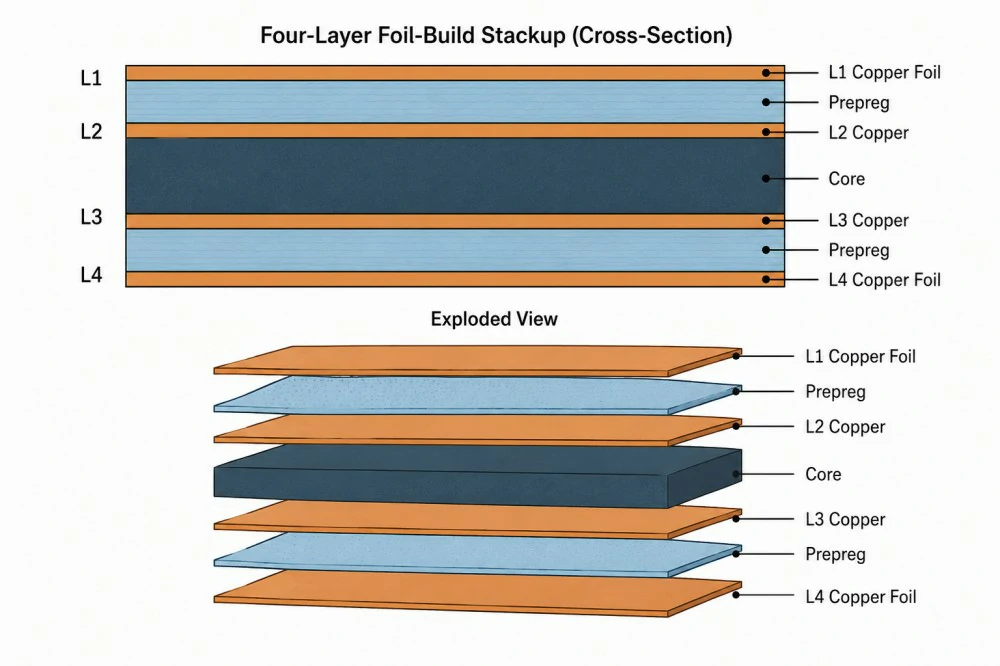
Layer count directly influences HDI PCB cost, as multilayer boards involve additional lamination cycles, material usage, and alignment requirements. High-speed designs may require multiple layers for power planes, ground shielding, and differential pairs to mitigate EMI. Excessive layers can increase material usage and yield risks associated with warpage or delamination. Optimized stackups group signal layers adjacent to reference planes, helping reduce crosstalk without unnecessarily increasing layer count. Engineers can simulate stackups to verify impedance control and avoid over-design. Where the electrical and mechanical requirements allow, reducing unnecessary layers can simplify via transitions and build sequences while lowering manufacturing cost.

How Microvias and Via Structures Affect HDI PCB Cost
Via types play a critical role in high-speed signal routing and manufacturing economics. Through-hole vias are generally simpler to fabricate and span multiple layers, but they can create stubs that affect signal performance at higher frequencies. Blind and buried vias connect specific layers and can reduce unwanted stubs, although they may require laser drilling or sequential lamination, increasing manufacturing complexity and cost. Microvias enable higher routing density in HDI boards and are valuable for compact high-speed layouts, but their small structures require precise process control to maintain reliability. Strategic use of via types, consistent with applicable HDI PCB design guidelines, can minimize unnecessary via structures while preserving required performance. Factories can prioritize via farms or stitching where EMI suppression requires them.
How HDI Design Complexity and Prototyping Affect PCB Cost
Design complexity can increase HDI PCB cost through tighter tolerances, more demanding inspection requirements, and additional process controls. Fine-line traces and spaces may require LDI exposure or other advanced imaging processes to maintain accuracy, increasing setup and processing requirements. Controlled impedance also requires consistent dielectric thickness, which can complicate panelization and fabrication. Prototyping iterations help expose these issues early, but repeated design revisions can increase overall project cost. Where performance requirements allow, streamlined designs with practical tolerances can reduce manufacturing complexity. Early DFM reviews can identify over-specifications and align the design with actual fabrication capabilities.
HDI PCB Low Cost Manufacturing: Practical Cost Reduction Strategies
Selecting HDI PCB Materials for Performance and Cost Control
Prioritize materials based on actual frequency and signal integrity requirements rather than applying blanket material upgrades. Enhanced FR-4 may be suitable for some demanding applications, while specialized low-loss laminates can be reserved for designs where their electrical performance is necessary. Evaluate the total stackup loss budget through simulation before specifying materials. Hybrid constructions can use cost-effective cores for less critical layers and low-loss materials for critical signal paths. This approach can help control material expenses while maintaining the required electrical performance and applicable PCB acceptability requirements.
How Efficient HDI Routing Can Reduce PCB Manufacturing Cost
Achieve high-speed performance with fewer layers by leveraging broadside coupled striplines and embedded components. Pair high-speed nets on inner layers flanked by planes for inherent shielding. Backdrilling through-vias removes stubs affordably compared to blind vias. Advanced routing algorithms optimize trace lengths, reducing the need for extra layers. A 6-layer board can handle many 10 Gbps applications if stackup symmetry prevents warpage. This strategy lowers lamination costs and improves yields.

Optimizing Via Usage and Types
Limit blind and microvias to critical high-speed nets, using through-vias elsewhere. Convert unnecessary microvias to larger laser vias for cost savings in drilling. Via-in-pad designs increase density but require filled vias to avoid solder wicking issues. Factories favor staggered via sequencing to simplify build-ups. Per design standards, cap via counts per net to essential fanouts. These tactics can reduce unnecessary sequential processes and help control HDI PCB manufacturing cost.
Simplifying Design Complexity
Standardize trace widths and spaces across nets to minimize retooling. Use symmetric stackups for natural impedance matching. Incorporate test points judiciously to cut probing expenses. Panelize designs efficiently for volume runs. Prototyping focuses on small panels first, validating signal integrity before full production. This iterative approach helps control HDI PCB fabrication cost by identifying design and manufacturing issues before volume production.
HDI PCB Cost Control From Prototype to Volume Manufacturing
Prototype with relaxed tolerances initially, tightening only after validation. Leverage quick-turn fabs for 4-8 layer proofs-of-concept. Volume manufacturing benefits from large panels and standard thicknesses. Implement statistical process control for consistent yields. Adhering to IPC standards during fabrication ensures first-pass success, avoiding costly respins.
HDI PCB Price: What Determines the Final Manufacturing Quote
HDI PCB price is influenced by more than the basic board size or layer count. Material selection, sequential lamination, microvia structures, copper requirements, surface finish, board complexity, production volume, and panel utilization can all affect the final manufacturing quote. Prototype orders may also carry different setup and engineering costs than volume production.
For procurement teams, comparing HDI PCB price should therefore involve more than checking the lowest unit quotation. A reliable comparison should consider the specified material system, stackup, via structure, manufacturing tolerances, inspection requirements, and expected production volume. Clear design documentation allows manufacturers to provide more consistent quotations and helps avoid cost changes after engineering review.
Factory Production Insights Into HDI PCB Cost Optimization
In production runs for networking equipment, switching from an all-blind-via structure to a hybrid through/blind via configuration can reduce fabrication complexity while maintaining the required signal performance, depending on the design. Another approach involves using standard FR-4 for non-critical layers while reserving low-loss materials for critical signal layers. These adjustments should be evaluated against the applicable performance requirements and fabrication capabilities. Pre-production DFM audits can also identify unnecessary specifications and potential manufacturing risks before volume production. Such factory-driven adjustments can play an important role in controlling HDI PCB manufacturing cost without compromising required performance.
Conclusion
Cost-effective HDI PCB manufacturing depends on informed decisions in material selection, layer count, via types, design complexity, and prototyping. By optimizing these elements, engineers can balance demanding performance requirements with manufacturing cost considerations. Factory experience also highlights the value of standards compliance and early DFM review for maintaining reliability. Applying these strategies can help control HDI PCB cost while avoiding unnecessary manufacturing complexity. Procurement teams can also obtain more consistent pricing when specifications, stackup requirements, and production conditions are clearly defined. Ultimately, a well-controlled HDI manufacturing strategy helps balance technical performance, reliability, and production cost.
FAQs: HDI PCB Cost
Q1: What Factors Determine HDI PCB Cost?
A1: HDI PCB cost depends on several factors, including material selection, layer count, stackup complexity, microvias, sequential lamination, copper requirements, surface finish, inspection, and production volume. High-speed applications may require specialized materials and tighter process controls, which can increase manufacturing expenses. Early DFM review helps engineers identify unnecessary specifications and select a practical structure that balances performance, reliability, and overall production cost.
Q2: How Does Material Selection Affect HDI Cost of Production?
A2: Material selection has a direct effect on HDI cost of production because different laminates have different material prices and processing requirements. Standard materials can provide a cost-effective option for less demanding designs, while low-loss materials may be necessary for critical high-speed signal paths. Hybrid stackups can help control cost by reserving higher-performance materials for areas where their electrical properties provide a specific design benefit.
Q3: How Can HDI PCB Low Cost Manufacturing Be Achieved?
A3: HDI PCB low cost manufacturing depends on controlling unnecessary manufacturing complexity rather than simply selecting the cheapest materials. Engineers can optimize layer count, use practical via structures, improve panel utilization, select materials according to actual signal requirements, and avoid unnecessarily tight tolerances. Early DFM review can also identify over-specified features before production, helping reduce fabrication complexity while maintaining required electrical and mechanical performance.
Q4: What Determines HDI PCB Price?
A4: HDI PCB price is influenced by board size, layer count, material system, microvia structures, sequential lamination, copper requirements, surface finish, inspection requirements, production volume, and panel utilization. Prototype and volume production may also involve different engineering and setup costs. For a more consistent quotation, manufacturers generally need complete information about the stackup, materials, fabrication requirements, quantities, and required tolerances.
Q5: What Makes an HDI PCB Cost-Effective Solution for High-Speed Applications?
A5: An HDI PCB cost-effective solution balances electrical performance, routing density, reliability, and manufacturing complexity. Microvias, optimized stackups, controlled impedance, and appropriate low-loss materials can support compact high-speed designs, but advanced structures should be applied selectively. Using complex HDI features where they provide limited practical benefit can increase manufacturing cost without a corresponding performance advantage. Early design and DFM review helps identify a more balanced construction.
Q6: How Can Keyboard PCB Cost Optimization Reduce HDI Manufacturing Expenses?
A6: Keyboard PCB cost optimization can focus on simplifying the layer structure, selecting practical materials, optimizing routing density, and improving panel utilization. When an HDI structure is used for a compact keyboard design, engineers should apply microvias and fine-line routing only where they provide a clear packaging benefit. Early DFM review can help balance keyboard PCB cost optimization with manufacturing reliability and required electrical performance.
Q7: What Should Be Considered for Charger PCB Cost Optimization?
A7: Charger PCB cost optimization requires balancing electrical performance, thermal requirements, component density, and manufacturing complexity. For charger designs using HDI structures, engineers can evaluate whether advanced vias, additional layers, or specialized materials are necessary for the actual power and routing requirements. Optimizing the stackup and avoiding unnecessary fabrication constraints can help control manufacturing expenses while maintaining the required reliability and electrical performance.
Q8: How Does GPS PCB Cost Optimization Affect HDI PCB Cost?
A8: GPS PCB cost optimization involves balancing compact board dimensions, signal integrity, material selection, routing density, and manufacturing requirements. When an HDI structure is used for a compact GPS design, microvias and fine-line routing can improve routing efficiency but may add fabrication complexity. Careful stackup planning, practical tolerances, and early DFM review can help control HDI PCB cost while maintaining reliable GPS signal performance.
References
IPC-6012F — Qualification and Performance Specification for Rigid Printed Boards. IPC, 2023
IPC-2221G — Generic Standard on Printed Board Design. IPC, 2017
IPC-A-600K — Acceptability of Printed Boards. IPC, 2020