Introduction
Electronic enclosures house sensitive circuits that must operate reliably amid growing electromagnetic interference challenges from dense integration and high-speed signals. Conductive gaskets and sealants emerge as critical components in enclosure shielding design, bridging gaps between mating surfaces to ensure electrical continuity while providing environmental protection. These materials attenuate electromagnetic waves, preventing ingress or egress that could degrade performance or cause compliance failures. Engineers designing for telecommunications, aerospace, or medical devices increasingly rely on conductive gaskets EMI solutions to meet stringent electromagnetic compatibility requirements. This article explores the principles, selection criteria, and best practices for integrating these elements effectively. Understanding their role enhances overall system integrity and longevity.
What Are Conductive Gaskets and Sealants and Why Do They Matter?
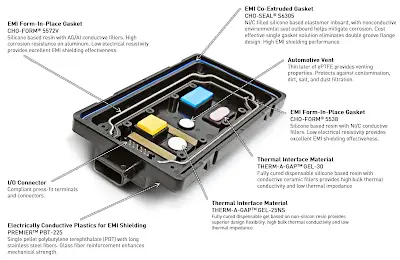
Conductive gaskets consist of elastomeric bases like silicone or fluorosilicone loaded with conductive fillers such as silver, nickel, or graphite particles to achieve low electrical resistance paths across enclosure joints. Sealants, often dispensed as viscous compounds, serve similar functions in irregular geometries where molded gaskets prove impractical. Together, they form the last line of defense in enclosure shielding design by maintaining a Faraday cage-like barrier against EMI. Without proper implementation, even well-shielded internal components suffer from leakage at seams, doors, or penetrations, leading to radiated emissions or susceptibility issues. In high-frequency environments above 1 GHz, their conformal nature ensures intimate contact, minimizing impedance discontinuities. Their dual capability for EMI attenuation and environmental sealing EMI makes them indispensable for IP-rated assemblies exposed to dust, moisture, or chemicals.
The relevance stems from escalating frequencies in modern electronics, where traditional metal-to-metal contacts falter under vibration or thermal cycling. Conductive gaskets EMI performance directly correlates with system-level electromagnetic compatibility, influencing certification outcomes. Engineers must prioritize these in early design phases to avoid costly redesigns. Material advancements continue to balance shielding effectiveness with mechanical compliance, enabling lighter, more compact enclosures.
Technical Principles of Enclosure Shielding with Conductive Gaskets
Shielding effectiveness relies on reflection, absorption, and multiple reflections within the gasket material, governed by skin depth and material resistivity. At low frequencies, reflection dominates due to high conductivity, while absorption prevails at microwaves as fillers interact with fields. Volume resistivity, measured via ASTM D991, quantifies the material's ability to conduct currents perpendicular to the interface, typically targeting below 10 ohm-cm for broad-spectrum performance. Compression deforms the elastomer, forcing fillers into stable networks that reduce contact resistance to mating flanges. Gaps larger than a fraction of the wavelength compromise shielding, underscoring the need for uniform deflection.
Transfer impedance characterizes gasket performance, representing voltage drop per unit current along the interface, directly linking to attenuation in dB. Environmental factors like humidity alter filler percolation, potentially increasing resistance over time. Thermal expansion mismatches between enclosure metals and gasket bases demand materials with matched coefficients to sustain contact. IEC 61000-5-7 provides guidelines for evaluating enclosure shielding, emphasizing repeatable test fixtures for apertures and joints. These principles guide engineers in predicting field containment before prototyping.
Gasket Material Selection Criteria
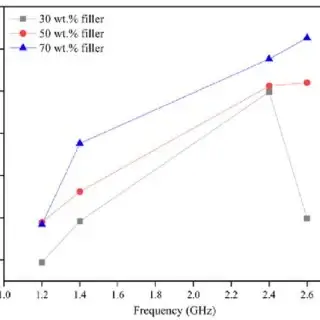
Gasket material selection hinges on operating frequency, environmental exposure, and mechanical requirements, with fillers dictating EMI performance trade-offs. Silver-aluminum offers superior broad-band shielding but higher cost and galvanic corrosion risks in saline atmospheres, favoring nickel-graphite for cost-sensitive, DC-to-10 GHz applications. Base polymer influences compression set and temperature range; silicone excels to 200°C with low outgassing, while fluorosilicone resists fuels. Engineers assess DC resistivity alongside RF shielding data to match application needs, avoiding over-specification that inflates costs.
Aging stability under compression proves critical, as filler migration or oxidation degrades long-term conductivity. For EMI sealant applications, viscosity and cure time determine applicability in form-in-place scenarios, ensuring void-free bonds. Compatibility with enclosure finishes, like nickel plating, prevents chemical reactions. Structured evaluation matrices aid in balancing these factors logically.
Gasket Compression Force and EMI Performance
Gasket compression force EMI directly impacts shielding by determining contact area and filler network density, typically requiring 10-30% deflection for optimal performance. Insufficient force leaves micro-gaps, elevating transfer impedance and allowing field penetration; excessive force accelerates fatigue. Force per unit length varies with cross-section; rectangular profiles demand higher loads than hollow D-shapes for equivalent deflection. Engineers model this using deflection curves, ensuring fastener spacing maintains uniform pressure across seams.
Vibration induces dynamic compression variations, necessitating materials with low compression set below 25% post-72-hour recovery tests. Hardware integration, like wave washers, supplements gaskets in low-force regimes. Quantitative analysis via finite element simulation predicts stress distribution, correlating to measured attenuation. Proper management sustains decades-long performance in rugged deployments.
EMI Sealant Applications and Environmental Sealing
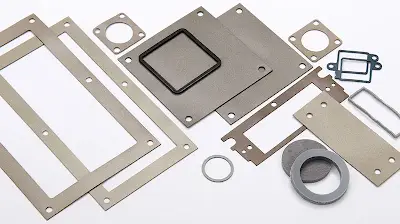
EMI sealant applications extend to complex geometries like connector backshells or lid edges, where molded gaskets falter. Dispensed via robotic nozzles, these cure to conductive matrices mirroring gasket properties, ideal for retrofit shielding. They excel in environmental sealing EMI, combining IP67+ protection with >60 dB attenuation up to 18 GHz. Cure mechanisms, whether RTV or heat-activated, influence outgassing and bond strength to substrates.
Challenges include primer needs for non-porous metals and shrinkage control to preserve uniformity. In wave-guide penetrations, sealants fill voids, blocking higher-order modes. Dual-purpose formulations satisfy both moisture ingress and RF leakage criteria per IEC 60529 classifications. Application precision ensures repeatability, critical for production scalability.
Best Practices in Enclosure Shielding Design
Initiate with joint analysis, identifying high-risk seams via modal analysis for resonant leaks. Select gaskets with aspect ratios suiting closure forces, favoring low-force options like fabric-over-foam for delicate assemblies. Surface preparation via conductive coatings enhances flange conductivity, minimizing paint-induced discontinuities. Fastener torque sequencing prevents warping, verified through prototype shielding effectiveness sweeps per IEC 61000-5-7.
Integrate grounding straps at corners to bypass gasket paths, reducing reliance on perfect compression. Environmental testing accelerates aging, correlating compression force retention to EMI decay. Documentation of material datasheets and test correlations builds design heritage. These practices yield robust, compliant enclosures minimizing field returns.
Conclusion
Conductive gaskets and sealants form the cornerstone of effective enclosure shielding design, delivering reliable EMI attenuation alongside environmental resilience. Key considerations like gasket material selection, compression force EMI optimization, and sealant versatility enable engineers to tailor solutions precisely. Adhering to principles such as uniform deflection and filler stability ensures sustained performance across frequencies and conditions. Integrating these early fosters compliance and innovation in demanding applications. Future trends toward broadband, lightweight composites promise further enhancements without compromising integrity.
FAQs
Q1: What factors influence conductive gaskets EMI performance most significantly?
A1: Compression force and material resistivity dominate, as uniform deflection creates low-impedance paths essential for broad-band shielding. Filler type affects absorption at high frequencies, while base elastomer governs environmental durability. Testing per ASTM D991 confirms suitability, guiding selection for specific enclosure shielding design needs. Proper implementation yields consistent >80 dB attenuation.
Q2: How does gasket compression force EMI impact long-term shielding effectiveness?
A2: Optimal 15-25% compression balances contact resistance and fatigue resistance, preventing gap formation under thermal cycling. Excessive force causes set, increasing impedance over time; insufficient allows leakage. Vibration testing validates retention, correlating force decay to EMI rise. Engineers use deflection profiles to spec fasteners accordingly.
Q3: What role do EMI sealant applications play in environmental sealing EMI?
A3: Sealants fill irregular voids, providing conformal EMI barriers with IP ratings per IEC 60529 while curing to gasket-like conductivity. They suit dynamic joints or repairs, resisting moisture ingress that degrades fillers. Viscosity control ensures void-free application, enhancing overall enclosure integrity in harsh environments.
Q4: How to approach gasket material selection for enclosure shielding design?
A4: Evaluate frequency range, corrosion risk, and temperature via resistivity and shielding data. Nickel-graphite suits general use; silver for premium RF. Balance cost with compliance, prioritizing low compression set for reliability. Prototype verification confirms fit.
References
IEC 61000-5-7:2001 — Electromagnetic compatibility (EMC) - Part 5-7: Installation and mitigation guidelines - Degrees of protection provided by enclosures (EM code) against electromagnetic disturbances. IEC, 2001
ASTM D991 — Standard Test Method for Rubber Property—Volume Resistivity of Electrically Conductive Elastomeric Materials. ASTM, 2017
IEC 60529 — Degrees of protection provided by enclosures (IP Code). IEC, 2013