FPC character height minimum is one of the most frequent points of pushback during DFM review. Designers often set text at 0.6mm or 0.8mm because it fits neatly on the layout, only to receive boards where the legend is barely readable or completely blurred.
The flex PCB text size limit is not arbitrary. It comes from real material behavior, printing process physics, and registration tolerances that rigid boards simply do not share.
The Physics Behind FPC Character Height Minimum
Legend ink has a practical minimum thickness for adhesion and visibility. On polyimide film or coverlay, anything below a certain height loses edge definition during screening or curing. The ink spreads slightly — this is normal — but at very small sizes the spread consumes the entire character.
Most production processes need at least 1.0mm character height for reliable results. Below that, yield drops and readability suffers, especially after thermal stress or flexing.
How Position Affects Flex PCB Text Size Limit
Legend printed directly on coverlay behaves differently from legend on bare PI or over solder mask. Coverlay surfaces have slight texture and dimensional change after lamination, making fine text harder to resolve.
Bare PI areas can sometimes support slightly smaller text because of better flatness, but they are more prone to ink adhesion issues without proper surface treatment. Areas with solder mask openings create transition steps that distort nearby legend.
Dynamic flex zones or near bend lines add another constraint. The material movement during use can crack or distort small characters over time.
Factory Capability Differences for FPC Character Height
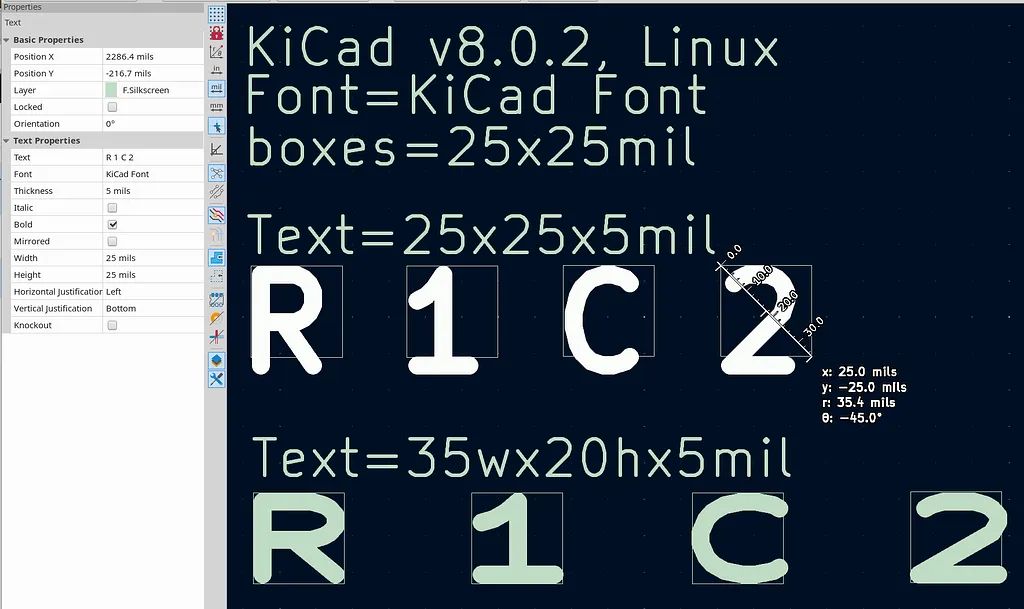
Not all FPC shops have the same process window. Standard screen printing lines typically require 1.0–1.2mm minimum character height for consistent yield. High-end facilities with finer mesh screens or photoimageable legend can sometimes go down to 0.9mm, but this is not guaranteed across panels.
Laser-marked legend offers better resolution in some cases, yet it brings higher cost and still has limits on minimum line width and contrast on dark substrates. Always confirm the specific capability with your chosen vendor rather than assuming industry-wide standards.
The gap between prototype and volume production capability can be significant. What looks acceptable on a few panels often fails at scale when registration drifts.
Practical Spacing Rules That Matter
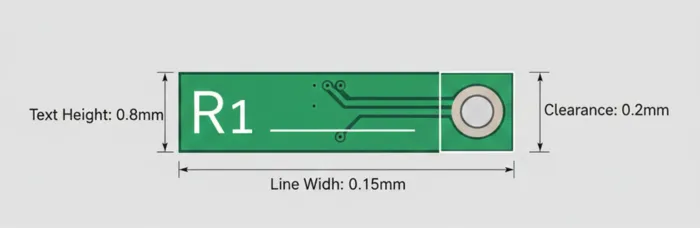
Character height alone is not enough. Minimum spacing between characters should be at least 0.2mm, and clearance to copper or coverlay edges should stay 0.15–0.2mm. These clearances prevent bridging and maintain readability when minor shifts occur.
Engineering Review Rules for Adjusting Legend Size
During DFM review, we apply clear modification guidelines. Any text below 1.0mm height gets flagged. We recommend upsizing to 1.2mm wherever space allows. For tight areas, we suggest moving non-critical markings or using abbreviated codes.
If the design really cannot accommodate larger text, we discuss alternative processes like laser marking or relocating the legend to a stiffer section of the board. Changing font weight or switching to a less condensed style can also help without increasing overall space.
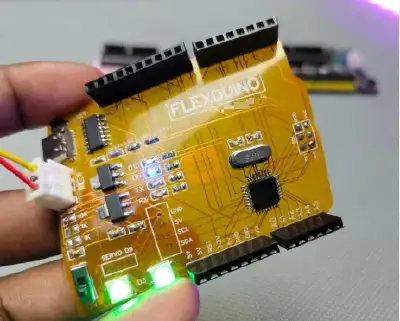
We also check polarity marks, test points, and connector pin labels — these are the ones that matter most in assembly and troubleshooting. Sacrificing readability on these is rarely worth the space saved.
Long-Term Consequences of Pushing Flex PCB Text Size Limit
Small legend that barely passes prototype often fails in volume production or field use. Technicians waste time trying to read blurred markings. Poor ink definition can lead to flaking after thermal cycling or repeated flexing.
The extra time spent in layout to respect FPC character height minimum pays back many times over during manufacturing and product life.
Recommended Guidelines for Your Next Flex Design
Set your default FPC legend text to 1.2mm height with 0.25mm spacing. Use 1.0mm only after confirming with the fabricator and only in non-critical locations. Always include legend keep-out zones around coverlay openings and bend areas in your design rules.
Build a flex-specific text library rather than reusing rigid board settings. Review legend layers early in the layout phase instead of waiting for final DFM. These habits eliminate most FPC character height minimum related issues before they reach the factory.
Respecting the flex PCB text size limit is not about being conservative. It is about delivering boards that are manufacturable, readable, and reliable in real-world conditions.