Introduction
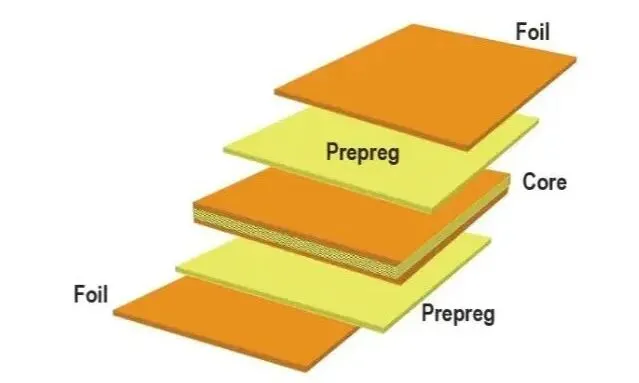
The electronics industry relies heavily on FR-4 as the standard PCB substrate due to its balanced electrical, mechanical, and thermal properties. However, growing concerns over electronic waste and resource depletion have spurred interest in renewable substrates derived from bio-based materials like polylactic acid (PLA), flax fibers, and cellulose. These alternatives aim to maintain high performance while enabling compostability and reduced environmental impact. Engineers designing sustainable PCBs must evaluate renewable PCB substrate thermal performance alongside traditional metrics to ensure reliability in applications from consumer devices to renewable energy systems. This article examines bio-based PCB dielectric properties, alternative PCB materials for high frequency use, and sustainable PCB design guidelines. Factory processes for these materials require adaptations, but they align with the push for greener manufacturing.
Why Renewable Substrates Matter in PCB Design
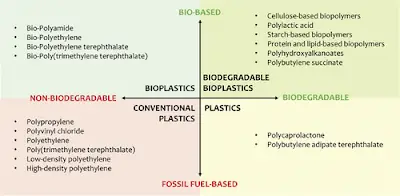
Renewable substrates address the sustainability challenges of conventional laminates, which contribute significantly to e-waste landfills. Bio-based materials sourced from plants reduce reliance on petroleum-derived epoxies and glass fibers, potentially lowering carbon footprints by up to two-thirds in some formulations. For electrical engineers, these substrates offer opportunities in disposable electronics, wearables, and low-power IoT devices where end-of-life compostability is valuable. Yet, performance parity with FR-4 remains critical, particularly in renewable PCB substrate thermal performance during assembly and operation. Industry shifts toward circular economy principles demand that designs incorporate compostable PCB materials comparison early in the process. Factories implementing these materials can achieve compliance with emerging eco-regulations while optimizing for recyclability.
The relevance extends to high-reliability sectors where thermal cycling and humidity exposure test material limits. Renewable options like PLA reinforced with natural fibers provide dielectric stability suitable for moderate frequencies. Engineers benefit from reduced material costs over time as bio-feedstocks scale. Sustainable PCB design guidelines emphasize lifecycle assessment from lamination to disposal. These substrates enable innovative form factors, such as thermoformable boards for curved assemblies.
Technical Principles of Renewable PCB Substrates
Bio-based PCB dielectric properties stem from the polymer matrix and fiber reinforcement, where PLA exhibits a dielectric constant around 4.6 to 5.6 at frequencies from 10 kHz to 100 kHz, closely matching FR-4's stable value of approximately 4.6. Dissipation factors for these materials hover near 0.0175, supporting signal integrity in alternative PCB materials high frequency applications up to several GHz in optimized composites like rice husk or banana fiber blends. Natural fibers such as flax or cotton lower the overall dielectric constant in some cases, aiding high-speed designs by minimizing losses. However, frequency-dependent variations require characterization per IPC-4101 specifications for base materials to ensure consistency across production lots. Moisture absorption in hydrophilic fibers can alter these properties, necessitating surface treatments like silane coupling.
Thermal performance in renewable substrates involves coefficient of thermal expansion (CTE) values of 13 to 24 ppm/°C for PLA composites, comparable to FR-4's 14 to 17 ppm/°C in the x-y plane. This similarity reduces warpage risks during soldering, though lower glass transition temperatures (Tg) around 55 to 65°C limit standard lead-free reflow profiles compared to FR-4's 130 to 180°C. Thermal conductivity remains low at about 0.2 W/m·K, akin to FR-4's 0.25 W/m·K, suitable for low-power boards but challenging for heat-intensive apps. Renewable PCB substrate thermal performance improves with fillers, yet factories must validate via thermal cycling tests aligned with IPC-6012 qualification for rigid boards. Degradation starts above 200°C, prompting low-temperature processing adaptations.
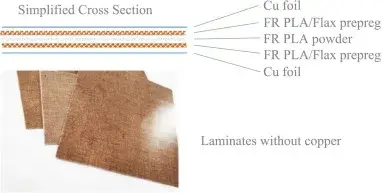
Mechanical integrity relies on fiber-matrix interfaces, with tensile strengths of 89 MPa and flexural moduli around 7 GPa for PLA-cotton substrates, lower than FR-4's 20+ GPa but sufficient for flexible or low-stress designs. Flammability requires additives to reach UL-94 V0 or V1 ratings, as pure bio-polymers are combustible. Compostability tests show partial biodegradation in soil, with cotton degrading faster than PLA under industrial conditions. These principles guide selection for applications balancing sustainability and durability.
Compostable PCB Materials Comparison
Compostable PCB materials comparison reveals PLA-flax or PLA-cotton as frontrunners against FR-4, with bio-based options offering 50% lower density for lighter boards. FR-4 excels in mechanical robustness, with flexural strength over 400 MPa versus 100 MPa in PLA composites, but renewables provide better conformability for 3D shapes. Dielectrically, bio-materials match at low frequencies but show potential at high frequency due to lower Dk in fiber-rich variants. Thermally, both have similar CTE, but renewables' low Tg demands process tweaks like bismuth-based solders at 138°C.
Sustainability metrics favor compostables: PLA-cotton loses 5% weight in six months under ambient composting, while FR-4 persists indefinitely. Factories note higher moisture sensitivity in bio-substrates, up to 4.8% absorption untreated, versus FR-4's stability, mitigated by acetylation. High-frequency performance in rice husk PLA reaches Dk 2.43, outperforming FR-4's 4.4 for antennas. Overall, compostables suit short-lifespan products, with trade-offs in rigidity and heat resistance.
| Property | PLA-Cotton Composite | FR-4 Typical |
|----------|----------------------|--------------|
| Dielectric Constant (100 kHz) | 4.6 | 4.6 |
| Tg (°C) | 55-65 | 130-180 |
| CTE (ppm/°C) | 13-24 | 14-17 |
| Tensile Strength (MPa) | ~89 | ~300 |
| Compostable | Partial (industrial) | No |
Sustainable PCB Design Guidelines and Best Practices
Sustainable PCB design guidelines start with application matching: use bio-substrates for low-power, non-critical boards under 100°C operation. Select reinforcements like flax for balanced dielectric and mechanical properties, targeting Dk under 4 for high-frequency signals. Factories should implement moisture control via desiccants and preconditioning per J-STD-020 for handling sensitivity. Validate thermal performance through finite element analysis of CTE mismatches to predict warpage.
Best practices include additive manufacturing for traces, avoiding aggressive etching that delaminates fibers. Anneal at near-Tg temperatures to enhance adhesion, as seen in silver ink prints stable up to 3N scratch force. Incorporate flame retardants early for assembly compatibility. Prototype with small panels to assess drill quality, minimizing fiber pull-out. Lifecycle testing ensures compostability claims hold under real disposal scenarios. These steps align factory yields with performance specs.
Key Insights from Factory Implementations
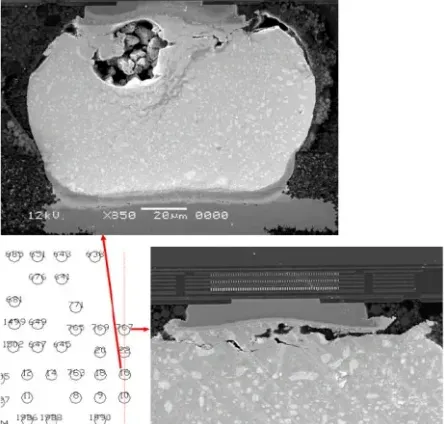
Factory-driven insights highlight process adaptations for renewables: low-Tg materials enable thermoforming but require via-in-pad designs for heat spreading. High-frequency prototypes using cellulose show signal loss below -3 dB, viable for RF modules. Compostable boards excel in disposable sensors, reducing e-waste by enabling soil breakdown. Challenges like microcracking from thermal cycling underscore the need for hybrid stacks with FR-4 cores.
Conclusion
Renewable substrates push PCB design beyond FR-4 toward sustainability without fully sacrificing performance. Bio-based dielectric properties and thermal characteristics offer viable paths for high-frequency and moderate-power uses. Engineers following sustainable PCB design guidelines can integrate these materials effectively. Compostable options promise a greener future, pending scaled production. Prioritize testing to bridge gaps in mechanical and processing limits.
FAQs
Q1: What are the key bio-based PCB dielectric properties compared to FR-4?
A1: Bio-based materials like PLA composites exhibit dielectric constants of 4.6 to 5.6 at low frequencies, matching FR-4 closely, with dissipation factors around 0.0175. Lower Dk variants from rice husk enable alternative PCB materials high frequency performance. Moisture treatments stabilize properties for reliable insulation.
Q2: How does renewable PCB substrate thermal performance stack up?
A2: Renewables show CTE of 13-24 ppm/°C similar to FR-4, but Tg of 55-65°C limits reflow soldering. Thermal conductivity nears 0.2 W/m·K, adequate for low-power apps. Factories adapt with low-temp alloys for viable thermal management.
Q3: What sustainable PCB design guidelines apply to these materials?
A3: Match substrates to low-heat apps, control moisture per J-STD-020, and use fiber treatments for stability. Validate per IPC-4101 for dielectric specs. Focus on lifecycle from lamination to composting.
Q4: In a compostable PCB materials comparison, when to choose bio-based over FR-4?
A4: Opt for bio-based in disposable or flexible designs where partial compostability adds value. FR-4 suits high-mechanical needs; renewables trade strength for eco-benefits in low-stress, high-frequency roles.
References
- IPC-4101E — Specification for Base Materials for Rigid and Multilayer Printed Boards. IPC, 2017
- IPC-6012E — Qualification and Performance Specification for Rigid Printed Boards. IPC, 2015
- J-STD-020E — Moisture/Reflow Sensitivity Classification for Nonhermetic Surface Mount Devices. JEDEC, 2014