Introduction
Smart home devices, from wireless thermostats to security cameras and voice-activated hubs, depend on printed circuit boards to integrate sensors, processors, and communication modules into compact designs. Selecting the appropriate PCB materials directly influences signal integrity, thermal performance, and long-term reliability in environments with varying temperatures and humidity levels. Engineers face unique challenges in balancing cost, performance, and compliance when designing these devices. This PCB material selection guide explores key considerations tailored for electric engineers working on smart home applications. By understanding material properties and trade-offs, you can optimize board performance while meeting industry requirements. The discussion covers standard options alongside specialized alternatives for high-frequency signals and thermal demands.
Why PCB Material Selection Matters for Smart Home Devices
Smart home devices operate in dynamic conditions, including frequent power cycling, RF transmissions for Wi-Fi and Bluetooth, and proximity to heat-generating components like LEDs and microcontrollers. Poor material choices can lead to signal loss, delamination, or warpage, compromising device functionality and user safety. For instance, materials with mismatched coefficients of thermal expansion cause stress on solder joints during temperature fluctuations common in residential settings. Compliance with environmental regulations adds another layer, ensuring devices are safe and recyclable. Proper selection enhances electromagnetic compatibility and reduces failure rates over the device's lifecycle. Ultimately, informed choices align with design goals for efficiency and durability.

Key Properties to Evaluate in PCB Materials
PCB materials are characterized by electrical, thermal, mechanical, and environmental properties that dictate suitability for smart home applications. Electrical properties include dielectric constant and dissipation factor, which affect signal propagation speed and attenuation, especially critical for RF modules. Thermal properties such as glass transition temperature and coefficient of thermal expansion ensure stability under operating heat. Mechanical strength resists flexing or vibration from device handling, while flame retardancy prevents fire hazards. Environmental factors like moisture absorption influence reliability in humid bathrooms or kitchens. Engineers must prioritize these based on device specifications, referencing standards like IPC-4101 for base material requirements.
Material thickness uniformity supports high-density interconnects, minimizing impedance variations in multilayer boards. Low moisture absorption prevents popcorn effects during assembly reflow. High peel strength maintains copper adhesion under thermal stress. These properties interact, so holistic evaluation is essential. Testing per IPC-6012 verifies performance under real-world conditions.
FR-4 vs Alternatives: Core Comparison for Smart Home Designs
FR-4, the most common epoxy-glass laminate, offers a cost-effective baseline for many smart home PCBs due to its balanced electrical and mechanical properties. It performs well in low-to-mid frequency applications under 1 GHz, providing good rigidity and processability for standard through-hole and surface-mount assemblies. However, its higher dissipation factor limits use in demanding RF scenarios, where signal attenuation becomes noticeable. Alternatives emerge when FR-4 falls short, such as in boards requiring better thermal dissipation or high-frequency handling.
High-Tg FR-4 variants improve heat resistance for densely packed designs with power components. Polyimide materials excel in flexible or high-temperature zones, like sensor interfaces in curved device housings. Ceramic-filled epoxies provide enhanced thermal conductivity without sacrificing much electrical performance. The choice hinges on frequency needs, power levels, and form factor constraints.

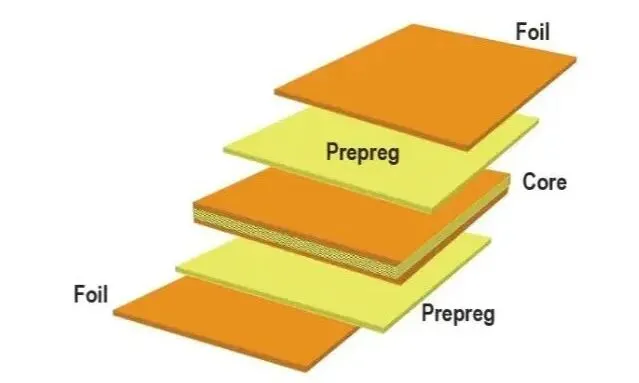
In FR-4 vs alternatives debates, engineers weigh cost against performance gains. FR-4 suits budget-conscious prototypes and general interconnects in hubs or plugs. Specialized laminates justify premiums in premium devices with 5G modules or AI processors. Multilayer stacks often mix materials, using FR-4 cores with high-frequency skins. Fabrication compatibility remains key, as alternatives may require adjusted drilling or plating processes.
High-Frequency PCB Materials for Wireless Smart Home Features
High frequency PCB materials become essential for smart home devices relying on Wi-Fi, Zigbee, or ultra-wideband communications, where low dielectric constant and dissipation factor minimize insertion loss and phase distortion. PTFE-based laminates, reinforced with glass or ceramics, deliver superior RF performance above 1 GHz by maintaining signal integrity over longer traces. Hydrocarbon ceramics offer stable properties across temperature ranges, ideal for outdoor sensors exposed to weather variations. These materials support tighter impedance control in microstrip or stripline configurations.
Engineers select based on operating frequency bands; for sub-6 GHz smart home links, mid-loss epoxies suffice as FR-4 alternatives. Bonded configurations reduce interlayer transitions that cause reflections. Surface treatments enhance solderability without degrading RF characteristics. Testing verifies return loss per design simulations.

Layer stackup optimization pairs high-frequency skins with cost-effective cores. Via transitions demand precise back-drilling to avoid stubs. These materials enable compact antennas integrated directly on the board.
Thermal Conductivity PCB Materials for Power-Hungry Components
Thermal conductivity PCB materials address heat dissipation in smart home devices with processors, motor drivers, or LED arrays that generate localized hotspots. Standard FR-4 conducts heat poorly, relying on vias or planes for spreading, which limits effectiveness in thin boards. Metal-core boards, typically aluminum-backed, channel heat to chassis sinks efficiently for high-power lighting controls. Ceramic-filled polymers boost in-plane conductivity while preserving dielectric isolation.
Thick copper layers or embedded coins improve vertical heat paths in multilayer designs. Coefficient of thermal expansion matching prevents board bowing near components. Engineers calculate junction-to-ambient paths during thermal simulations.
Hybrid stacks combine conductive cores with standard laminates for balanced performance. Surface finishes like ENIG aid heat transfer without oxidation. Reliability testing per J-STD-020 assesses reflow tolerance under thermal stress.
RoHS Compliant PCB Materials: Ensuring Environmental and Safety Standards
RoHS compliant PCB materials exclude restricted substances like lead, mercury, and certain flame retardants, aligning with global regulations for consumer electronics. Modern FR-4 formulations achieve compliance through halogen-free resins and lead-free plating processes, maintaining mechanical integrity. These materials support higher reflow profiles needed for lead-free soldering in assembly lines. Halogen-free options reduce smoke toxicity in fire scenarios, enhancing safety in enclosed smart home installations.
Procurement teams verify supplier declarations for full compliance across the stackup. Alternatives like low-halogen polyimides extend options for flexible circuits. Aging tests confirm no degradation in humid environments.
Assembly processes adapt to these materials' higher moisture sensitivity levels. Bake-out procedures prevent defects. Compliance documentation streamlines certification.
Best Practices for PCB Material Selection in Smart Home Projects
Start with a requirements matrix listing frequency, power dissipation, operating temperature, and compliance needs. Simulate thermal and signal performance early to validate choices. Collaborate with fabricators on DFM reviews for material processability. Prototype iterations refine selections based on empirical data.
Prioritize suppliers with IPC certifications for traceability. Stackup design tools aid CTE matching. Field testing in representative environments uncovers latent issues.
Multisource materials mitigate supply risks. Lifecycle cost analysis includes rework potential.
Conclusion
Choosing PCB materials for smart home devices demands balancing electrical, thermal, mechanical, and regulatory demands through a structured PCB material selection guide. FR-4 serves as a versatile starting point, with alternatives addressing high-frequency PCB materials, thermal conductivity PCB materials, and RoHS compliant needs. References to standards like IPC-4101 and IPC-6012 guide reliable implementations. Engineers achieve optimal performance by evaluating properties holistically and applying best practices. This approach ensures devices deliver consistent functionality, safety, and longevity in real-world deployments.
FAQs
Q1: What is the best starting point in a PCB material selection guide for general smart home devices?
A1: FR-4 remains the go-to for cost-effective, RoHS compliant PCB materials in low-to-mid frequency applications like basic sensors and controllers. Evaluate dissipation factor and glass transition temperature against device specs. Alternatives enter for specialized needs, but FR-4 handles most interconnects reliably. Always align with IPC-4101 base material specs for consistency.
Q2: How do FR-4 vs alternatives impact high frequency PCB materials in Wi-Fi modules?
A2: FR-4's higher loss tangent causes signal degradation above 1 GHz, making low-Dk PTFE or ceramic alternatives preferable for high frequency PCB materials. These maintain phase stability in compact traces. Stackup design minimizes transitions. RF testing confirms improvements over FR-4 baselines.
Q3: Why prioritize thermal conductivity PCB materials in power-intensive smart home designs?
A3: Devices with processors or drivers generate hotspots that standard FR-4 struggles to dissipate, risking component failure. Thermal conductivity PCB materials like metal-core or filled epoxies spread heat effectively. Match CTE to silicon for joint reliability. Simulations guide layer choices.
Q4: Are all RoHS compliant PCB materials suitable for every smart home application?
A4: RoHS compliant PCB materials like halogen-free FR-4 suit most, but high-temperature zones may need polyimide variants. Verify moisture sensitivity per J-STD-020. Halogen-free reduces environmental impact without performance loss. Procurement checks ensure chain-wide compliance.
References
IPC-4101E — Specification for Base Materials for Rigid and Multilayer Printed Boards. IPC, 2017
IPC-6012E — Qualification and Performance Specification for Rigid Printed Boards. IPC, 2018
J-STD-020E — Moisture/Reflow Sensitivity Classification for Nonhermetic Surface Mount Devices. JEDEC, 2014