Introduction
Spacecraft electronics must operate flawlessly in conditions far beyond earthly norms, including vacuum exposure, extreme thermal cycling, high radiation levels, and intense launch vibrations. Printed circuit boards (PCBs) serve as the backbone of these systems, housing critical components that control navigation, communication, and data processing. Without proper protection, environmental stressors can lead to corrosion, electrical shorts, outgassing contamination, or mechanical failures. Conformal coating emerges as a vital solution, forming a thin, protective polymeric layer that conforms precisely to the PCB's contours and components. This article explores conformal coating options and techniques tailored for spacecraft applications, helping electrical engineers select and implement reliable safeguards. By addressing key challenges head-on, engineers can ensure mission success in the unforgiving expanse of space.
What Is Conformal Coating and Why It Matters for Spacecraft PCBs
Conformal coating is a dielectric polymeric film applied to assembled PCBs to shield circuitry from environmental hazards while maintaining electrical performance. Typically ranging from 25 to 75 microns in thickness, it provides insulation, moisture resistance, and mechanical buffering without significantly altering the board's profile. In spacecraft electronics, this protection becomes indispensable due to the absence of atmospheric pressure, where atomic oxygen, solar radiation, and thermal swings from cryogenic cold to scorching heat threaten reliability. Unprotected PCBs risk dendritic growth from residual contaminants, solder joint fatigue from vibration, or insulation breakdown under radiation-induced charge buildup. Engineers prioritize conformal coatings to extend operational life, reduce failure rates, and comply with rigorous qualification demands. Ultimately, selecting the right coating directly impacts the longevity and success of space missions.
Harsh Space Environments and the Role of Conformal Coatings
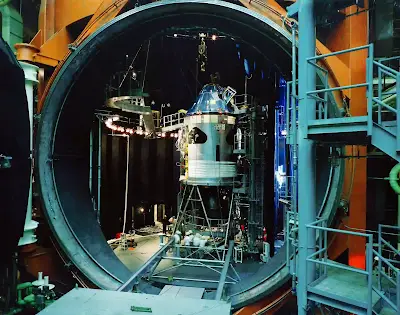
Space imposes multifaceted threats on electronics, starting with vacuum conditions that promote outgassing from materials, potentially condensing on optics or sensors and causing failures. Thermal cycling between minus 150 degrees Celsius in shadow and plus 150 degrees Celsius in sunlight induces expansion mismatches, leading to cracks in unprotected solder joints or traces. High-energy radiation from cosmic rays and solar flares degrades insulators, increasing leakage currents over time. Launch vibrations and acoustic loads further stress assemblies, exacerbating micro-cracks or delamination. Conformal coatings mitigate these by sealing surfaces against contaminants, absorbing shocks, and providing low-outgassing barriers. For instance, they prevent ion migration in humid launch phases and maintain dielectric integrity amid radiation exposure, ensuring signal integrity persists throughout a satellite's lifespan. Engineers facing similar challenges in navigation systems should review our guide to conformal coating in harsh environments.
Key Types of Conformal Coatings for Space Applications
Electrical engineers evaluating the best conformal coating for space applications must weigh properties like thermal range, outgassing, flexibility, and application uniformity against mission specifics. Parylene coating for space PCBs stands out for its vapor-deposited nature, yielding pinhole-free, ultra-conformal films with minimal weight addition. This type excels in vacuum environments due to low outgassing and resistance to chemicals and radiation, making it suitable for high-reliability modules. Silicone conformal coating for space PCBs offers exceptional flexibility and broad temperature tolerance, ideal for components enduring vibration and thermal shock during launch and orbit. Acrylic conformal coating for space electronics provides straightforward application and good moisture resistance, though it suits less extreme profiles where rework access matters. No single type dominates; combinations or hybrids often optimize protection based on PCB design and exposure profiles.
Parylene coatings form through chemical vapor deposition, where monomers polymerize directly on the substrate for complete coverage, even under components. This process avoids solvents, reducing contamination risks critical in cleanroom-assembled spacecraft boards. Engineers favor parylene for its biocompatibility and stability under atomic oxygen erosion, common in low Earth orbit. However, its brittleness limits use in high-flexure areas, prompting silicone alternatives there. Silicone resins cure to rubber-like films that dampen vibrations and handle rapid temperature changes without cracking. Their hydrophobicity repels liquids during ground handling, though permeability requires careful moisture management post-application.
Acrylic coatings, solvent-based and air-cured, deliver fast processing and easy removal for repairs, appealing in prototyping phases of space electronics development. They offer solid dielectric strength for high-voltage traces but may yellow or embrittle under prolonged UV or radiation. In practice, acrylic suits inner boards shielded from direct space exposure, while parylene or silicone guards outer layers. Troubleshooting focuses on matching coating to stressors: test thermal cycling for silicone viability or outgassing per ASTM E595 for parylene suitability. Layering techniques, like silicone over acrylic bases, enhance overall resilience without excessive thickness.
Material Comparison Table
| Coating Type | Outgassing (TML / CVCM) | Temp Range | Radiation Resistance | Flexibility | Dielectric Strength | Best For | Key Limitations |
|---|---|---|---|---|---|---|---|
| Parylene | <0.5% / <0.05% | -200°C to +150°C+ | Excellent (stable under cosmic rays) | Moderate (can be brittle) | Very High (~5000 V/mil) | Vacuum, optics, sensors, long-duration missions | Difficult rework; requires specialized CVD equipment |
| Silicone | 0.4% / 0.03% (qualified grades) | -65°C to +200°C | Good | Excellent (rubber-like) | High | Vibration damping, thermal cycling, launch stresses | Higher moisture permeability; may require bake-out |
| Acrylic | Variable (higher unless modified) | -55°C to +125°C | Moderate (can yellow/embrittle) | Good | High | Prototyping, rework-heavy assemblies, shielded boards | Lower atomic oxygen & long-term radiation resistance |
| Hybrids/Nanocomposites | Tailored (<1.0% / <0.1%) | Wide range | Enhanced with fillers | Customizable | High to Very High | Complex missions requiring multiple properties | Higher cost; qualification may take longer |
Parylene coating for space applications stands out for its proven flight heritage on missions such as Hayabusa2 and Juno.
Low Outgassing and Radiation Performance Requirements
Low outgassing is non-negotiable for space PCB protection. In vacuum, volatiles can migrate and condense on sensitive surfaces, degrading performance or causing mission-ending contamination. NASA and ESA rely on ASTM E595 testing, which measures Total Mass Loss (TML) and Collected Volatile Condensable Materials (CVCM) under simulated space conditions (typically 125°C in 10⁻⁵ Torr vacuum for 24 hours).
Acceptable limits are generally TML ≤ 1.0% and CVCM ≤ 0.1%. Many programs impose tighter internal requirements (e.g., TML < 0.5%). NASA SP-R-0022A and ESA PSS-01-702 provide additional material screening protocols. Qualified materials like certain Parylene and Arathane formulations routinely achieve TML values below 0.41% and CVCM below 0.03%.
Radiation hardness is equally critical. Coatings must resist total ionizing dose (TID) levels from tens to hundreds of krad(Si) and single-event effects. Parylene maintains dielectric stability under prolonged exposure, while some silicone and nanocomposite formulations incorporate fillers to improve charge dissipation and reduce arcing risk. Engineers should request test data for both outgassing and radiation (e.g., Co-60 gamma testing) when qualifying materials for flight.
Conformal Coating Application Techniques for Spacecraft PCBs
Conformal coating application techniques demand precision to achieve uniform coverage without voids or pooling, especially for complex spacecraft PCBs with fine-pitch components. Dip coating submerges the assembly in liquid resin, ideal for high-volume production, but requires thorough masking of connectors and vias to prevent bridging. Spray application, using automated selective sprayers, allows targeted deposition on high-risk areas, minimizing material use and waste. Brush methods suit rework or low-volume scenarios, offering control for irregular geometries common in custom space hardware. Parylene demands specialized vapor deposition chambers for gaseous monomer delivery, ensuring penetration into shadow areas under tall components.
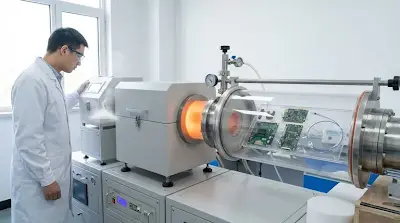
Pre-application steps include plasma cleaning for surface activation, enhancing adhesion per IPC guidelines. Post-coat curing varies: UV or thermal ovens for acrylics and silicones, room-temperature for some silicones, or vacuum baking for parylene to drive off residuals. Thickness verification uses microscopy or beta gauging, targeting 50 microns average to balance protection and flexibility. Masking with temporary tapes or fixtures protects gold fingers and test points, removable post-cure without residue. Engineers troubleshoot defects like fisheyes from oils or orange peel from improper atomization by refining viscosity and humidity controls.
Best Practices and Standards Compliance
Adhering to industry standards ensures conformal coatings perform reliably in space. IPC-CC-830 outlines qualification tests for coatings, including dielectric withstand, thermal shock, and humidity resistance, guiding material selection. J-STD-001 specifies soldering and coating processes for high-reliability assemblies, emphasizing cleanability and inspection criteria. Practical workflows start with design-for-coating reviews, spacing components to allow under-spray access and avoiding sharp edges that trap bubbles. For practical implementation details on surface preparation and prototype-scale application, see our guide to cleaning and coating PCB prototypes.
Surface preparation involves ultrasonic solvent cleaning followed by IPA wipe-down to remove flux residues. Application in controlled environments prevents particulate inclusion, with HEPA-filtered booths standard for space-qualified work. Post-process inspections per IPC-A-610 verify coverage continuity, edge exclusion, and fluorescence under UV for uniformity. Accelerated life testing simulates space conditions: thermal vacuum cycles, vibration profiles, and radiation dosage to validate performance. Documentation tracks batch qualifications, aiding failure analysis if issues arise.
Troubleshooting Common Issues in Space PCB Coatings
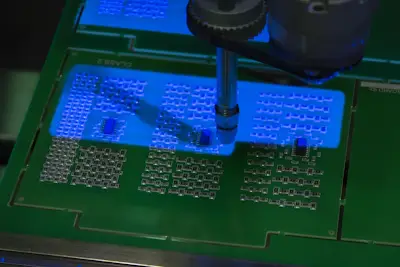
Even with best efforts, challenges like delamination from poor adhesion plague space applications. Root causes include contaminated surfaces or mismatched thermal expansion coefficients between coating and substrate. Engineers mitigate by primer applications or selecting CTE-matched resins, verified through peel tests. Bubbles or voids from trapped air during dipping resolve via vacuum degassing pre-coat or slower withdrawal rates.
Cracking in thermal cycling signals over-thickness or brittle formulations; thinning to 40 microns or adding flexibilizers helps. Radiation darkening in acrylics prompts parylene switches for transparent stability. Outgassing failures, detected via ASTM methods, necessitate low-volatiles silicones or parylenes. Rework involves solvent stripping for acrylics, abrasion for silicones, or plasma etching for parylene, followed by reapplication. Systematic root-cause analysis, logging environmental data during processing, prevents recurrence across production runs.
Future Trends and Emerging Materials
The field continues to evolve. Nanocomposite coatings incorporating silica or graphene oxide improve radiation shielding and charge dissipation while maintaining low outgassing. Charge-dissipative formulations help prevent ESD events in high-radiation environments. Self-healing polymers that automatically repair micro-cracks are moving from research to limited flight trials.
Artificial intelligence is optimizing application parameters in real time — predicting thickness uniformity from spray data and flagging potential defects before cure. Sustainability pressures are driving development of lower-VOC and more environmentally friendly formulations for ground processing without compromising space performance. Integration with additive manufacturing and printed electronics will enable conformal coatings that are applied during the build process itself.
These advances promise even higher reliability for denser, more powerful spacecraft electronics through 2030 and beyond.
Conclusion
Conformal coatings form the frontline defense for spacecraft electronics PCBs, shielding against vacuum, radiation, thermal extremes, and mechanical stresses. Parylene excels in uniform, low-outgassing protection, silicone in flexibility for dynamic loads, and acrylic in accessible applications, with selection driven by mission profiles. Mastering conformal coating application techniques like selective spray or vapor deposition, alongside IPC-CC-830 compliance, ensures robust performance. Electrical engineers benefit from proactive troubleshooting and standardized practices to minimize risks. Implementing these strategies not only boosts reliability but also streamlines qualification for demanding space programs. Prioritizing tailored coatings translates to resilient electronics ready for the cosmos.
FAQs
Q1: What is the best conformal coating for space applications?
A1: The best conformal coating for space applications depends on specific threats like radiation or vibration. Parylene offers superior uniformity and low outgassing for vacuum environments, while silicone provides flexibility for thermal cycling. Acrylic suits milder exposures with easy rework. Evaluate per IPC-CC-830 tests matching mission needs for optimal protection without excess weight.
Q2: Why choose parylene coating for space PCBs?
A2: Parylene coating for space PCBs delivers pinhole-free coverage via vapor deposition, resisting chemicals, moisture, and radiation effectively. Its minimal outgassing prevents contamination in vacuum, crucial for sensors and optics. Though less flexible, it penetrates under components seamlessly, enhancing long-term dielectric stability in orbit.
Q3: How does silicone conformal coating for space PCBs perform under vibration?
A3: Silicone conformal coating for space PCBs absorbs shocks and maintains integrity across wide temperatures due to rubber-like elasticity. It dampens launch vibrations, reducing solder joint fatigue. However, monitor moisture permeability to avoid internal condensation; pair with bake-out processes for reliable spacecraft deployment.
Q4: What are key conformal coating application techniques for spacecraft electronics?
A4: Conformal coating application techniques for spacecraft electronics include dip for volume, spray for selectivity, and vapor deposition for parylene uniformity. Mask critical areas, clean rigorously, and cure under controlled conditions to avoid defects. Inspect per IPC standards to ensure adhesion and coverage, vital for harsh space reliability.
References
[IPC-CC-830C — Qualification and Performance of Electrical Insulating Compounds for Coating Printed Wiring Boards. IPC, 2019]
[J-STD-001GS — Requirements for Soldered Electrical and Electronic Assemblies. IPC, 2011]
[IPC-A-610H — Acceptability of Electronic Assemblies. IPC, 2019]